
Quick Take
- Surveying one of the world's most dangerous regions sounds impossible. Here's the unconventional method that made it work. Explore the aerial survey →
- An active war zone is secretly one of Africa's greatest wildlife sanctuaries, and the reason why defies everything you'd expect. Discover the refuge effect →
- Lake Chad's birds may hold the key to protecting millions of vulnerable people, though this depends entirely on whether one urgent recommendation gets acted on. Read the urgent recommendation →
Lake Chad is arguably the most important source of water in Africa. It sits landlocked between four countries: Chad, Cameroon, Niger, and Nigeria. This location has made it a freshwater resource for over 30 million people in the area, which remains one of the most vulnerable and climate-sensitive regions on Earth. Time, however, has not been kind to Lake Chad. Since the 1960s, it has shrunk by approximately 90%. This has transformed the once-continuous lake into a collection of disconnected pools and wetlands. Lake Chad faces immense insecurity, enduring the pressures of both ecological crisis and war. Remarkably, this also makes it an enduring refuge for biodiversity.
A new study, published in Proceedings of the National Academy of Sciences, explores this phenomenon. Using aerial surveys and advanced spatial modeling techniques, researchers discovered that Lake Chad’s remaining waterways are an important sanctuary for nearly 2.5 million waterbirds. This makes it one of the most important wetlands for birds on the entire African continent. This article examines the new study and explores how the Lake Chad situation serves as a policy wake-up call. We will also examine how human conflict does not necessarily lead to a reduction in biodiversity.
Lake Chad Basin Crisis
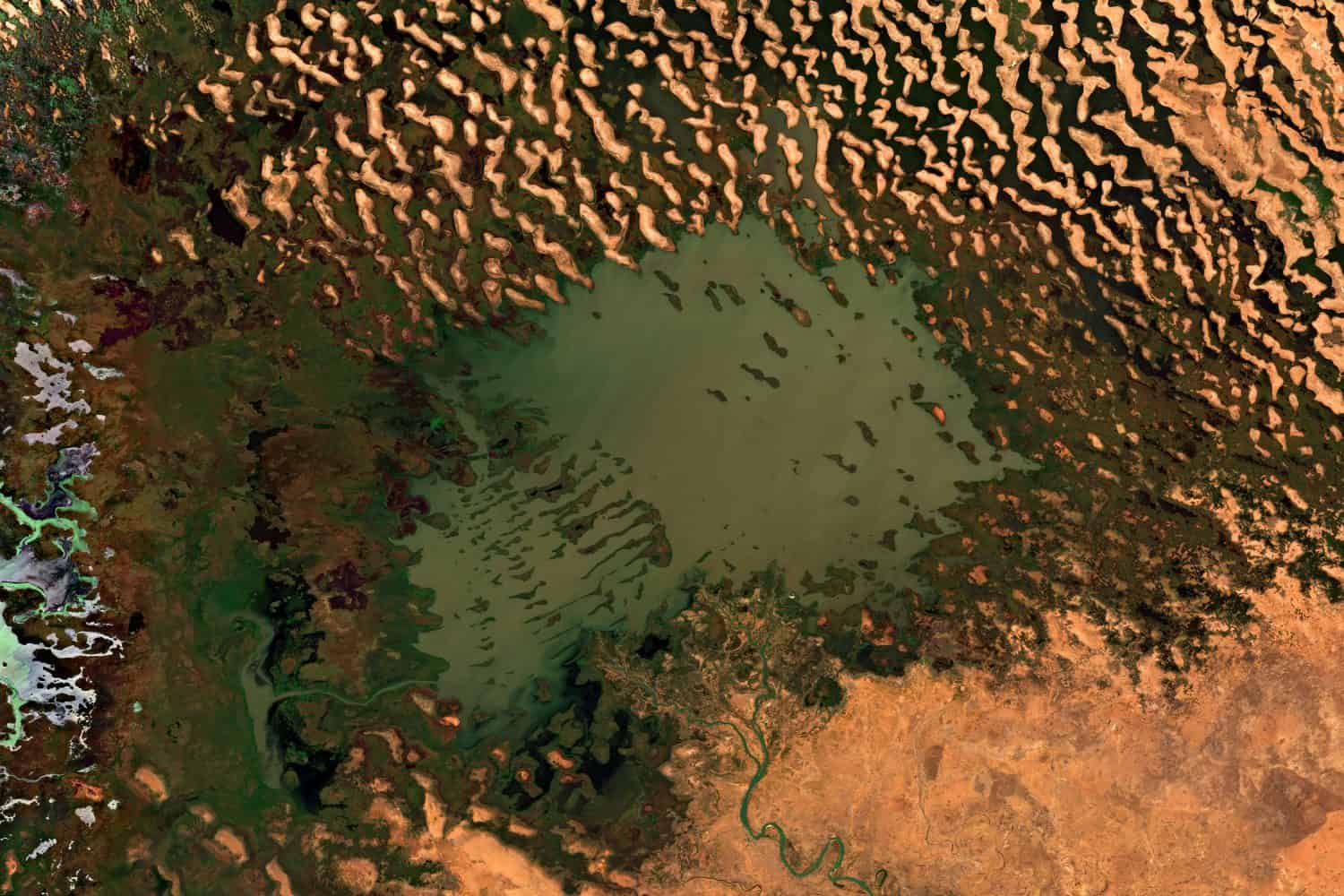
Lake Chad has endured fractured waterways, human displacement, and outright war.
©lavizzara/Shutterstock.com
Since at least 2009, Lake Chad has been caught in the crossfire of complex human conflicts. It began that year in Nigeria before spreading across the region into Cameroon, western Chad, and southeastern Niger. An estimated 2.9 million people have been displaced due to fighting between various non-state actors. The conflicts have disrupted access to healthcare, food, and basic services.
Just last year, rival extremist groups Boko Haram and the Islamic State – West Africa Province (ISWAP) waged the Battle of Lake Chad. Soldiers armed with heavy weapons on motor boats fought violently, resulting in the death of at least 200 people. In response, the Nigerian Air Force launched a series of airstrikes, some of which directly targeted the Lake Chad Basin.
An active conflict zone like this seems the last place you would find considerable biodiversity. And yet, the birds still treat Lake Chad as a veritable sanctuary. A team of French and Chadian researchers set out to understand how, producing the first comprehensive survey of the lake’s waterbird populations since 2008.
Surprising Survey
Researchers from Tour du Valat and the French Biodiversity Agency (Office Français de la Biodiversité – OFB) partnered with the NGO Wings for Conservation and Chad’s Department of Wildlife and Protected Areas. Using aerial surveys with scientific protocols and advanced spatial modelling techniques, the team found surprising results. Despite the region’s ongoing conflict, Lake Chad hosts the largest concentration of wetland birds on the African continent.
In one sense, Lake Chad’s reputation as a waterbird refuge was established decades ago; it has long been a major site for migratory birds. Recent conflicts in the region, however, have made scientific monitoring difficult, if not dangerous. Because up-to-date data on Lake Chad’s biodiversity was lacking, the researchers took to the skies to get a better look.
As one of the study’s authors, Pierre Defos du Rau, explained to EurekAlert, both aerial surveys and spatial modelling helped the team gain a comprehensive overview. He said, “By combining adapted aerial sampling methods with spatial modelling, we were able to estimate wildlife abundance across vast and difficult-to-access territories while limiting risks to observers.”
Paradoxical Protection
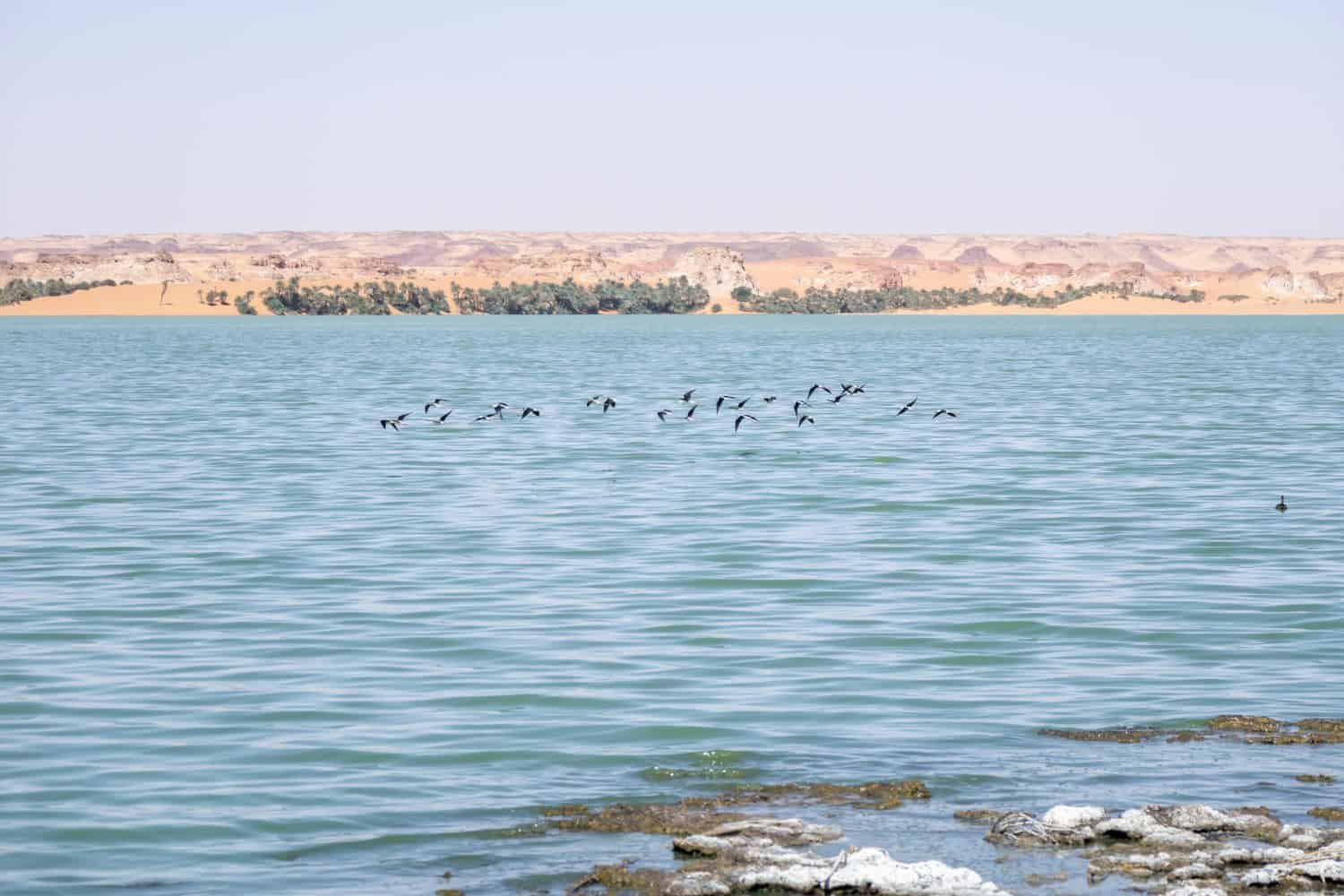
The “refuge effect” helps explain an increase in some of Lake Chad’s waterbird populations.
©Torsten Pursche/Shutterstock.com
One might think that ongoing battles between non-state actors would drive the birds away. However, the opposite appears to be true. The researchers found that some waterbird species in Lake Chad have maintained or even increased their populations during years of conflict. Furthermore, some of the conflict areas showed “higher animal densities than more accessible sectors,” meaning that areas more accessible to humans had fewer birds.
While surprised, the researchers also pointed to the “refuge effect” to explain these population increases. Conflict is destructive, but its shifting nature can temporarily reduce human activity in certain areas. In some areas, this reduction in human activity can temporarily create more favorable conditions for wildlife. At the same time, the researchers were quick to point out that others have experienced significant declines amid the conflict.
Policy Wake-Up Call
The wetlands and wildlife of Lake Chad also support communities that depend on these ecosystems for food and livelihoods. In response to their findings, the research team has called for increased protection of Lake Chad. They recommend the creation of “a large-scale protected area and the inscription of the site on the UNESCO World Heritage List.”
Wetlands across the world are disappearing at a distressing rate. Lake Chad serves as a symbol of this rapid decline, where protection and preservation offer a chance to ensure biodiversity and support the human communities that depend on it.