
Quick Take
- Researchers developed eyespots for food containers to deter gulls from approaching them.
- Eyespots make would-be predators think twice before attacking, given how large the animal appears with its faux eyes.
- Some gulls have no fear of humans or eyespots, making them a problem for outdoor diners.
Gulls are notorious for stealing food in the blink of an eye. Whether it is food dropped at outdoor restaurants or taken directly from a person’s hand while on the boardwalk, gulls are brazen when it comes to human food.
What if there were a way to deter gulls from their thievery? What if fries came with a side of fear? “Watching” your food can make gulls think twice before taking what does not belong to them. In this instance, it is not staring at the gulls that stops them. It is the eyespots—eye-like markings—that fool gulls into believing it is too dangerous to steal food.
Food Packaging with Eyes Deters Some Gulls From Stealing Food
Gulls have no shame when it comes to stealing food from people in coastal towns and urban areas. Some areas are so inundated by gulls that it makes it hard to enjoy a meal outdoors, with the birds looking ready to swoop in at a moment’s notice. This led Dr. Laura Kelley and Dr. Neeltje Boogert, both from Exeter University, to examine whether gulls could be kept at bay simply by looking at them.
In their new study, published in Ecology and Evolution, Dr. Kelley and Dr. Boogert did not want to simply stare at the gulls. They wanted to know if eyespots could keep gulls from stealing food. To determine this, 30 gulls located in Cornwall were presented with two fast-food boxes simultaneously. One box had eyes affixed to it, while the other had nothing.
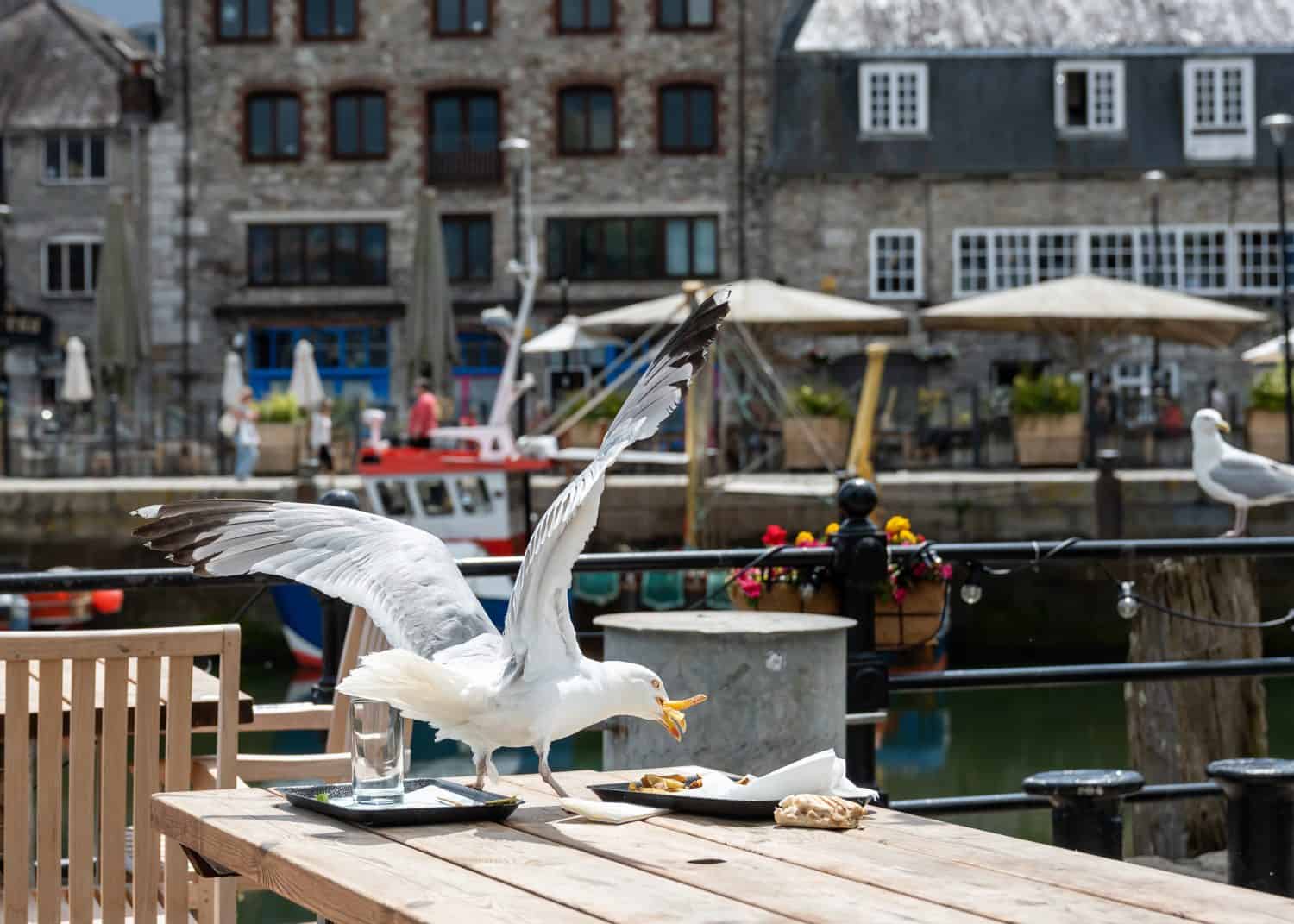
Gulls will nab food from plates or takeout boxes when there are no eyespots affixed to them.
©pavla/Shutterstock.com
Some gulls were hesitant to approach the box with eyes. Approximately half of the birds chose not to investigate the box with eyes at all. The other half were hesitant as well, but eventually pecked at the box with eyes.
Dr. Kelley and Dr. Boogert also wanted to know whether the gulls would learn that the eyes affixed to the boxes were not real and therefore not a threat. To determine this, the gulls were presented with the boxes three times over a short timeframe. Half of the gulls avoided the boxes with eyes entirely. The other half eventually approached the boxes without hesitation and pecked at them to get their free meal.
The authors found that not all gulls are brazen and fearless when it comes to human food. While the eyespots did not stop every gull from approaching, they did deter half of them. In a real-world experiment, this could potentially mean a significant number of gulls would not approach people eating outdoors. This is why Dr. Kelley and Dr. Boogert have suggested that future collaborations with local food vendors could help test whether placing eyes on take-out boxes would stop gulls from nabbing food, potentially creating a more relaxing environment for outdoor diners.
Gulls Do Not Like to Be Watched When Sneaking Up to Steal Food
The new study builds on a 2019 study conducted by the authors. That study, published in Biology Letters, found that many gulls do not like being watched as they sneak up to steal food from people. Exactly why this occurred was unclear.
To determine if gulls would be brash enough to steal food while being watched, researchers set some food within close proximity to themselves while at the beach. While gulls are often thought to be eager food thieves, the 2019 study found that only 26% of the gulls tested were interested in approaching and touching the food. This significantly decreased the pool of gulls that would be participating.
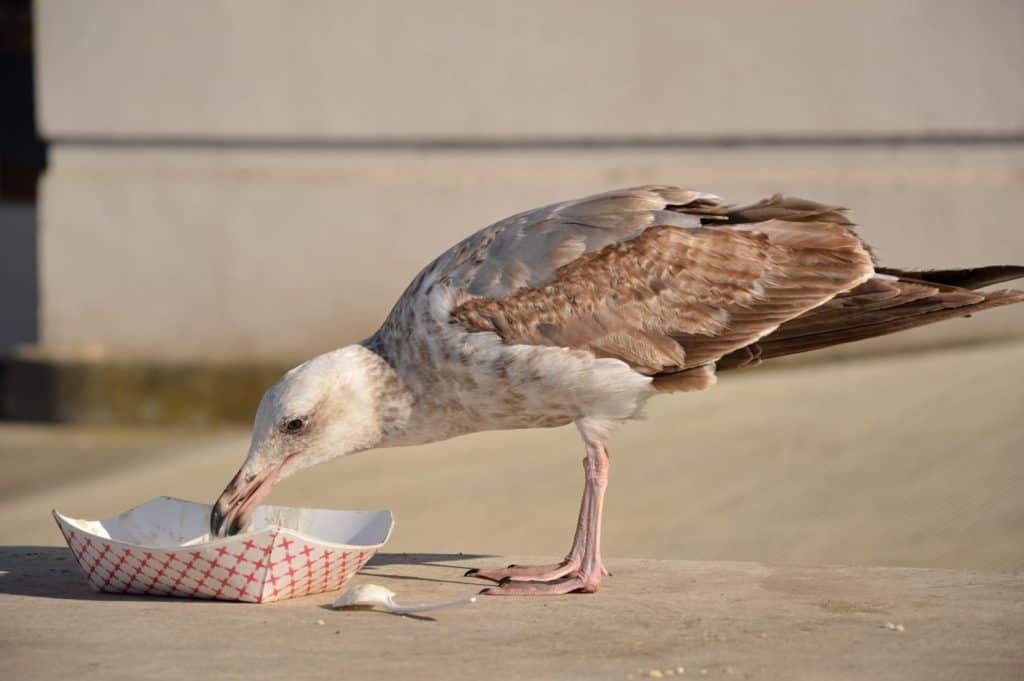
Gulls will hesitate to take food from people when they are being stared at directly.
©Ulf Nammert/Shutterstock.com
The pool of gulls started at 74 participants. Of those, only 27 were willing to participate in the trial. Of those 27, just 19 completed the paired trials. The majority of gulls slowed their approach when being looked at by humans. However, the time varied with how quickly or slowly the gulls would move to get the food. Those who were not looked at would swoop in within seconds and fly off before anything could be done about the food theft.
It was concluded that the gulls have learned through observation that when humans look at them, they are likely to be chased off the food. Therefore, there is a danger that gulls recognize associated with being watched. This is why gulls do not like to be watched when they perform their food capers.
Why Animals Act More Guardedly When Being Watched
Animals that believe they are being watched will approach situations with caution. This reaction is behavioral and evolutionary. Both factors lead to a more guarded approach when animals feel that eyes have zeroed in on them, ultimately giving them a better chance of surviving an attack by a predator.
Depending on the species, there will be a range of responses when the animal feels it is being watched. Some of the most common include:
- Run away
- Freeze
- Shift to become more protected
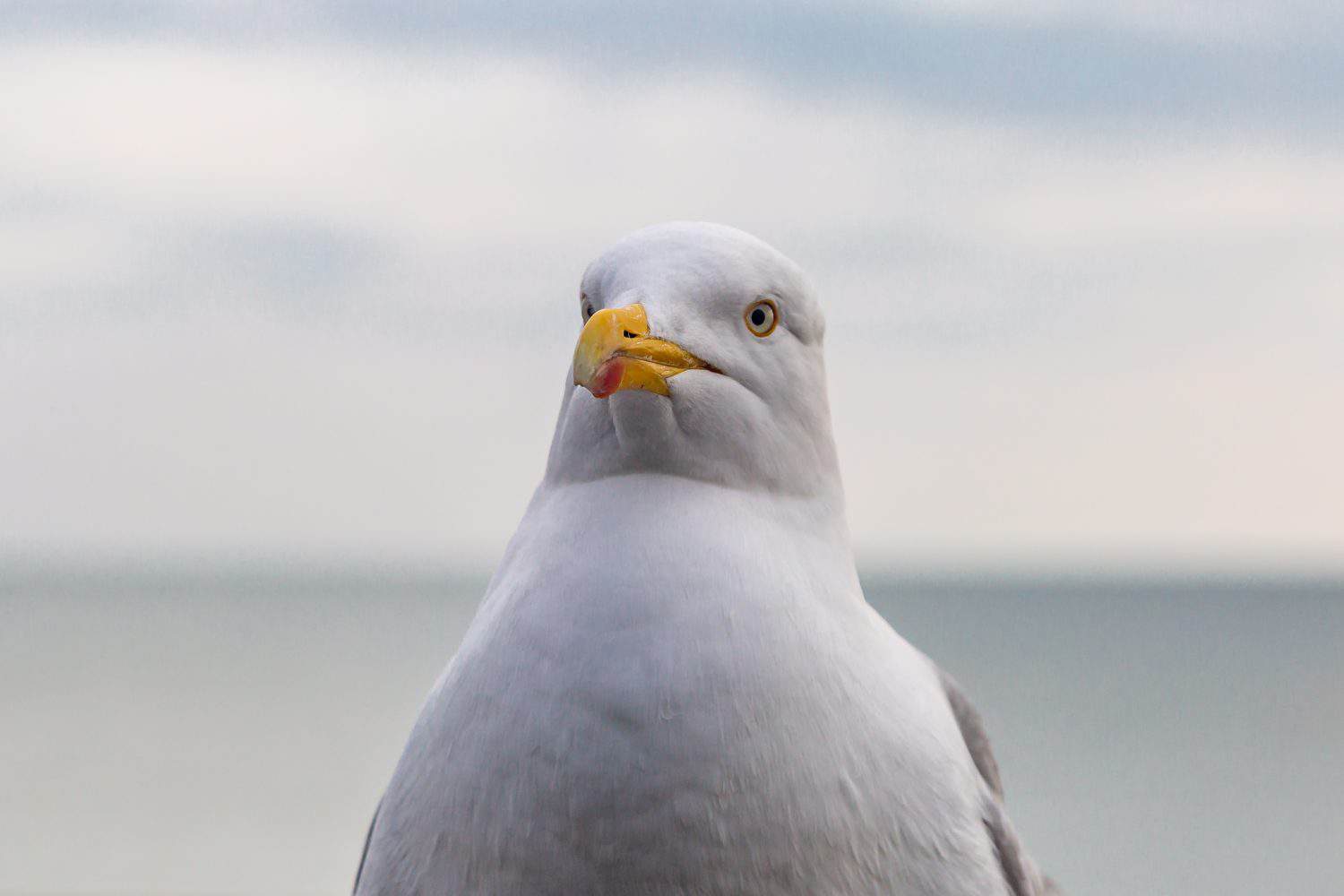
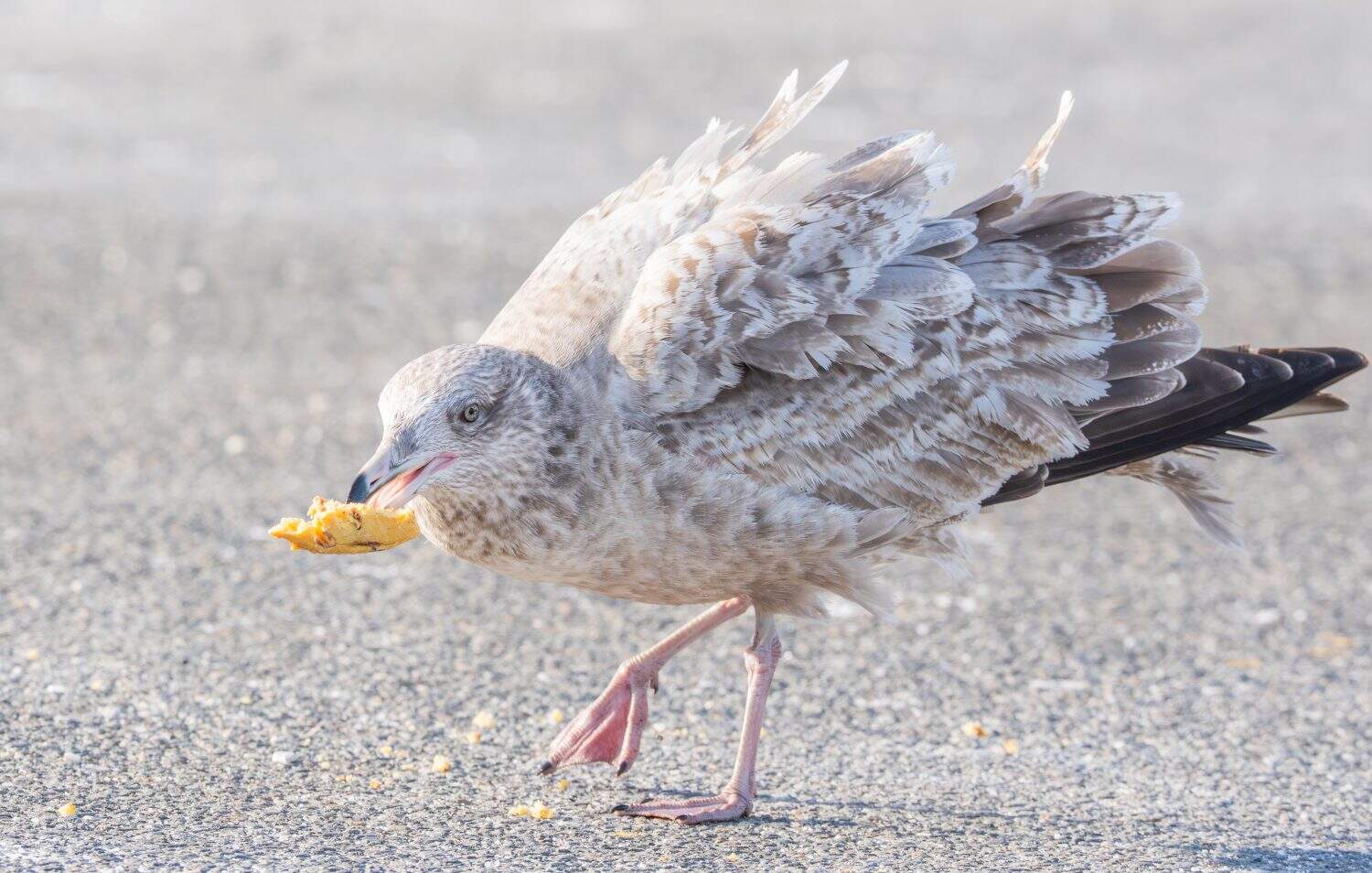
Gulls and other animals act more guardedly when they believe they are being watched to protect themselves from becoming prey.
©Melanie Hobson/Shutterstock.com
These choices are part of the fight-or-flight response that animals have. Because of these defense mechanisms, predators are not always successful when stalking their prey. Additionally, there are evolutionary survival instincts ingrained into some animals. This puts them in tune with their environment. Not only is the feeling of being watched felt, but small movements, new scents, and different sounds are also signs of potential danger. It is believed that all of these senses working together help animals determine if they are at risk of being attacked.
Can Animals Sense They Are Being Watched?
Many people will experience the feeling of being stared at one or more times in their lifetime. This holds true even if no eye contact has been made with the person staring. The reason someone has an innate feeling of being watched has been widely studied since the late 1800s. Why people get this feeling has yet to be discovered.
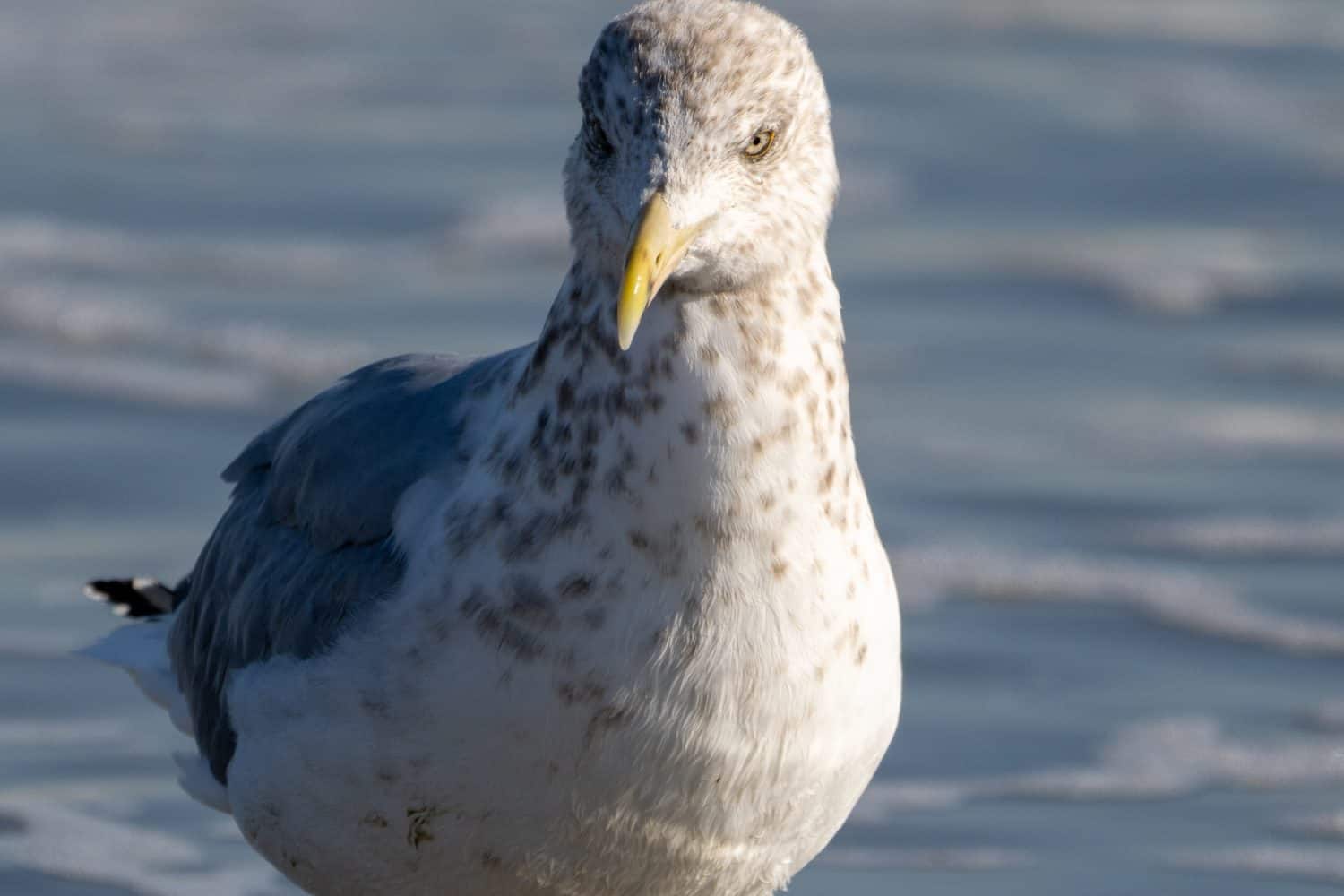
Gulls and other animals can sense they are being watched not only by what they see, but also by what they smell, hear, and sense with electrical and magnetic fields.
©JohnJ002/Shutterstock.com
It is believed that animals, too, can sense when they are being watched. However, unlike humans, who rely primarily on vision, animals use a variety of senses to detect changes in their environment. Some of the other senses that animals use in conjunction with their sight to determine if they are being watched include:
- Changes in scent
- Changes in sounds
- Sensing electrical and magnetic fields
It is through sight that many animals know if a predator is approaching quickly. Given their peripheral vision and ability to detect small movements, animals are likely more attuned to whether they are being watched than humans are. Consequently, their behavior changes when animals sense they are being watched.
Why Have Animals Evolved to Mimic Nature with Pretend Eyes?
The goal of any species is to intimidate would-be predators. The more intimidating a creature appears, the less likely it is to be attacked. As species have evolved, some have developed what appear to be large eyes on their bodies. These pretend eyes have proven to either ward off predators or cause predators to attack parts of their bodies that do not have vital organs.
One of the most successful examples of pretend eye mimicry is the butterfly. While the size of the spots on the butterfly’s body is not necessarily important, the fact that there are two spots together and that they are conspicuous is. This is because any bird that might attempt to strike and eat the butterfly will think twice, believing it is being directly stared at.
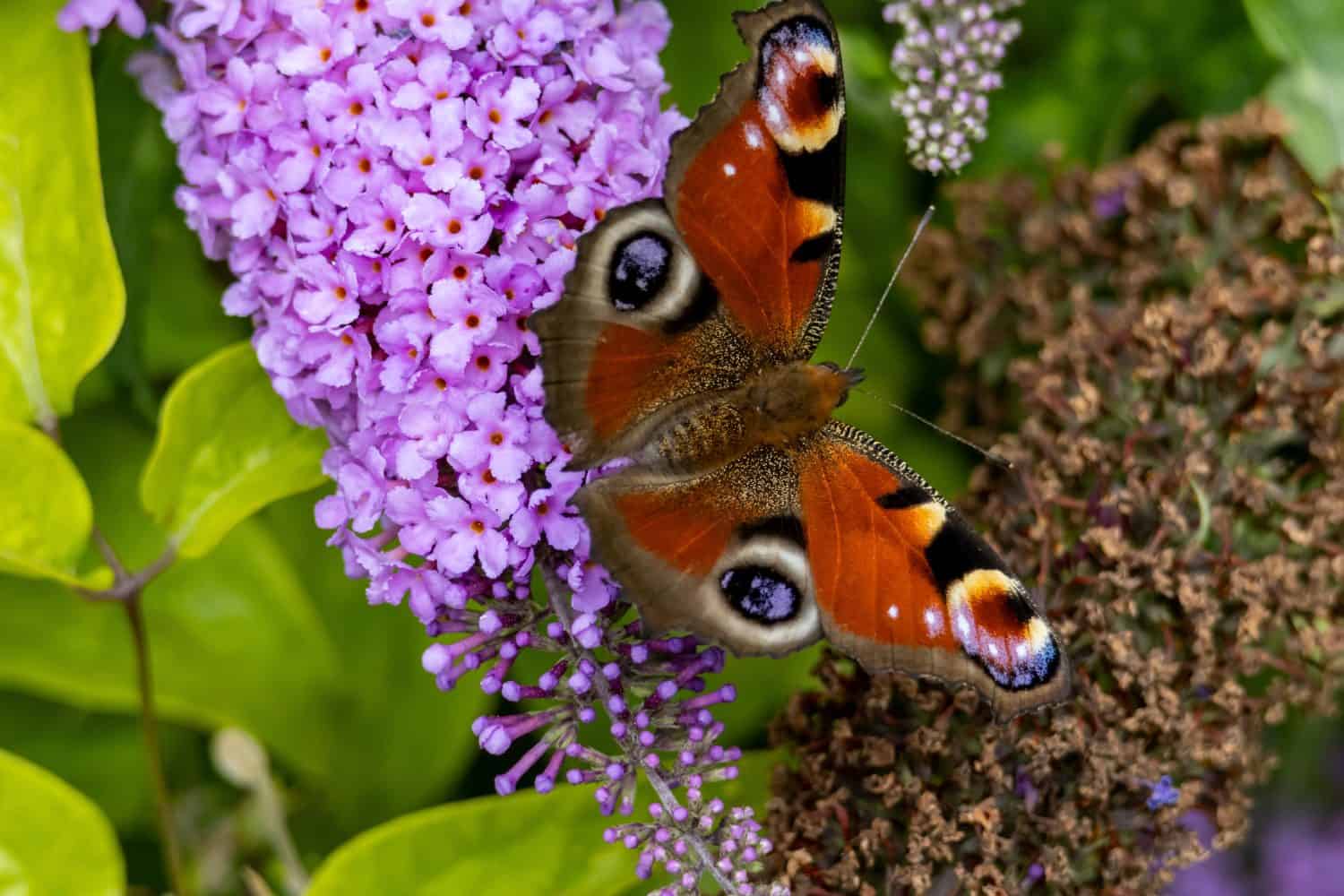
Eyespots have been adapted by a number of animals as they have evolved to better protect themselves from predators.
©Bvbflo1/Shutterstock.com
In addition to butterflies, birds, reptiles, and even tigers use eyespots to their advantage. Like butterflies, it is the pigmentation that gives the appearance of eyes, some of which are so impressive that it is hard to believe they are only eyespots.
Whenever an animal believes it is being watched, it tends to err on the side of caution. While this strategy did not work with all gulls in the study, it slowed down or completely deterred many from approaching food containers. In cities known for gulls stealing food from people’s hands, putting eyes on food containers could help reduce this problem for some diners. The real question that remains is whether this would always be a deterrent or whether gulls would learn over time that the eyes were no threat. Given how quickly gulls learn through observation, it is possible that over time, they could learn that the eyes are not a real threat.