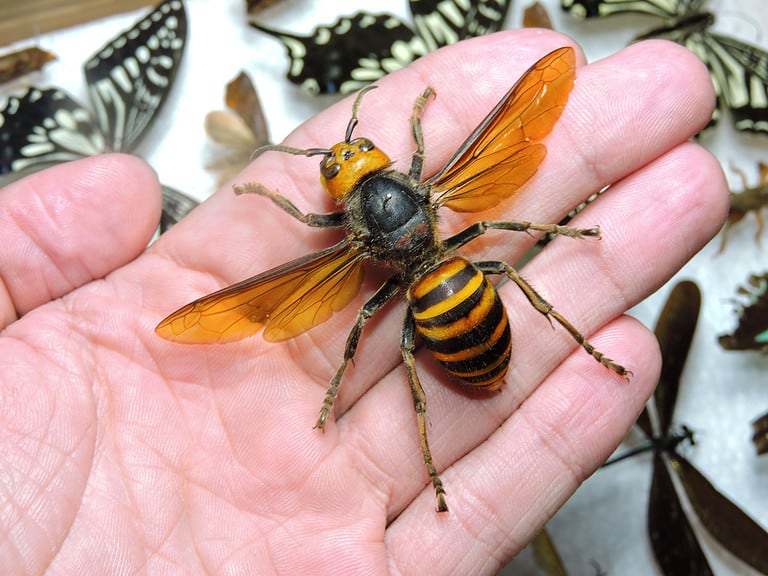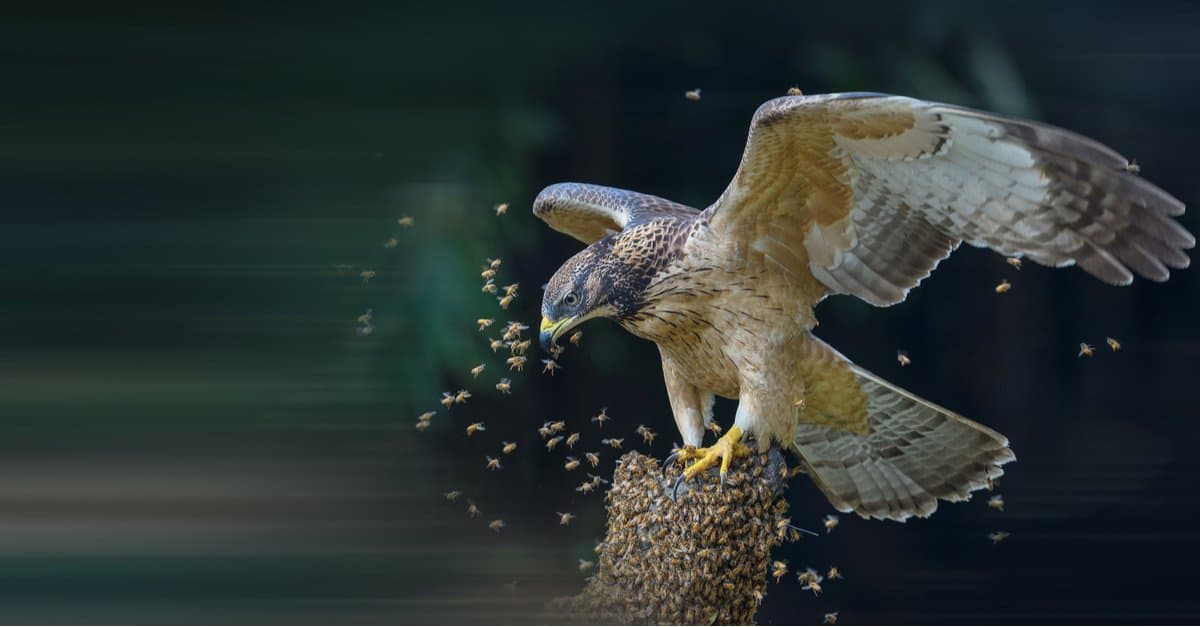

Asian giant hornets (Vespa mandarinia) are the largest social wasp in the world and have been given the dramatic name of “murder hornets” in the media due to their ability to raid beehives and kill the occupants. They are native to parts of Asia, including southern China, northern India, Japan, Korea, Malaysia, Nepal, Taiwan, Thailand, and a part of eastern Russia, where it lives in temperate and subtropical lowland forests. They have a powerful sting, and most animals keep away from them, but honey buzzards have other ideas. In this fascinating video, honey buzzards repeatedly attack an Asian giant hornet nest, but they do not get stung. Let’s explore what honey buzzards seek in hornet nests, why they do not get stung, and how they could help control invasive hornet populations.
The Asian Giant Hornet’s Dangerous Sting
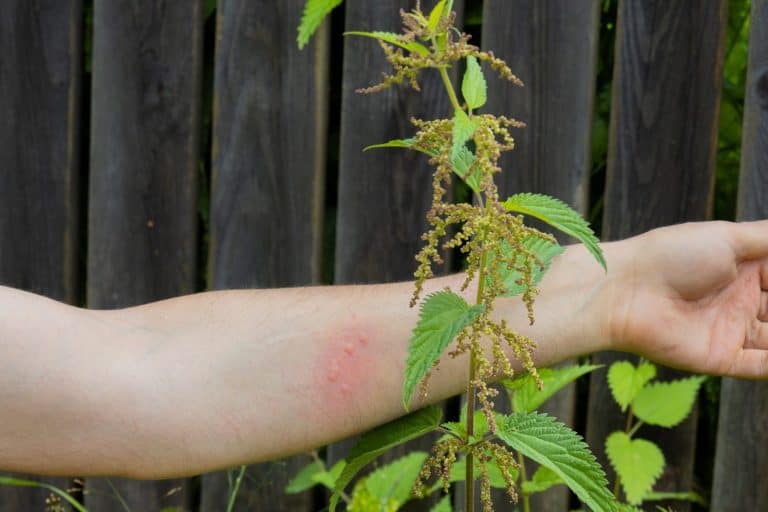
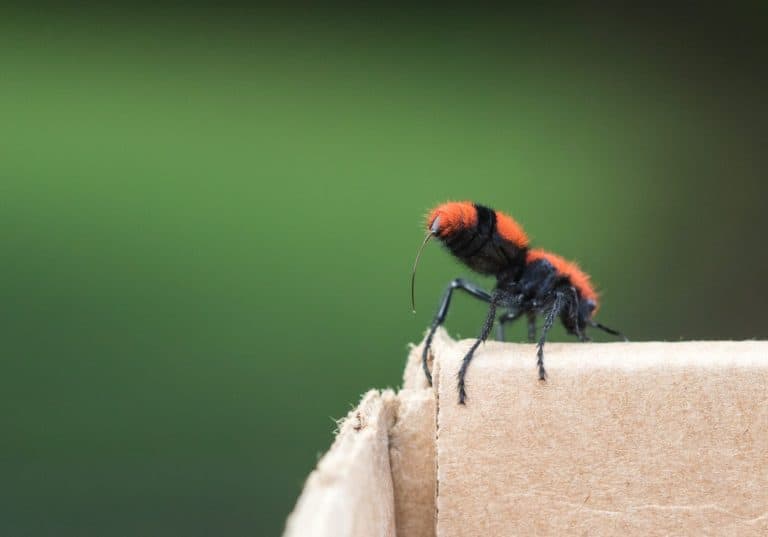
This is a social species that lives in colonies. Workers can measure 1 to 1.5 inches long, while queens can reach 2 inches. Their wingspans can reach 3 inches. Only females have stingers, which can be a quarter of an inch long. It is not an exaggeration to describe their sting as deadly. It has been compared to that of velvet ants, which have some of the most painful stings on Earth. In Japan, fatalities have been recorded, most often from anaphylaxis and cardiac arrest. The dangers arise from the large quantity of venom that Asian giant hornets inject through multiple stings, rather than just the potency of the venom itself. That said, these wasps do not seek out trouble and deliver most stings when defending their nests. Each year, a queen starts a new nest, where she raises a brood of female workers. The nest contains chambers with developing larvae, which can provide a nutritious meal for any animal brave enough to access them.
Honey Buzzard Protection
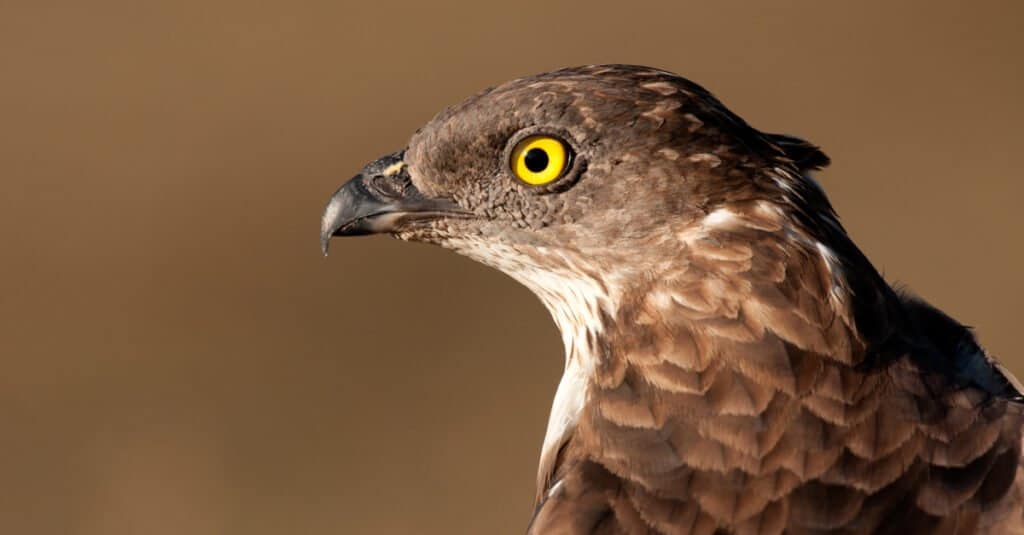
Dense plumage protects honey buzzards from stings.
©Petr Salinger/Shutterstock.com
There are several species of honey buzzards that belong to the Accipitridae family of birds. They are medium-sized raptors that feed mainly on wasp and bee larvae. Despite their name, honey buzzards are not interested in honey. These birds have a number of features that prevent them from getting stung. Their legs and feet have thick scales that stingers cannot penetrate. Their plumage is dense and tightly packed, acting like armor. They have a protective layer over their eyes and may even have a chemical deterrent on their feathers to ward off attacks.