The honeybee, with its black and yellow coat, exemplifies pollinator prowess. Apis mellifera, or honeybees, are extraordinary insects that pollinate about 15 billion worth of food crops each year commercially in the US. While bees are often thought of as a collective mind, each hive actually has a dramatic hierarchy. To discuss this topic, I sat down with Dr. Julia Bowsher, a bee expert and professor at North Dakota State University. “Honeybees have a unique level of sociality,” Bowsher says.
Male bees, otherwise known as drones, are on the sidelines here with their only job being to reproduce with the female queen bee. Queen bees and worker bees, on the other hand, are the star players of the hive and are cut from the same cloth. “Queen and worker bees develop from the same diploid eggs,” Bowsher says. Diploid means that the queen and worker bees have two sets of chromosomes, while the males only have one (haploid).
A Star Is Born

Worker bees ensure that the queen’s main job is laying eggs for the colony.
©Kuttelvaserova Stuchelova/Shutterstock.com
Though they are born with similar genetic material, the lives of queen and worker bees could not be more different. About three days after hatching, some larvae become queens, destined to lay eggs and live for years, while others become workers, toiling for the hive and caring for the next generation.
During the first three days of larval development, worker and queen bees are both fed royal jelly. Royal jelly is a nutrient-rich honeybee secretion from the hypopharyngeal and mandibular glands of nurse or worker bees. Though the main component of royal jelly is water, it consists of a mix of proteins, sugars, fats, vitamins, and minerals essential to the development of queen bees. After the third day, larvae that will become queens are placed in special cells and continue to receive royal jelly, while larvae that will become workers receive a less nutritious diet.
The Queen’s Court

The global apiculture market is a multi-billion-dollar industry.
©PHOTOCREO Michal Bednarek/Shutterstock.com
Queen bees are fertile female bees. Typically, there is only one queen per hive. Queens are larger females with a long abdomen. Within this abdomen are many well-developed ovaries and a spermatheca, which are used for laying eggs. In honeybees, queens have a longer life expectancy. Queen bees generally live 2-5 years, which is 10-20 times longer than the typical lifespan of a worker bee.
Honeybees have a unique level of sociality.
Dr. Julia Bowsher, a bee expert and professor at North Dakota State University
The main differences between worker and queen bees lie in their physical traits and duties in the hive. A queen’s sole job is to produce offspring. Queens mate with male drones to create more worker bees. Male bees (drones) are made from unfertilized eggs, a process known as parthenogenesis. Queen bees also produce a potent pheromone cocktail, called the Queen Mandibular Pheromone (QMP), that regulates the hive. This pheromone unites the colony under a scent that signals to workers that she is healthy and present. When the queen’s mandibular pheromone falters (typically when she is old or sick), it signals to the workers that the queen is no longer in her prime and prompts them to rear a new queen.
The Workers
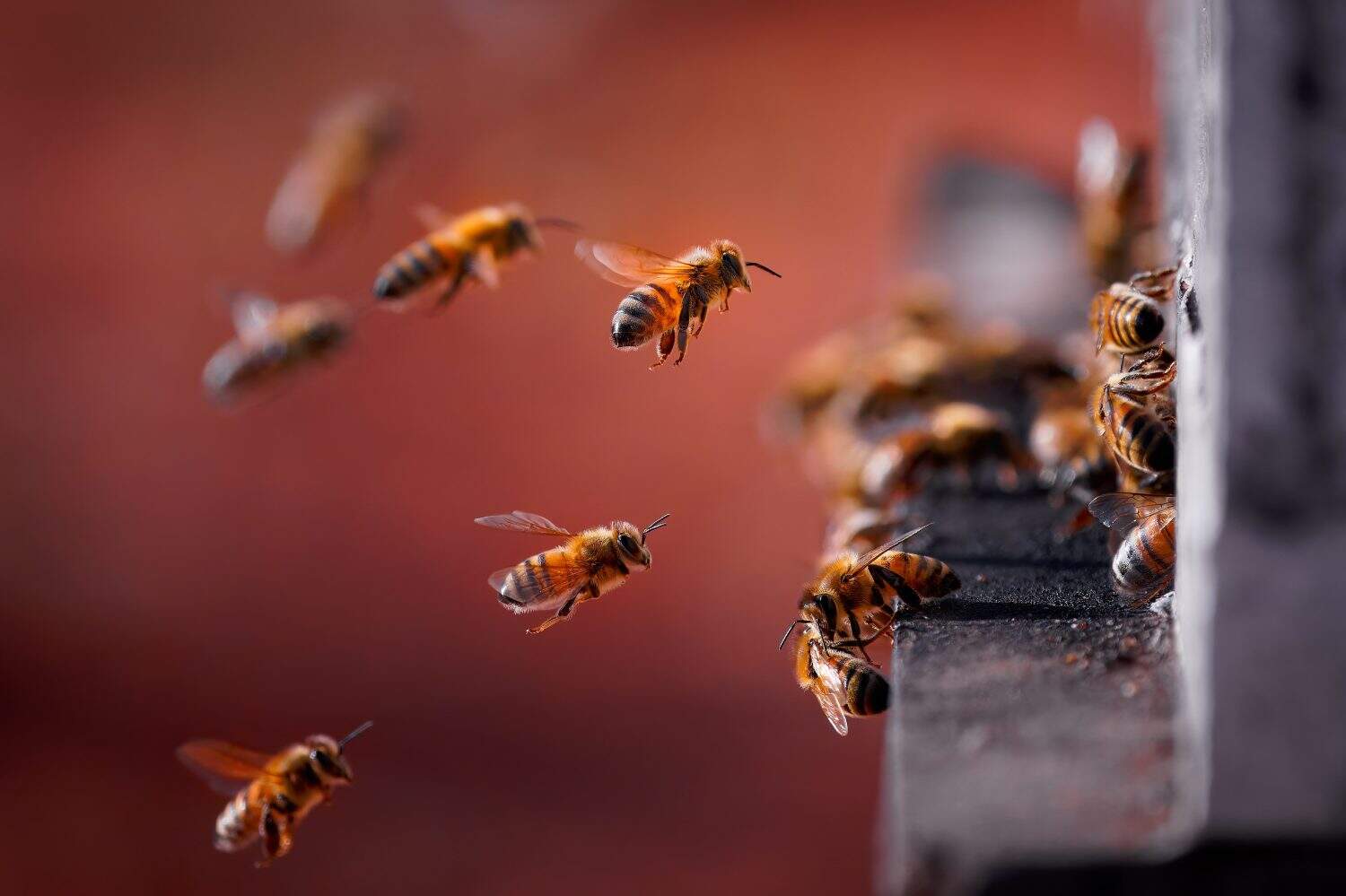
Honey bees do a ‘waggle dance’ to share information about the location of food.
©Martin Pelanek/Shutterstock.com
Compared to the queen, worker bees are significantly smaller. As females, worker bees do have ovaries, but they are noticeably smaller. Worker bees usually do not lay eggs, but this can change when there is no queen present.
As their name suggests, the main job of worker bees is to maintain the hive. “Honeybees have an interesting division of labor. Nurse bees spend the majority of their time in the hive,” Dr. Bowsher says. Nurse bees are simply younger worker bees that take care of the developing brood. As they age, worker bees forage for nectar and pollen using their specialized pollen baskets and notched mandibles. Some of the main duties of worker bees include:
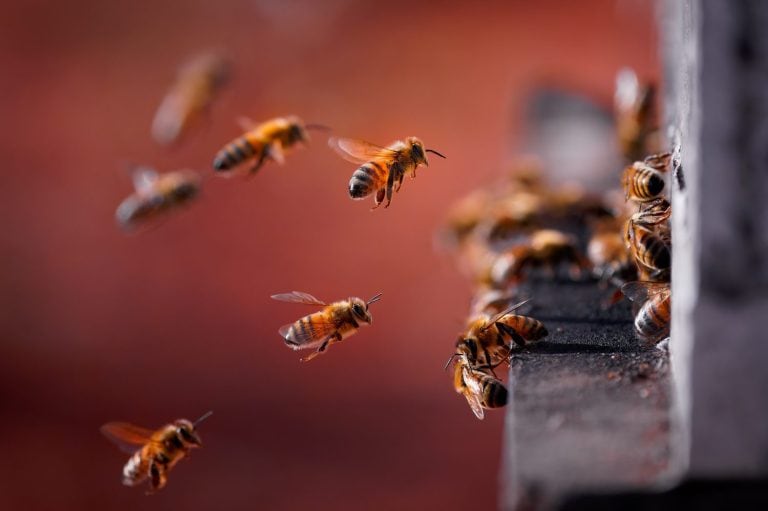
- Defenders of the hive: One of the most interesting roles of worker bees is their call to guard duty. Worker bees inspect individuals entering and around the hive, using their scents to ensure they are residents. Guard duty also includes protecting the hive from organisms that could cause a threat to the hive.
- Foragers: Using their pollen baskets, worker bees venture out into the world to collect pollen. Other substances acquired include nectar, propolis (bee glue mixture), and sometimes even water.
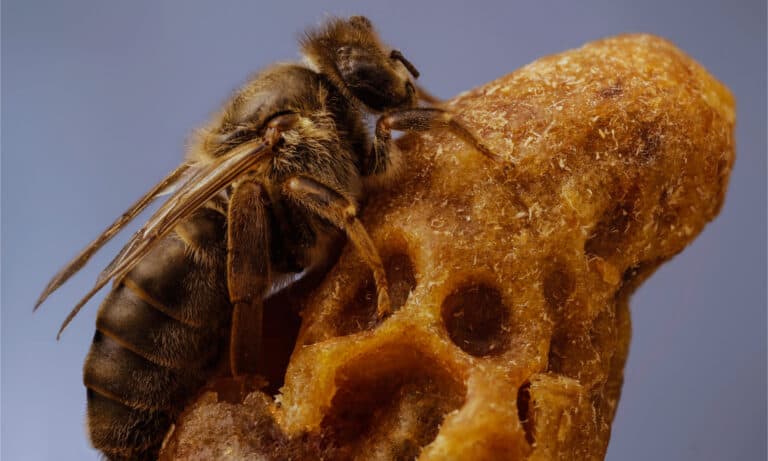
- Wax artist: The most distinguishable part of a hive is the honeycomb. Honeycomb is created by worker bees through their wax glands, which secrete the wax that they then mold into honeycomb.
- Nurse bee: Younger worker bees work day in and day out to take care of the next generation of bees. Their duties are to feed young larvae with royal jelly and older larvae with bee bread (pollen and honey mixture).
- Queen bee sidekick: Worker bees attend to the queen’s every need. Since her sole job is to lay eggs, worker bees take care of everything else, including feeding her, cleaning her waste, and grooming her.
- Housekeepers: Worker bees clean the hive, sometimes starting with the cell they emerged from. They also work as temperature controllers of the hive by keeping it warm during the winter months and circulating air through the hive.
Hive Hierarchy
Honeybees are complex creatures with an advanced hierarchical system that keeps the hive running smoothly. Without one of these key players, the hive would cease to function. This high level of division of labor is what makes honeybees unique and an interesting model for studying social insects. This caste system is effective and demonstrates that, in honeybee societies, each type of bee is essential to the hive’s survival.