
Quick Take
- Scientists spent decades misreading a honeybee signal, and what it actually means changes what we thought we knew about how bees interact. Discover the real meaning →
- Honeybees have a communication system far more layered than most people realize, and one sound in particular plays a role no one predicted. Explore bee communication layers →
- The way this new research was conducted matters just as much as what it found, and that approach could eventually help save bee colonies. See the colony health potential →
No creature fascinates and delights the human mind quite like the honeybee, and not just because of the tasty honey it produces. Nearly every aspect of this insect’s existence provides fodder for biologists, sociologists, and even philosophers. Honeybees have incredibly complex social structures, ones that require elaborate forms of communication. Among the many quirks and tics that make up honeybee language, scientists long ago identified a sharp, vibrating resonance they likened to a “stop” signal. However, new research from Nottingham Trent University suggests that this signal is actually more of a courtesy than a warning.
Using highly attuned sensors, researchers found that this whooping vibration is a sort of spontaneous reaction from honeybees when they bump into each other in the dark confines of the hive. Previously, scientists assumed this strange sound to be a sort of warning to ward off intruders or simply other bees getting in the way. What researchers found was that instead of sending a ‘watch out’ signal, honeybees actually produce a sort of gasp akin to expressing surprise. Let’s learn more about this fascinating research and how it deepens our understanding of an already incredibly complicated species.
I Beg Your Pardon
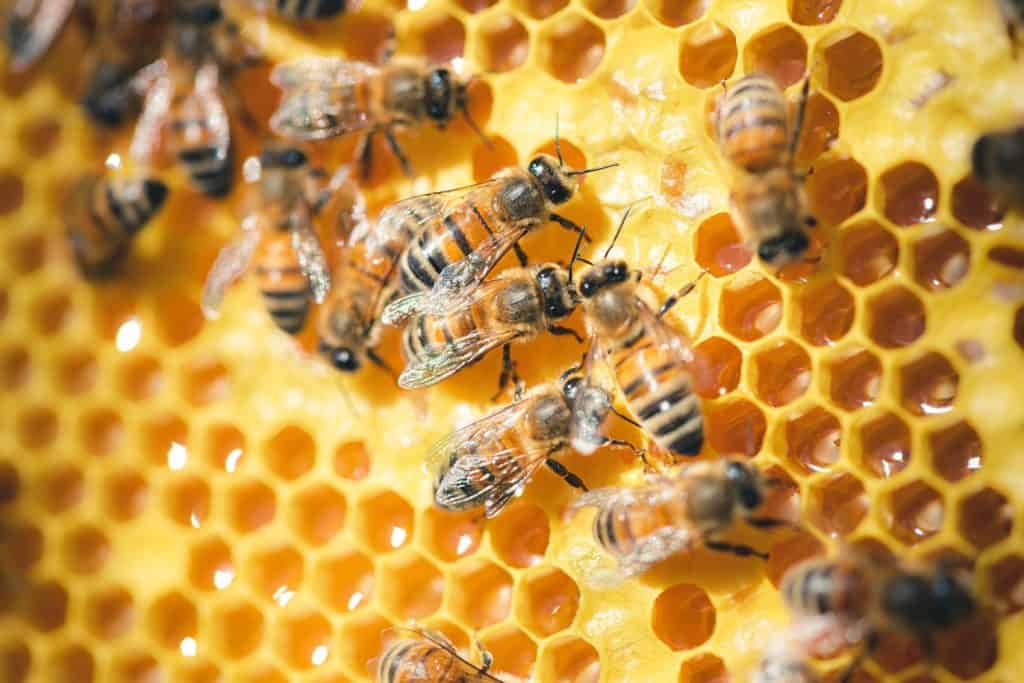
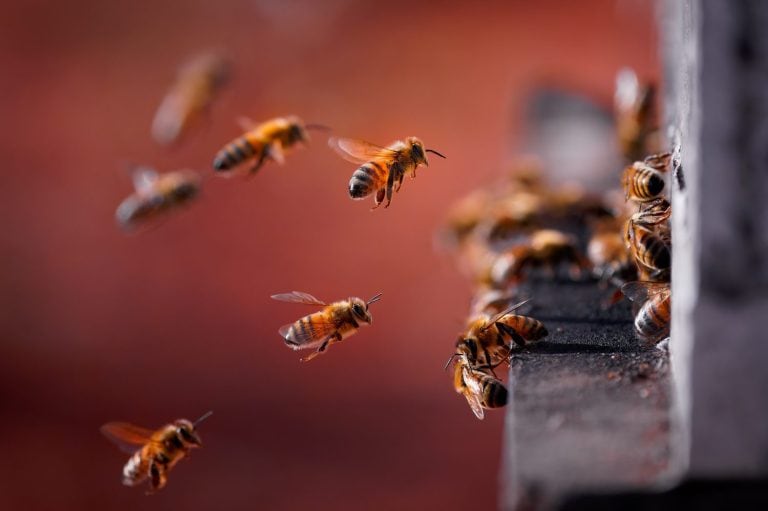
Bees have a surprisingly complicated communication framework, one that uses dancing and vibrations.
©Alexander Wallstrom/Shutterstock.com
In the second half of the 20th century, scientists learned that bees communicate through vibrations. Researchers suggested that these vibrations were akin to meal requests. As time went on, the understanding of these signals deepened. Some researchers observed a particular noise used to stop another bee from doing a waggle dance (a foraging signal).
Over the intervening years, scientists classified more of these vibratory bee signals. The whooping sound is but one note in the honeybee’s surprisingly expansive repertoire. Another well-known bee sound is piping. Queen bees produce this high-pitched sound exclusively. It sounds more like a ‘toot’ when announcing her presence and more like a ‘quack’ when used as a response. Bees also make a sort of hissing noise, which they collectively produce when their hive is disturbed or threatened in some way.
However, the most famous bee communication is the waggle dance. Bees use the waggle dance as a sort of GPS for other bees to tell them where to find food. Usually, bees accompany their waggle dances with a low-frequency buzzing sound.
New Insights
The latest research out of Nottingham Trent University deepens this understanding and upsets some previously held paradigms in the process. According to various media outlets, including Science Alert, that “stop” signal is actually much more common than previously thought.
The team at Nottingham Trent University placed accelerometers in the middle of two hives to record bee sounds too subtle for the human ear. They recorded these sounds for a year before using software to scan them and isolate the whooping sounds. The team also made sure these sounds came from organic circumstances. “Scientists in the past have explored this signal in artificial circumstances where they ensured that the bees under investigation would be trying to inhibit other bees,” says Martin Bencsik, physicist and member of the research team.
Shock and Awe
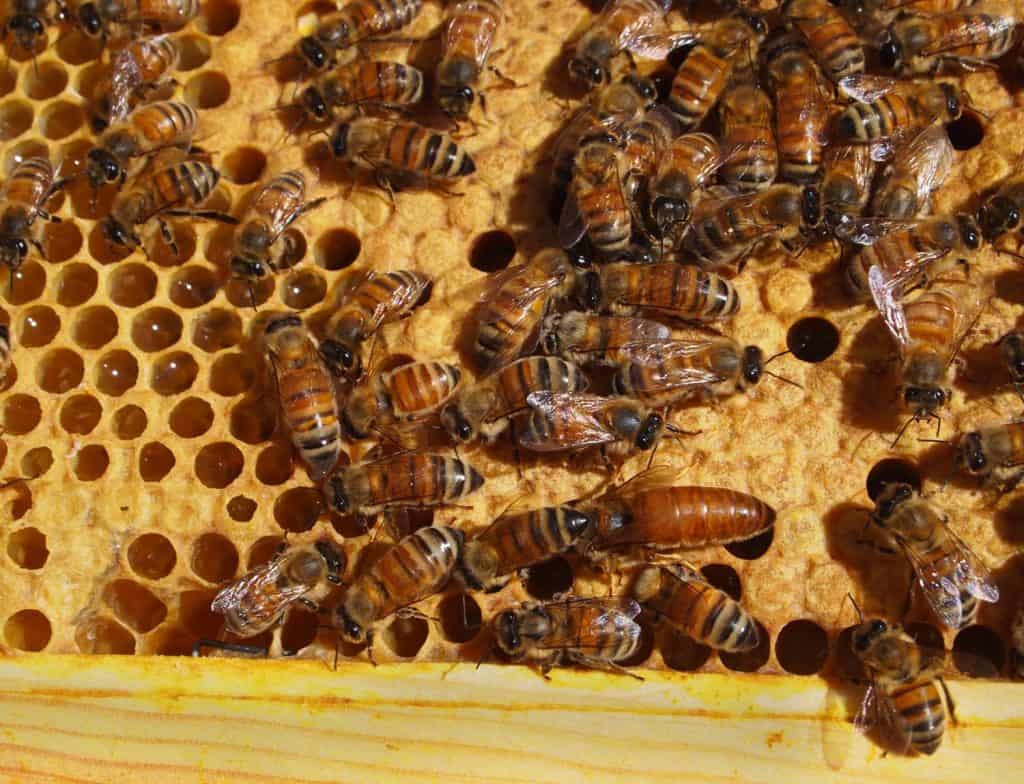
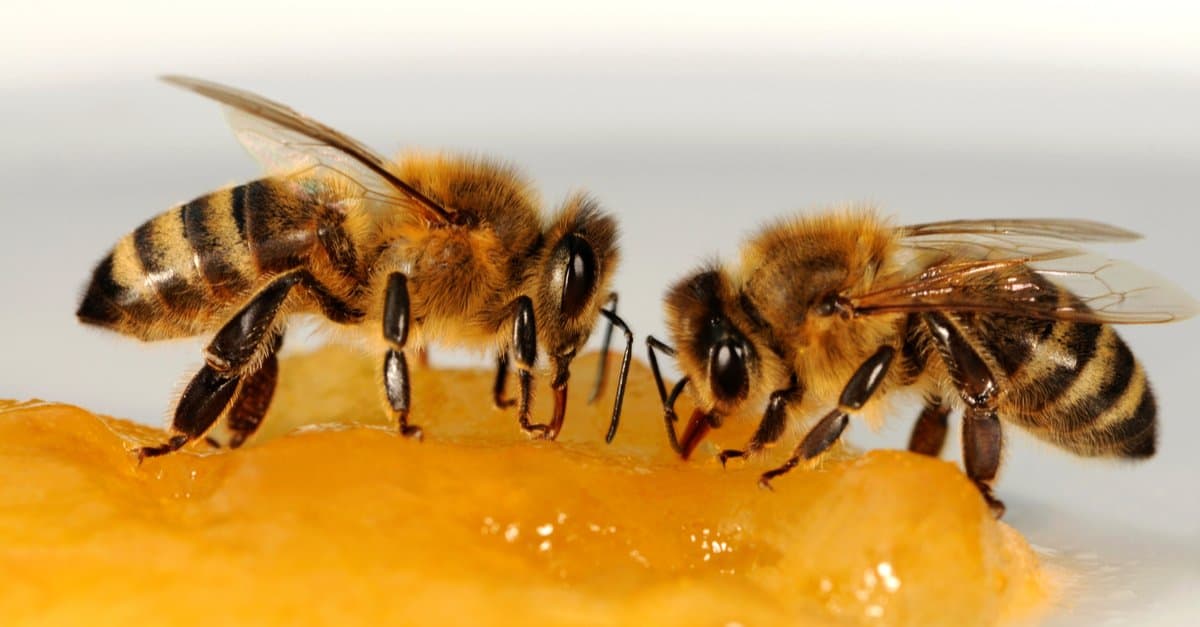
Researchers learned that the whooping sounds bees make are more of a surprise signal than a warning.
©duckeesue/Shutterstock.com
By letting the bees operate as usual, the team uncovered some surprising results. For one, the team’s accelerometer sometimes picked up six or seven whoops a minute coming from a small section of the hive. After researchers put cameras inside, they noticed the whooping sound happened most when bees bumped into each other.
According to Bencsik, the team believed that the bees were making that sound as an inhibitory signal only in a few select instances. The rest of the time, it seemed like the bees were expressing surprise. When speaking to the New Scientist, Bencsik said, “There’s no way a bee was trying to inhibit another one that frequently, and there’s no way a bee would request food that frequently.”
The researchers decided that, instead of a “get out of the way” expression, the adorable little whooping sounds were akin to “whoa” or “oh my.” The bees were simply gasping or shouting in surprise, not anger.
Not prepared to rest on their scientific laurels just yet, the research team is now looking into whether or not stressed colonies make whooping sounds more often than unstressed colonies. One researcher involved in the study, Michael Ramsay, believes their investigation methods have potential for evaluating hive health. He said, “It shows promise that our methods can be used as a sensitive way of monitoring and assessing colony status for these hugely important pollinators.”
Listen to these fascinating whooping sounds yourself.