
Quick Take
- The queen bee's strategy for surviving pesticide exposure is actively harming the next generation, and this finding is not what anyone expected. See how queens offload →
- Worker bees serve as the colony's first line of defense against pesticides, though their efforts can reach a tipping point where they backfire completely. Workers as first defense →
- A queen under pesticide stress actually lays more eggs than normal, yet the colony still shrinks. The reason is a grim paradox. Why more eggs means collapse →
- Even low-level pesticide exposure can doom an entire colony, though not in the way scientists previously thought. Low exposure, colony-wide threat →
Without honeybee queens, there would not be a colony. They are the only bees that lay thousands of eggs daily to support the colony’s growth. So why would honeybee queens pass pesticides into their eggs? A new study suggests it is to survive.
Queen Bees Pass Pesticides to Eggs
Queen bees are the heartbeat of honeybee colonies. Without them consistently producing eggs, the colony would not survive. This is why the eggs and larvae are so fiercely protected from would-be invaders from other bee colonies.
According to a new study published in Current Biology, there are times when it is ultimately responsible for some eggs failing to develop. She does this to save herself, and therefore the colony, from pesticide exposure.
Researchers from the University of California, Davis, created “nanocolonies” consisting of 60 worker bees and one queen. Each of these colonies was fed water, pollen, and food that was contaminated with methyl parathion. The pesticide was tagged with a “low-level radioactive marker to enable tracking” using a biological accelerator spectrometry, or BioAMS. This allowed researchers to determine just how much pesticide the bees could absorb, even at low levels.
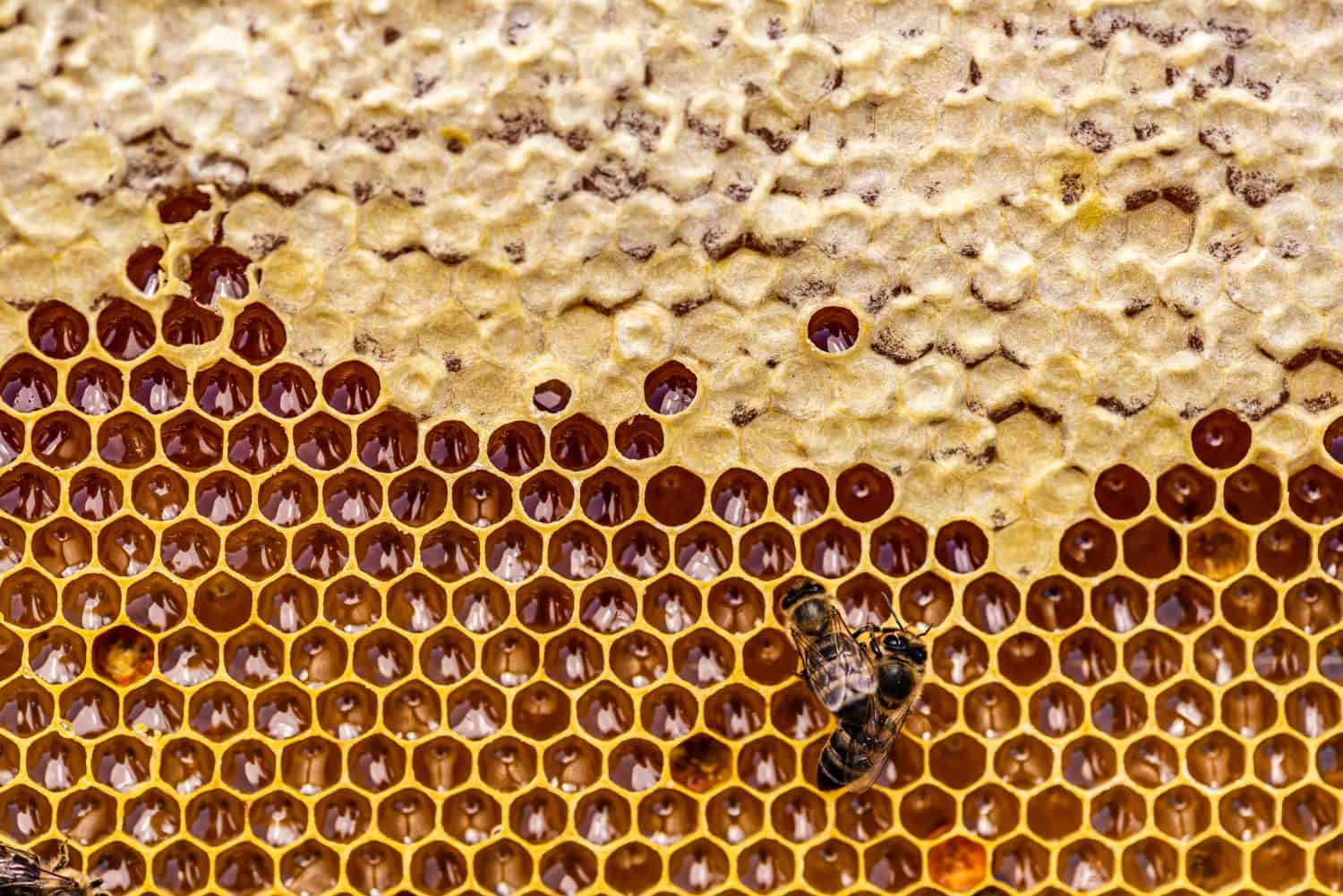
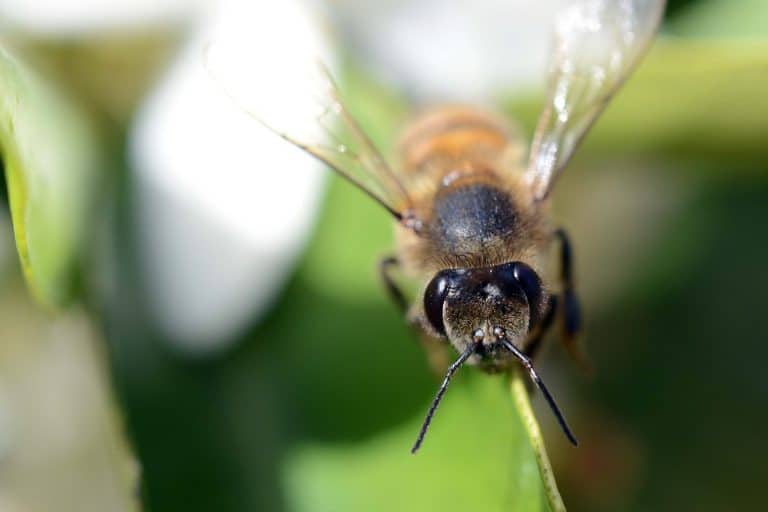
Queen bees will actively pass pesticides onto their eggs to reduce levels in their bodies.
©Wirestock Creators/Shutterstock.com
According to Sascha Nicklisch, study senior author and associate professor in the Department of Environmental Toxicology, the queen bee offloads pesticides onto her eggs in order to survive.
“In order to protect herself, the queen bee offloads these chemicals into her eggs to get rid of them,” Nicklisch explained in a press release. “No one has shown this in honeybees before.”
The process by which the queen bees rid themselves of pesticides is “maternal offloading.” This happens, according to recent UC Davis PhD graduate and lead author Angela Encerrado-Manriquez, when worker bees become overwhelmed.
“In our study, pesticides began to accumulate in queens over time, suggesting that worker filtration capacity can be overwhelmed,” Encerrado-Manriquez said in the press release. “When this happens, queens have their own defense. Maternal offloading allows them to shunt the toxic burden to their eggs.”
What Happens to the Eggs After Pesticides Are Offloaded?
Once the pesticide levels in a colony have reached the point where they are starting to build up in the queen bee’s body, she works to offload as many toxins as possible. While this is done to save the queen’s life, it carries a greater risk of harm to the developing eggs.
According to the study, a typical honeybee queen will lay 1,000 to 2,000 eggs per day in a healthy colony. This may seem like a lot, but in a colony being bombarded with low levels of pesticide exposure, the number increases. The more eggs there are to offload pesticides onto, the healthier the queen bee will be.
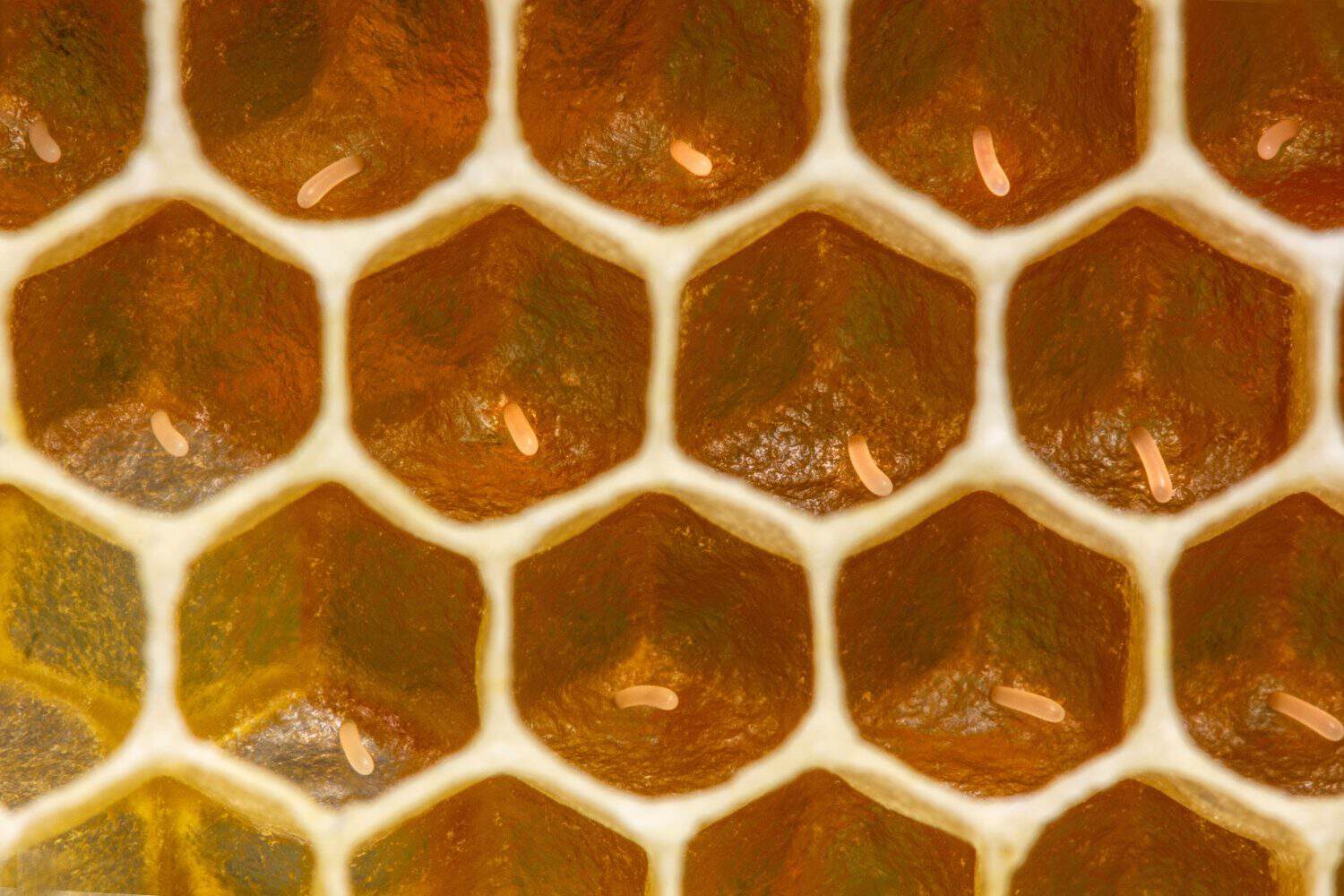
Eggs carrying pesticide loads will not develop properly.
©Lehrer/Shutterstock.com
However, when pesticides are offloaded, eggs do not develop properly. Some will never develop. Others will develop larvae that will never be capable of becoming worker bees. Some eggs will produce worker bees that lack the immunity typically found in healthy colonies.
If the offloading happens for too long, there will not be enough worker bees to keep the colony functioning. Just how long it will take for a colony to reach this point is not yet known.
When Does the Responsibility Fall to the Queen Bee to Deal with Pesticide Exposure?
Worker bees are the first line of defense against pesticide exposure. However, with no built-in resistance to pesticides, they have only so many tools to ensure the queen bee and larvae are not exposed.
Worker bees first process incoming food by removing toxins. As seen in the study, the bees were very successful on their first day in the “nanocolonies,” removing 95% of the pesticides and placing the toxins in the honeycomb. However, by day 10, this percentage dropped to 86%. The worker bees had accumulated 55 times as much pesticide in their bodies as the queen. This dramatic change shifted responsibility to the queen to remove toxins from her own body to survive.
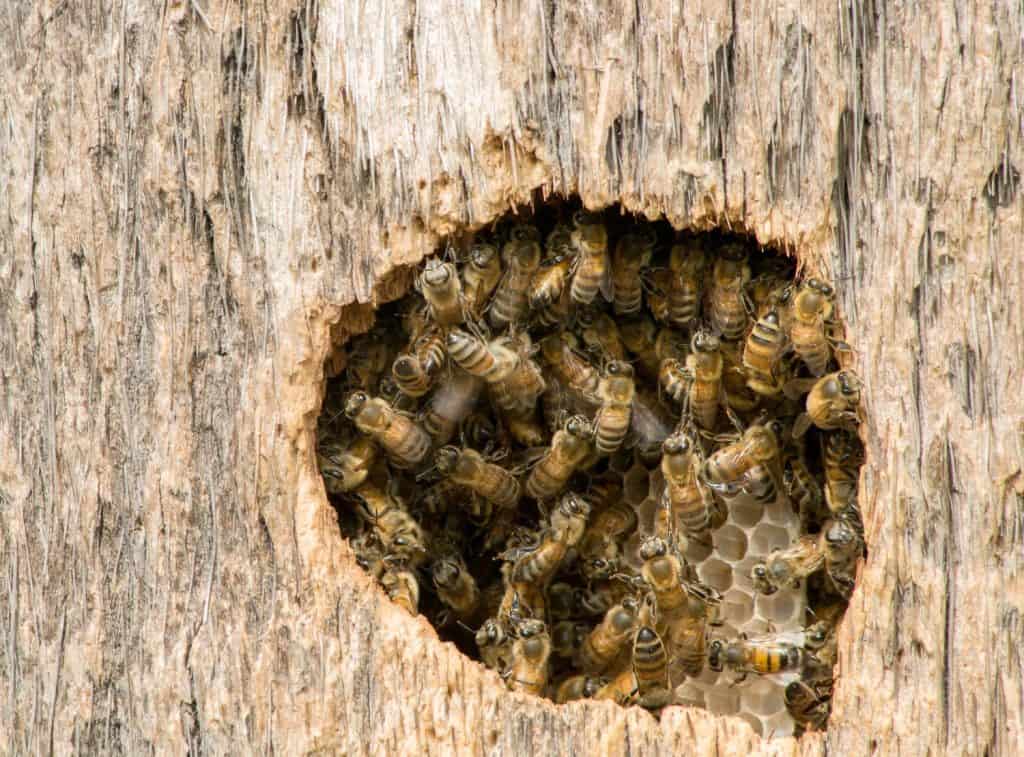
When worker bees are no longer capable of reducing pesticide levels in food and nectar, queen bees step in.
©Donna Bollenbach/Shutterstock.com
The queen bees will coat their eggs with pesticides as pesticides accumulate in their bodies. With 1,500 to 2,000 eggs laid daily, a significant number of eggs are exposed to pesticides. On day 10, according to the study, the eggs had already accumulated several times the methyl parathion level that the queen had in her body. The queen bee was actively removing pesticides from her body to help keep the colony alive. Without a queen laying eggs to replace and expand the colony, it will eventually die.
How Pesticides Affect the Overall Health of the Bee Colony
This study is important not only for understanding how the queen bee helps reduce pesticide exposure in a colony but also for the survival of bees and their status as pollinators.
Honeybees are responsible for pollinating 80% of the world’s flowering plants. Without their assistance, crops would not yield fruits, nuts, or vegetables. Not only does this affect people, but also animals that depend on the plants bees pollinate.
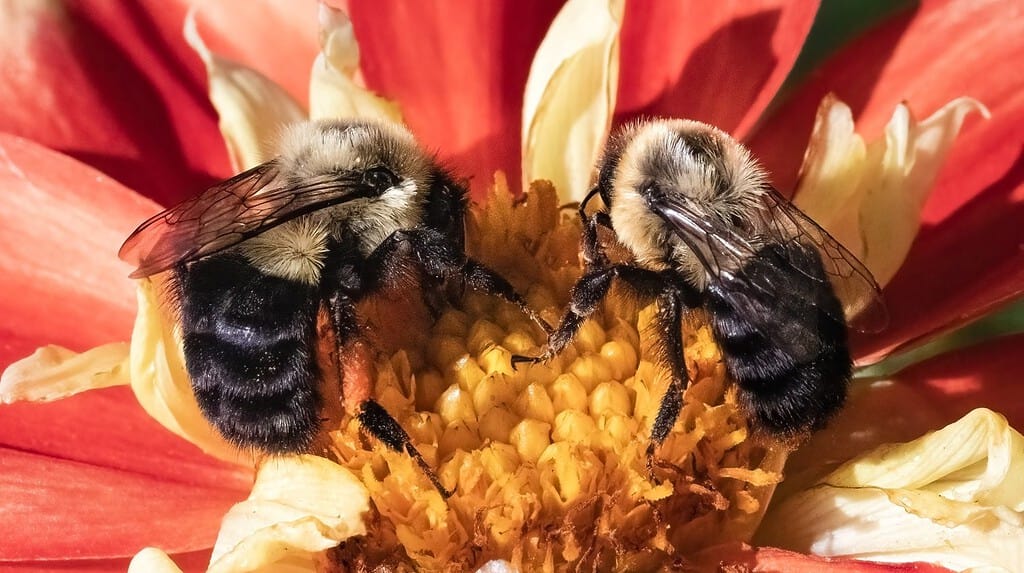
When bee colonies die due to pesticide exposure, flowering, food-producing plants no longer get pollinated.
©Victoria Virgona/Shutterstock.com
When pesticide levels become too high for worker bees to effectively filter and reduce their pesticide loads, the queen has no choice but to offload the pesticides onto her eggs. This leads to the next generation of worker bees either not developing, developing into compromised worker bees, or becoming incapable worker bees.
According to the study, this causes a delayed colony collapse. The queen bee is laying more eggs than normal to help spread out the pesticide load. But even with more eggs being laid, the colony is not growing. Eventually, even with low-grade pesticide exposure, the colony will cease to exist.
When colonies of honeybees cease to exist, food production suffers. In regions of the world where food shortages already exist, this could be detrimental. In areas where food shortages are not currently an issue, they could begin to appear. Food and feed prices will soar. This is why protecting honeybees is so incredibly important and why further studies are planned to determine just how long a colony can be under the stress of low-grade pesticide exposure before collapse is imminent.