
The transformation from a caterpillar to a moth is an amazing process. Although the changes that occur within a cocoon are not visible to the human eye, they are intriguing. The luna moth is one such species, changing from a bright green caterpillar to a beautiful, luminous green moth. This Instagram post by @explaininginsects shows a luna moth emerging from its cocoon before allowing its wings to unfurl. Read here to learn about luna moths and how they grow!
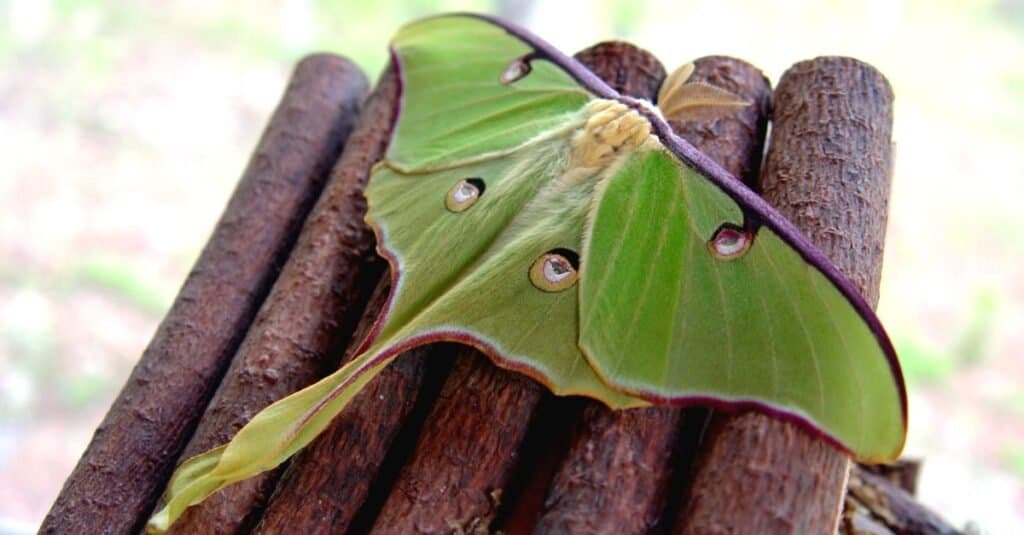
The Luna Moth, a beautiful green animal, only lives for a week to reproduce.
©David Hampton/Shutterstock.com
About the Luna Moth
The luna moth is a giant silk moth, a part of the Saturniidae family. Known scientifically as Actias luna, they are native to North America. They inhabit deciduous forests in the United States and Canada. Ranging from Florida to Maine in the eastern United States, to Texas, Oklahoma, and Kansas in the Central U.S., luna moths are well dispersed. Surprisingly, these are some of the biggest moths in North America.
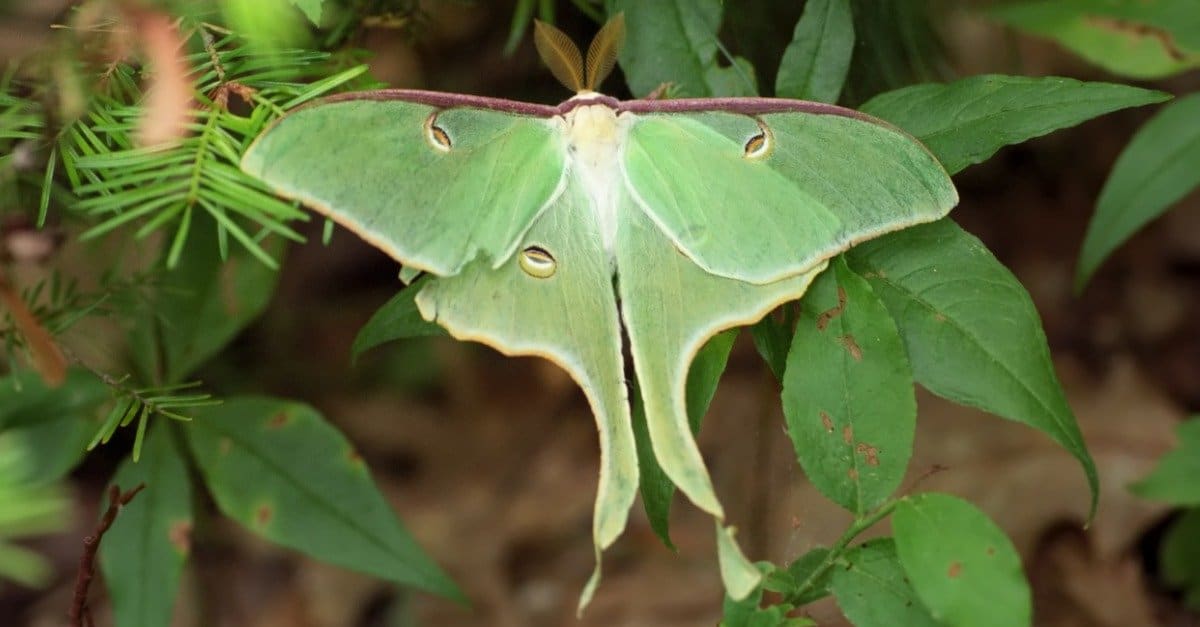
Luna moths grow to roughly two inches in body length and a wingspan of three to five inches. Their broad wings are pale green in color, with the bright color seemingly glowing under bright light, hence their lunar name. As seen in the video, their wings have a purple border, contrasting with the green beauty. They have a furry, white body and two large eyespots. These eyespots are to make them look bigger than they are as a way to scare predators.
Luna moths are nocturnal, just like other moths. Also, like other moths, they are attracted to light. While not rare per se, these moths have an extremely short adult life span, making them relatively hard to spot. Adult luna moths, both male and female, emerge from their cocoons without functional mouths, meaning that they do not eat. Instead, they live off of stored energy from their caterpillar stage, meaning that they die off quickly. They are also predated by bats, birds, and other small mammals. Because of their short lives, luna moths make the most of their time as adults. Many regions where these moths are found will see multiple generations in one year.
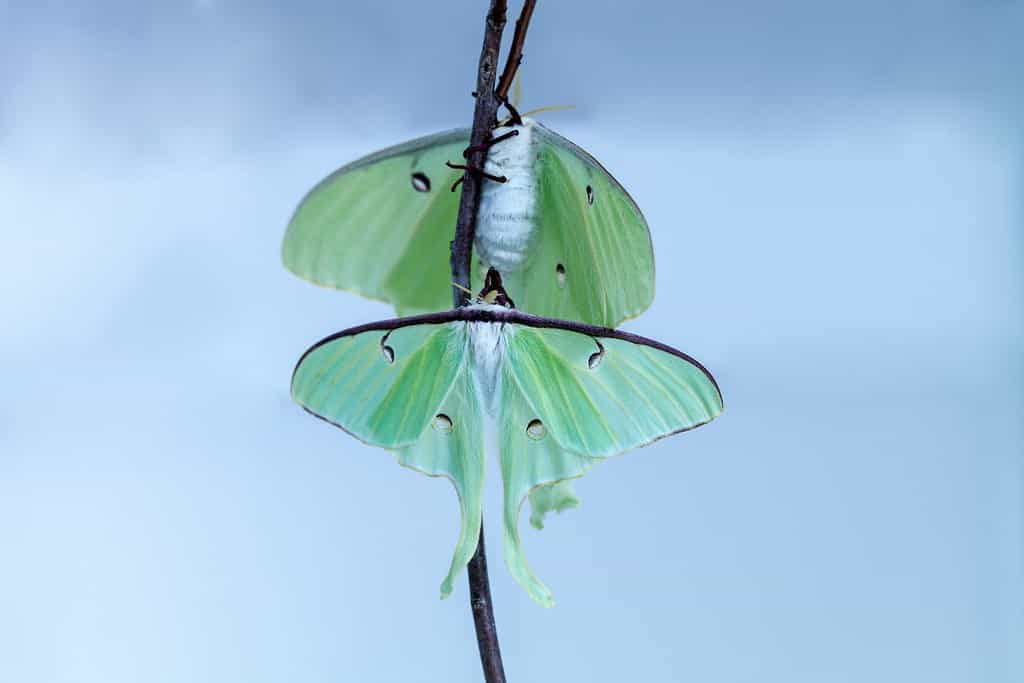
Luna moths live short adult lives.
©SunflowerMomma/Shutterstock.com
Luna Moth Life Cycle
Luna moths have short adult lives and spend the majority of their life as caterpillars. Beginning as eggs, they hatch after one to two weeks, depending on the climate. A warmer environment means quicker hatching, and a colder environment means slower. After hatching, the larva stage begins. After catching, the larva stage begins.
Luna moth caterpillars go through five instars, or five periods of molting. In the first instar, the caterpillar is roughly .03 inches. After around six days, they enter their second stage, where they develop a brighter green color. They start their third stage after about five days, where they get chunkier due to eating lots of leaves. After another five days, they enter their fourth instar. In this stage, they are roughly one inch long and will reach two to three inches by their fifth instar. In their final stage, they eat a tremendous amount of leaves to store energy for their adult life. Before entering the pupation stage, they stop eating. This final instar lasts about a week.
Pupation, or the cocoon stage, is what you see the moth exiting in the video above. This metamorphosis takes around two to three weeks. After spinning a silk cocoon, the caterpillar will shed its skin for one last time and become a pupa. While inside the cocoon, the developing moth forms its legs, wings, antennae, and other essential body parts. To emerge, the adult moth splits the cocoon with a spike on its abdomen and pushes itself out. Because its wings are not yet ready, the moth must rest before it can fly. As seen in the video, the moth will hang upside down on a branch for a few hours, allowing blood to flow to the wings. This blood is called hemolymph, a fluid similar to blood that helps to pump the wings up. Once this process is complete, the moth is ready to fly!