
Quick Take
- Antlion larvae mandibles do more than just trap prey. They serve a hidden sensory function that lets the larvae tilt the odds of escape to nearly zero. See how mandibles sense prey →
- The 'bug Slurpee' describes an enzymatic process that happens before the prey even stops moving. Explore the liquefying process →
- Antlion larvae carry three separate venom glands, and what they produce adds up to the ability to rival far larger predators. See the venom breakdown →
- Antlion larvae have no way to expel waste for up to three years, and what their bodies do with it instead is unexpected. Discover how waste is stored →
Numerous predatory insects exist worldwide. From assassin bugs to blister beetles, these insects are appropriately named for their ability to harm prey.
When it comes to the doodlebug, the name does not instill fear. It conjures an image of a harmless insect that sounds more like prey than predator. However, the larvae’s other name, antlion, is far more sinister. Thanks to its feeding mechanism, the larvae are known to turn prey into a “bug Slurpee”, all before the captured insect knows what’s happening.
The Insects Creating a “Bug Slurpee” Out of Prey
Antlion larvae, or doodlebugs, are given their name because they typically prey on ants. However, these are not the only insects antlion larvae target. The predatory insects create traps in sand or soft earth for prey to fall into. As long as the prey fits between the antlion larvae’s mandibles, any insect is fair game.
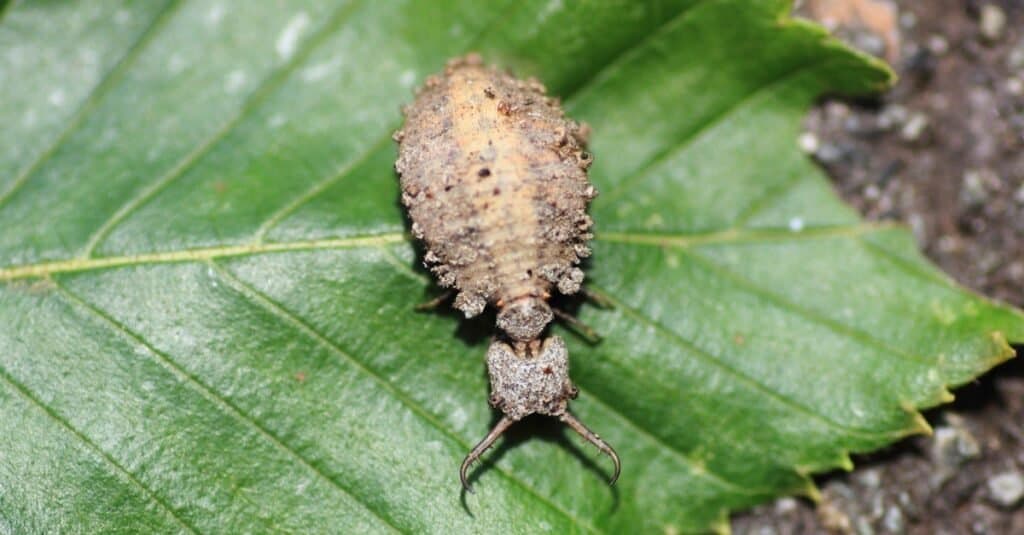
The antlion larvae use their mandibles to capture, incapacitate, and liquify their prey.
©Queserasera99/Shutterstock.com
Unlike other insects that use their mandibles to bite, chew, and tear prey apart, antlion larvae’s mandibles do not work in the same fashion. Because of this, they have adapted a unique way to subdue and consume prey by essentially creating a “bug Slurpee” that is easily devoured without chewing.
How the Antlion Larvae Mandibles Operate
Insect mandibles tend to pack a large amount of force behind their pinching abilities. While the measured force of the antlion larvae’s mandibles is unknown, it is clearly enough to keep their prey immobile once caught.
Antlion larvae’s mandibles are “sickle-shaped”. The main purpose of the mandibles is to quickly both capture and injure prey. Once a victim is caught, the antlion larvae will create open wounds, easily injecting venom into prey through their mandibles. Additionally, a suction-like feature is used for feeding.
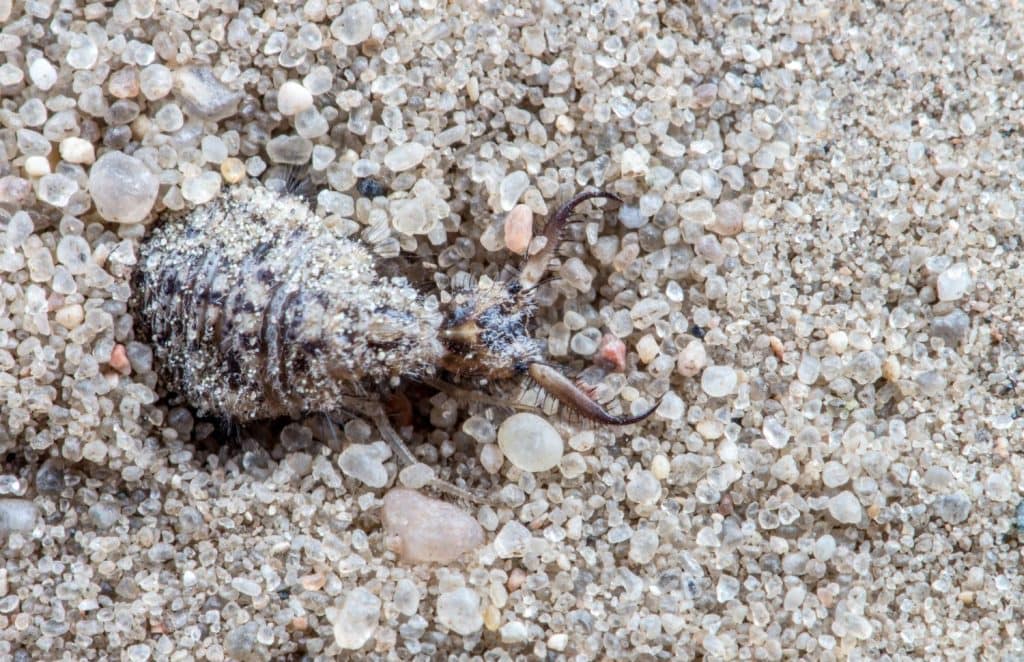
Antlion larvae’s mandibles have multiple functions, none of which are chewing or tearing.
©Rainer Fuhrmann/Shutterstock.com
The mandibles also serve a sensory function, detecting how much their prey is struggling after it falls into the sand trap. If the insect is not struggling enough, the antlion larvae can fling sand at the prey to make its chances of survival zilch.
Finally, the mandibles are key to constructing the sand traps used to catch prey. The sand is tossed backward by the mandibles until a burrow is created. Once complete, the antlion larvae and their mandibles will be ready to strike any prey that accidentally falls into the sand trap and is unable to escape.
Antlion Larvae Inject Toxins into Prey
Beyond capturing prey, the mandibles are also used to incapacitate victims and keep them from escaping their sand traps.
The strong, reinforced mandibles can overpower larger prey, making it nearly impossible for insects to escape once in the antlion larvae’s grasp. But in addition to the great force behind the mandibles, they also inject toxins into the prey, rendering it lifeless almost immediately.
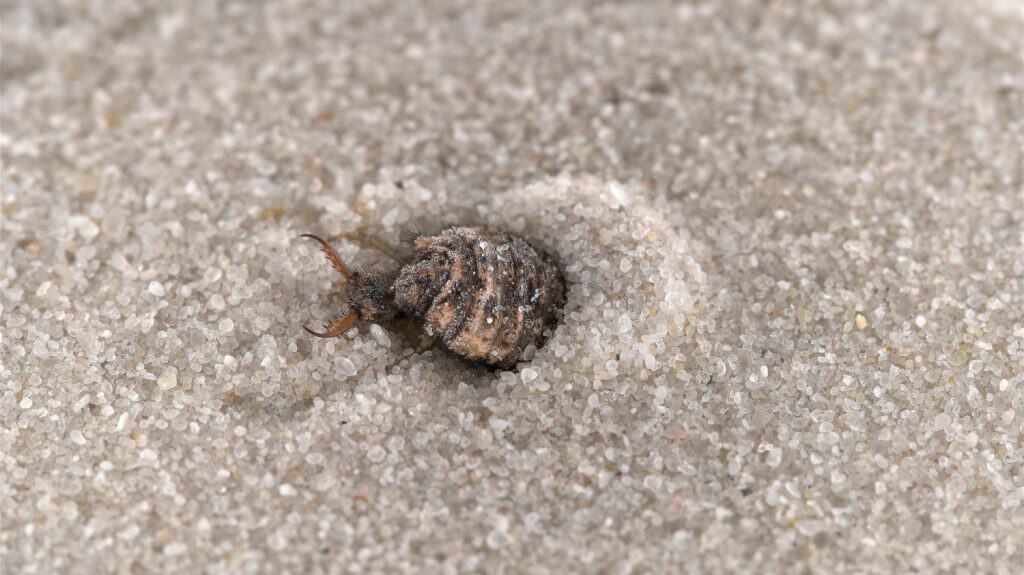
Antlion larvae will inject toxins via venom glands into prey.
©shoma81/Shutterstock.com
The toxins come from three different venom glands, each containing a unique substance. Remarkably, 256 different venom proteins are produced solely by antlion larvae.
The goal of antlion larvae is to work smarter, not harder. By injecting toxins into prey, the antlion larvae do not have to exert much energy or risk injuring their mandibles, which would be a death sentence for the larvae. The faster the prey can be subdued, the faster hungry antlion larvae can feed.
How the Antlion Larvae Consume Prey from the Inside Out
While the mandibles are perfectly designed for capturing and constraining insects, the larvae cannot chew or break apart prey. Therefore, they have developed another method of obtaining nutrients: consuming their prey from the inside out.
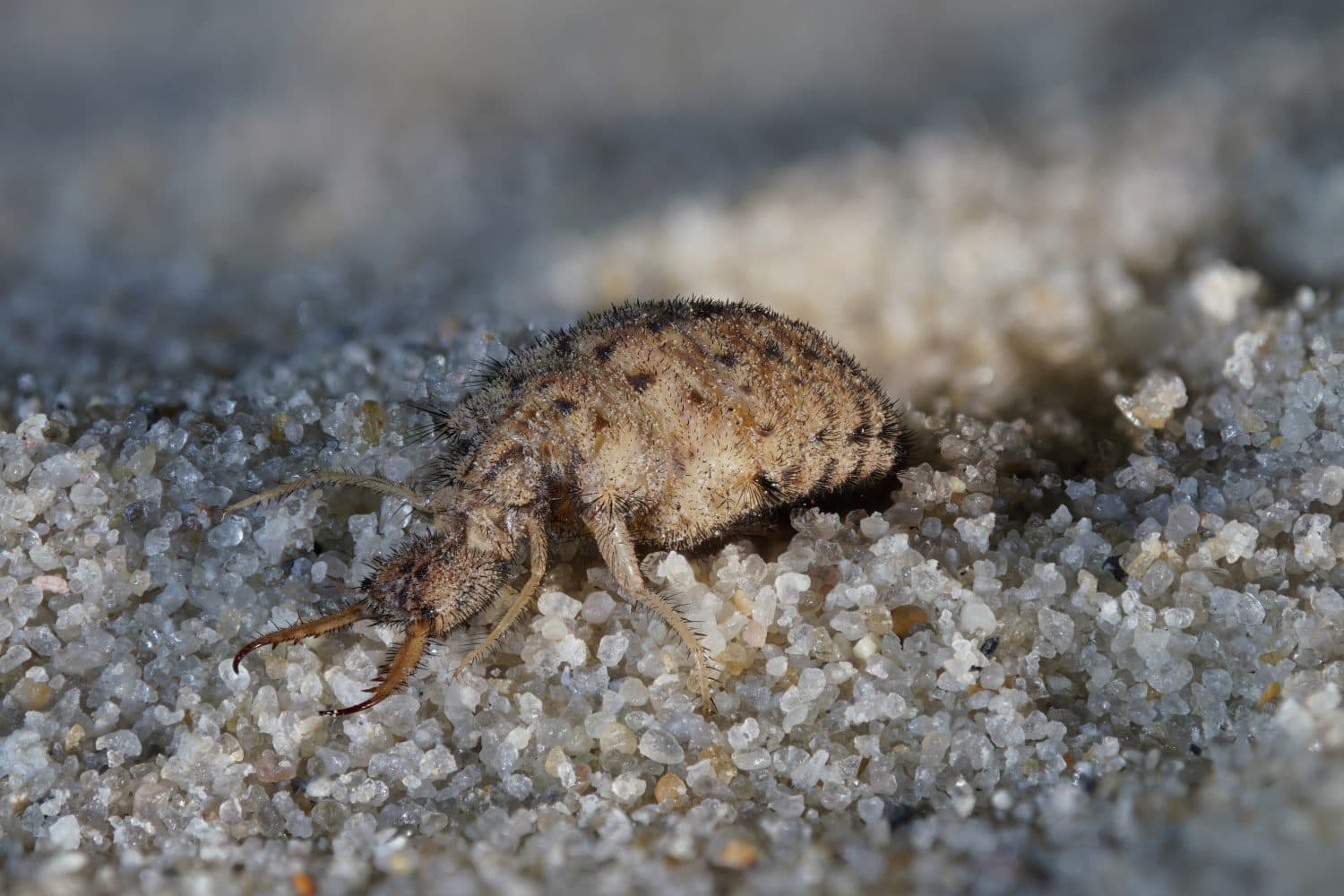
Antlion larvae inject enzymes into prey to liquify them internally.
©klaus Keller nature photo/Shutterstock.com
In addition to injecting toxins into their prey, antlion larvae also inject fast-acting enzymes that liquify the insides of insects. Once the process is complete, the antlion larvae use their mouth area to suck out the liquid meal.
When done feeding, the antlion larvae dispose of the prey’s exoskeleton by tossing it out of the trap; they then wait patiently for the next insect to unknowingly fall to its death.
What Happens to Waste While in the Antlion Larvae Stage?
With the exception of a few species, most insects have to eat to survive, and antlion larvae certainly fall into this latter category. And like all animals that consume and digest food, they must excrete what isn’t needed. But what happens if there is no orifice from which to excrete waste?
Because antlion larvae do not have a true anus, what they consume remains in their bodies for the entire larval stage. This can be anywhere between one and three years.
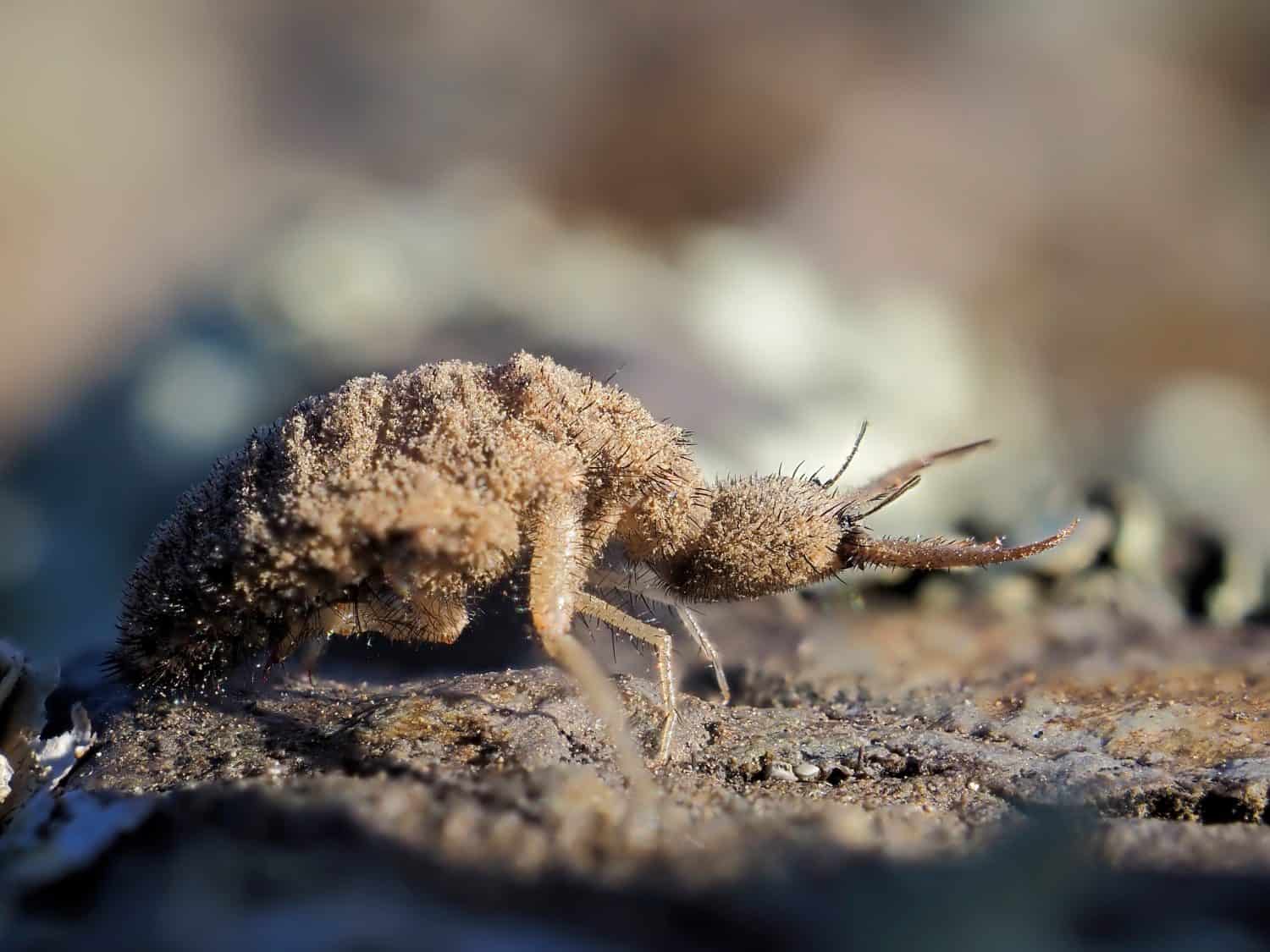
Antlion larvae will not excrete any waste. Only when they become adults will waste be expelled.
©aaltair/Shutterstock.com
While antlion larvae can excrete fluid from their bodies during the larval stage, this substance is not waste. The waste accumulates until some of it is used to form a silk cocoon within a burrow in the sand.
The antlion will remain in the cocoon, undergoing a process of metamorphosis that lasts approximately three weeks. Once transformed into an adult, the accumulated waste will finally be expelled.
Antlion larvae are incredibly interesting, albeit fearsome insects. Not only are they engineers, expertly building traps, but they are also effective at rendering prey defenseless and flooding it with powerful, liquifying enzymes. Through these abilities, antlion larvae are capable of thriving in environments where others could not survive.