
Quick Take
- New fossil evidence suggests lungfish and lobe-finned fish diversified much faster than previously estimated during the early Devonian Period.
- The skeletal structure of 410-million-year-old lobe-fins contains bones homologous to the humerus, radius, and ulna found in modern human arms.
- Advanced CT scanning of 3D Gogo Formation fossils reveals internal soft-tissue structures.
When we think of the fish that inhabit the deep blue sea today, it’s easy to forget that they haven’t always been there. The ocean was once a much quieter place, populated mainly by smaller creatures, ranging from microscopic organisms to soft-bodied animals. About 400 million years ago, however, the ocean became filled with fish. This time period represents one of the greatest breakthroughs in the biological history of Earth. Now, scientists have made a breakthrough in understanding how aquatic life began the world-altering shift to land.
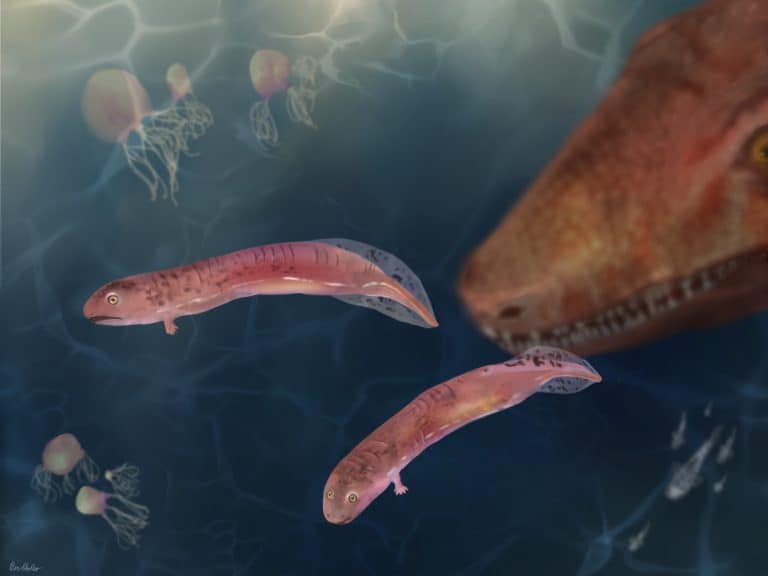
The Devonian Period, also called the Age of Fish, featured an extensive diversification of creatures in the ocean. Suddenly, fish became legion. Placoderms with armored jaws appeared, along with the ancestors of sharks and rays known as chondrichthyans, as well as bony fish called osteichthyans. This period also saw the gradual evolution of aquatic lifeforms into land-dwelling species. Recently, scientists from China and Australia have managed not only to reanalyze fossils from Australia’s Gogo Formation, but also to reconstruct the skull of a 410-million-year-old lungfish. Together, these breakthroughs provide the clearest picture yet of how fish rapidly diversified during one of the most formative periods in Earth’s biological history. Let’s learn more about the team’s findings.
Auspicious Origins
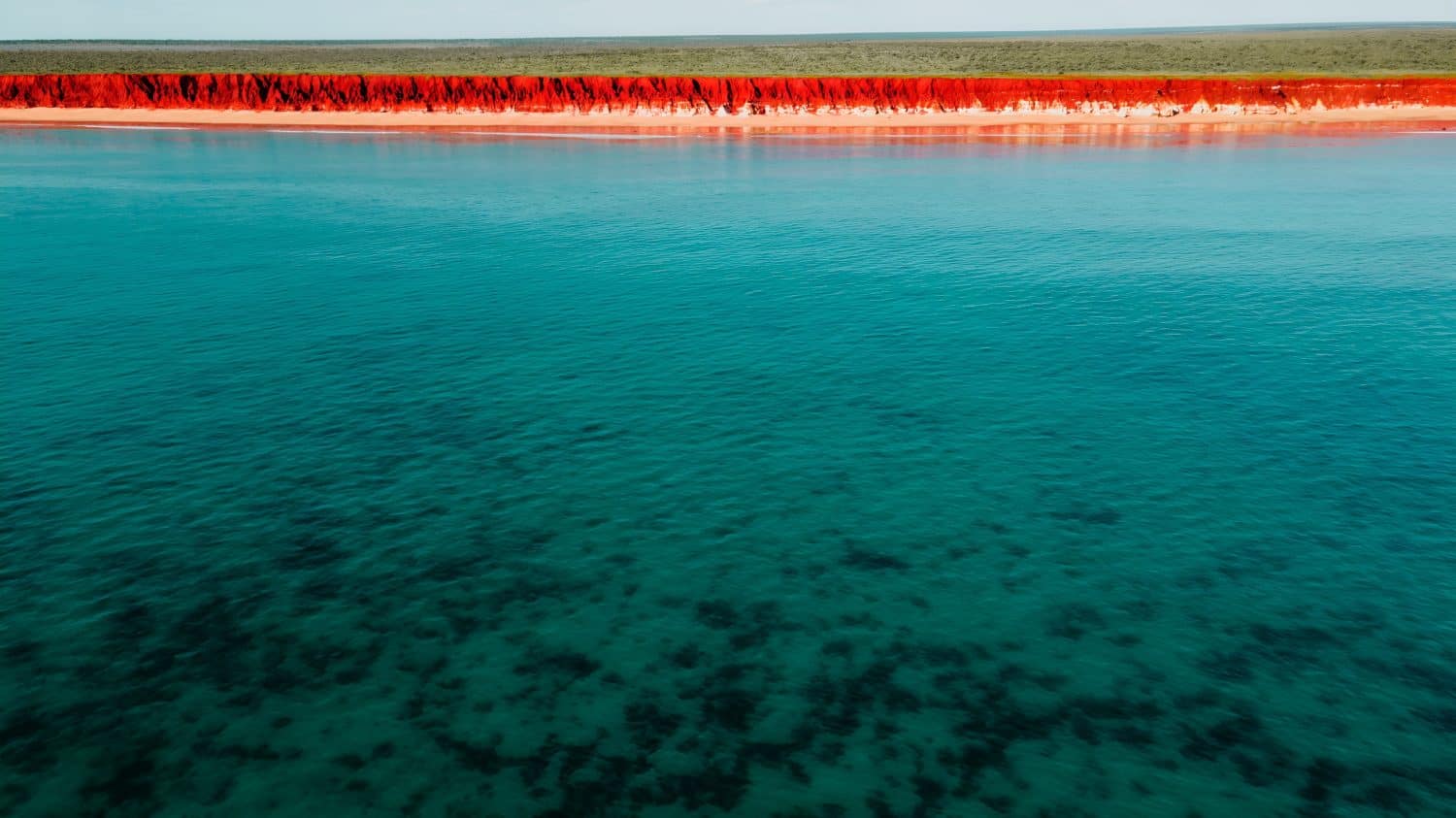
Scientists reanalyzed specimens found in the Kimberley Region of northern Western Australia.
©Lauren Henderson/Shutterstock.com
The origins of this scientific discovery date back more than 15 years. In 2010, scientists found a fragmentary fossil from the Late Devonian Gogo Formation in Western Australia. It came from an area that scientists consider to be Australia’s first ‘Great Barrier Reef,’ specifically located in the Kimberley region of northern Western Australia.
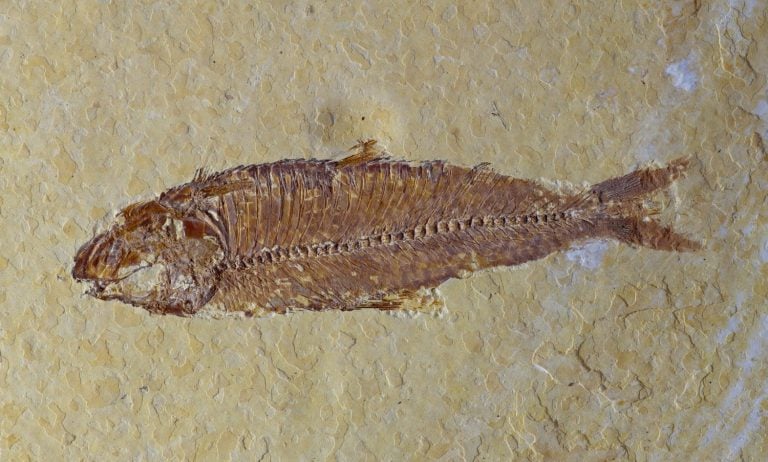
The only problem with the fossil, however, was that scientists had no context for placing it. As Dr. Alice Clement, of the Flinders University Paleontology Lab, told Science Daily, “The unusual specimen was so enigmatic, the authors who first described it in 2010 considered it could be a whole new type of fish never before seen in science.”
Since many early fish had cartilaginous skeletons instead of bone, the fossil record from this time period is usually limited to microscopic teeth or even rarer soft-tissue impressions. Information about that puzzling fossil found in WA has finally been brought to light, thanks to a team of researchers using advanced imaging techniques, such as CT scanning and computed tomography.
Lungfish Illumination
The Australian team of researchers, led by Dr. Alice Clement, discovered the remarkable diversity of the lungfish found at the Gogo Formation. They also revisited older specimens that were once considered too damaged to study in detail. However, of all the specimens collected, one from the Kimberley region provided the most insight. As Dr. Clement told Science Daily, “Using high-tech scanning, this time we were able to create comprehensive new digital images of the external and internal cranium, showcasing the complexity of the brain cavity of this fascinating lungfish.”
Interestingly, the team was also able to confirm that impressions previously taken by researchers had been viewed incorrectly; they were examined upside down and back to front. These insights were made possible by the team’s extensive collaboration, with their findings published in the Canadian Journal of Zoology. For example, coauthor Hannah Thiele worked with several museums and research facilities, including the Australian Nuclear Science and Technology Organisation (ANSTO), to analyze the fossils using top-of-the-line tools.
Specifically, the researchers were able to compare the inner ear region of one lungfish skull with those of other specimens found in the area. According to Hannah Thiele, these insights add “to the wider understanding of the evolution of these earliest lobe-finned fishes, both in Gondwana and across the world.”
South China Sea

Chinese researchers managed to reconstruct the skull of an early lungfish species that lived around 410 million years ago.
©Marisa Estivill/Shutterstock.com
A separate study, published in the journal Current Biology, provides further insight into the ancient lungfish. Working in parallel with the Australian researchers, a team of Chinese scientists reconstructed the skull of Paleolophus, an early lungfish species that likely lived in the seas of southern China 410 million years ago.
Led by Flinders researcher Dr. Brian Choo, the research team included scientists from the Chinese Academy of Sciences and the Institute of Vertebrate Paleontology and Paleoanthropology in Beijing.
They named the new fossil species Paleolophus yunnanensis, which means ‘Old crest from Yunnan.’
This reconstructed fossil provides an unprecedented look at lungfish from a time between their earliest appearance and their diversification several million years later. As Dr. Choo told Science Daily, “It was a time when the group was just starting to develop the distinctive feeding adaptations that would serve them for the remainder of the Devonian and onwards to the present day.”
Family Tree
Lungfish represent an ancient branch of the vertebrate family tree. As Dr. Choo noted in his interview with Science Daily, several species of lungfish alive today belong to this same lineage. One of these, the Australian lungfish from Queensland, has long fascinated scientists because of its close evolutionary relationship to tetrapods—vertebrates with limbs, such as humans.
Dr. Choo explained to Science Daily that his team’s findings offer significant new insights into vertebrate evolution. He said, “The exceptional lungfish skull unearthed in 410 million-year-old rocks in Yunnan gives us major insights into the rapid evolutionary diversification between the early-, mid- and late Devonian.”