
Quick Take
- The Great Lakes piping plover population plunged from nearly 800 pairs to 13 by the late 1980s due to habitat loss and predation.
- Record 88 nesting pairs in 2025, the fourth consecutive year of growth.
- The banding program was completed on 35 adults and 142 wild chicks in the summer of 2025.
In 1986, the Great Lakes population of piping plovers earned a distinction no species wants. These small shorebirds, which breed and spend their summers on the shores of the Great Lakes—primarily in Michigan—were listed under the federal Endangered Species Act. The Great Lakes were once home to nearly 800 pairs of piping plovers. By the late 1980s, that number dropped to just 13 pairs. Habitat deterioration, nest disturbances, and predation were all identified as causes of the population plunge.
Facing the near extinction of this subspecies of the piping plover population, a collaboration of agencies and organizations joined forces to turn the tide. They formed the Great Lakes Piping Plover Conservation Team, which included federal and state agencies, non-governmental organizations, Great Lakes tribes, and private citizens with a passion for conservation. Their goal was to work together to help the recovery of this unique Great Lakes shorebird.
Their efforts throughout the past several decades have helped the Great Lakes piping plover populations soar. In 2025, the nesting population reached a record number of 88 nesting pairs. This is the fourth consecutive year piping plover populations have grown.
Meet the Piping Plover
The piping plover (Charadrius melodus) is a small shorebird that lives, nests, and breeds on sandy shorelines throughout North America. There are three distinct populations of piping plovers in North America. The subspecies Charadrius melodus circumcinctus lives along the Great Lakes shorelines and rivers and lakes throughout the Northern Great Plains. The subspecies Charadrius melodus melodus can be found along the Atlantic coast.
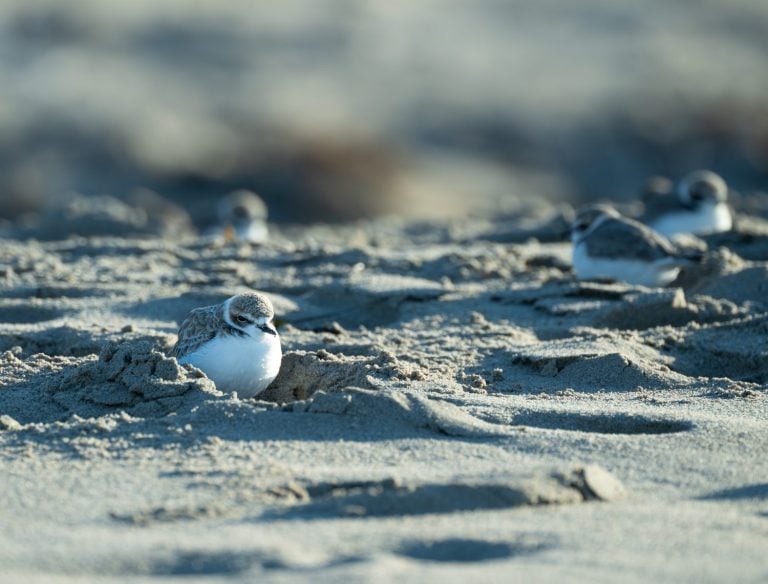
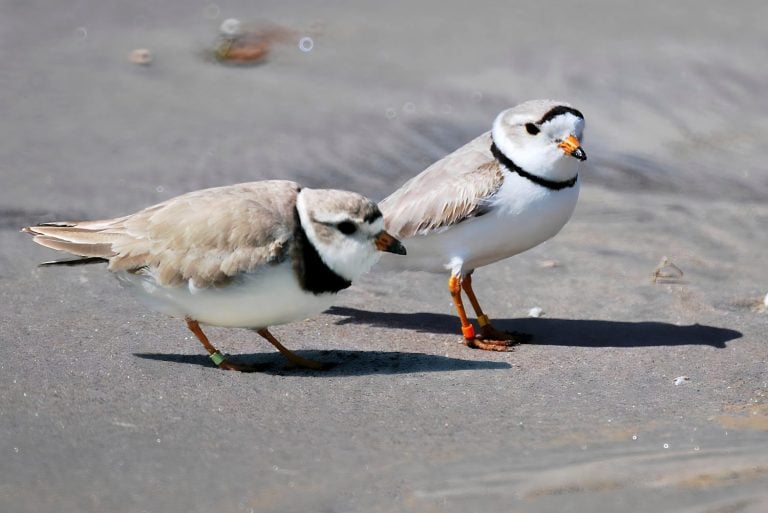
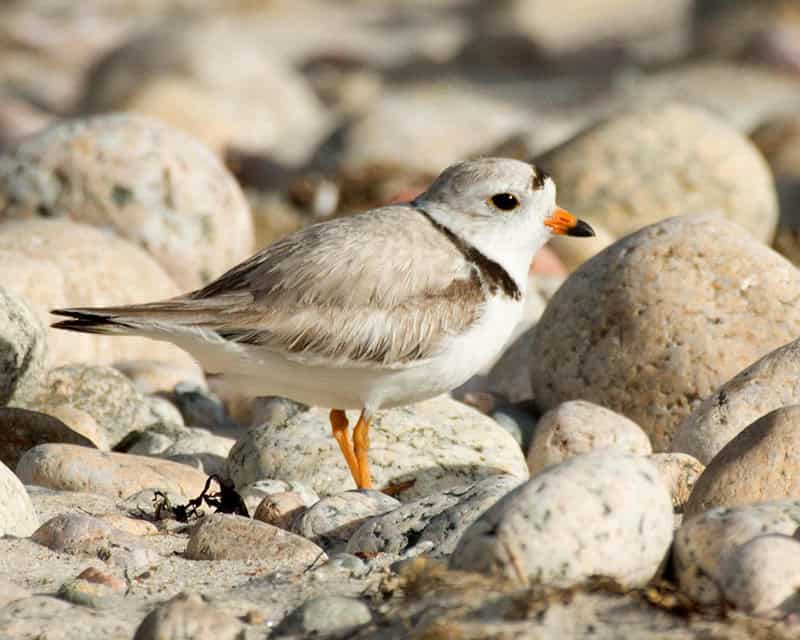
The piping plover is about seven inches tall and has a wingspan of around 15 inches. They have a white underbelly, a beige back, and a beige tail. They are notable for the distinctive black bands that appear around the neck and across the forehead of breeding-age adults. They also have distinctive orange legs and beaks tipped with black, though this bright orange coloration fades in winter.
Piping plovers spend the warmer spring and summer months nesting and raising their chicks in the northern parts of the U.S. and southern Canada. In the fall, as colder temperatures approach, the plovers migrate to warmer climates, like the southern U.S. Atlantic coast and the Caribbean, for the winter. They then return north the following spring.
They build their nests, incubate eggs, and raise their young at ground level between the high-tide line and nearby sand dunes. They forage in nearby salt marshes, across intertidal sand flats, and among piles of rocks for the marine invertebrates that make up the majority of their diet.
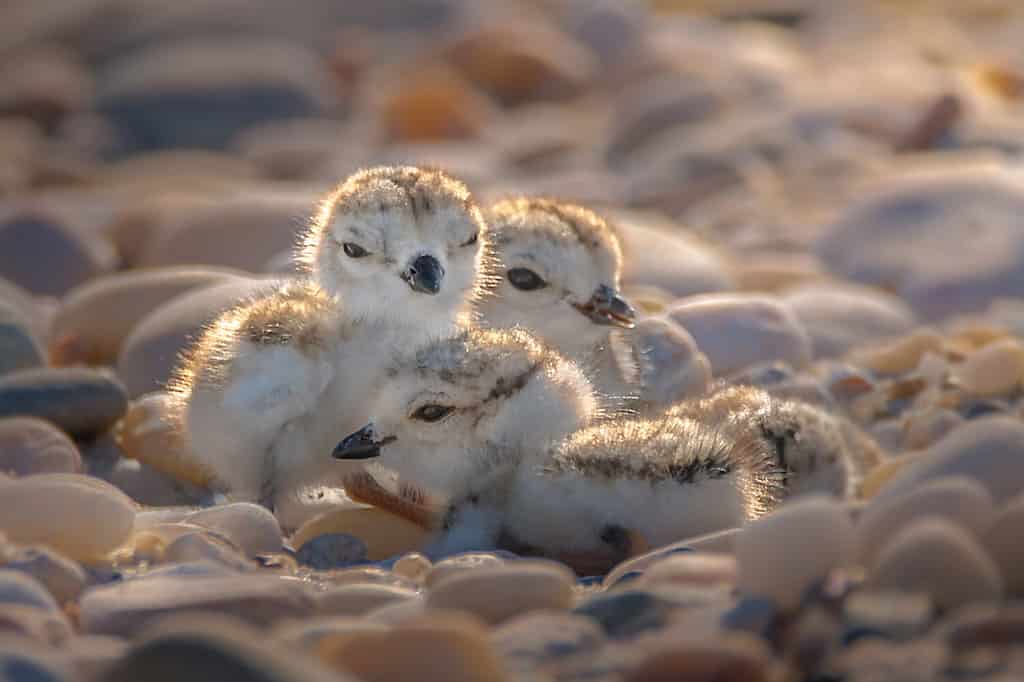
Males and females share egg incubation and chick rearing duties.
©Jay Gao/Shutterstock.com
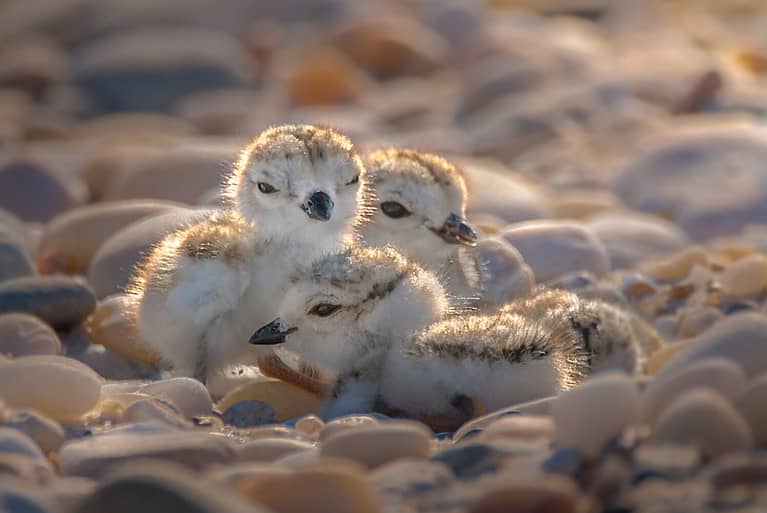
Female piping plovers lay, on average, four eggs that take 25 days to incubate and hatch. Males and females share the incubation and young chick-rearing duties. Chicks learn to fly about 25 days after hatching. Until then, you’ll see them following their parents around on the beach searching for food.
How Did Conservationists Help Boost Population Numbers?
Boosting the Great Lakes piping plover population took a coordinated effort among many organizations, spearheaded by the Great Lakes Piping Plovers Conservation Team. A key component of the program is monitoring piping plover sites.
A team of trained volunteers and staff monitors key locations daily throughout the summer breeding season. Their goals are to educate the public, observe plover behaviors, and protect nests from human and predator destruction. These volunteers comb the beaches and other habitats piping plovers call home. When they find nests, they mark them and cordon them off with stakes and rope to protect them. They also record data and share it with researchers to help guide conservation efforts.
One of these locations where regular monitoring occurs is Cat Island, located in the lower Green Bay of Lake Michigan. There, the Audubon Great Lakes conservation group conducts monitoring activities daily between April and August. A team of 32 volunteers keeps an eye on plover nests and also monitors interactions between the plovers and nearby herring gull populations, which are encroaching on the plovers’ habitat.
Another monitored area is nearby Longtail Point, a location where piping plovers have been trying to nest for the past three years. Accessible only by boat, volunteers have been pivotal in documenting the nesting and post-nesting fates of the piping plovers there.
Beyond observing and monitoring, piping plover conservation efforts also include banding, or placing a small band on the plover’s leg. The band has unique identifying information that allows observers in other locations to quickly identify the bird and record data in the piping plover database. By banding piping plovers, researchers can better understand the birds’ migratory patterns, overwintering preferences, survival, and reproductive success.
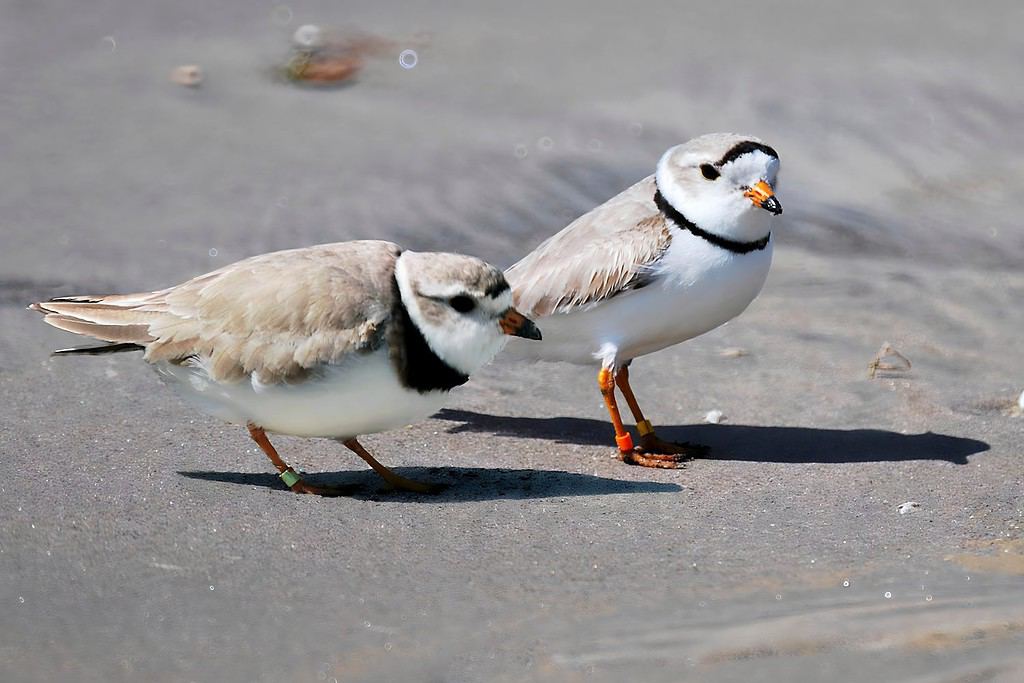
Piping plovers are banded by volunteers to help track their travels and behaviors as they grow.
©Susana Miranda/Shutterstock.com
The banding project is managed by Dr. Francie Cuthbert, Stephanie Schubel, and Alice Van Zoeren of the University of Minnesota. In the summer of 2025, banding was successfully completed on 35 adults and 142 wild chicks.
One example of banding in action is the various sightings of “Obie,” a senior male from the Cat Island breeding site. According to Audubon data, Obie’s journey back to Cat Island in 2025 took him to Ontario on the north side of Lake Erie in early April, then to Bay City, Michigan, a week later, and finally to Cat Island one week after that. The first banded chicks from the 2025 breeding season were spotted in their wintering grounds along the South Carolina coast a few weeks after they hatched at Sleeping Bear Dunes National Lakeshore in Michigan.
Another conservation effort that has been met with great success is the captive rearing program at the University of Michigan Biological Station. The program is designed to salvage at-risk unhatched piping plover eggs, incubate them in captivity, and then release the chicks back into the wild. In 2025, 45 eggs were incubated from 15 different nests under the program. A total of 37 chicks were hatched. Of those, 36 were successfully released. This marks one of the highest totals in the program’s history.
These captive-reared birds are actively contributing to wild piping plover populations. In summer 2025, several of the captive-reared birds were seen nesting in Great Lakes locations. One pair, Searocket and Imani, produced three healthy chicks at Montrose Beach in Chicago. Two captive-reared sisters returned to Cat Island to successfully fledge a total of six healthy chicks. The book Raised to Be Wild by Susan Saunders and Mary Lundeberg provides additional insight into the captive-breeding efforts of the Great Lakes Piping Plover Conservation Team.
What’s Next for Piping Plover Conservation?
While piping plover populations in the Great Lakes have steadily grown year-over-year, their future is not guaranteed. Recreational disturbances along fragile coastal ecosystems continue to threaten piping plover habitats. Likewise, climate change plays a part in reducing the piping plover’s natural habitat.
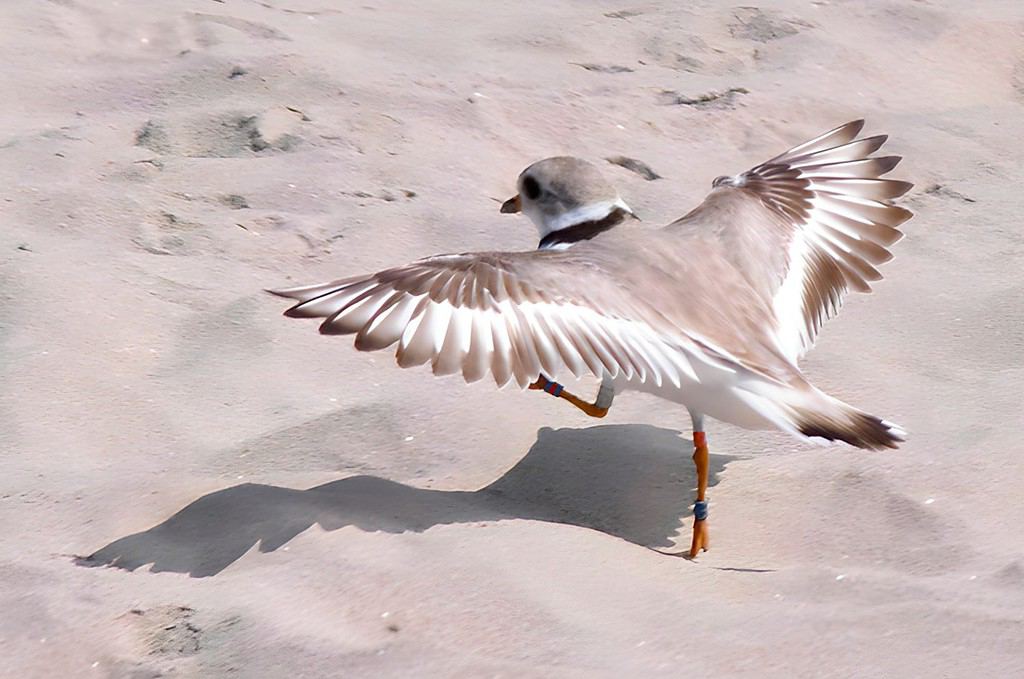
Achieving healthy piping plover populations requires continued conservation efforts.
©Susana Miranda/Shutterstock.com
Continued conservation efforts by groups like the Great Lakes Piping Plover Conservation Team and captive breeding programs, like the one at the University of Michigan Biological Station, are key factors helping piping plover populations continue to grow.
Individuals can do their part too. When you’re in a piping plover habitat, stay out of marked nesting areas, keep dogs leashed, and take your trash with you to avoid attracting plover predators, like gulls. Walk as close to the waterline as you can to avoid unintentionally disturbing unmarked plover nests. Don’t disturb driftwood or kelp you see along the shoreline, as this is a source of plover food.
You can also support conservation efforts and report piping plover sightings to the state wildlife agency or U.S. Fish and Wildlife Service. They can respond and add the nesting sites to shared databases. Educating your friends and family about piping plovers also helps spread the word about how to protect this endangered species. The Great Lakes piping plover population is on an upward trajectory. Building on that momentum will require the efforts of many.