
Quick Take
- There are no more than 10 vaquita alive today.
- The Mexican government is convinced it can better protect the vaquita by shrinking the Zero Tolerance Area, despite plans to allow shipping vessels to pass directly through its center.
- Vaquita’s population decline is directly correlated to the use of gillnets in the Gulf of California.
In February 2026, the Mexican government announced it was making massive amendments to the protections put in place to save vaquitas in the Gulf of California. Conservation organizations and scientists sounded the alarm in hopes of saving the vaquita. But despite efforts over the past month, it appears that the white flag has been raised and Mexico is giving up on the most endangered porpoise on Earth. Is this indeed the end for the vaquita porpoise?
Mexico’s Proposed Regulation Changes Could Mark the End for the Vaquita
The vaquita porpoise is critically endangered. This has been the case for decades. The only reason the vaquita has not yet gone extinct is that conservation groups have been working with the Mexican government to enact laws and regulations banning the use of gillnets. The effort has also been supported by the Mexican Navy, which has installed concrete barriers equipped with hooks to catch gillnets floating freely in the sea.
With just six to 10 vaquitas known to be living in the Gulf of California, even one death is devastating to the survival of the species. Therefore, when the Mexican government announced it would be amending regulatory measures on gillnets, conservation groups worldwide sounded the alarm.
Beginning in 2020, a Zero Tolerance Area (ZTA) was created in the Upper Gulf of California. The goal of the ZTA was to establish a no-fishing, no-entry area to protect the vaquita. Through the efforts of the Mexican government and collaboration with the Sea Shepherd Conservation Society, the ZTA dramatically reduced vaquita deaths in the Gulf of California.
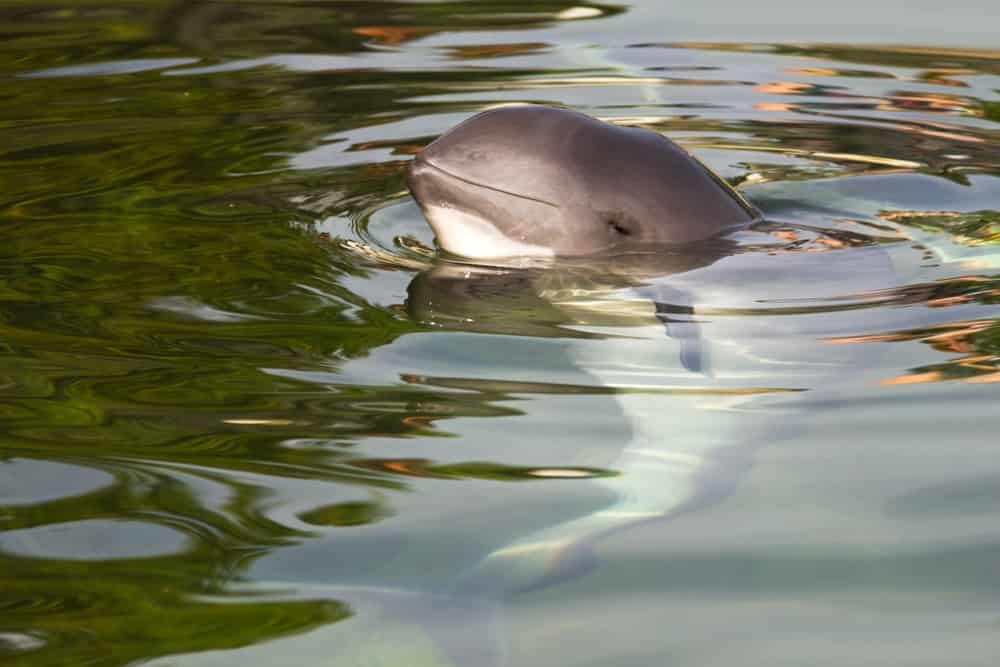
The Mexican government proposed changes to the 2020 regulations put in place to save the remaining six to 10 vaquita porpoises.
©Tharuka Wanniarachchi/Shutterstock.com
The efforts to save the vaquita over the last several years may all have been for naught. The new regulations proposed by the Mexican government would reduce the area where gillnets are currently prohibited by 85%. According to DJ Schubert, senior wildlife biologist with the Animal Welfare Institute, “the ban on possession, transport, manufacturing, and sale of gillnets” will also be repealed, and “fishers will be able to legally use traditional gillnets in a much larger area, including in areas where vaquita have been seen or heard as recently as 2015.”
“While Mexico is also proposing to slightly increase the size of the ZTA, it is not extending the ZTA boundaries to encompass an area to the northwest of the current ZTA where vaquita were observed during the 2025 survey, thereby allowing legal gillnet fishing in that area,” Schubert explains to A-Z Animals.
If these changes to the regulations are passed, as Schubert believes they will be, the vaquita will be lost forever.
“Mexico’s failure to enforce existing regulations—and now, its attempt to roll them is sentencing this beloved porpoise to extinction,” Schubert said in a statement after the proposal was released by the Mexican government.
What Led to the Demise of the Vaquita?
The Gulf of California is a rich and diverse region supporting an untold number of aquatic creatures. Some, such as the vaquita, are not found anywhere else on the planet.
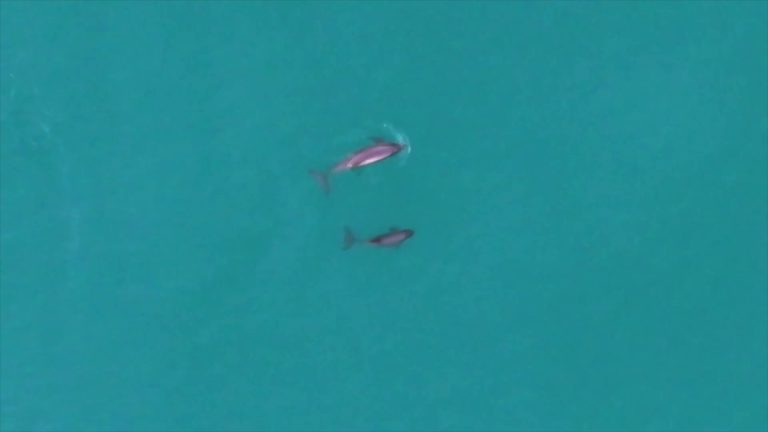
Because of their elusive nature and the distinctive black markings around their eyes, vaquitas—nicknamed the “panda of the sea”— did not become internationally known until 1958. There are no records of the population size at that time, but some estimates suggest there were several hundred.
Just two decades later, the vaquita was placed on the International Union for Conservation of Nature’s Red List. As of 1978, the vaquita was considered a “vulnerable species.” Despite this status, nothing was done to conserve the 100-pound porpoises. Consequently, their population declined dramatically over the next two decades, from 567 in 1997 to just 19 in 2018.

The vaquita population dropped dramatically when gillnets were introduced to their habitat.
©Paula Olson, NOAA, Public domain, via Wikimedia Commons – Original / License
One theory that has circulated for years claims that the vaquita population declined due to habitat changes in the Gulf of California caused by the damming and diversion of the Colorado River. According to a January 2025 paper by Lorenzo Rojas-Bracho and Barbara L. Taylor, members of the IUCN Species Survival Commission’s Cetacean Specialist Group, this theory does not hold water.
Between the 1980s and the 1990s, there were 60 necropsies performed on vaquitas that had been entangled and ultimately died due to net entanglement. Each of these vaquita was healthy and had food in its stomach. If the diversion of the Colorado River had contributed to the decline of the vaquita, the small porpoises would have been emaciated, the paper contends. Additionally, hundreds of vaquitas were still living in the Gulf of California during this timeframe.
It was not until gillnets were used more frequently, beginning in 1997, that vaquitas began to decline rapidly. The nets used to target the endangered totoaba fish for their bladders—which can fetch poachers as much as $65,000 per bladder—also catch vaquitas. As the black market for totoaba grew, there was a direct correlation with the decline of the vaquita population. Therefore, the only theory conservationists believe explains why the vaquita population has dropped to six to 10 members is the increased use of gillnets.
Mexico claims that it needs to shrink the size of the area where gillnets are prohibited in order to effectively enforce its laws in that area and that by doing so, its efforts to protect the vaquita in its core habitat will be more effective.
DJ Schubert, senior wildlife biologist with the Animal Welfare Institute
Reducing the Size of the Gillnet Protection Area Will Protect the Vaquitas?
Since the Mexican government enacted regulations in 2020 to ban the use of gillnets in the Gillnet Prohibition Area (GPA), enforcement has been minimal. As a result, fisheries and cartels have continued to use gillnets in areas where vaquitas are known to live, facing no consequences.
Instead of stepping up the enforcement of the use of gillnets in the GPA, the Mexican government wants to decrease its size. The reasoning? It can better “enforce” the laws set forth to protect the vaquita by focusing on a smaller region of the Upper Gulf of California.
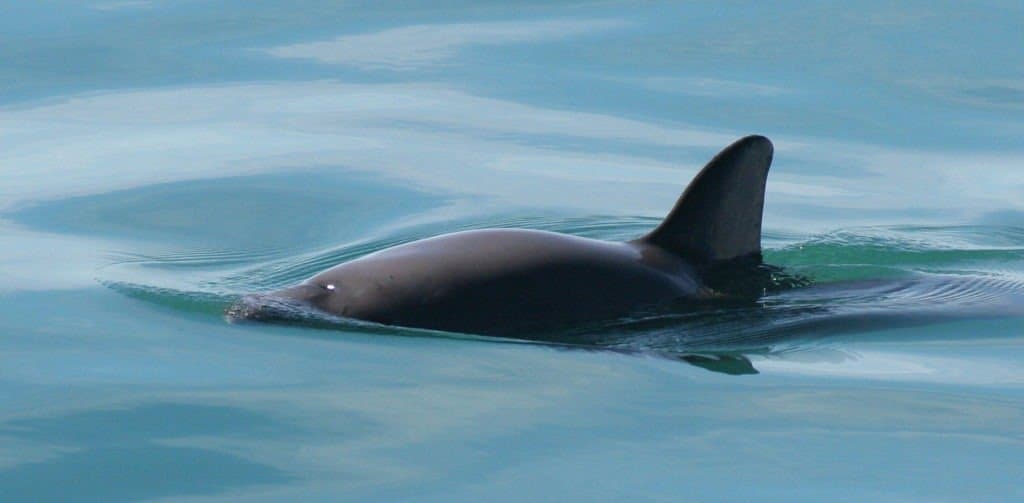
The Mexican government claims that by reducing the vaquitas’ protected area, it can better protect them.
©Paula Olson, NOAA / Public domain, via Wikimedia Commons – Original / License
“Mexico claims that it needs to shrink the size of the area where gillnets are prohibited in order to effectively enforce its laws in that area and that by doing so, its efforts to protect the vaquita in its core habitat will be more effective,” Schubert tells A-Z Animals. “To ostensibly improve its vaquita protection efforts, Mexico is proposing to significantly reduce the size of the Gillnet Prohibition Area, to slightly reduce the size of the vaquita refuge, and to make the resulting area the new GPA.”
According to Schubert, the Animal Welfare Institute and its allies believe “dramatic changes to the regulations will increase threats to the vaquita, particularly those animals who may range beyond the revised protected area and likely result in entanglement in gillnets and death, driving the species to extinction.”
Further still, AWI, the scientific community, and other conservation groups remain unconvinced that Mexico can fully enforce its regulations.
Mexico’s Intention to Protect the Vaquita May Have Been an Overreach
The intentions of the regulations passed by the Mexican government in 2020 appeared to be the first administration in decades to care about the future of the vaquita. However, although this is speculative, some believe that because the administration that enacted the regulations would not be responsible for enforcing them, it overreached in the scope of the regulations.” This has led to the current status of there being just six to 10 vaquita left in the world.
Once President Andres Manuel Lopez-Obrador came into power, he “slashed the budgets of nearly every Mexican agency, including those directly responsible for protecting the vaquita and enforcing the laws,” Schubert says. This included the 2020 regulations that were implemented to stop illegal fishing.
“With the cartels becoming more involved in the illegal totoaba trade and cartels and fishers initiating violent protests against enforcement agents over several years, even when enforcement actions were taken, the risks were high for the agents to be harassed, threatened, or worse,” Schubert states. “For the latter half of the Lopez-Obrador administration, after the Sea Shepherd Conservation Society negotiated an agreement with the government of Mexico to collaborate on enforcing fishing restrictions within the ZTA, enforcement efforts gradually improved in that small area to the point where little illegal fishing was documented.”
Schubert says, “It is difficult to understand the intentions of the current and past Mexican administrations regarding the vaquita.” Had it not been for the work and collaboration of the Sea Shepherd Conservation Society, the Mexican Navy, and other Mexican agencies in stopping illegal fishing in the ZTA, Schubert and others in the conservation and scientific world believe “the vaquita would likely already be extinct.”
The lack of enforcement within the ZTA has led to vaquita deaths in the Gulf of California, despite the 2020 regulations designed to protect the porpoises. The Mexican government claims that illegal fishing has significantly decreased in this area. If this is the case, why do vaquitas continue to perish within the ZTA?
“While Mexico has claimed that it has effectively reduced illegal fishing in the vaquita refuge by 95 percent,” Schubert explains, “that estimate is inconsistent with the available data from daily vessel/fishing observation reports published by [Safer Ships and Cleaner Seas] SSCS.”
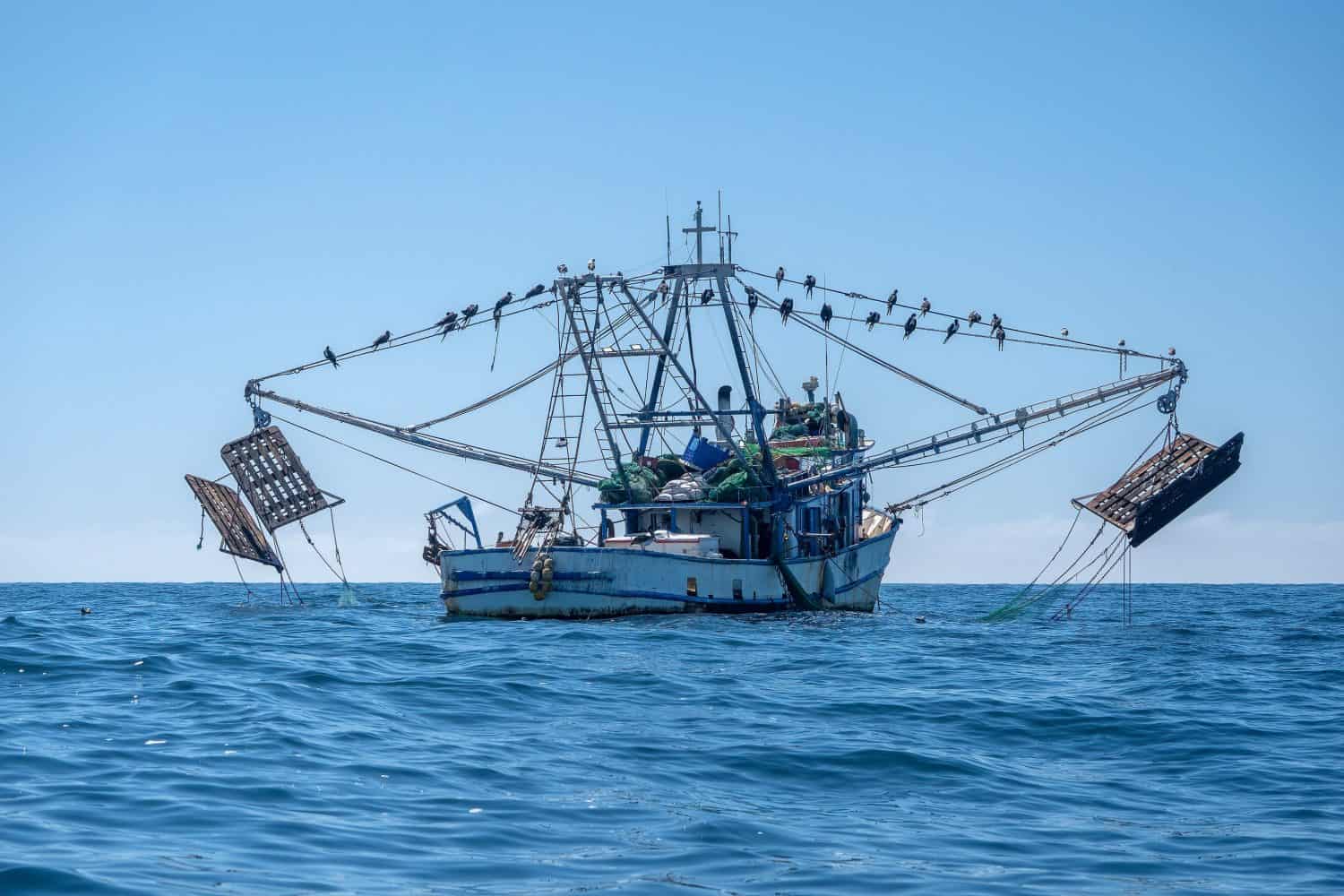
Illegal fishing makes up 40% of the fish caught in Mexico.
©Andrea Izzotti/Shutterstock.com
It is not only AWI and SCSS that have noted the Mexican government’s statistics may be over-inflated based on data collected over the years. Both Oceana, an organization that works tirelessly to protect the oceans, and the National Commission of Aquaculture and Fisheries (CONAPESCA) have found that illegal fishing represents 40% of the total fish caught in Mexico.
According to a 2024 report by Oceana, there has been a 75% decrease in seizures of illegally caught fish and a 95% reduction in the number of people detained for illegal fishing. To determine these figures, the organization compared data compiled between 2009 and 2014 to data between 2018 and 2023.
Over 20% of the fish that enter the market in Mexico is done illegally. Therefore, it is difficult to believe that illegal fishing within the ZTA has decreased by 95% since 2020, especially when, according to the report, the Mexican government’s efforts are addressing only a small fraction of the problem.
Mexico Plans to Allow Vessels to Travel Through the Zero Tolerance Area
Per the regulations set forth by the Mexican government in 2020, the ZTA would be a protected zone in which both fishing and vessel traffic would be prohibited. As part of the regulatory changes, vessel traffic would be allowed again.
According to Schubert, this defeats the entire purpose of the ZTA. These sentiments were sent via email to Under Secretary Robles, dated March 27, 2026. The purpose of the email was to follow up on a phone call held between the Under Secretary, AWI, and its allies on March 18, 2026, to better understand the proposed amendments to the regulations.
If vessel traffic becomes a reality through the ZTA, the future of vaquitas is grim.
©Logomaker691/Shutterstock.com
“The decision to create a vessel transitway through the ZTA is unacceptable,” the email signed by Schubert, another member of AWI, attorneys for the Center for Biological Diversity, and a member of the Environmental Investigation Agency UK, reads. “There is no scientific or legal justification for the proposed transitway, and if enacted, this corridor for vessel traffic would defeat the entire purpose of establishing the ZTA as a sanctuary free of vessels and gillnets in the 2020 regulations.”
The portion of the email goes on to read, “By definition, a zero-tolerance sanctuary should minimize vessel traffic, disturbance, and opportunities for the transport or deployment of illegal gillnets in the area most critical to vaquita survival. While we recognize the need to facilitate fisher access to those areas outside the expanded ZTA (but within refuge boundaries) where alternative gear will be allowed, access to those core fishing areas should not dissect the heart of the ZTA.”
The proposed vessel traffic lane would be one kilometer wide and run directly through the heart of the ZTA. If enacted, the vaquitas would no longer be protected from vessel strikes, further jeopardizing the stability of the population.
Mexico’s Mind Appears to Be Made Up, Despite Outcry from Conservation Groups
After the proposed regulatory amendments were made public in mid-February 2026, the goal of the meeting between AWI and its partners was to better understand why the Mexican government sought to make changes. Additionally, there was hope that minds could be changed. However, it appears that the government has made up its mind to move forward with the proposed amendments, regardless of the consequences to the vaquitas.

Despite hearing from conservation groups and scientists, the Mexican government seems intent on rolling back regulations aimed at saving the vaquitas.
©Vynkdeepi666 / CC BY 4.0 / via Wikimedia Commons – Original / License
Schubert states that he and AWI’s allies are “grateful” for the time Mexican officials spent on the call, but the outcome was “disappointing.”
“It became clear to us that the government had already agreed to the proposed amendments and, therefore, while they listened to our concerns”, Schubert tells A-Z Animals, “they would not be making any changes to the proposed amendments.”
How Long Can the Vaquita Survive with the Rolled Back Regulations?
If Mexico is indeed moving forward with the amendments to the 2020 regulations created to protect the vaquita, it is difficult to predict how long the remaining porpoises can survive. According to Schubert, the number of “variables” involved makes the vaquita’s future hard to predict.
“It is impossible to know, as there are so many variables that would impact how quickly the few remaining vaquita could die,” Schubert says.
The variables Schubert speaks of include:
- Whether Mexico can meaningfully enforce its laws in the smaller gillnet prohibition area, including the ZTA and a smaller Vaquita Refuge
- The distribution of the vaquita (and whether that distribution changes), and whether all fishers comply with the proposed new regulations
- If the remaining vaquita are able to avoid gillnets (as some scientist theorize is the case with the surviving vaquita)
- Whether any fisher will report killing or observing a dead vaquita.
Over the last several years, Schubert says there have been no reports of dead vaquitas. Despite this, it is believed that some have occurred both naturally and illegally. The lack of reports is believed to be due to fishers disposing of dead vaquitas before authorities can discover them.
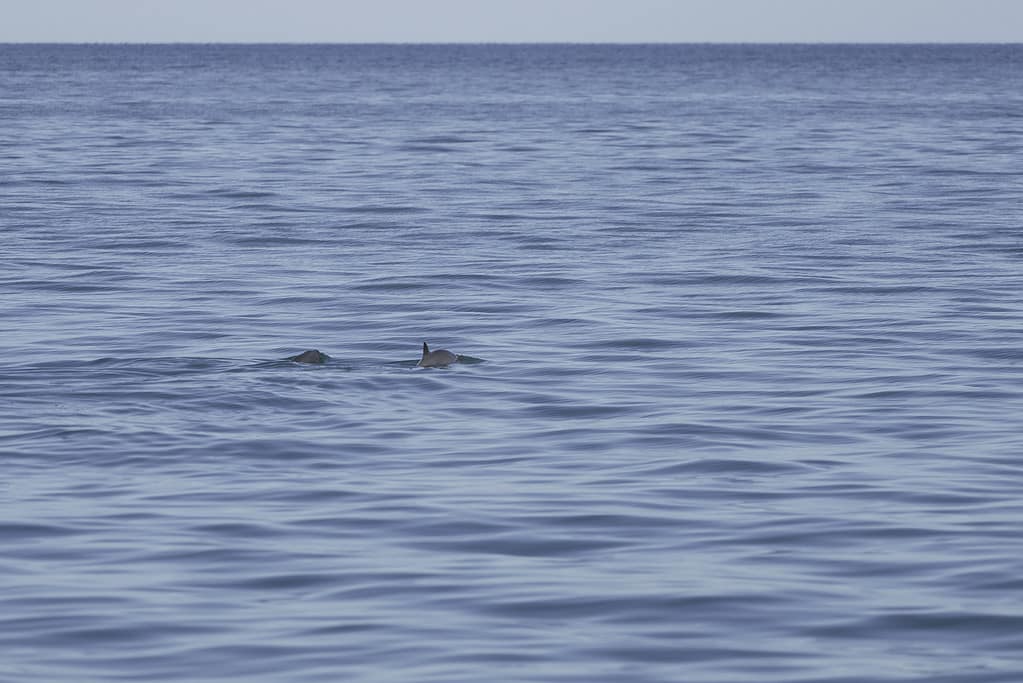
The future of the few remaining vaquitas in the Gulf of California is uncertain.
©David Schneider/ via Getty Images
“This is likely due to a ‘shoot, shovel, and shut up’ attitude amongst the fishers, which likely results in any dead vaquita being cut up and buried on shore to avoid there being any chance of anyone learning of ongoing vaquita deaths,” Schubert explains. “This could potentially lead to additional restrictions on fishing activities in the Upper Gulf of California imposed either by Mexico or through international sanctions.”
The future of the vaquita rests in the hands of the Mexican government. Whether public outcry in conjunction with organizations like AWI can change the outlook of the Under Secretary and colleagues remains to be seen. But from an outside perspective, it appears the government has struck the final blow for the vaquita—a sad reality, given how hard the “pandas of the sea” have struggled to survive.