
The Rhisotope Project is a ground-breaking initiative to help save the magnificent rhinos of Africa. At least one rhino is killed here by poachers every day to harvest its valuable horns. Poachers sell these horns to be carved into decorations or crushed into powder for use in traditional medicine, which is falsely believed to cure ailments ranging from hangovers to cancer. This project uses the existing nuclear security infrastructure to detect the illegal importation of this valuable commodity. Take a look at this informative video and then read on for more details on this fascinating project.
Rhino Crisis
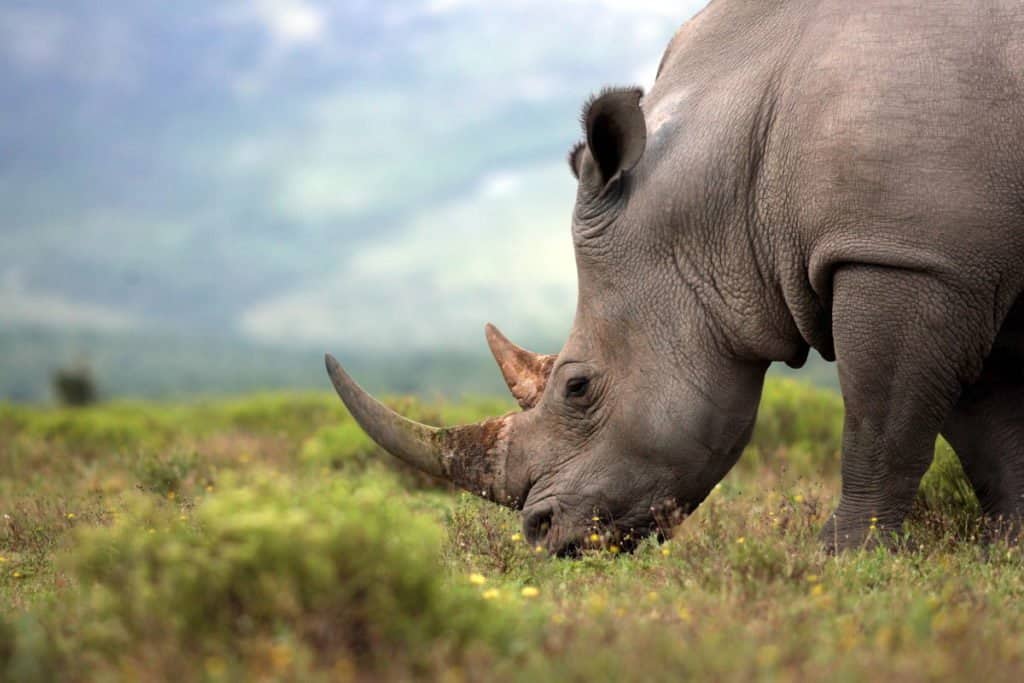
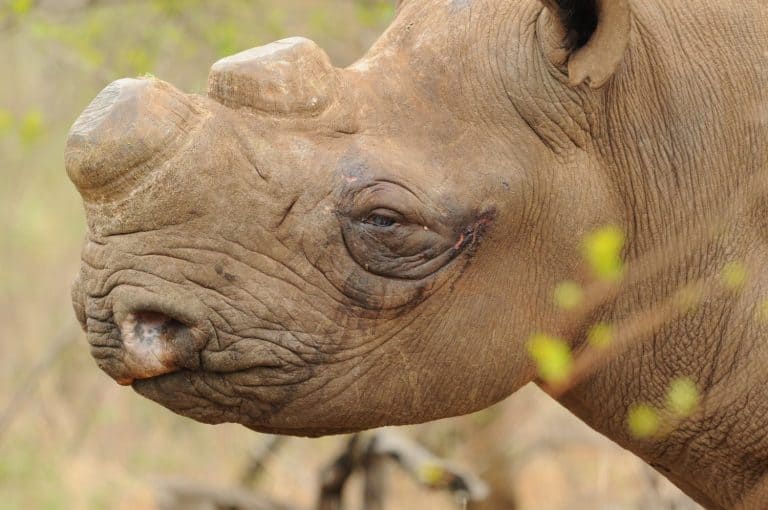
Rhinos are poached for their horns.
©JONATHAN PLEDGER/Shutterstock.com
International trade in rhino horn has been banned under CITES (Convention on International Trade in Endangered Species of Fauna and Flora) since 1977. Yet, most rhino species are in trouble. The black rhino, Javan rhino, and Sumatran rhino are critically endangered. There are only two northern white rhino individuals left on the planet, and they are both female. The southern white rhino is currently classified as Near Threatened, not endangered.
There was a significant surge in poaching, particularly in South Africa, starting in 2008. However, more recent statistics show improvement: the number of rhinos killed in South Africa dropped to 769 in 2018. However, there remains a market for rhino horns in Vietnam, though demand has decreased in recent years due to public awareness campaigns.
Meanwhile, poaching gangs are using increasingly sophisticated methods to obtain rhino horns and evade detection. At the same time, the rhino populations are also threatened by habitat loss caused by deforestation. Their habitats are being degraded or destroyed by logging, agriculture, and human settlement projects.
Previous initiatives have involved infusing horns with a brightly colored dye and even injecting the horns with highly toxic ectoparasiticides that cause nausea, vomiting, and convulsions. The effectiveness of both approaches has been doubtful.
The Science Behind the Rhisotope Project
Radiation has been used in human medicine and industry for many years. The scientific principle is that unstable forms of an element emit radiation to transform into a more stable form. That radiation is easily traceable and can be detected by special devices.
There are over 11,000 of these devices worldwide, called portal monitors, along with trained officials. They are located at ports of entry such as airports and harbors. It would be almost impossible for a smuggling syndicate to get an isotope past the port authorities. So, if you could inject rhino horns with a radioactive isotope, you could catch the smugglers.
The principle was tested on fake 3D-printed rhino horns embedded with isotopes. None of them makes it past security devices. The next challenge was to determine whether the isotope would migrate from the rhino’s horn into its body and cause harm.
Testing the Method
When scientific studies or initiatives are tested before being rolled out, it is called a pilot study. Three pilot studies have been completed for this project. In the phase one pilot, the horns of two white rhinos were treated with stable isotope-labeled compounds. It was conducted at Buffalo Kloof, a private game reserve in the Eastern Cape, on two white rhinoceros bulls. Samples of the blood and fecal matter were collected, and there was no evidence that the isotope had traveled from the horn into the rest of the body.
The second phase of the pilot aimed to establish the dose level in the rhino’s head and the minimum detectable activity (MDA) required to be detected by the port authority devices. In the final pilot project, the isotopes were injected into the horns of 20 rhinos: 18 white rhinos and two black rhinos. The animals were monitored twice a day for a period of six months. No abnormalities were detected in their behavior, horn growth, or health. As of August 2025, the Rhisotope Project has officially reached operational status and is being rolled out to both private and public rhino populations.
The Future of the Project

Scanners in airports can detect the isotopes.
©Vietnam Stock Images/Shutterstock.com
The Rhisotope Project is a collaboration between the International Atomic Energy Agency (IAEA) and top rhino conservation experts. The ultimate aim is to apply this technology in rhino populations throughout southern Africa and beyond. Privately owned rhino populations have been the first to benefit. These rhinos are located on game farms and reserves. As of August 2025, the project is being expanded to include rhinos in national and provincial reserves and parks. It will be a run alongside positive engagement programs to support the local populations, and will require ongoing engagement with local law enforcement communities. The project’s success depends on collaboration between local, national, and international law enforcement, nuclear security, and policing agencies, especially at port authorities.