
Quick Take
- Drying out should be a death sentence, yet for rotifers it secretly triggers a genetic trick no other animal seems to pull off. See the genetic trick →
- About one in ten of the rotifer's genes don't actually belong to it, and the organisms it stole from are not what you'd expect. Discover the stolen genes →
- These animals have never once been observed having sex, and that unusual fact is directly tied to why they're so hard to kill. Explore their sex-free survival →
- The foreign DNA rotifers absorbed millions of years ago still actively protects them today, though this protection only holds under one very specific condition. Find the one key condition →
When you are a tiny animal living on moist lichen, a dry spell is a disaster. Your cells collapse, and your DNA breaks down, leaving you a dried-out husk of a creature. Yet, the remarkable bdelloid rotifers (Philodina roseola) can come back from this dried-out state. They can do this because they have stolen DNA from other creatures! We explored how and why they do this.
Continue reading
The Crazy World of Rotifers
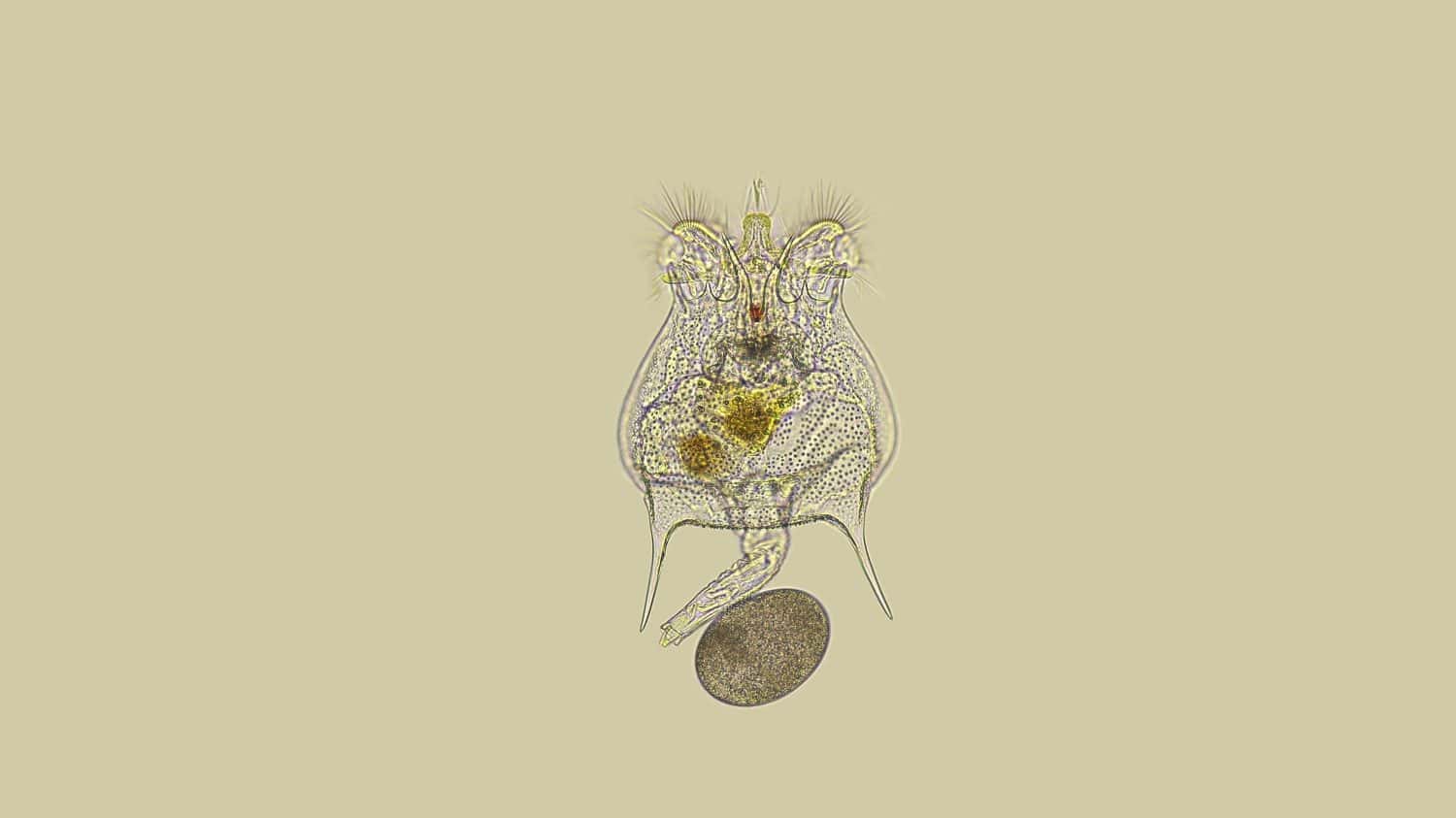
Bdelloid rotifers are tiny aquatic animals. If you view them through a microscope, you can spot them by the characteristic pair of ciliated, eversible disks (corona) on their heads and the way they creep around like leeches. No male Bdelloid rotifers have ever been observed, and while experts have long assumed they do not exist, recent genomic evidence suggests sexual reproduction may occur, though males remain undiscovered. Females produce unfertilized eggs that develop directly into new females, a process known as parthenogenesis.
Rotifers can survive on lichen.
©Galumphing Galah/Shutterstock.com
They are found in rivers, lakes, and ponds. However, they can also be found in unexpected places for aquatic organisms, such as mosses and lichens growing on rocks, trees, and even rooftops. They have also been found in rain puddles, rock pools, bird baths, and even the tanks of sewage treatment plants. The challenge with these habitats is that they frequently dry out. Yet, when water returns, live bdelloid rotifers can be seen moving around again, alive and well. How can these tiny creatures survive such catastrophic desiccation?
How Do Bdelloid Rotifers Survive Desiccation?
Bdelloid rotifers use a method called horizontal gene transfer (HGT), which scientists define as the “non-sexual movement of genetic material between two organisms.” They have imported fragments of DNA from other organisms in their environment, and these have helped them survive. Studies have found that HGT is most common in those rotifers that desiccate more frequently. Also, the foreign genes were mainly enzymes. Some of them helped with the catabolism of complex polysaccharides and stress responses.
Around one in ten of the rotifer’s genes have been copied from bacteria, fungi, and even plants. They have DNA from bacteria that can make antibiotics. This horizontal gene transfer occurred a very long time ago. Nearly half of their foreign genes were acquired before the divergence of bdelloid families over 60 million years ago. The process happens very infrequently; only around once every 100,000 years.
The cycle of desiccation and rehydration removes many of the usual barriers to horizontal gene transfer. The dried-out cell membranes become leaky, making it easier for DNA exchange. As DNA breaks and is repaired during desiccation, fragments of other DNA can be incorporated into the genome. Finally, because rotifers rarely reproduce sexually, a process that typically limits horizontal gene transfer, they are more likely to incorporate foreign DNA.