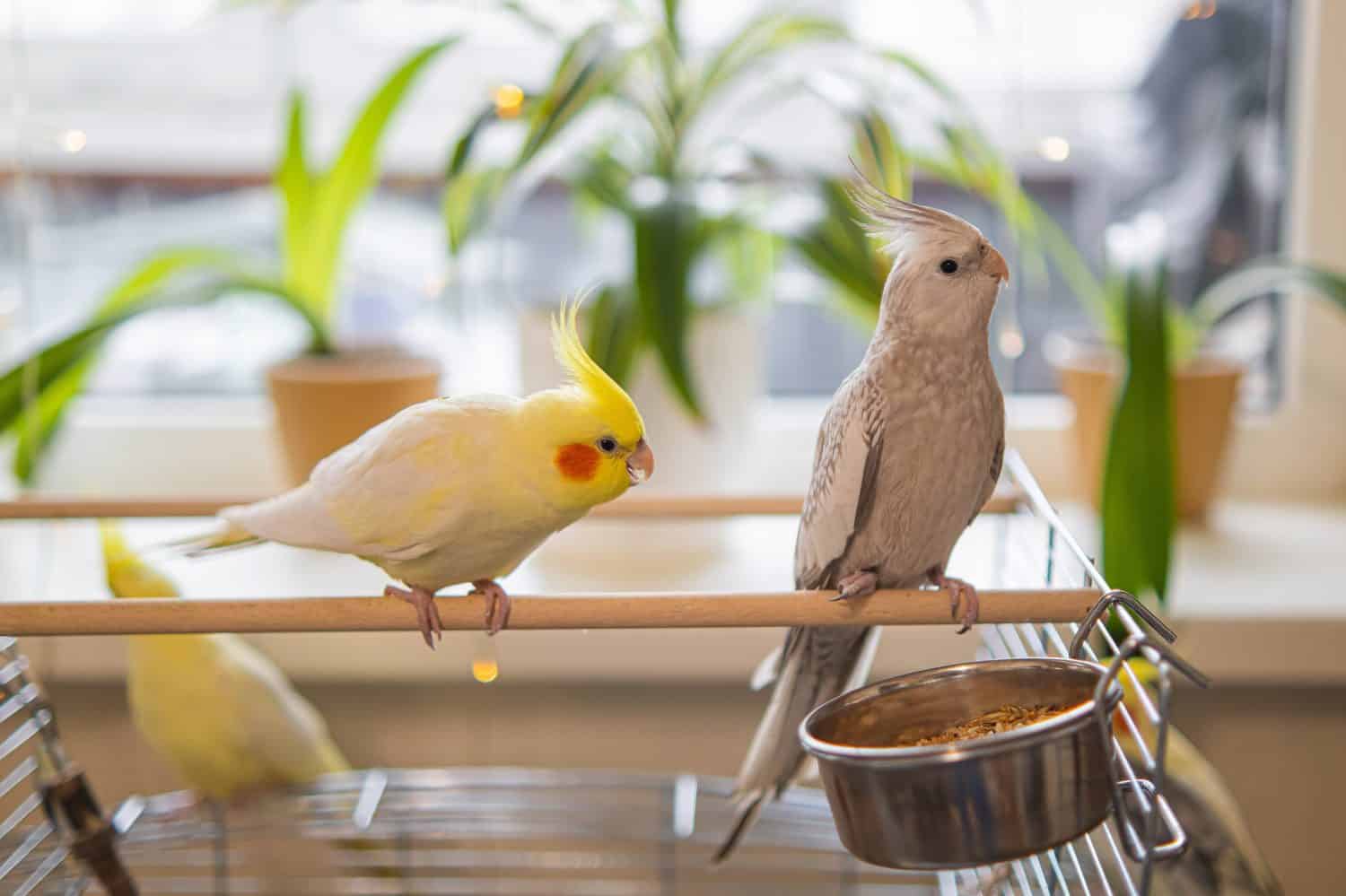

Pet bird owners know that birds can be messy. Birdseed is often found in greater quantities on the floor around the cage than in the bowl inside the cage. And lest we forget the poop…
Yes, a bird cage can get pretty gnarly fairly quickly, and cleaning the cage can often be a messy endeavor as well. Thankfully, though, there are several surefire ways to clean a bird cage with minimal mess. It’s simple, fast, and efficient.
Arrange the Area
Before you do anything, put a disposable pad or large towel around the cage. Close any open windows to prevent dry debris from blowing around the room. And have all of your necessities — a trash can, cleaner, paper towels or rags, even a mini-vacuum — at the ready.
Remove Bird and Items
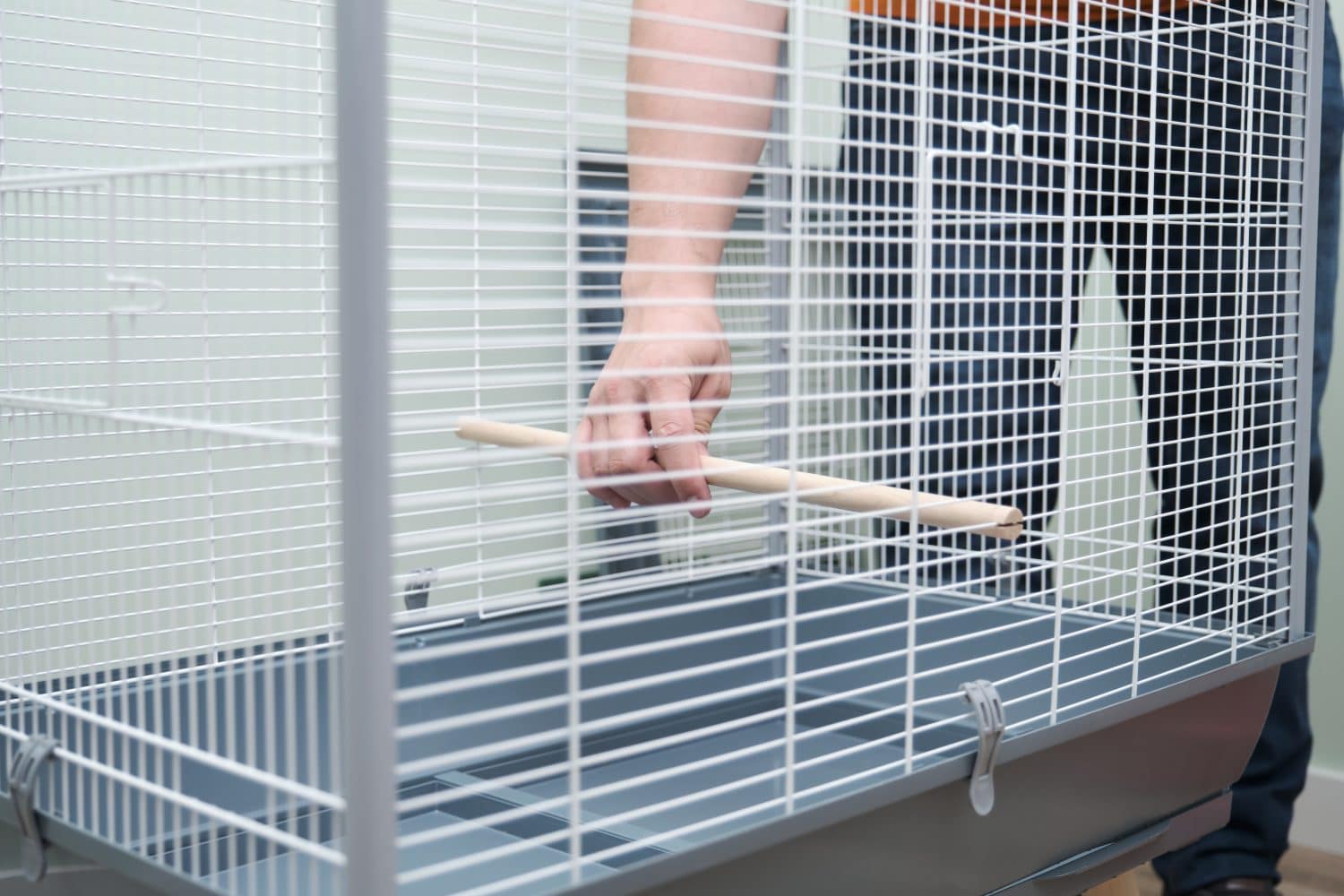
Either transfer your bird to a safe spot like the bathroom or clean around them in the cage if it’s too dangerous to let them out.
©Ladanifer/Shutterstock.com
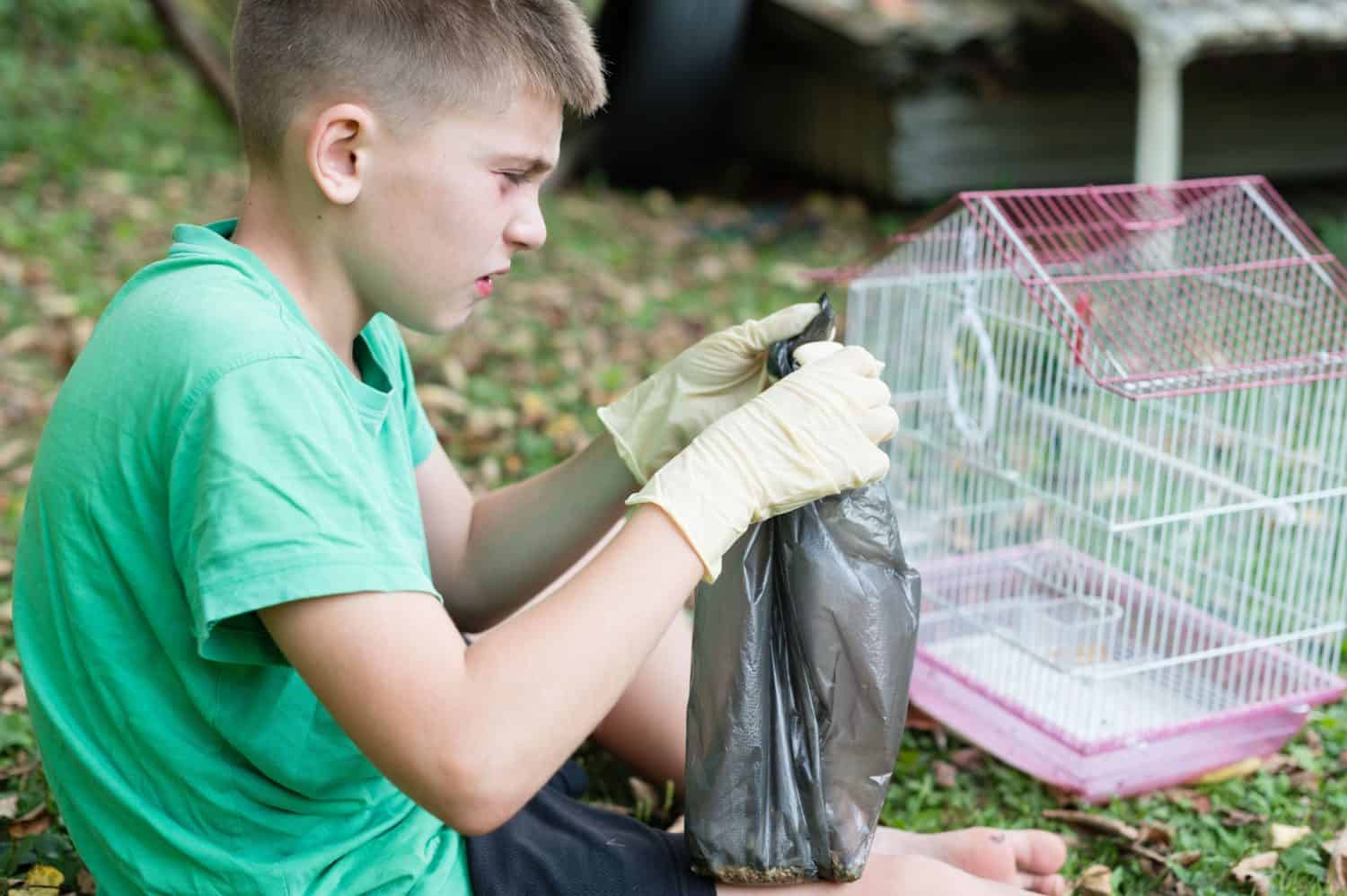
Next, remove every large item from your bird’s cage. This includes food and water bowls, perches, toys, and other accessories. This allows you to dump the loose waste and debris at the bottom of the cage directly into a trash bag. You might want to fold the bag opening around the cage tray to prevent debris from spilling onto the floor.
If your bird is still in the cage, move it to a secure room and encourage them to come out. You can turn the cage on its side, which will point them to the exit without frightening them too much. Once they’re out of the cage, you can move them to a secure spot. This can be a travel carrier, or an easy-to-clean space like the bathroom. Some people train their birds to sit on their shoulders while they clean their cage.
That said, not everyone needs or wants to take their birds out of their cages during cleaning time. Some people have dogs in the same house, which necessitates more caution. This might require you to clean the bottom of your bird cage while the birds hang out near the top, before working around the cage bit by bit and letting them get out of your way.
Clean the Cage
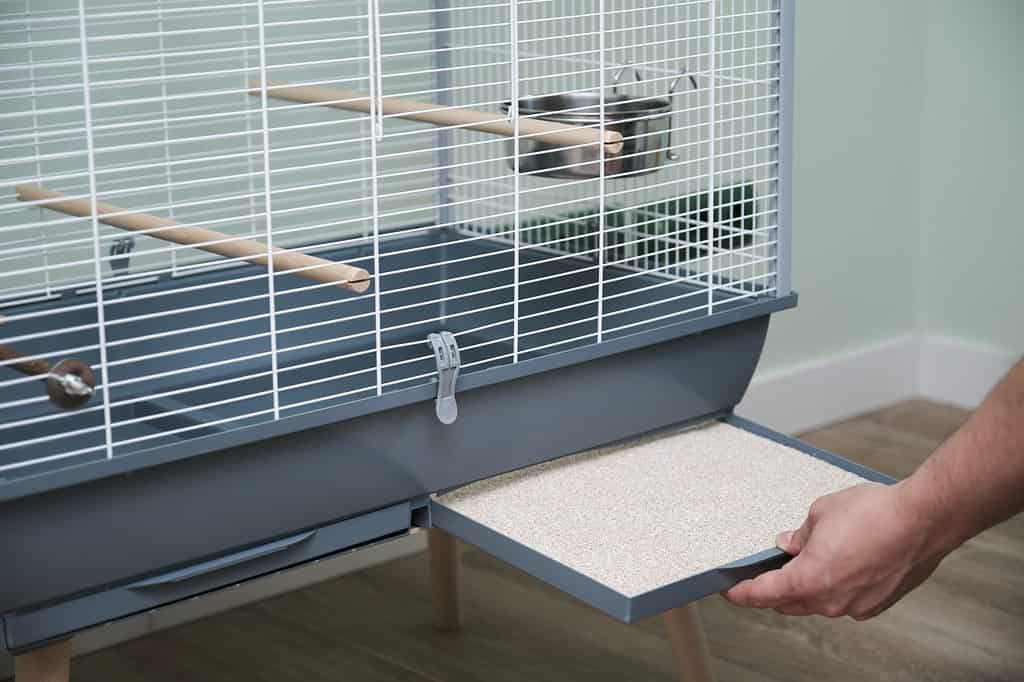
Scrape up dried waste before getting the cage wet and giving it a full wash.
©Ladanifer/Shutterstock.com
Grab a small portable vacuum or a damp paper towel to pick up feathers or dust that were not dumped into the trash bag. Use an old credit card or a specialized scraper tool to remove any dried waste from the various parts of the cage. Dispose of any swept-up debris in your trash bag.
The next step is probably the most difficult, but also the most effective at getting your bird cage clean. It’s time for a wet clean, which means spraying the cage well enough for a full wash. While there are several commercial bird-safe cleaners on the market, you can also make safe cleaning solutions at home. Either dilute white vinegar with water in a 1:1 ratio or mix unscented dish soap and warm water. Thoroughly wash your cage with this mixture and let it sit for several minutes. Then, wipe all the bars and corners with a microfiber cloth, if possible.
It’s also important to change their bowl and water dispenser. Food bowls should be emptied and wiped down every day. A vigorous wash should occur during a full cage cleaning session, but your bird’s water should be refreshed once a day regardless. It may look clean, but it can just as easily fill up with waste.
Dry and Reassemble
Dry the cage off with a towel (preferably a microfiber towel) and reinstall the perches and toys before adding the lining to the bottom.
©Andrii Anna photographers/Shutterstock.com
Once the cage looks clean and shiny, wipe everything down with a dry towel to prevent mildew from forming. If the cage looks and feels dry, reinstall the perches and toys you removed earlier. Add fresh liners, such as newspaper or paper towels, to the bottom of the cage. Birds get bored, so it is best to move their toys and perches around to keep things fresh. Different arrangements of toys and perches mean better enrichment for your bird.
When you return the water bowl to the cleaned cage, try to position it away from any perches so droppings don’t end up in it so easily. While it isn’t strictly part of the cleaning regimen, it’s important to refresh their food bowl regularly so it doesn’t get dirty or filled with waste.
Job Well Done

Consider daily 30-second mini-cleans.
©narikan/Shutterstock.com
At this point, you can put your bird back in the cage and pat yourself on the back for a job well done. To make cleaning easier in the future, consider the following tips. Pre-cut disposable cage liners can save you time. Keep a small portable vacuum near the cage for a quick clean-up of feathers and food that have fallen outside the cage. Items like food bowls and water dispensers should be cleaned every day, while cages should be cleaned more thoroughly once a week.