
Quick Take
- There are two types of baby bird you might find on the ground, and confusing them could make things much worse. Spot the difference →
- Your instinct to 'rescue' a grounded baby bird might be exactly the wrong move. When to back off →
- One well-meaning thing people almost always do for a baby bird in trouble can actually put it in danger. Safe handling tips →
- Knowing when to call a wildlife rehabilitator—and when to leave a bird alone—could make all the difference. When to call for help →
Most of us have spotted a baby bird on the ground at some point in our lives. It’s distressing, and we obviously want to do what’s best. But how can we help these little birds? Should we even get involved at all? In this article, we’ll examine the perilous time in a bird’s life when it leaves the nest for the first time. We’ll also provide a straightforward guide on what you should do, if anything, to help.
Bird Nesting Season
We normally think of the nesting and breeding season as taking place between March and July. Some bird species start nesting earlier and continue through the summer. Tawny owls, for example, can have their young as early as February, but for barn owls, it can be as late as October.
Resident songbirds generally begin their nesting behavior between February and March. Migratory species begin establishing their territories once they arrive in April or May. Some birds also have more than one brood in a breeding season. Robins, for example, may rear three clutches. On the other hand, blue tits generally have just one.
The female bird lays the eggs, and they eventually hatch. The baby birds stay in the nest until they are ready to leave. This is where confusion can arise between a nestling and a fledgling. You need to identify which stage the bird is in before deciding how best to help.
What Is a Nestling?
Baby birds that have hatched but are not mature enough to leave the nest are called nestlings. This stage can last for just a few days. Robins take around 13 days to be strong enough to leave the nest. If a nestling is outside the nest, it should not be! It’s also likely to still be near the nest. But how can you tell it’s a nestling?
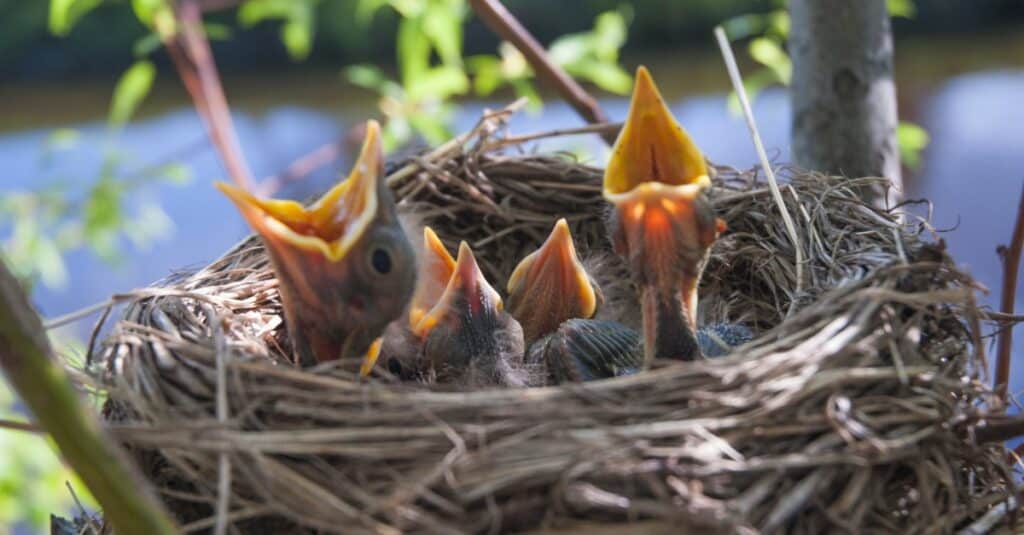
Nestlings have hardly any feathers.
©iStock.com/markhonosvitaly
Nestlings are fluffy and downy or may have only a few feathers. They cannot grip with their feet, so if you pick them up, they will not hold onto your finger. Nestlings also cannot hop, walk, or move around.
What Is a Fledgling?
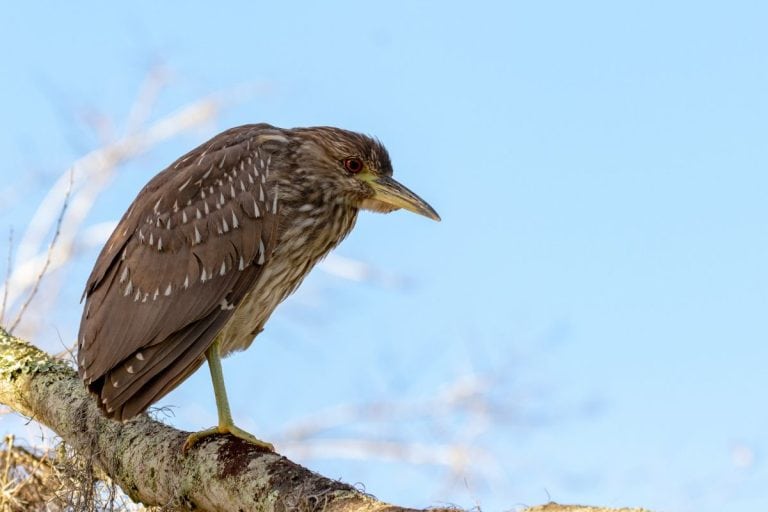
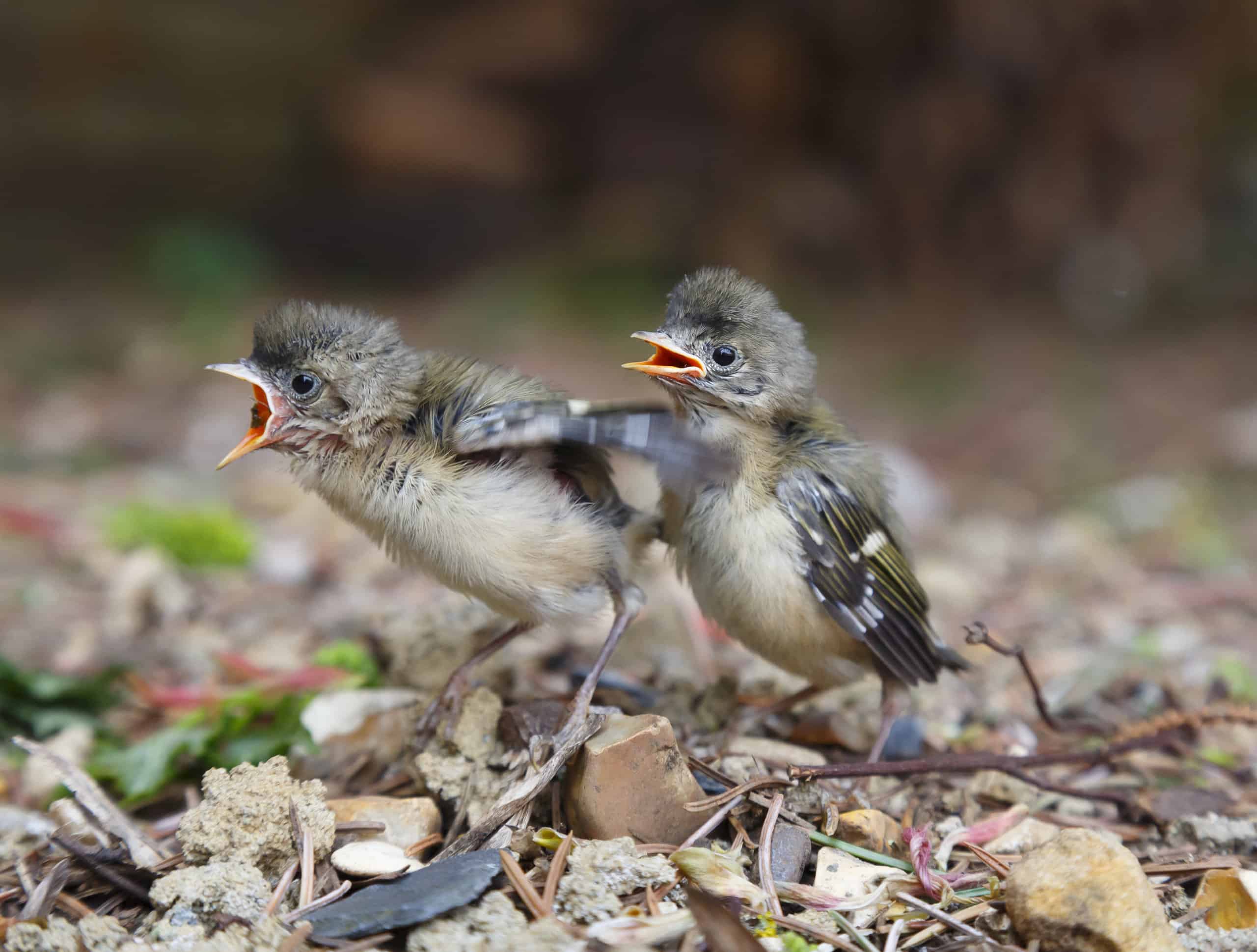
Fledglings are larger and have feathers, often with a stumpy tail. They can grip branches or your finger with their feet. You may spot them learning to fly, although they can be quite clumsy at first. At this stage, the bird is ready to be outside the nest and is learning to live independently. Its parents are likely nearby and will still bring food occasionally.
What Should You Do If You Find a Baby Bird?
Start by observing the baby bird from a safe distance and for an extended period. If it is a nestling, try to locate the nest. Then, gently pick up the bird and place it back in the nest. The parents will continue to care for it. If the nest has been destroyed, you can try to make a replacement using a wicker basket or a plastic container with drainage holes. Place any remaining parts of the original nest inside the new one and return it to the original location.
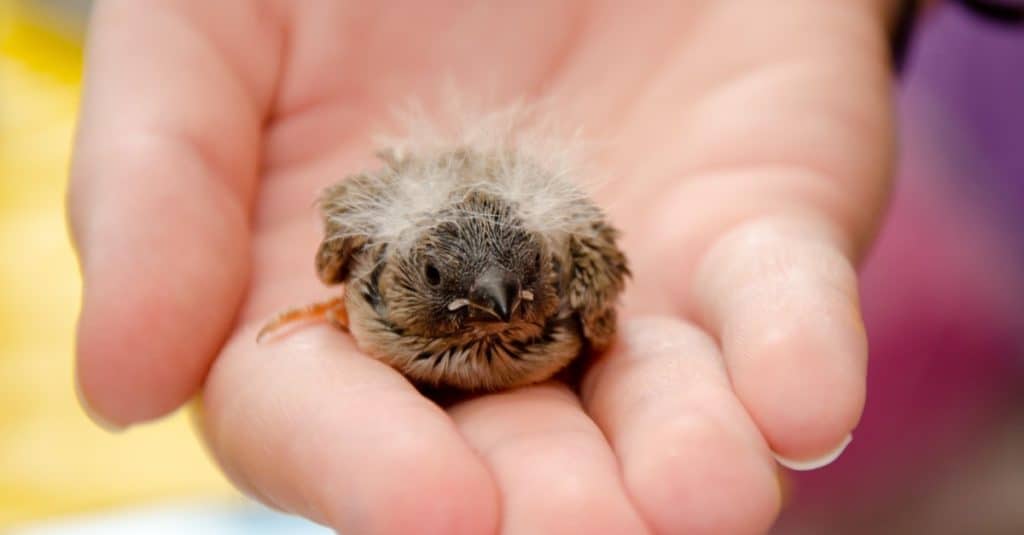
Only handle baby birds if it is necessary.
©Olena Kurashova/Shutterstock.com
If the nestlings have visible wounds, have had contact with a cat, are lying on their side, or feel cold, you need to intervene. Place the bird in a small cardboard box lined with a towel, and keep it somewhere warm. You can use a heat source, such as a clean sock filled with dry, uncooked rice and microwaved for one minute. Do not give the bird food or water. Instead, contact a wildlife rehabilitator immediately. Follow the same steps if it is clear that both of the nestling’s parents are dead. You can find a wildlife rehabilitator on the Humane Society of the United States website or search for a licensed wildlife rehabilitator in your area.
Back Off If You Find a Fledgling
If you find a fledgling on the ground, it is unlikely to be an emergency. Although it may appear abandoned, the parents are probably nearby, possibly caring for several young at once. Observe from a distance, and you will likely see the parents tending to the chick. Do not try to return it to the nest, as it has already left this stage.
If there is an obvious threat, such as a cat or a dog, contain that threat. Only contact a wildlife rehabilitator if the fledgling is injured, the parents are clearly dead, or the parents have not returned within an hour.
Handling Baby Birds
If you need to handle a baby bird, wear gloves if possible or use a towel. Hold the bird with one hand, positioning its head between your index and middle fingers, and gently wrap the rest of your hand around its body.
Transport birds in a well-ventilated box and keep them in a dark, quiet place. This helps reduce stress and shock, providing the best care possible.