
Quick Take
- Male reptiles hide their reproductive organs within hemipenal bulges and only remove them when mating.
- The bulges help biologists identify the sex of the reptile.
- Other anatomical features relevant to reproduction include the cloaca, which serves as a common opening for excretion and reproduction, and femoral pores, which are glandular structures that release pheromones to attract mates.
Identifying the sex of animals can be difficult at first glance, depending on the species and their appearance. Lizards, crocodiles, and other reptiles are especially difficult to discern. However, there is one unique feature that can help the ID the sex of these scaley animals. This Instagram post by @bewareoflizard shows a hemipenal bulge, which commonly covers reproductive organs in reptiles. Read here to learn more.
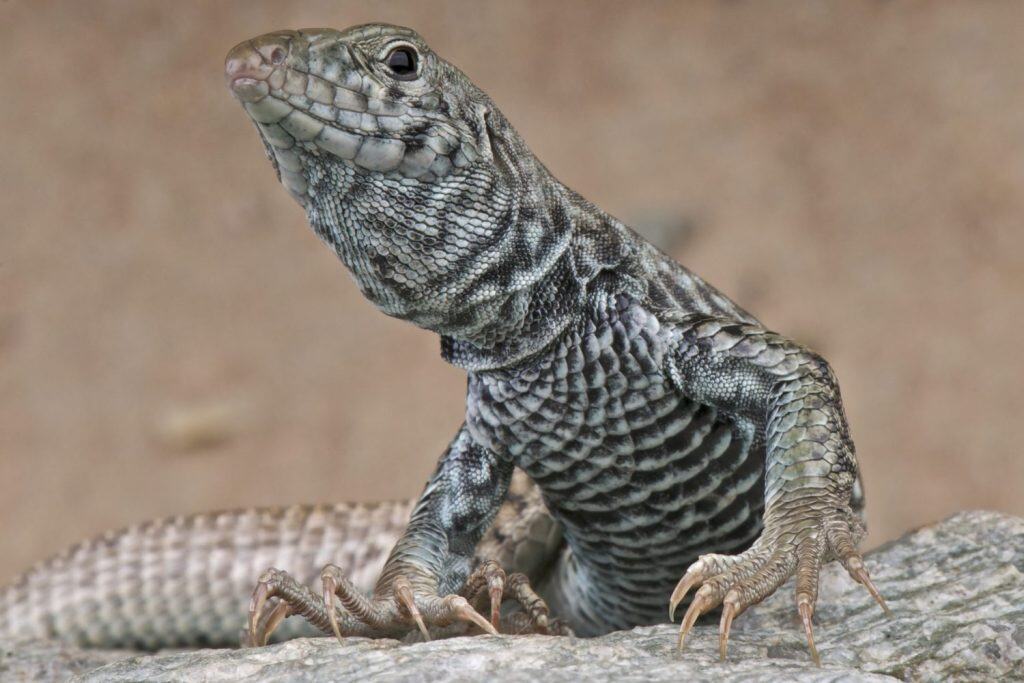
Reptiles have an extremely different reproductive system from mammals that maximizes their chances of reproduction.
©reptiles4all/Shutterstock.com
What are Hemipenal Bulges?
As seen in the video above, hemipenal bulges are located just behind the back legs of many male lizards and snakes. The bulges are an important identifying feature that distinguishes between males and females. When the bulge is present, biologists can quickly identify the reptile as male. Inside these bulges are two hidden reproductive organs known as hemipenes, which typically only emerge during mating. Unlike mammals, which usually have a single reproductive organ, many reptiles have a pair of hemipenes. During mating, only one hemipenis is used at a time, which raises questions about the evolutionary advantage of having two sex organs. However, having two hemipenes allows for more flexibility during mating, such as accommodating different positions or serving as a backup if one is injured. Although unusual in the animal kingdom, it is one of many adaptations that help reptiles thrive and prosper.
Hemipenes are used exclusively for mating. They transfer genetic material from the male to the female and are not involved in excretion. For this reason, it is uncommon to see hemipenes except during mating. Instead, excretion occurs through the cloaca, an opening located just in front of the hemipenal bulges. This opening is both where waste exits the body and where eggs are laid. All reptiles have a cloaca, a trait shared with birds and amphibians, highlighting its evolutionary significance among vertebrates. Femoral pores are also involved in mating. These pores are located along the inner thighs and release chemical signals to attract mates. Together, these features help biologists identify the sex of reptiles. Each plays a role in successful reproduction.