
Quick Take
- When an animal is half male and half female, it is called bilateral gynandromorphism.
- It is very rare but can be seen in butterflies, moths, crustaceans, insects, and birds.
- It is easier to see when males and females of a species look very different.
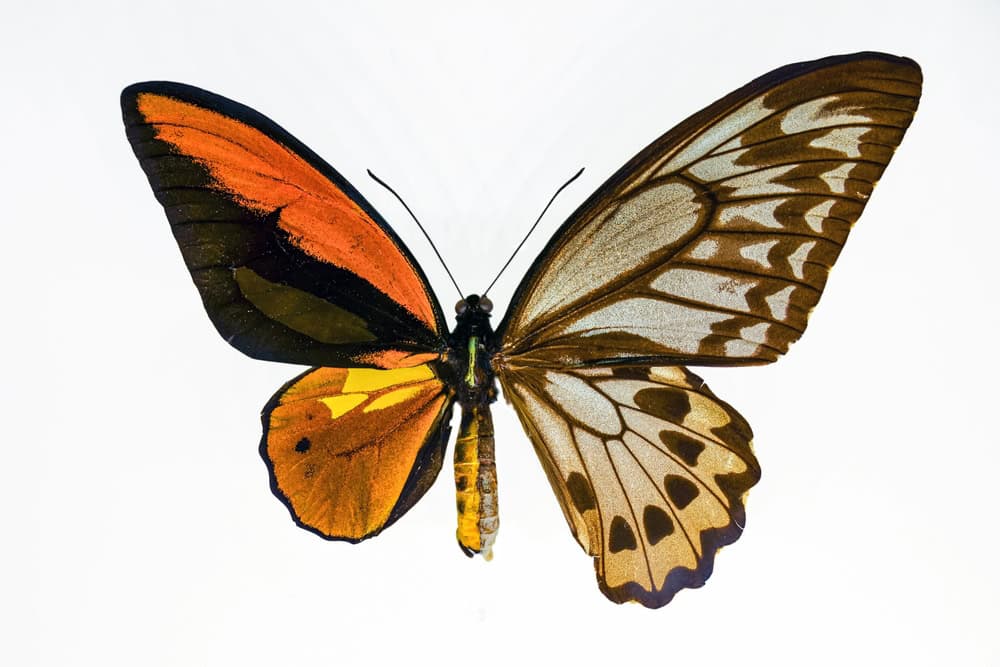
We expect butterflies to be both beautiful and symmetrical; however, some are not. Gynandromorphism is estimated to occur in about one in 10,000 butterflies. As you can see in this Instagram post, the result is both puzzling and stunning as your brain tries to work out what you are looking at. In this article, we explain how this phenomenon occurs.
The Mystery of Dual Gender Butterflies
When an animal is half male and half female, it is called bilateral gynandromorphism. It is also very rare. Occasionally, organisms have both male and female body parts, but having a perfect split down the middle is extremely unusual. It has been recorded in a previous exhibition of butterflies and moths at the Natural History Museum in the UK. Here, the phenomenon was recorded three times between 2008 and 2016.
Asymmetrical Great Mormon
One of the butterfly species with a recorded bilateral gynandromorphism is the Great Mormon (Papilio Memnon). This large butterfly is native to southern Asia. Even without bilateral gynandromorphism, it has very varied appearances.
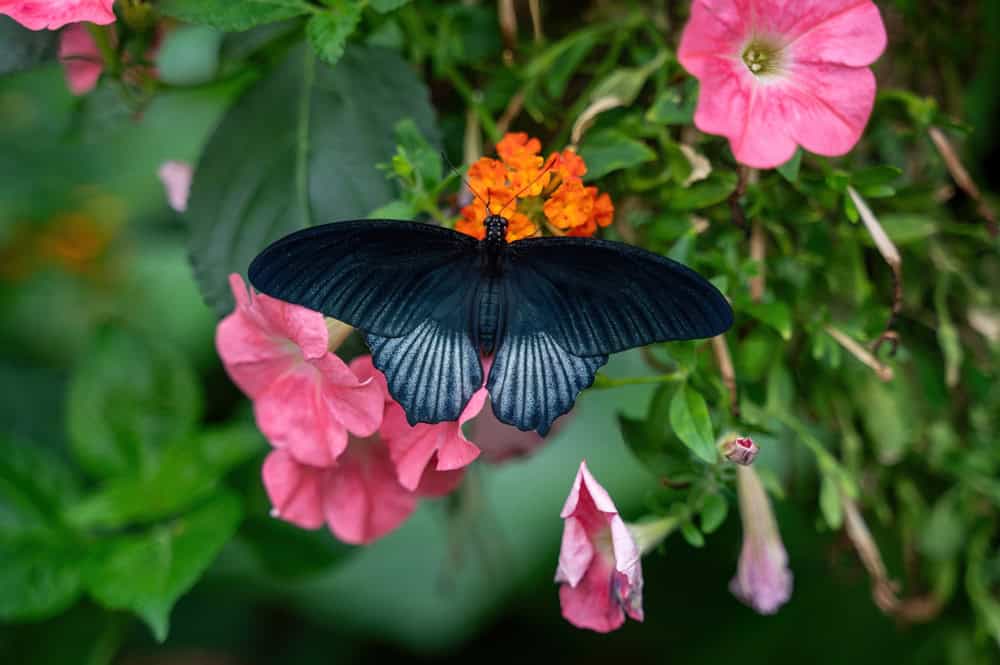
Great Mormon butterflies have different male and female forms.
©Claudia Evans/Shutterstock.com
There are four male and many female forms. Males are tailless and range in color from deep blue to black, with some displaying a red streak on the forewing. Some female forms have tails, but others do not, and they can be a variety of colors and patterns. There are about two dozen recognized female forms, with sources often citing around 24.
Which Animals Exhibit Gynandromorphism?
An animal with gynandromorphism is called a gynandromorph. All of the cells on each side are the correct genetic sex. For example, all the cells on the female side have female chromosomes, while those on the male side have male chromosomes.
It has been seen in crustaceans (spider crab and lobster), insects, snakes, and birds. It is easier to see when the males and females of an organism look very different. This is true for butterflies, moths, and birds.
Researchers believe there are several possible causes. One of the sex chromosomes may have been lost or damaged during development. A parasitic bacterium could be to blame, or even temperature may be the cause.