
Quick Take
- Humpback whales mainly feed on krill and small schooling fish, often using highly coordinated feeding tactics.
- One of their most famous hunting methods is bubble-net feeding, where they corral prey with underwater bubbles before lunging upward.
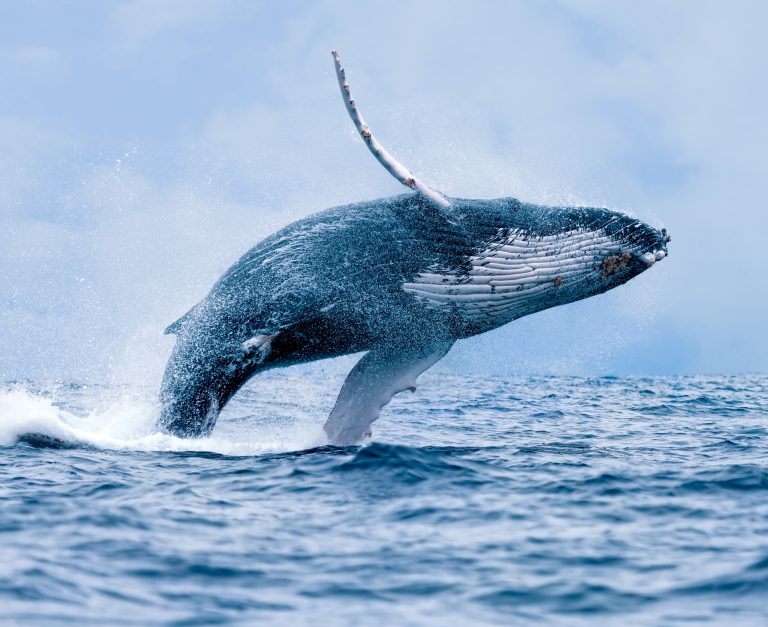
- Humpbacks live across the world’s major oceans and migrate long distances between high-latitude feeding grounds and warmer breeding waters.
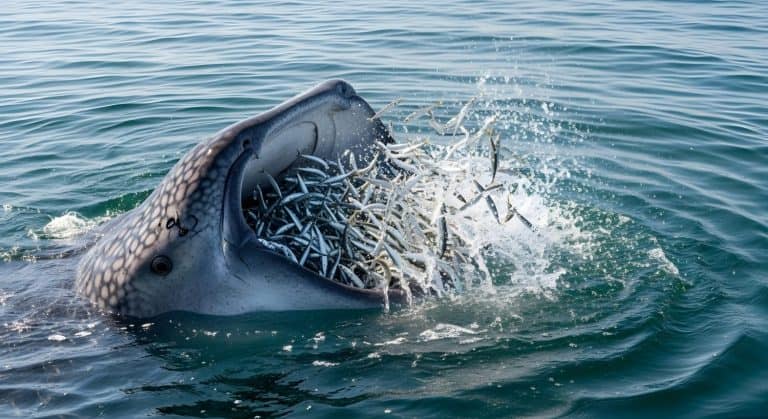
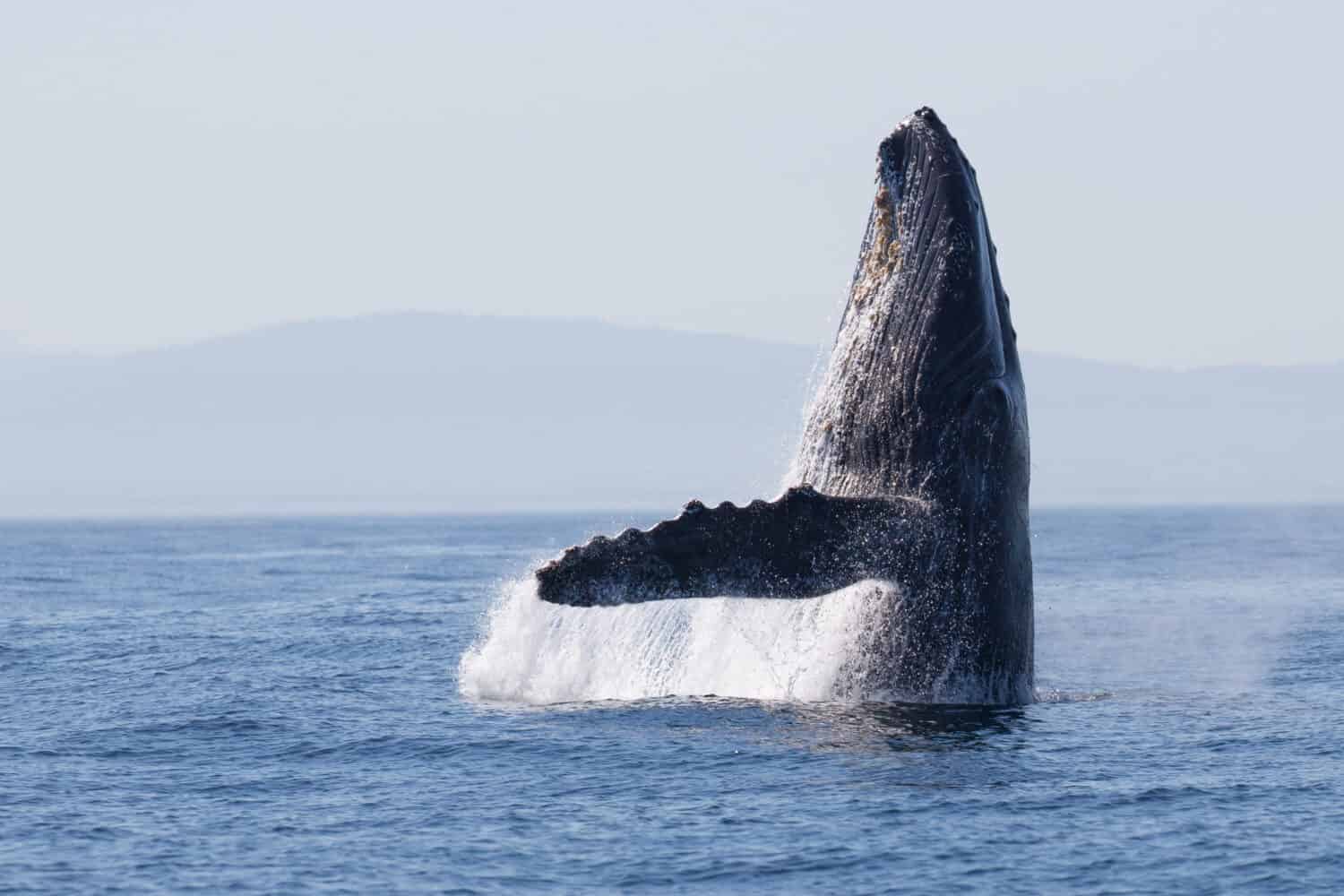
A massive mouth can hold a lot of fish, and they don’t come more massive than a humpback whale’s! The amazing clip above shows a close-up view of a humpback whale lunging through what appears to be a dense school of small fish in a single feeding pass. The fish have no idea what is happening as the huge sea creature emerges from below them, mouth wide open! Check out the extraordinary sight.
Where Do Humpback Whales Normally Live?
The scientific name for humpback whales is Megaptera novaeangliae, and they are normally in polar and tropical waters. You can spot them in the Atlantic, Pacific, and Southern oceans, and in many adjacent seas; they are generally absent from the very high Arctic. Many humpback whales migrate seasonally to feeding grounds in places such as the Bering Sea and Antarctic waters, although some populations, such as the Arabian Sea population, are unusual in being largely non-migratory. Humpback whales are found in coastal waters off Long Island, New York, and Cape Cod, Massachusetts.
Scientists recognize multiple distinct population segments and stocks of humpback whales worldwide, and movement between some populations is limited, though it is not entirely absent. Globally, NOAA recognizes 14 distinct population segments of humpback whales. Broadly, humpbacks are divided into North Atlantic, North Pacific, and Southern Hemisphere groupings, but the detailed stock and population structure is more complex.
What Do Humpback Whales Normally Eat?
Humpback whales are opportunistic feeders whose diet varies by region, but they primarily target krill and small schooling fish.
Plankton are tiny organisms that live in water. Diatoms, protozoans, small crustaceans, eggs, and larvae are all plankton. The name comes from the Greek word for ‘drifter,’ and this perfectly sums up the life of plankton. Nearly all plankton are under an inch in length, and some are microscopic. It’s crazy that such a large animal lives off the smallest creatures in the sea! An average humpback whale eats between 4,400 and 5,500 pounds of plankton, krill, and small fish every day in the feeding season.
When it comes to fish, humpbacks may eat anchovy, herring, sand lance, capelin, pollock, and in some regions, Atka mackerel and other small schooling fish.
Humpback Whale Feeding Strategies
Some humpbacks use a technique called bubble-net feeding, in which they release curtains or nets of bubbles underwater to corral prey into a tight group before lunging upward with their mouths open. With their prey unable to move, the whale dives under the ring and swims to the surface with its mouth wide open, just as you see in this clip. It is an ingenious method of hunting in the water and is highly effective!