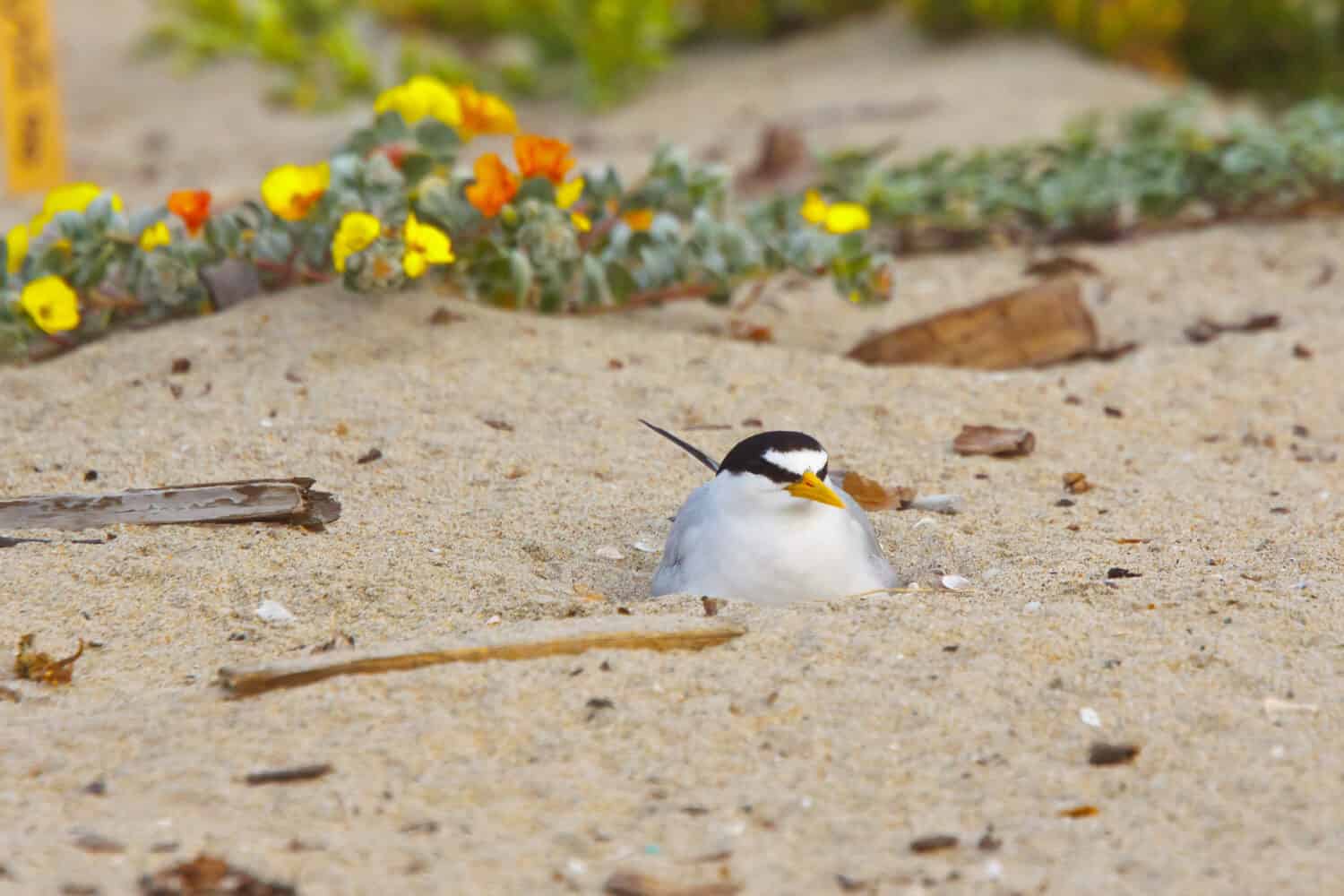

Many bird courtship rituals are elaborate and intense, and the California least tern is no exception. This fascinating Instagram post follows a couple from the ‘getting to know you’ stage right through to feeding the cute little chicks that were the product of this union. Take a look for yourself, and then let us guide you through the stages and complexities of California least tern romance.
Finding a Mate
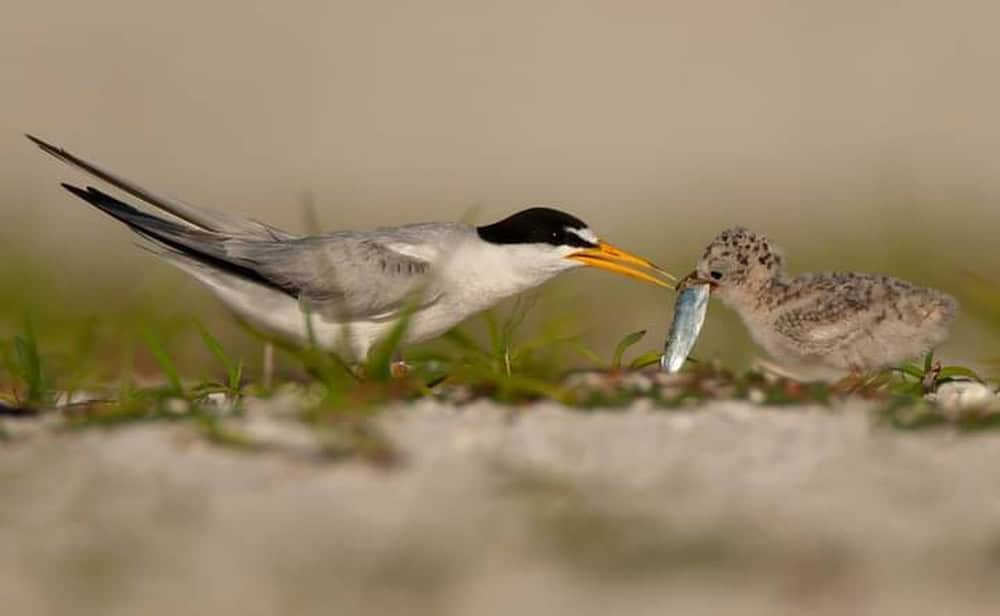
Least terns form breeding colonies.
©DANY STOCK/Shutterstock.com
For this bird, federally listed as an endangered subspecies, finding a mate is the first challenge. In the 1970s, they were on the brink of extinction with just 582 breeding pairs left. Thanks to extensive conservation efforts, the population has increased from historic lows, but it remains vulnerable. This is partly due to the concentration of their breeding sites and their sensitivity to human disturbance.
They gather to breed along the Pacific coast of California, from San Francisco Bay to Baja California, Mexico. There have been some sightings as far as Arizona, but these are rare. More than 40 California least tern nesting sites have been recorded, some of which are manmade or actively managed to optimize breeding conditions.
Courtship Ritual
Once all the birds are in the same location, pairing up can begin. Breeding starts at about three years of age, and they are seasonally monogamous. This means that the pair will stay together for the entire breeding season. Take a look at the clip and notice the intricate movements and the way in which the male presents a fish to the female.
This is a courtship display or ritual. The movements of both the male and female are a signal that they are ready to mate. California least terns do not start to breed until they are three years old, and these rituals demonstrate to potential mates that they are sexually mature.
Furthermore, the male demonstrates his health and vigor through his movements. Because the female invests significant energy in producing and incubating eggs, she wants to ensure her offspring inherit healthy genes. He offers a fish to demonstrate that he can provide for his future family. She may eat it, which provides her with additional nutrition. This particular love story had a happy ending. Within three to four weeks, the eggs hatched, and the happy couple went on to raise a nest of beautiful chicks!