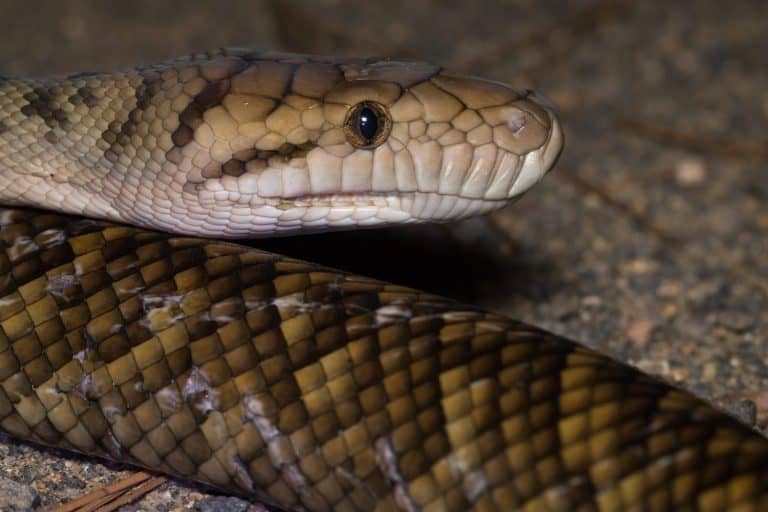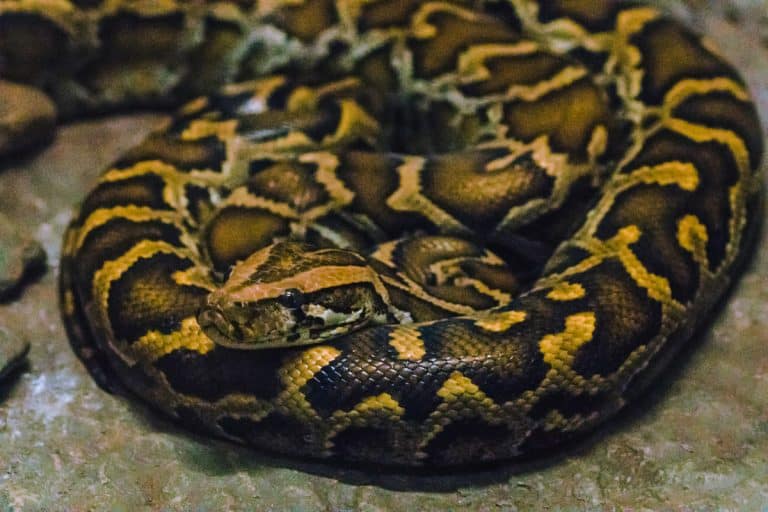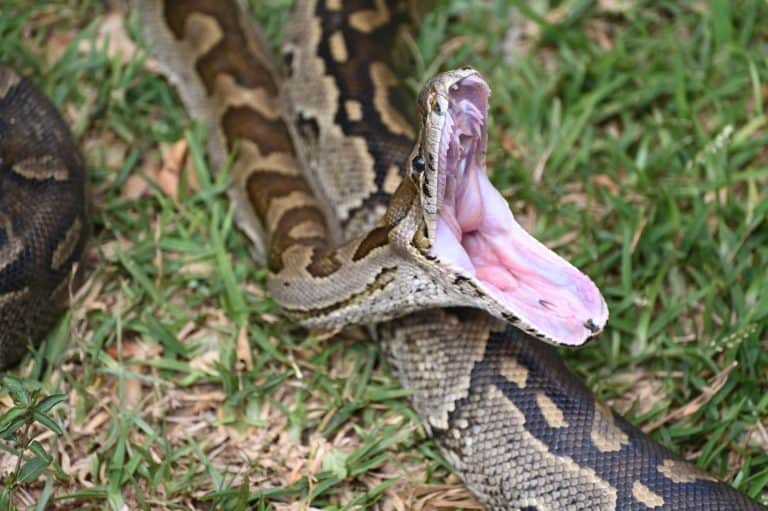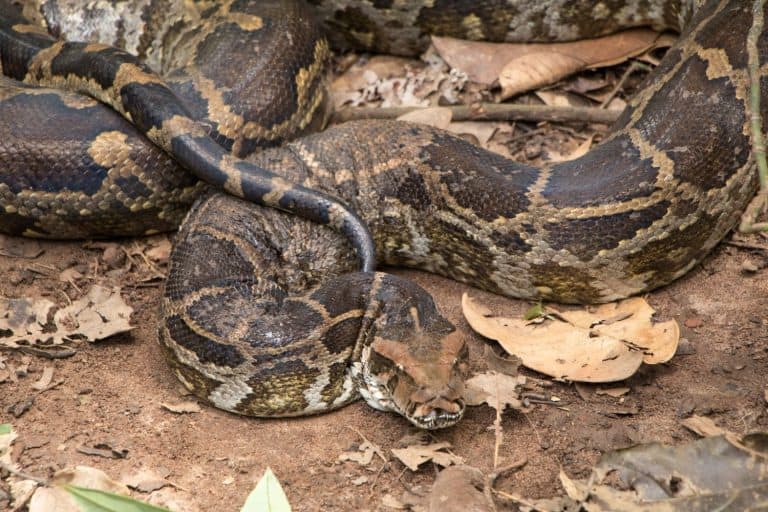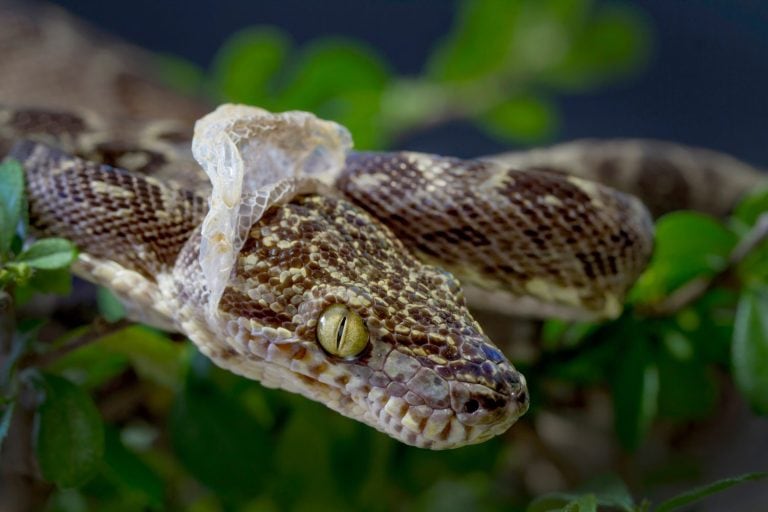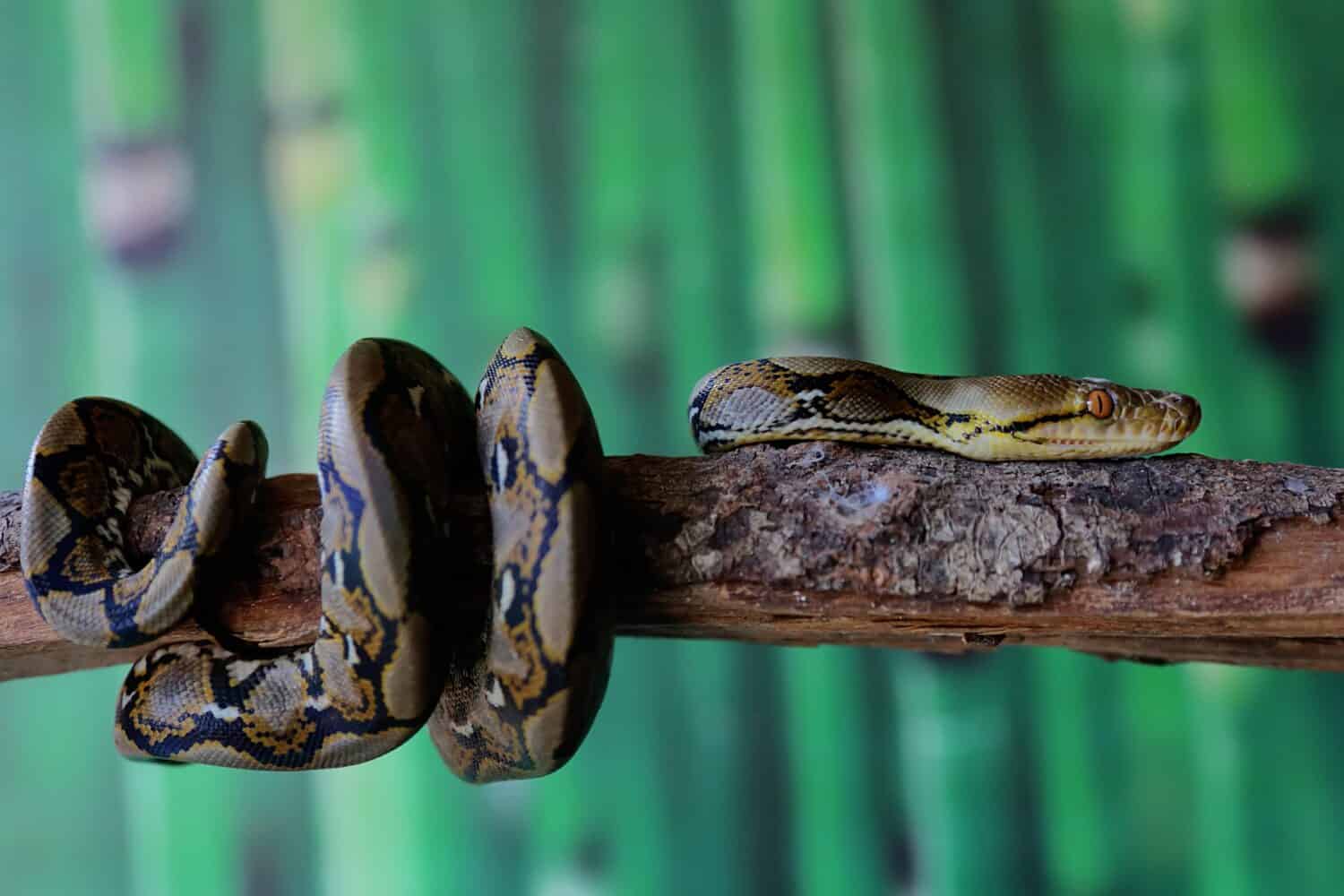

No matter how you feel about snakes, there is no denying that reticulated pythons are magnificent creatures. There is one female in this clip that has grown to 21 feet and is proving very tricky to relocate. Even with two grown men attempting to move her, relocating the python is a significant challenge. Let’s learn more about these incredible creatures and about some of the terminology used in the clip.
How Big Are Reticulated Pythons?
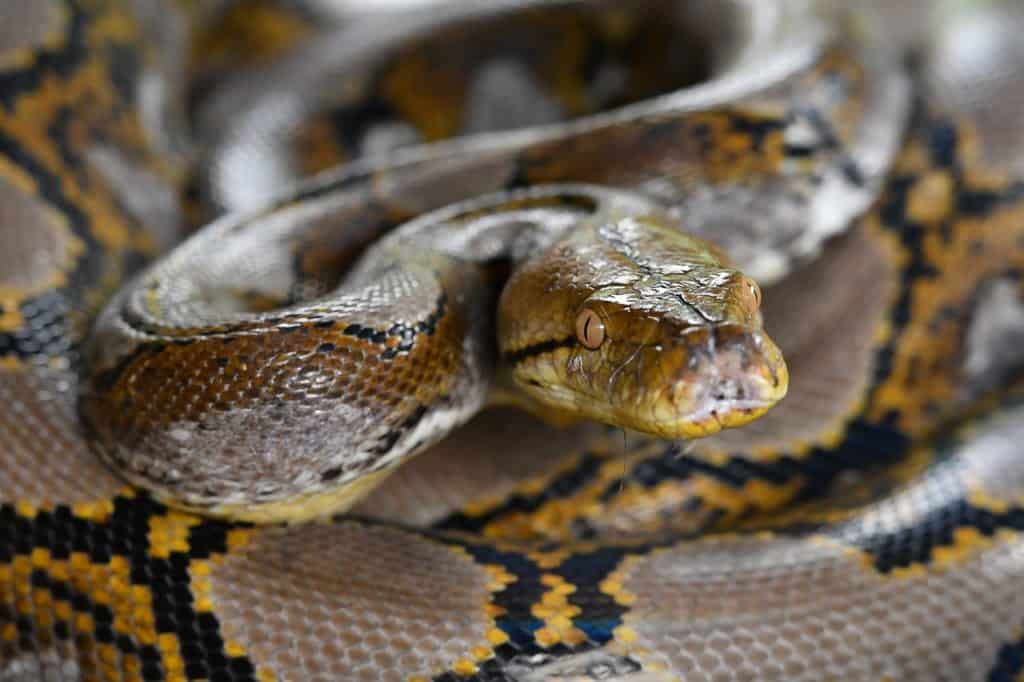
The largest reticulated python reached a length greater than 30 feet.
©jaiman taip/Shutterstock.com
Reticulated pythons (Python reticulatus) have lengths ranging from 5.25 feet to around 30 feet. They can weigh more than 350 pounds. The longest verified reticulated python reached 32 feet 9.5 inches, according to Guinness World Records. A 21-foot reticulated python would likely weigh between 150 and 200 pounds. The females are generally larger than the males.
Due to their size, keeping them in captivity is not easy, and so there have been relatively few captive individuals. You also need the correct temperature and humidity. In the wild, they live for up to 23 years. They live longer in captivity, where they do not have to face the same environmental stressors.
The Difficulty of Handling Reticulated Pythons
In the wild, reticulated pythons are a native species of southeastern Asia and western Bangladesh. They also live in southeastern Vietnam and on the Indo-Pacific islands west of New Guinea. These pythons occupy tropical rainforests, wetlands, and grassland forests. Water is very important to them, and they need it for protection and for hunting prey.
Wild-caught reticulated pythons are the hardest to handle. As the name indicates, they were born in the wild and lived at least some of their life there. They do not like to be handled and make life difficult for their keepers. They are also more likely to carry parasites and diseases, which could make them sick and more defensive. These parasites and diseases could be transmitted to humans. This discourages many reptile keepers from choosing them as pets.
Such a large and powerful snake acting defensively needs to be taken very seriously. They are not venomous, but they have a powerful bite that can result in their human handlers needing stitches. More worryingly, they kill their prey using constriction, and there are credible reports of people being attacked, constricted, killed, and even eaten by these snakes.
When two wild-caught specimens are mated in captivity, their offspring are referred to as Filial 1 or F1. This means that they are one generation away from living wild and may still retain some of the more aggressive characteristics. The next generation would be F2 and so on. Many captive-bred reticulated pythons are very docile, and some people keep them successfully as pets.