
In the canine world, the term purebred is tossed around frequently, without anyone thinking twice about the verbiage. For felines, it is different. Some believe only the term “pedigree” is appropriate for cats, and consider those who use “purebred” to describe a feline as uninformed. However, there is such a thing as a purebred cat. Even if a cat does not have papers showing its lineage, it is technically a purebred if both parents are of the same breed. After all, for a cat to be considered pedigreed, it must first be purebred. In summary, there are both purebred and pedigreed cats.
Purebred Cats Do Exist

A Sphynx cat is considered a purebred cat.
©jurra8/Shutterstock.com
Some do not believe the term “purebred” should be used for cats, substituting “pedigree” instead. However, because both purebred and pedigree cats exist, both terms are acceptable. But what is a purebred cat?
According to Dr. Grant Little, Nebraska-based veterinarian, the definition of a purebred cat is fairly easily explained. “A purebred cat is one in which the ancestry is of one particular breed, i.e., a Sphynx cat has to be bred over and over with other Sphynx to keep the same hairless genetics,” Dr. Little explains.
Dr. Little says he can often identify a Sphynx cat based on its appearance alone when he walks into an exam room. However, the purebred cat will need documentation to be considered a pedigree cat.
“Pedigree cats ARE purebred, but not all purebreds are pedigree cats,” Dr. Little says. “Purebred is another way of differentiating from just hybrid breeds that are running around wild, such as your domestic shorthair cats or domestic longhair cats, for example.”
Yet, for many, there is still confusion between a purebred cat and a pedigreed cat.
Why There Is Confusion Between Purebred Cats and Pedigree Cats

A Persian cat can be both purebred and pedigreed.
©varis kusujarit/Shutterstock.com
The confusion over what makes a pedigree cat versus a purebred cat can often come down to semantics, Dr. Little states. But there is a difference between the two terms. “Pedigree is a fancy way of saying [cats] have a documented lineage that goes back further. I believe it’s three generations. It shows that they have an ancestry that doesn’t have any cross-breeding or other genetics mixed in. This is a formal way of showing that a cat’s breed is authenticated deep into the bloodlines.” Essentially, “pedigree” equates to proven purebred.
Pedigree cats ARE purebred, but not all purebreds are pedigree cats.
Dr. Grant Little, Nebraska-based veterinarian
Dr. Little gives an example of pedigree: “A good way to compare it would be like the British Royal Family being able to document their bloodlines for generations, showing who the rightful kings/queens will end up being.”
However, a cat can still be a purebred without being pedigree if the cat’s parents are of the same breed, but with no documentation of their lineage. Therefore, both ‘pedigree’ and ‘purebred’ can be used to describe cats, although this can contribute to confusion.
Both Pedigree And Purebred Cats Are More Prone To Disease
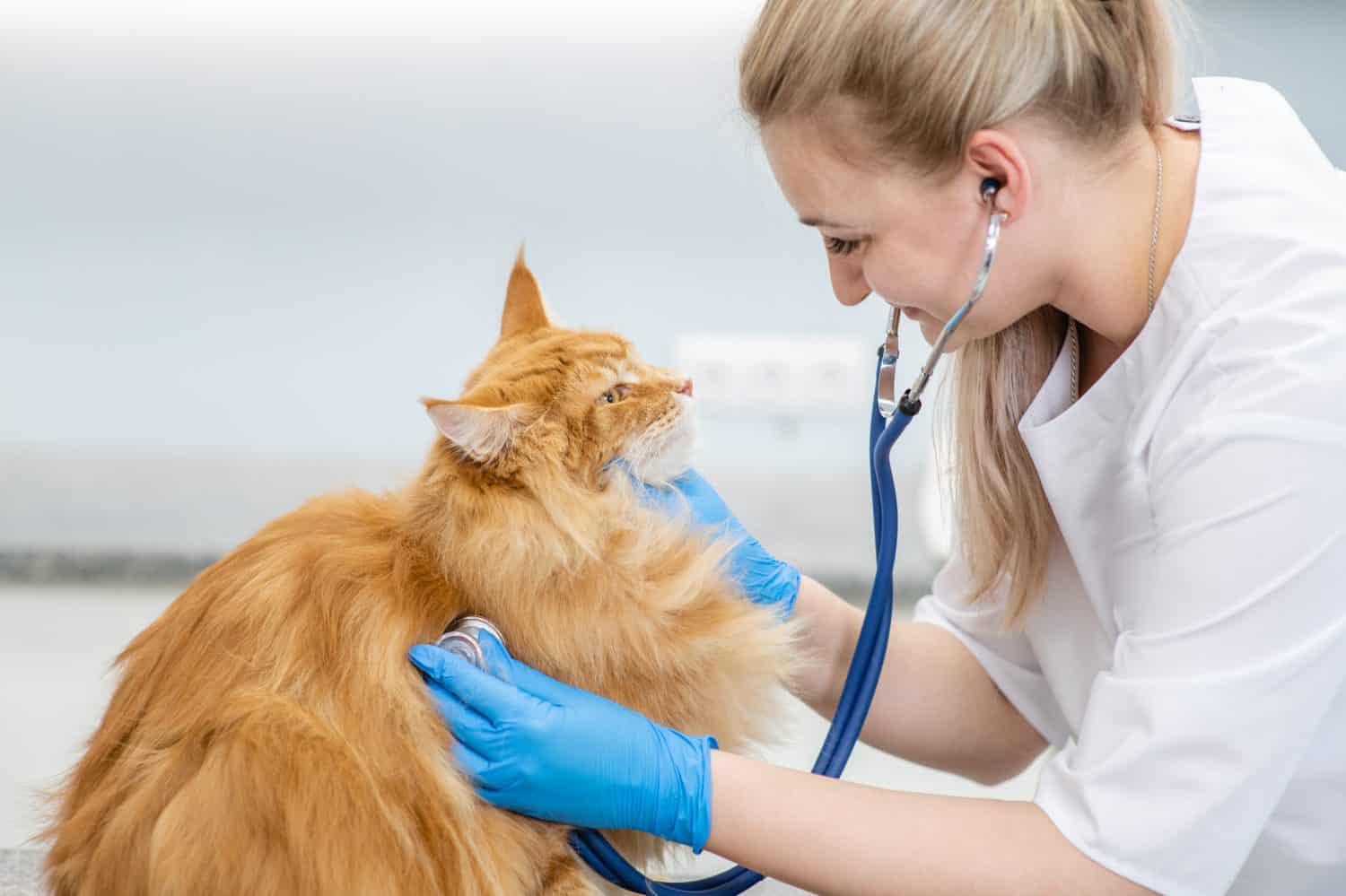
Purebred and pedigree cats, like this Maine Coon, have more health issues than crossbreed cats.
©Ermolaev Alexander/Shutterstock.com
All purebred cats (with or without pedigree) are more prone to disease. This is because continued breeding limits the gene pool substantially. Consequently, specific breeds are more likely to develop diseases than crossbreed cats. According to a 2023 study analyzing data from 550,000 cats, purebred and pedigree cats were far more likely to develop diseases than crossbreed cats. While each breed had its own health issues, the most common diseases purebred and pedigree cats developed included:
- Heart disease
- Female reproductive problems
- Lower respiratory infections
- Immunological disease
- Surgery complications
Dr. Little notes that, regardless of whether a cat has pedigree papers, he will assume a purebred is at greater risk. This is because these cats frequently present with the same diseases. “If I see a Maine Coon looking cat, I’m going to assume heart disease is a risk factor for this specific patient,” Dr. Little explains. “Where it has papers to prove it or not, it’s still a risk factor in this situation.”
Therefore, those considering a purebred or pedigree cat should understand that these cats are likely to have more health issues than crossbreed cats. This means not only is there a massive financial cost to purchasing the cat up front, but there is also the potential for hefty costs as the cat ages.
Documenting A Pedigree Cat

Pedigree documents can be obtained for cats like this Balinese cat and her kittens, as long as lineage can be proven for three generations.
©Heidi Bollich/Shutterstock.com
In general, those who plan on breeding their cat or who want their cats to participate in cat shows are the most interested in gaining access to pedigree documentation for their felines. However, owners of purebred cats may also want this information for their own satisfaction. Fortunately, documenting a pedigree cat is an easy process.
The first step in registering a cat for documentation is ensuring that it is a breed of cat that is recognized by a reputable cat registry. Some of the most prominent organizations include:
| Cat Registry Organization | Information On Organization | Website |
| TICA (The International Cat Association) | Recognizes 71 standard breeds. Established in 1979. | tica.org |
| CFA (Cat Fanciers’ Association) | Recognizes 44 standard breeds. CFA is the largest cat registry in the world. Established in 1906. | cfa.org |
| FIFe (Fédération Internationale Féline) | Recognizes 43 standard breeds. FIFe is an international organization. Established in 1949. | fifeweb.org |
In addition to the organizations listed above, there are also breed-specific registries. Therefore, if trying to document a pedigree Maine Coon, Persian, Siamese, or other breed of cat, there may be registries available outside of the long-established ones. Registering with these organizations can add credibility to a cat’s lineage.
Registration is fairly straightforward, according to 21cats.org. Owners will need the name of the breeder, as well as the names of the parent cats, alongside documentation of their lineage. Additionally, the registered cat will need to be up to date on all vaccines. In some instances, DNA analysis will be done to ensure there are no genetic abnormalities present.
Finally, owners must provide health history and photographs of the cat. Once this is completed, the application is sent to the corresponding organization. Within four to six weeks, the organization will notify applicants whether their cat has been officially recognized as a pedigree cat.
Importance Of Verifying Pedigree

Cat owners look for cats with a pedigree, like these Ragdoll cats, because they want a particular personality or coloration of cat.
©V. Pawtraits/Shutterstock.com
It may seem like an unnecessary step to verify the pedigree of a cat, especially for those who have no plans on breeding or entering their cats into shows. However, for those who want to adopt a particular breed of cat and have expectations of how that cat will behave, being able to trace their lineage can be very important.
Each pedigree cat has its own unique characteristics, both in appearance and personality. Some cat owners are drawn to certain breeds based on these factors. Therefore, a level of predictability comes with cats that have a verifiable pedigree.
Additionally, those looking to adopt can check registries to ensure that ethical breeding practices are in place. This helps reduce the likelihood of adopting a sick cat. However, because purebred and pedigree cats are more prone to breed-specific diseases, the registration cannot protect against those.
When adopting a cat, whether from a breeder or a shelter, having more information about the feline is always beneficial. Cat registries can be a valuable resource for potential cat owners seeking a cat with a pedigree, which also means the cat is purebred.