
Quick Take
- Leaf samples miss most of what's actually flying overhead, so scientists had to get creative to plug that gap. Discover airborne eDNA collection →
- Two mitochondrial markers are doing far more than just identifying insects, and one of them can reveal something unexpected about ecosystem health. Explore the genetic markers used →
- Agricultural pests showed up in the aerial traps, and their presence raised a concern scientists didn't expect to find above South Korea's forests. See the unexpected pest findings →
For all the insects that you see, there are dozens more zipping above your head. Many are too small to catch with the naked eye, and you’d never even know they were there. But every living organism leaves behind environmental DNA, and the world’s smallest flying insects leave it suspended in the air.
A recent study out of South Korea is documenting hundreds of airborne insects without ever seeing them. Thanks to eDNA, scientists are tracking the seasonal patterns of anything from arthropods to agricultural pests. Here’s what the data is telling them.
Why Track Insects You Can’t See?
In 2025, a collective study compared arthropod populations in Germany and South Korea. Researchers compared data from the previous 11 years to compare changes in diversity across both countries’ forests. The ecosystems of both are relatively similar, with many overlapping arthropod species. But when the results were in, there was a significant drop in the diversity of South Korea’s insect populations. The insects facing this decline were airborne, and losses were noted in both moth and butterfly species. At the same time, an uptick in subtropical and invasive species was recorded.

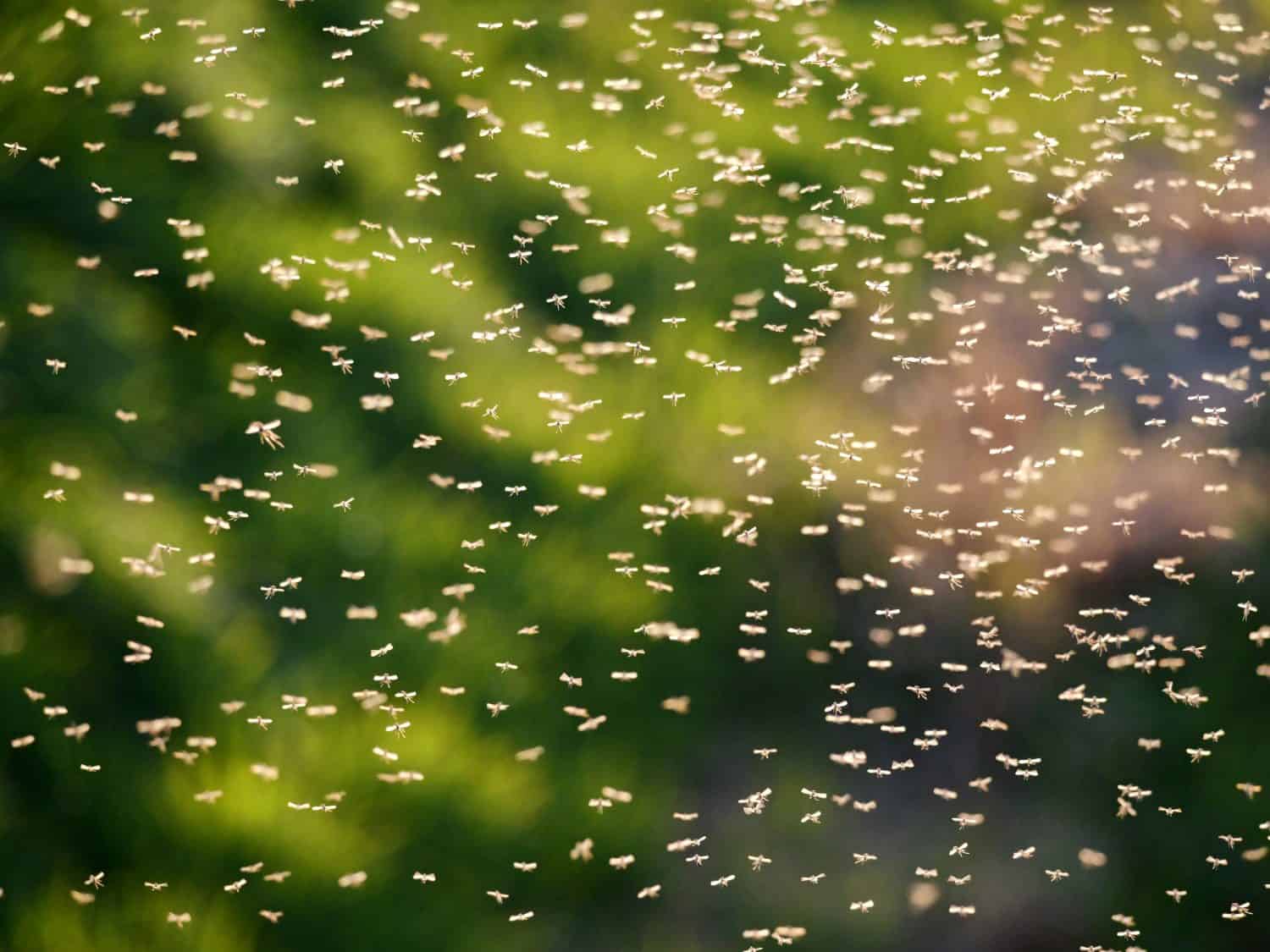
Most of the time, you can’t even see all the insects that are flying above your head.
©Janis Smits/Shutterstock.com
In comparison, data from the 2025 study showed no significant decline in arthropod diversity in German forests over the past decade. Other research has reported declines in specific insect groups in Germany. But for the most part, these species were undisturbed and faced little adversity despite changing climates and human activity. South Korea’s data was jarring in comparison. Over the course of just over a decade, arthropod diversity declined by roughly 61%. More than half of the region’s native species faced genetic challenges, and scientists were left asking one question: Why?
Snatching eDNA From an Unusual Place
The 2025 study used eDNA metabarcoding of leaf material from each forest. While this provides solid information about terrestrial insects and species that happen to land, it’s not comprehensive. Thousands of insects, including pests like lovebugs, spotted lanternflies, and mosquitoes, rarely spend much time on the ground. The original data painted a concerning picture, but to learn more about South Korea’s declining insect diversity, there had to be a more concise way.
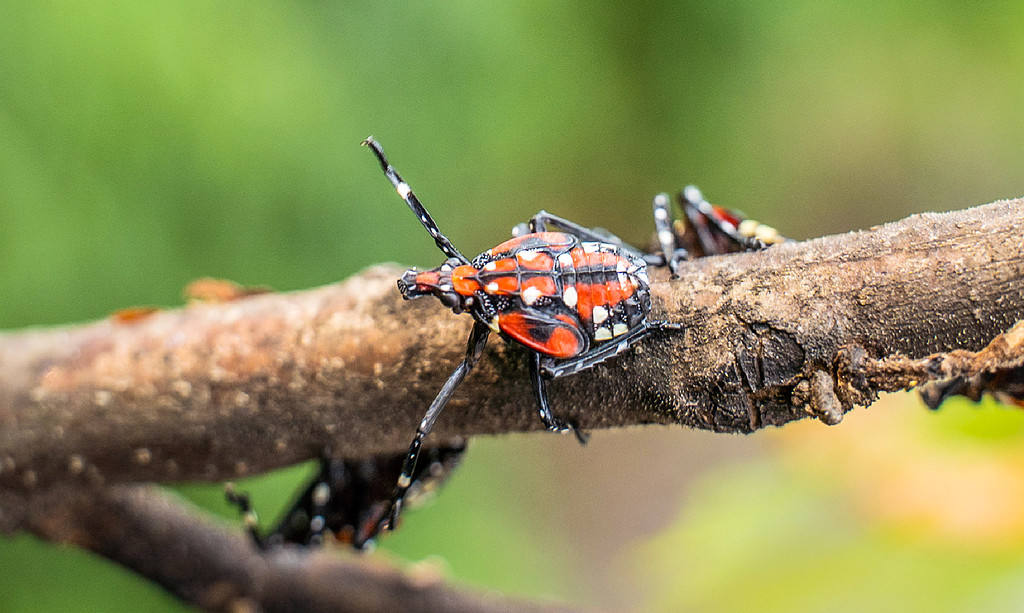
Spotted lanternflies are invasive in the U.S., but cause just as much damage in Asia.
©iStock.com/arlutz73
Taking eDNA from the air is a relatively new concept, but it offers a comprehensive perspective. As insects fly overhead, they leave microscopic traces of cells behind. When contained, these cells can be tested. Scientists can then compare the results to other known DNA sequences to identify the insect. Once they’ve made a match, they can also track the species’ aerial routes. In 2026, scientists have been able to do just that with aerial traps and a little ingenuity.
Tracking Airborne Insect Communities from the Air
As South Korea’s forests continue to experience declining insect diversity, these studies have become imperative. Tracking the biodiversity of airborne insects reveals their seasonal habits, reproductive rates, breeding patterns, and the overall health of the species. To do this, the research team used cytochrome c oxidase subunit I (COI) and mitochondrial 16S rRNA.
COI is a mitochondrial genetic marker commonly used to distinguish between similar species. In the case of airborne insects, it helps categorize multiple sets of eDNA that closely resemble one another. Alternatively, 16S rRNA is another mitochondrial DNA marker used to study animals, but it can also provide details about an individual’s health. It can offer clues about mitochondrial diseases, mutations, and body functions. Together, these can paint a picture of the overall health of an ecosystem’s species.
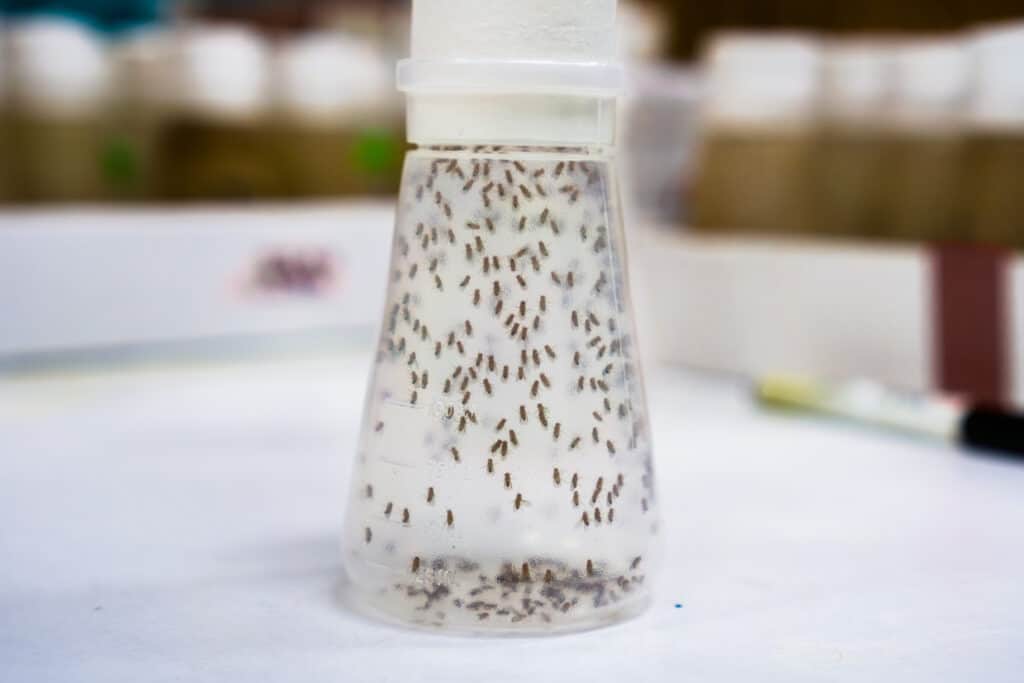
Scientists can test eDNA from various insects, thanks to the microscopic cells they leave behind mid-flight.
©iStock.com/Sundry Photography
To collect specimens, scientists used aerial traps that were nearly 33 feet long. They caught a wide range of species, including small-bodied insects, endemic species, and agricultural pests. The latter prompted some concern, given the number of agricultural fields throughout South Korea. The others also proved interesting, providing evidence of definitive migration patterns. Scientists noted that these occurred from early May to early July, late July to early September, and late September to late October. In addition to collecting crucial biodiversity data, the research team also gleaned valuable insight into the migration patterns of certain airborne insect species. With this data, scientists can better predict the arrival and departure of certain species, as well as their presence within South Korea’s forests.