
Quick Take
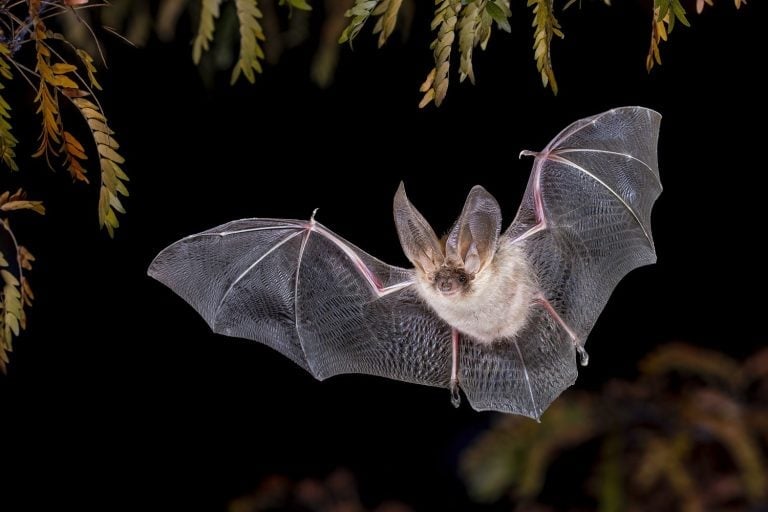
- Unlike bats, this nocturnal hunter has no ability to echolocate, and that single difference locks its entire survival to one celestial event. See why moonlight is critical →
- Every month, these birds enter a state normally associated with hibernating mammals, and researchers have finally figured out exactly what triggers it. Discover what triggers torpor →
- The timing of migration and hatching is not random at all. It is calculated around a predictable celestial window, and the margin for error is razor-thin. Explore the lunar timing strategy →
- City lights are spreading, and researchers fear they may be quietly dismantling a survival system millions of years in the making. See the threat from city lights →
Humans use calendars, while animals track the seasons in myriad ways — but the red-necked nightjar answers only to the moon. Every month, as the moon waxes and wanes, this nocturnal bird adjusts its behavior to match. Full moons offer plenty of light for hunting, while dark nights force the bird into an energy-saving survival mode. Even major life events, such as migration and breeding, appear to be timed around the lunar cycle.
Recently, after tracking these birds for over a decade, researchers have uncovered just how deeply they depend on moonlight. Their findings reveal a species living on an ancient celestial schedule and highlight the growing threat that artificial light pollution may pose, disrupting rhythms that these animals have evolved with for millennia.
How the Moon Rules the Red-Necked Nightjar
For the red-necked nightjar (Caprimulgus ruficollis), survival depends on much more than just the changing seasons. According to a groundbreaking 10-year study from Lund University, this elusive nocturnal bird lives by a 29-day cosmic clock, synchronizing much of its life with the phases of the moon.
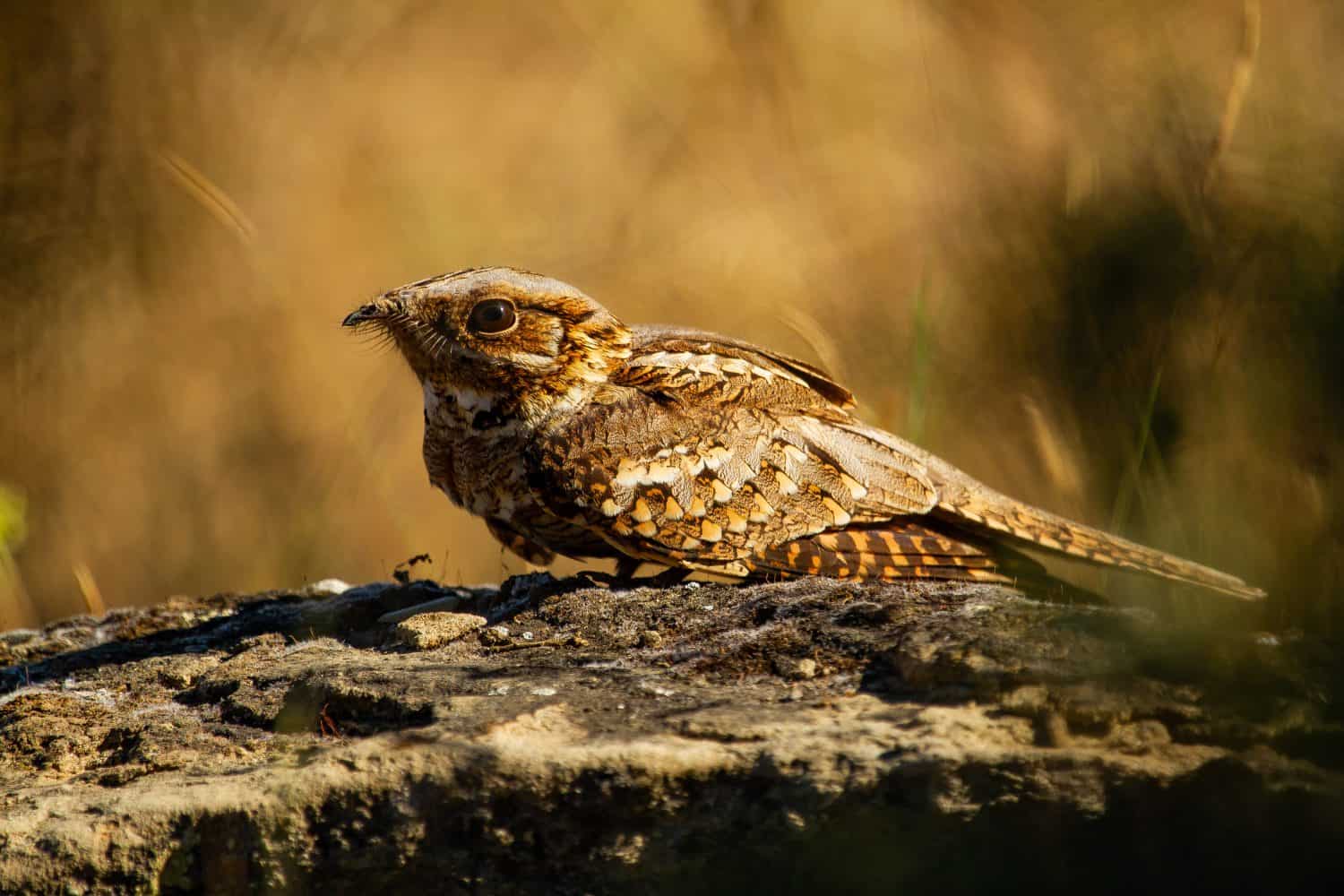
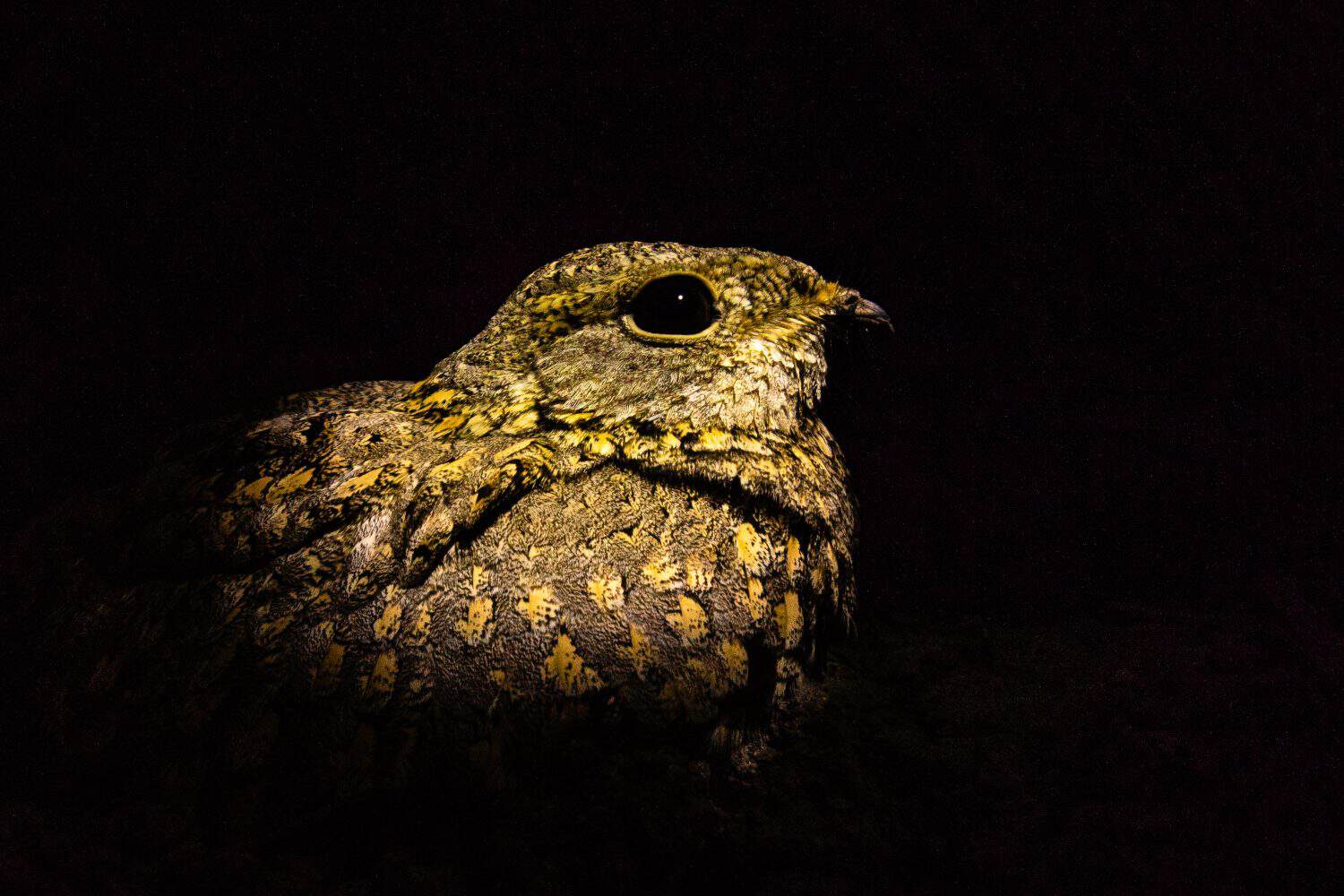
The red-necked nightjar produces a distinctive, repetitive tapping “kjotek-kjotek call.
©Wirestock Creators/Shutterstock.com
Unlike bats, nightjars use vision rather than echolocation to hunt flying insects at night, making them entirely dependent on moonlight. Bright full moons bring hunting opportunities, while dark nights bring scarcity. This monthly rhythm drives everything the bird does — from daily feeding and conserving energy to major life events like migration and breeding.
A Bird Built for Life After Dark
As Europe’s largest nightjar species, the red-necked nightjar is a master of two worlds. By day, its mottled, sandy feathers offer near-perfect camouflage against the dirt and leaf litter of the Mediterranean scrublands. By night, however, it transforms into an agile aerial predator, hunting moths and beetles.
Yet, despite their impressive aerial skills, these birds face a major challenge. Because they rely entirely on vision rather than echolocation, they cannot hunt in total darkness, making finding food drastically more difficult. The birds operate on such narrow energy margins that without moonlight to help them see their prey, their energy budget simply doesn’t work.
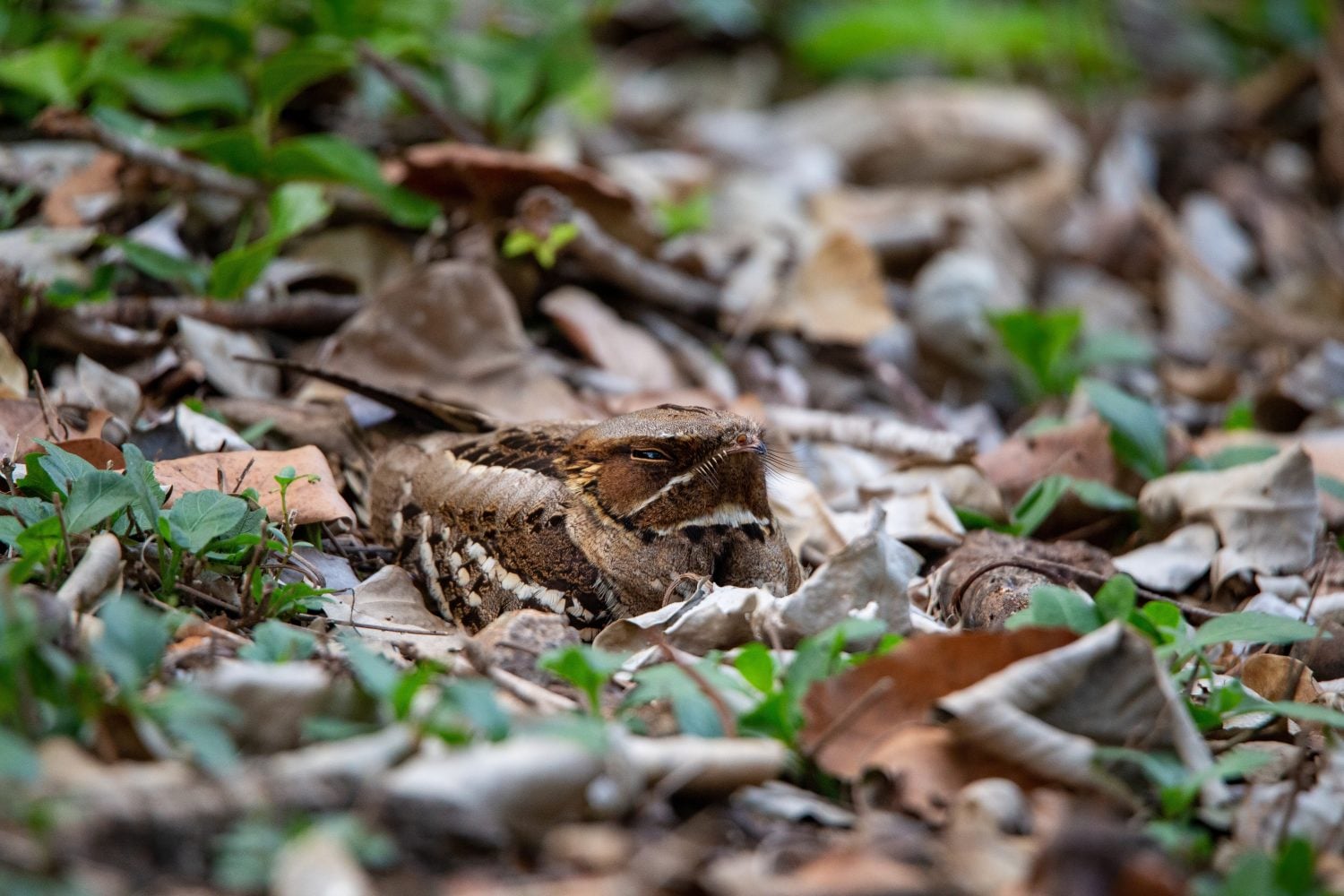
Red-necked nightjars have camouflaged feathers that allow them to remain hidden during the day.
©PIMPIKA_070432/Shutterstock.com
The Full-Moon Advantage
The study revealed that the red-necked nightjar lives in a predictable “boom-and-bust” cycle dictated by the moon. Bright, moonlit nights provide ideal hunting conditions, allowing the birds to stay active all night, maximize their food intake, and build up vital fat reserves.
Because their digestive systems process food slowly, nightjars cannot simply gorge themselves to store endless energy. Instead, they rely on the abundance of a full moon to stockpile just enough fuel to survive the darker half of the month. As a result, a nightjar’s body mass and energy reserves typically peak about six days after a full moon.
The New-Moon Slowdown and Survival Mode
When the moon disappears, hunting becomes much less efficient. Rather than remaining active throughout the night, the birds concentrate their foraging efforts around dawn and dusk when some natural light is available. As a result, the birds experience both a food and energy shortage during this time, and to survive, they enter a state of torpor. Similar to short-term hibernation, torpor allows the birds to lower their body temperature and conserve energy until conditions improve. Researchers found a direct relationship between the lack of moonlight and how often the birds use this trick, proving just how tightly their basic physiology is linked to the lunar cycle.
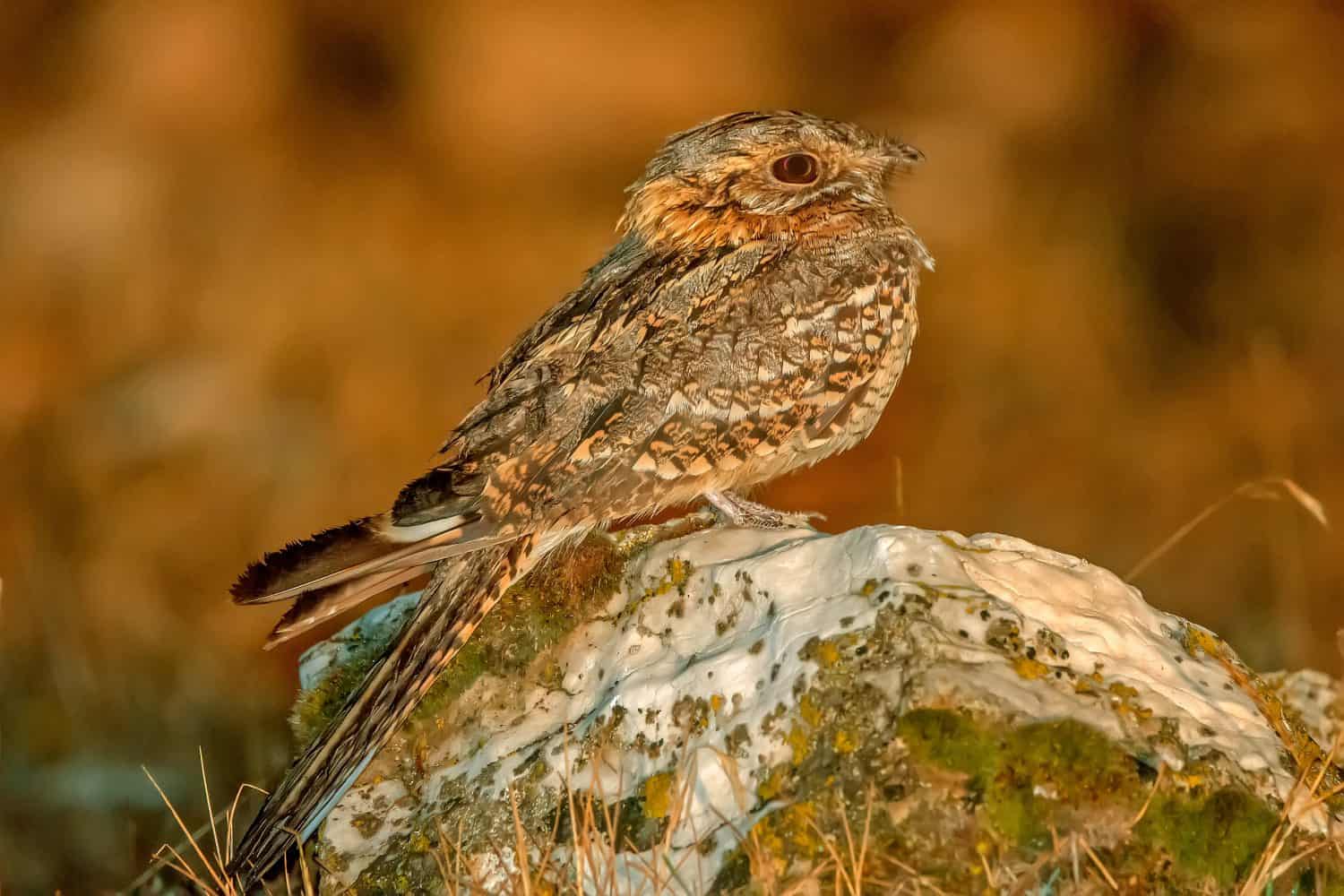
Red-necked nightjars are the largest nightjar species in Europe.
©Manuel67/Shutterstock.com
Migration and Breeding
Beyond day-to-day survival, the moon’s influence also dictates important life stages. Red-necked nightjars strategically time major life events around periods with maximum moonlight and food availability. For example, spring migration from West Africa typically begins 11 to 13 days after a full moon. This timing allows the birds to take advantage of peak hunting conditions right before making the demanding journey across the Sahara Desert.
Breeding also follows a precise schedule. Egg-laying is timed so that chicks hatch during periods of increased moonlight, giving parents the best chance of finding enough food for their young.
Tracking the Moon’s Influence for a Decade
The findings are based on more than a decade of fieldwork in Spain’s Doñana National Park. Researchers equipped 74 adult nightjars with custom, ultra-light sensors that tracked their every move, measuring activity levels, light exposure, and body temperature year-round. Five of these birds also carried advanced GPS loggers.
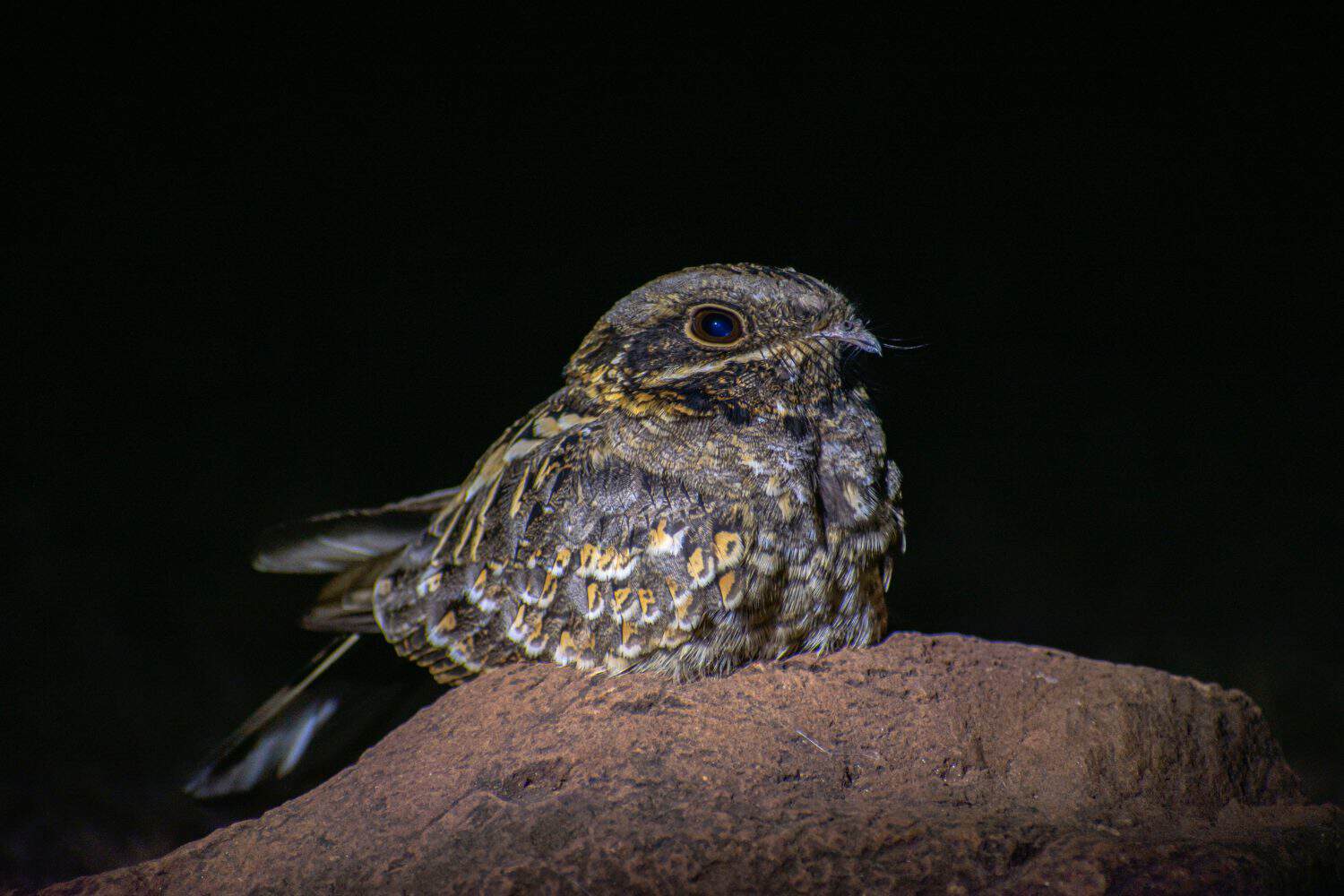
Red-necked nightjars breed across Spain, Portugal, Morocco, and Algeria, and spend their winters in West Africa.
©Chaitanya M Dudhalkar/Shutterstock.com
By comparing this information with shifting weather patterns and lunar phases over ten years, the team built one of the most detailed pictures ever assembled of how a nocturnal bird manages its energy in the wild. The results revealed an incredibly tight connection between moonlight and the red-necked nightjar’s survival.
When Artificial Light Replaces Moonlight
The study’s findings also raise concerns about the growing spread and impact of artificial light pollution. For thousands of years, red-necked nightjars have relied on predictable lunar patterns to determine when to hunt, rest, migrate, and breed. Today’s increasing urban development may interfere with these ancient cues by altering natural nighttime light conditions.
Researchers warn that artificial lighting like streetlights and city glows could mask or disrupt the signals the birds depend on, potentially throwing off the delicate balance that governs their energy budget. For a species already living on slim margins, even small disruptions could have significant consequences.

Researchers fear that artificial light pollution may throw off the bird’s entire biological clock.
©Laurent Fighiera/Shutterstock.com
The red-necked nightjar’s relationship with the moon highlights just how deeply wildlife can be connected to natural environmental rhythms. Rather than following a simple seasonal schedule, these birds use the lunar cycle as a biological calendar that helps determine when to feed, rest, migrate, and raise young. This research offers a rare, intimate glimpse into a hidden world, reminding us that for many creatures, survival doesn’t just depend on the turning of the calendar year, but on the steady, rhythmic pulse of the moon overhead.