
Quick Take
- Thousands of tiny creatures are marching in perfect circles under Israeli streetlights, and scientists have pinpointed the one specific condition that triggers it. See the trigger explained →
- Unlike most collective animal movements, these woodlice spirals serve no survival purpose. That aimlessness is exactly what makes them so alarming. Compare purposeful vs. aimless movement →
- A predator has already figured out how to exploit the death spirals, which may be a sign that the local ecosystem is quietly shifting. Explore the ecosystem effects →
- Artificial light may be doing far more damage to ground-dwelling wildlife than researchers ever suspected, with woodlice serving as just the latest evidence of this. See the wildlife disruption evidence →
It’s hard to believe that something as seemingly innocuous as street lighting could cause such chaos among wildlife in Northern Israel. Yet, on streets in the Golan Heights, woodlice (also called pill bugs, or roly-polies) are behaving bizarrely under the glare of artificial lights. We explore why this may be happening and what it tells us about the cost wildlife pays for our well-lit communities.
Woodlice Enter a ‘Death Spiral’ Under Street Lights
A recent scientific paper has described a series of chance observations by amateur naturalists at two locations in Israel. Five videos were captured at night between 2021 and 2025 in the Jezreel Valley and Eliad in the Golan Heights. Four of the videos showed how thousands of healthy, active woodlice formed themselves into circles and moved around either clockwise or anticlockwise. In some videos, at least five thousand and potentially tens of thousands of individuals were taking part. It only happened at night and under street lights. Another video showed a large group of woodlice moving in many different directions, without any clear pattern.

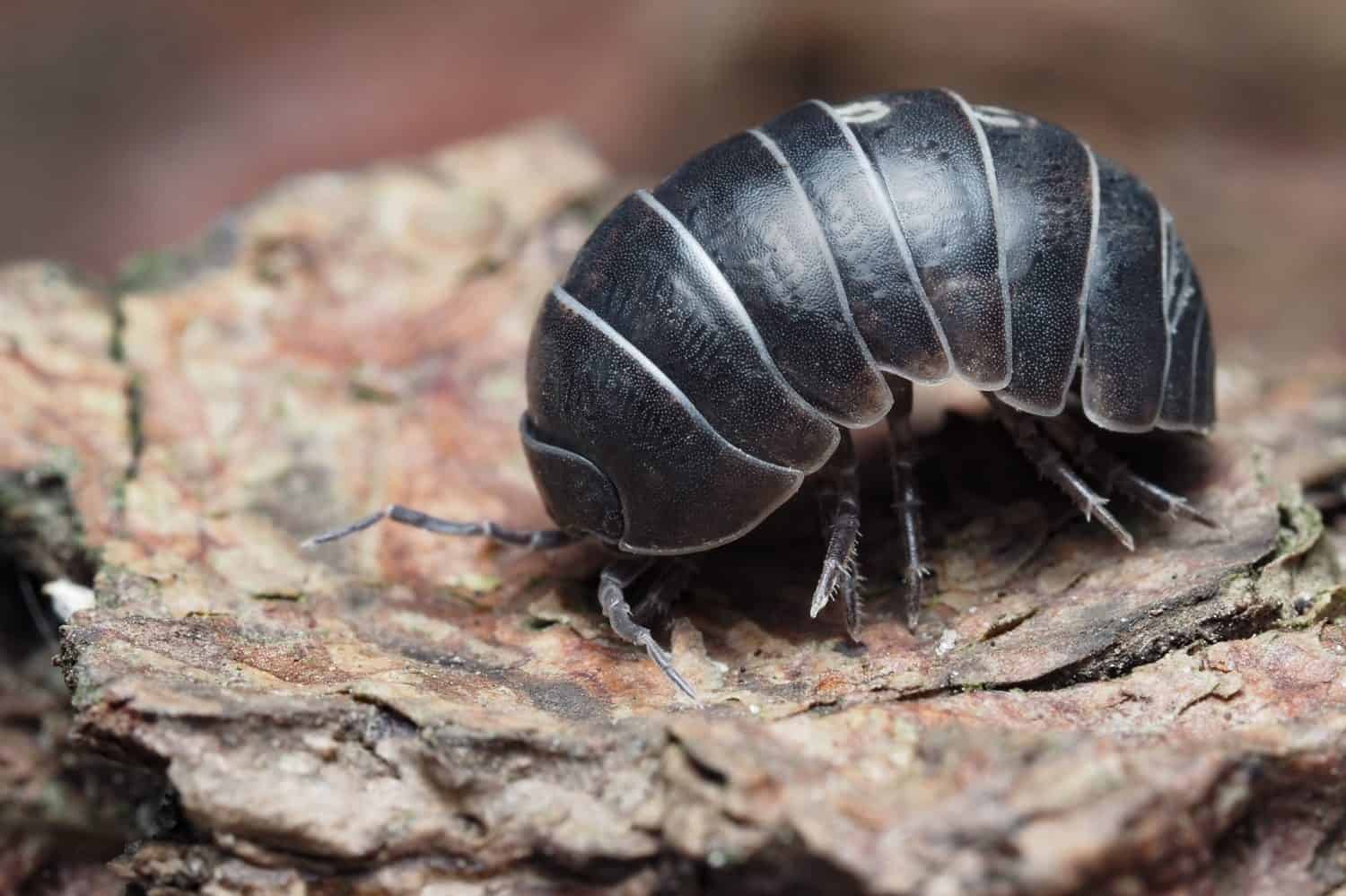
Pillbugs are gathering in their thousands under streetlights.
©Mauro Rodrigues/Shutterstock.com
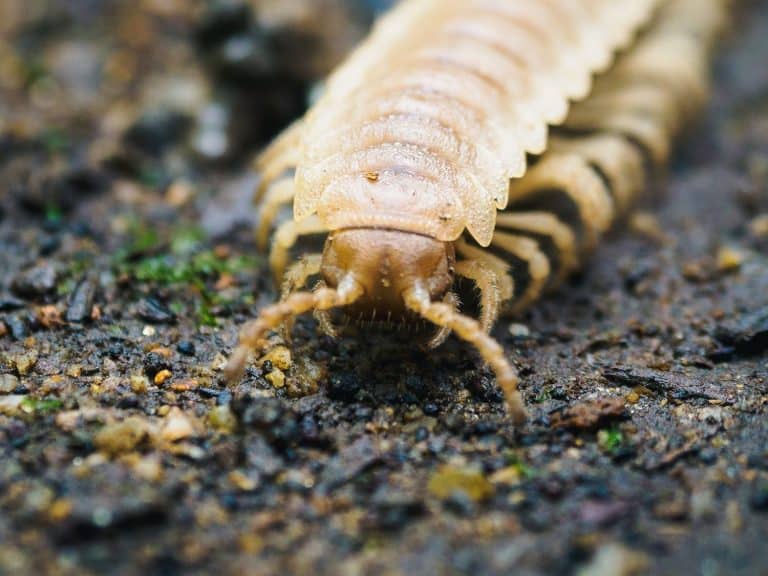
The woodlice observed were of the species Armadillidium sordidum, commonly known as the common pill-bug or doodle bug. They tend to seek out areas of higher humidity. They are typically found underneath rocks and wood, where humidity is higher. As detritivores, they feed primarily on decaying plant litter.
Animal Collective Mass Movement
Collective mass movement is seen regularly in the animal kingdom. Just think of the mass migrations of wildebeest, butterflies, and birds that we see each year. The animals derive strength in numbers and move together to enhance their chances of survival. There are clear reasons for their behavior—they migrate to areas with more favorable temperatures or greater food availability. You also see large-scale movements of animals such as ants that head away from the nest to forage and back to the nest with food. The important thing here is that there is both purpose and direction to their movement. In contrast, the woodlice circling under streetlamps seem to lack both purpose and direction.
Occasionally, there is a collective movement with no clear benefit; in fact, it can be detrimental. The circular milling behavior of army ants is a typical example. They lay down pheromone trails in featureless environments that can cause continuous circular marches to nowhere! The animals expend significant energy and increase their risk of predation, all without any apparent benefit.
Animals Responding to Light
There is no obvious benefit to the woodlice behaving like this, so something has likely caused them to become disoriented. Also, their behavior was observed at more than one site and over different years, which suggests that it is both consistent and environmentally driven.
Animals change their behavior under artificial light.
©A-Z Animals
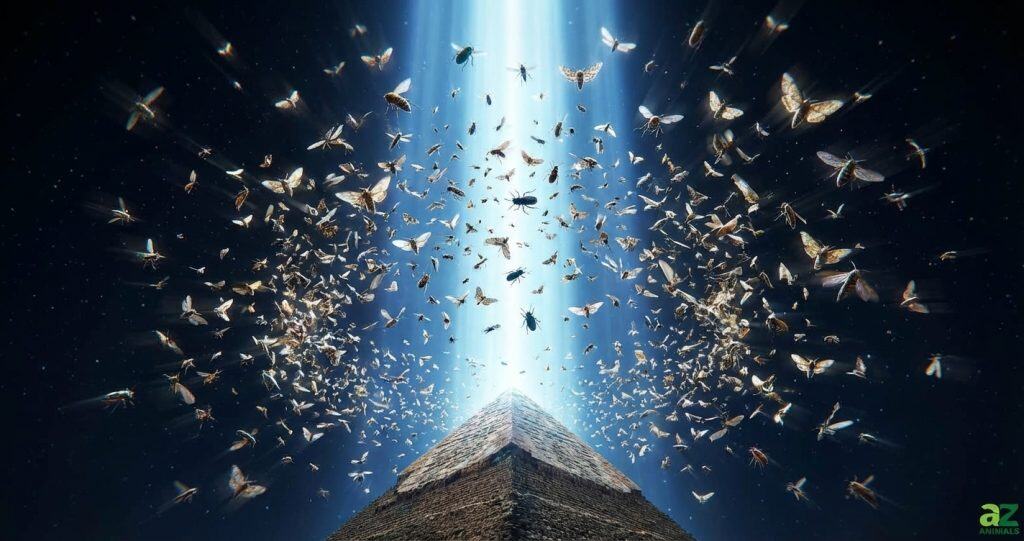
There is increasing evidence that artificial light affects behavior in wild animals. We’ve all seen moths and beetles gathering in large, erratic groups around lights at night. The concern is that while engaged in this pointless activity, the animals are not foraging for food or finding mates, which are essential behaviors for their survival.
Most research has been carried out on flying species. For moths, most studies point to them confusing the light source for the moon (the “transverse orientation” or “flight-to-light” hypothesis). More recent research, however, has shown that ground-dwelling arthropods such as beetles and woodlice also alter their aggregation behavior in response to artificial light.
Why Are Woodlice Walking in Circles?
The researchers carried out a few experiments on how the woodlice responded to lights from different directions. The only light that made them walk in circles was one shining from above, creating a circular illuminated zone on the ground. The woodlice appeared to walk along the boundary of this lit area, producing the observed circular trajectory.
The scientists proposed that the woodlice are initially attracted to the light source. They only start forming this death spiral once their numbers have reached a certain density. Once it starts, the spiral sustains itself endlessly, providing no benefit to the animals.
The Ecological Implications of Death Spirals Under Lights
There is some evidence that streetlights are changing the ecology of the area. A centipede (Scolopendra cingulata) and other woodlouse species (Porcellio laevis) were also observed near the lights. What’s more, the centipede appeared to be preying on the woodlice, suggesting it is taking advantage of the aggregations.
This study is significant because it is the first recorded mass circular movement of isopods. The fact that it takes place under street lighting suggests that it is caused by human influence.
Artificial light is one of the most drastic changes we have made to this world, and we are still discovering the effect it is having on wildlife. We know that artificial lights disrupt the natural patterns of light and dark, which in turn disturbs invertebrate feeding, breeding, and movement. This disruption may reduce and fragment populations. It disrupts the nocturnal behavior of frogs, including their courtship rituals, and has a devastating effect on baby turtles trying to find the sea. Birds and mammals are also affected.
In our connected ecosystem, what affects one species will have an impact on many others. Perhaps it is time to restore darkness to our environments, or at least create havens free from light pollution?