
Quick Take
- An estimated 16,000 (or more!) new species, such as this termite, are discovered annually across the world.
- Cryptotermes mobydicki, the newly discovered termite species, is classified as a drywood termite, meaning it lives in and consumes dry wood.
- Scientists aren’t sure the exact reasoning behind C. mobydicki‘s whale-esque head.
Sometimes it feels like we’ve discovered all there is to know about the world. But that belief is patently false. Scientists make new discoveries every day, from uncovering details about Saturn’s atmosphere to identifying previously unknown species. In fact, a 2025 study published in Science Advances found that scientists usually discover around 16,000 new species every year. Admittedly, this includes plants and fungi, which account for a significant portion. But animal species, especially insects, are major contributors to this new species list.
South America is known for its biodiversity, making it a hot spot for this type of discovery. According to the International Union for the Conservation of Nature (IUCN), South America holds 40% of our planet’s biodiversity and 25% of its forests. It was within one of those forests that a research team made a fascinating find: a termite with a whale-like head. Fittingly, they named it after the whale in Herman Melville’s classic novel Moby Dick. At the end of 2025, the researchers shared their insights into Cryptotermes mobydicki, granting us a peek at the secrets of the natural world we still have yet to fully understand.
What are Termites?
Termites are small eusocial insects. As Britannica explains, “Eusocial species [are] any colonial animal species that lives in multigenerational family groups in which the vast majority of individuals cooperate to aid relatively few (or even a single) reproductive group members. Eusocial species often exhibit extreme task specialization.” Termites’ tasks may include reproduction, work, or defense. When it comes to reproduction, termites are prolific. A queen can lay thousands of eggs daily in some cases.
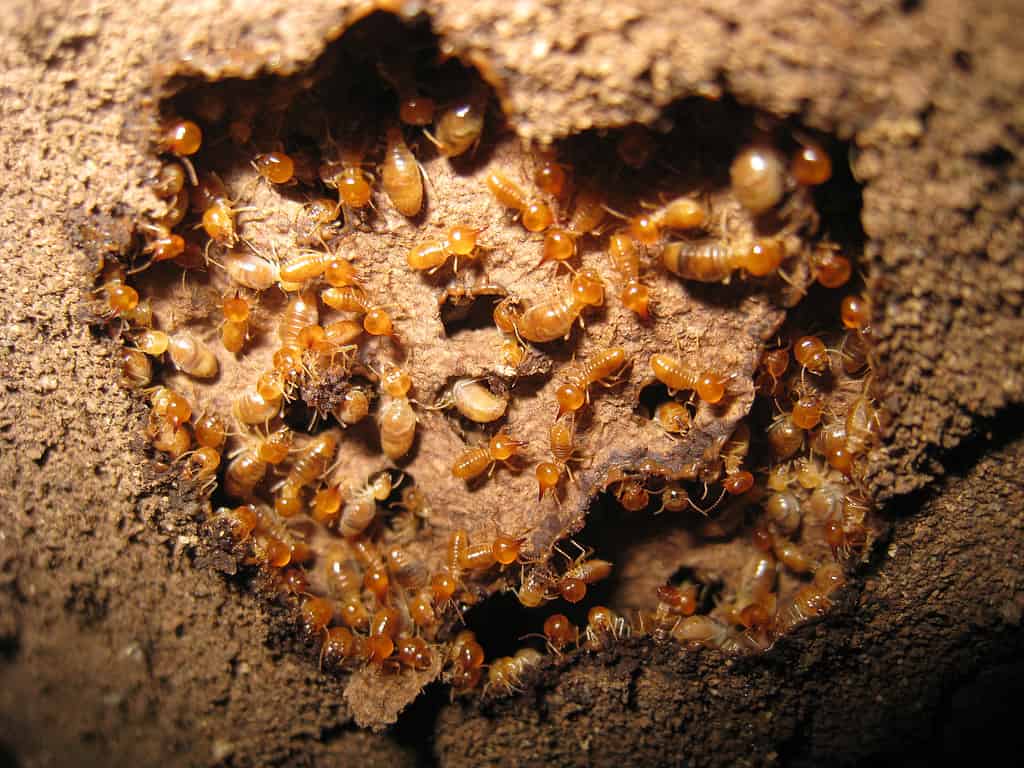
Subterranean termites are found in essentially every U.S. state except for Alaska.
©Cheng_Wei/iStock via Getty Images
An estimated 3,000 termite species exist. But termites are usually broken down into several main categories: subterranean, Formosan, dampwood, drywood, and cone-headed. Subterranean and Formosan termites are the types most people come into contact with. They’re destructive, aggressive, and can be hard to treat when infestation occurs. Dampwood and drywood termites, on the other hand, infest damp or dry wood respectively. While dampwood termites are not typically a threat to homes, drywood termites can sometimes pose a risk.
Discovering Cryptotermes mobydicki
Researchers were conducting fieldwork in French Guiana, a territory located on the northern coast of the richly biodiverse South America. During their work, they found a termite colony living in a dry wood tree, the perfect habitat for drywood termites, about 26 feet off the ground. Thirteen Cryptotermes termite species are endemic to the area (with two established elsewhere). So, they likely believed they were observing a known species.
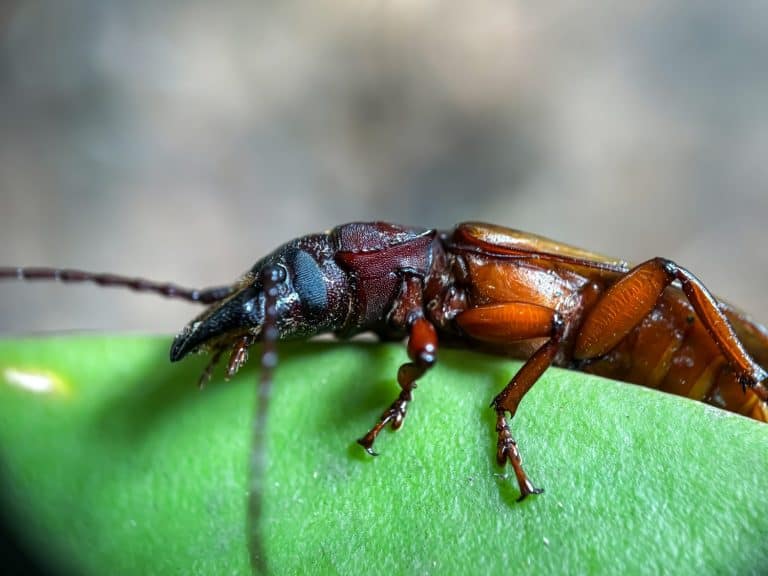
But researchers were stunned to discover the soldier termites displayed an extremely unusual head shape reminiscent of a sperm whale, a feature that led to their unique literary name. As described in ZooKeys, C. mobydicki soldiers differ from other Cryptotermes soldiers because they have:
- A longer, more narrow head capsule (giving it the whale-like appearance)
- Absent frontal horns and an absent frontal flange
- Hidden mandibles that are hard to see because of the extended head
Because their appearance was so unique, the researchers even questioned whether they had found a new genus. However, after studying their samples, they recognized that C. mobydicki represents the fourteenth endemic Cryptotermes species and sixteenth Cryptotermes species overall.
Why This Head Shape?
Why did these termites evolve to develop this head shape? Currently, researchers are unsure why the species evolved such an odd feature. However, there are a few potential hypotheses.
Certain termite soldiers develop what’s called phragmosis, or a phragmotic head. This means their specific head shapes are perfectly suited to plug up or block entrances to the nest, preventing intruders or predators from entering. However, Cryptotermes mobydicki lacks the frontal flange that typically defines a phragmotic head. Although their head shape could still be used to partially plug tunnels or delay entry, it’s not likely their head is used in the same way as other soldiers.
It’s also possible that C. mobydicki uses its head for an entirely different form of protection or defense. For example, its large head size may be a scary deterrent to intimidate rival termites, or it might help C. mobydicki navigate oddly shaped tunnels.
More in-depth study is needed to gain a clearer understanding of how these creatures operate and how their bizarre adaptation benefits them.