
Quick Take
- Britain's official record of storks breeding is almost nonexistent, so why does one agency say they were never native at all?
- The founding birds can't fly, yet they anchor the whole colony.
- The very first nest at Knepp ended in disappointment, and the project's later results came from that shaky start.
- A lone nest far from the main colony sits empty, and a group of young birds may decide what happens next spring.
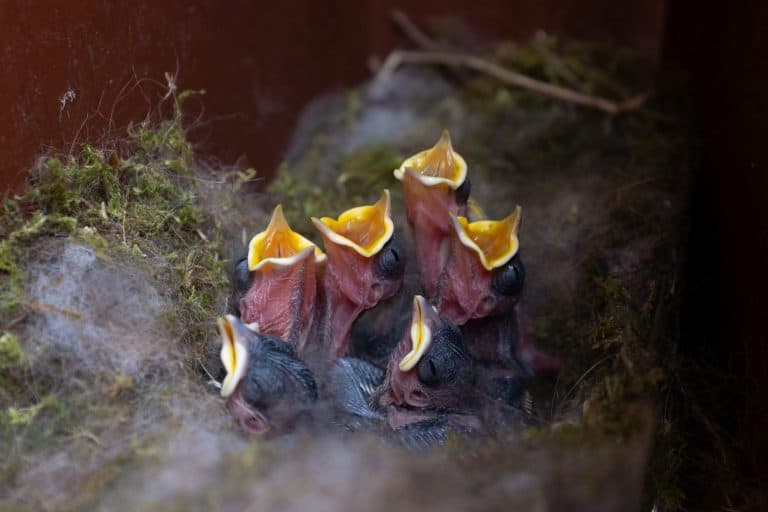
Forty-two wild white stork chicks fledged from 16 nests at Knepp Estate in West Sussex in 2026, according to the White Stork Project’s timeline of the reintroduction. Three more fledged from two nests at Wadhurst Park in East Sussex.
Before the project’s releases, Britain had a single breeding record for the species: Scotland, in 1416. That’s from a May 8, 2026 Natural England blog by Jeremy Sabel and Matt Heydon. England had no breeding records at all.
Sabel and Heydon listed the evidence: white storks are rare in archaeological finds, and medieval sites hold just one white stork record despite remains of numerous other wild birds. There are also records of “storks” imported from Calais in the 16th century. By Natural England’s definition, the white stork was never a native breeding bird, and the agency says releasing the species isn’t a priority.
The White Stork Project explains the gap with biology. White storks visit Britain every year from the continent, and they live in colonies for safety in numbers. The project thinks they failed to breed for centuries largely because no colony existed to give visiting migrants security. Both sides agree no license was needed: Natural England classes the species as a regular visitor, and the project describes its work as reinforcing that visiting population.
The count started with three eggs that never hatched
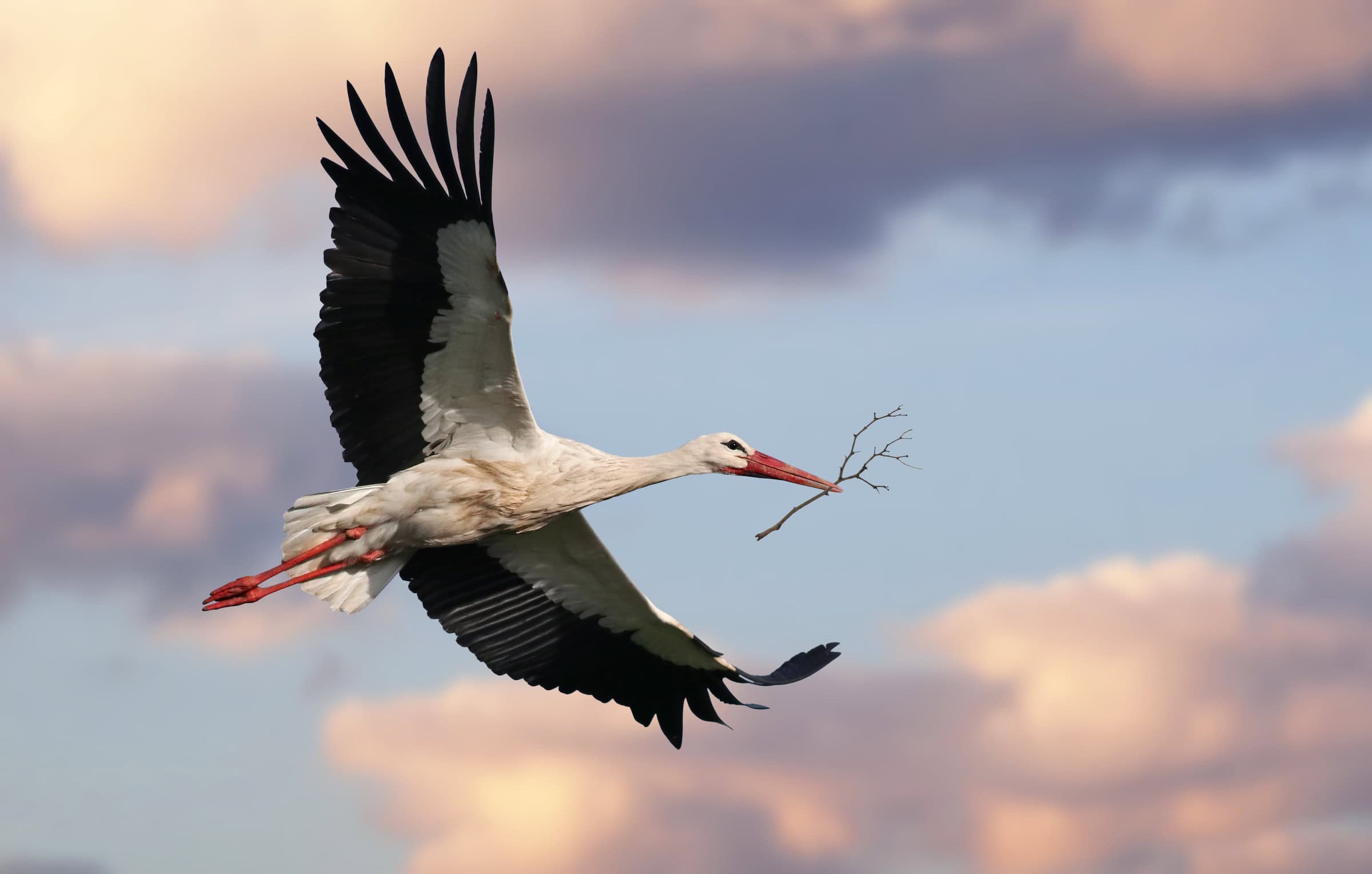
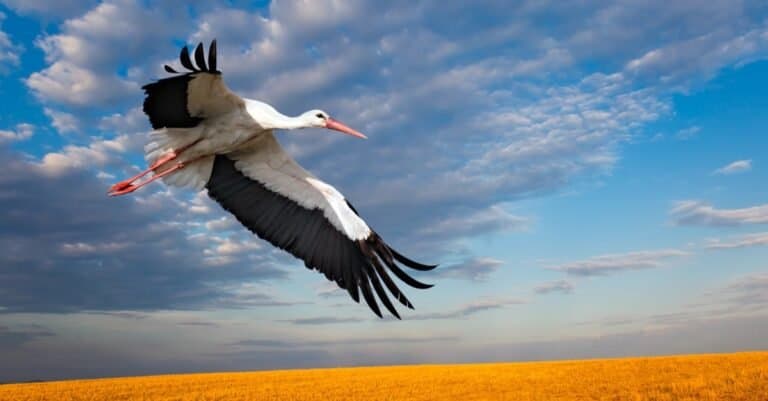
A white stork carries a stick for its nest. The first wild nest at Knepp was built in an oak. ©Fercast/Shutterstock.com
©Fercast/Shutterstock.com
In 2019, according to the project’s timeline, the first wild nest at Knepp was built in an oak by a project female, ringed GB07, and a wild male. Three eggs were laid and none hatched.
In 2020, three wild nests were built and four chicks fledged, in the project’s words “the first for 600 years.” Fifteen fledged in 2021, 18 from nine nests in 2022, 26 in 2023 and 53 in 2024. Knepp fledged 45 in 2025 and 42 in 2026, for more than 200 wild chicks in seven seasons. Breeding success varies from year to year, and the number of successful breeding pairs has grown steadily.
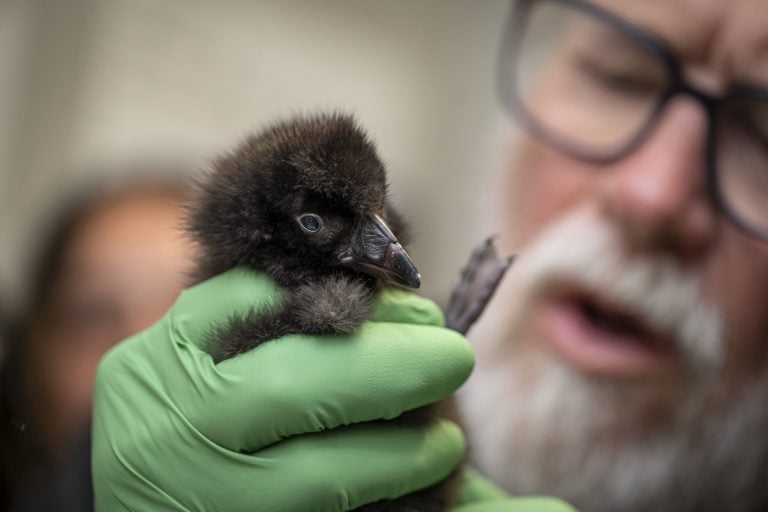
Stork chicks grow fast. Two hatched under controlled conditions in Staffordshire in 2025 were expected to reach full size in two months, about 3 feet tall with a 6.5-foot wingspan, BBC News reported.
Flightless storks from Poland anchor the colony
The founding birds are non-flying white storks from Poland, rescued after accidents with powerlines and roads and donated by Warsaw Zoo, according to the project. Some form the nucleus of the Knepp and Wadhurst colonies and breed on the ground inside pens, though storks are known for nesting high in trees and on structures.
The project counts ground-nest chicks in its annual totals. Those nests produced three of the 26 fledglings in 2023, nine of 53 in 2024 and seven of 45 in 2025.
Returning migrants grew from one to more than 10
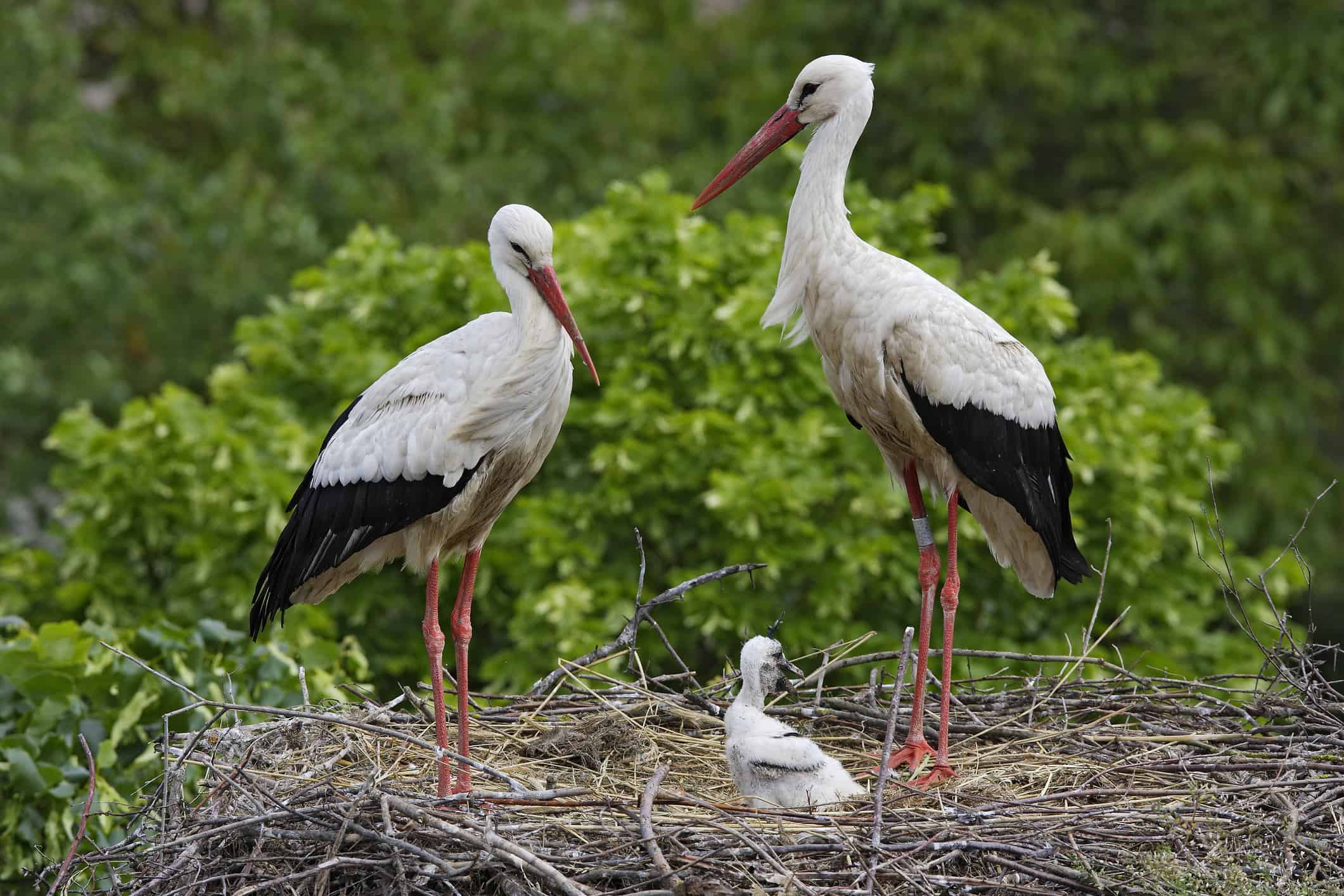
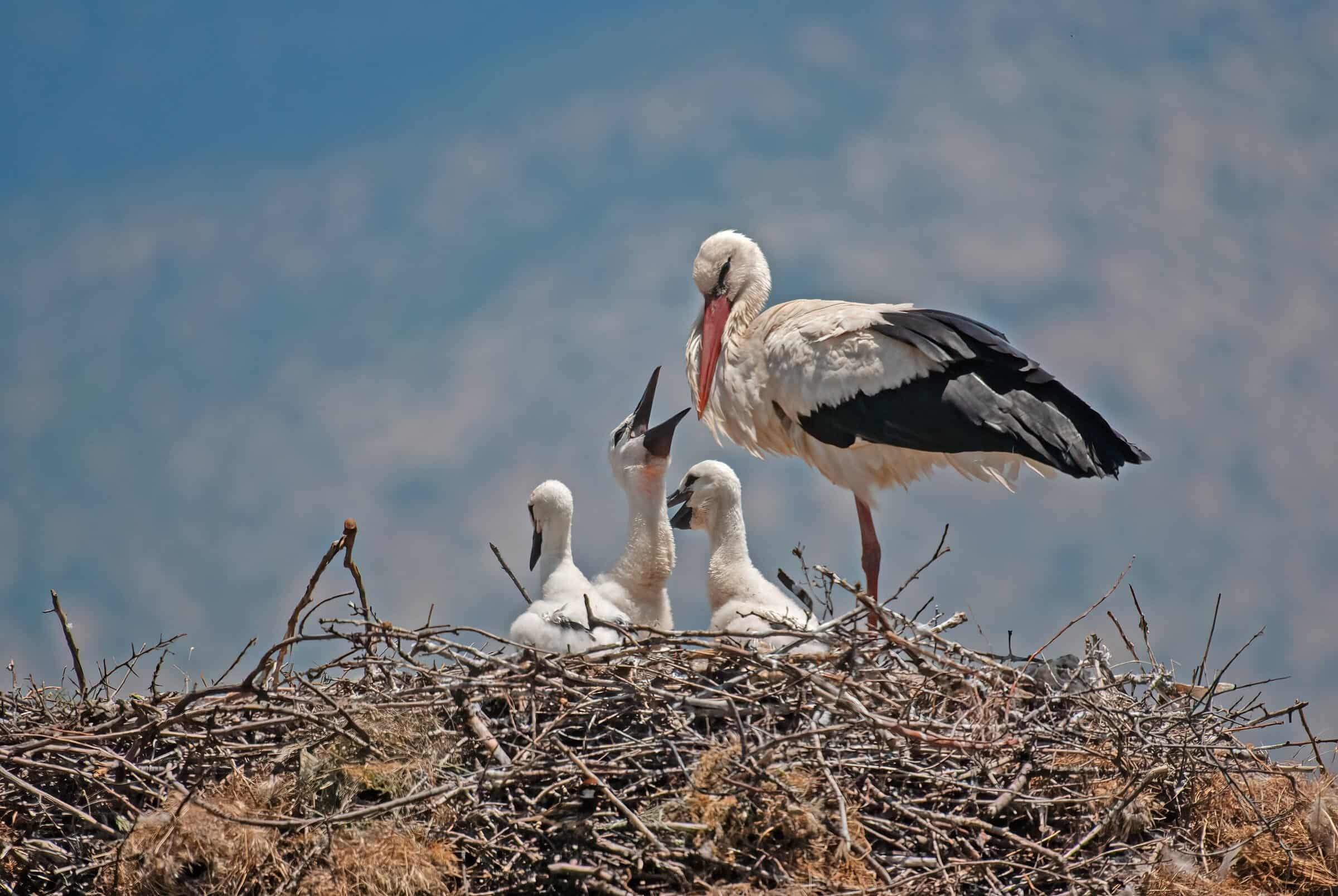
A white stork pair with a chick on their nest. The project hopes its young storks come back at four to five years old to breed. ©Michel VIARD/Getty Images
©Michel VIARD/iStock via Getty Images
Young storks from the project join wild storks on migration across Europe, sometimes as far as North Africa. The project hopes they return at four to five years old, ready to nest and bringing wild storks with them.
According to the project, a wild male hatched at Knepp in 2021 was seen in Morocco and Spain, came back in March 2024 and raised three young in an oak. In 2025, six birds photographed in France, Spain and Morocco returned, and three of them bred, producing seven chicks. In 2026, more than 10 returning migrants were confirmed at Knepp, and some bred.
The first nest away from Knepp sits unused
In 2026, project storks began gathering near Guildford and built a nest away from the main colony for the first time, the project says. It hasn’t been used yet.
Natural England says it “remains open to considering new evidence as to the status of any species.” Chicks hatched in 2022 and 2023 will be four or five next spring, the age at which the project hopes its migrants come home to nest.