
From pesky mosquitoes to majestic butterflies, insects come in a variety of forms and sizes. The tiny fairyfly is less than 0.25 inches long, while the giant walking stick can grow up to 7 inches long. Although many of the world’s largest insect species are primarily found in tropical rainforests and temperate regions, North America is also home to some surprisingly large insects. Continue reading to discover the five largest insects found in North America.
Quick Take
- The female Eastern Dobsonfly has a painful bite.
- The eyespots (ocelli) of the Polyphemus Moth help deter predators.
- The Luna moth’s wings can disruptecholocation.
5. Eastern Dobsonfly: 5.5 Inches
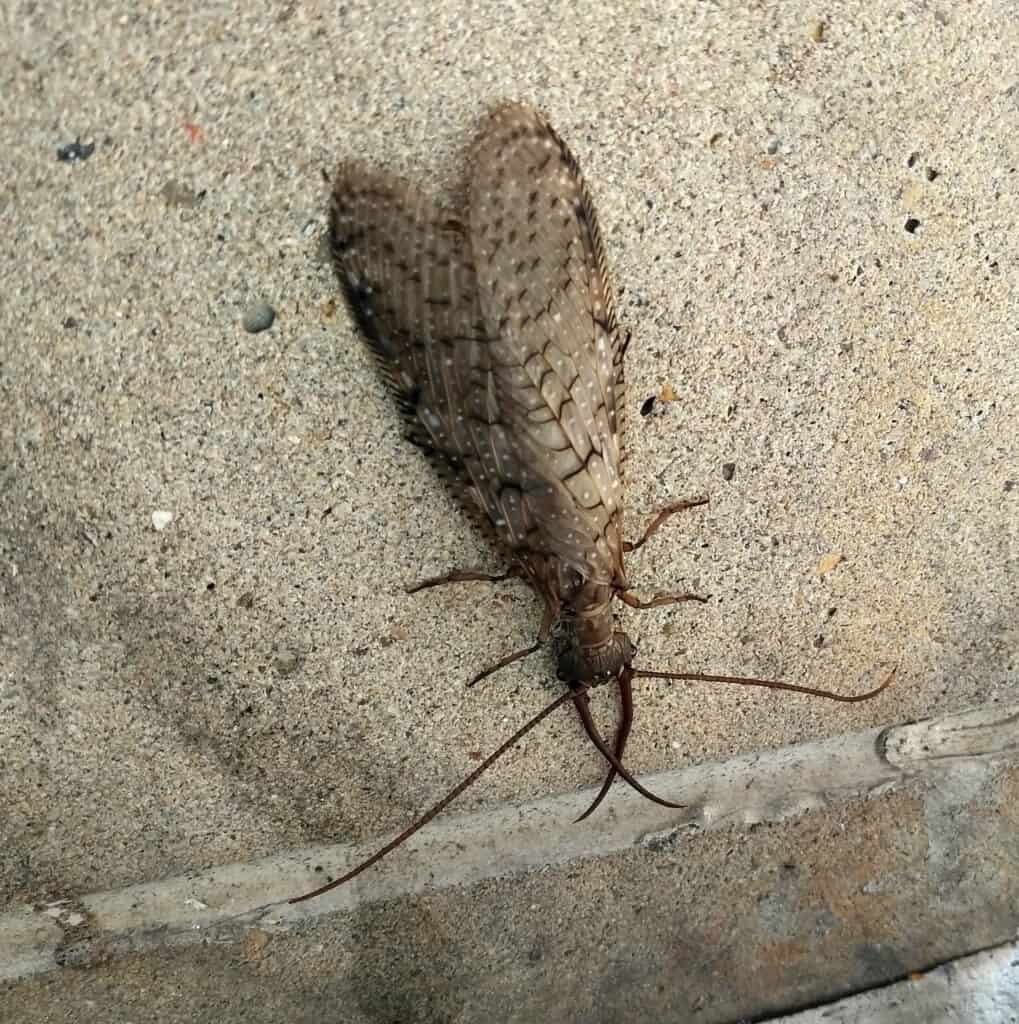
Male dobsonflies have long pincer-like mandibles.
©Josef Stemeseder/Shutterstock.com
Male dobsonflies look intimidating with their long, pincer-like mandibles, but they are actually quite harmless. Female dobsonflies, on the other hand, are the ones you need to watch out for. While females have much shorter mandibles, they are more powerful and capable of leaving a pretty nasty bite.
Eastern dobsonflies (Corydalus cornutus) are one of the largest insects in North America. Their wingspan can reach up to 5.5 inches, while their bodies are up to 2.5 inches long. They are widely distributed across Eastern North America, spanning from Southeastern Canada south to Texas and east of the Continental Divide.
4. Polyphemus Moth: 6 Inches
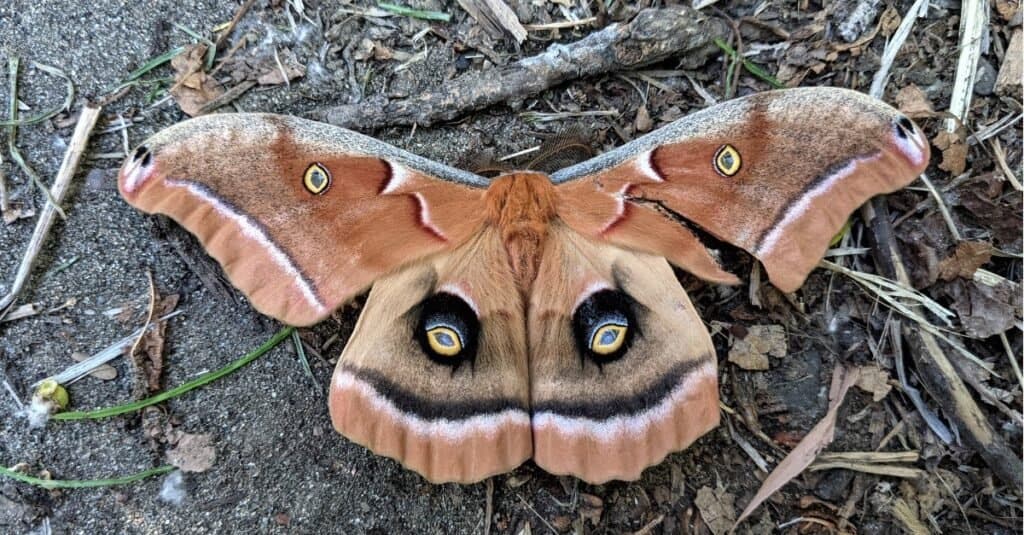
Polyphemus moths are fond of fruit trees, willows, birch trees, maples, and many other plant varieties.
©iStock.com/Mickilu
The giant silk Polyphemus moth (Antheraea polyphemus) gets its name from the distinct eyespot patterns on its wings. The eyespots (ocelli singular: ocellus) resemble giant eyes, reminiscent of Polyphemus, the famous cyclops from Greek mythology.
These colossal moths have an average wingspan of around 6 inches, and caterpillars are 3 to 4 inches long. It is one of North America’s most widely distributed giant silk moths and is found across Canada and the lower 48 U.S. states, excluding Arizona and Nevada. They thrive in deciduous forests, wetlands, and urban areas from coast to coast, extending south into Mexico; however, they are hard to find due to their excellent camouflage.
3. Luna Moth: 4 to 7 Inches
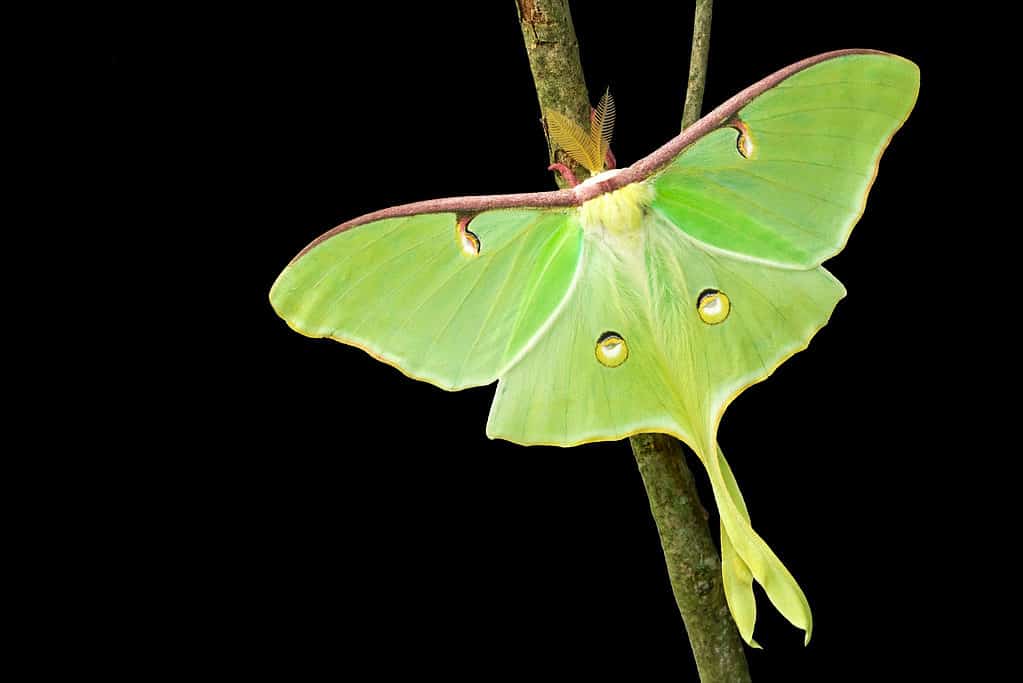
Luna moths may have bluish or yellowish tints to their green wings.
©JasonYoder/Shutterstock.com
The luna moth (Actias luna) is an iconic insect that is easily recognized by its stunning green coloring and elongated wings. These wings are typically 4 to 5 inches across, but some have been known to reach lengths of up to 7 inches. Luna moths are found in forested areas throughout North America, ranging from east of the Great Plains in the United States to Southeastern Canada and Eastern Mexico. Their extra-long tails serve as a defense against predators like bats, disrupting their use of echolocation.
Like their adult counterparts, luna moth caterpillars are also bright green. Caterpillars eat a variety of plants, depending on where they live, including persimmon, sumac, hickory, white birch, and walnut leaves. Luna moths must eat plenty during their caterpillar stage because, as adults, they do not eat. The moth stage lasts for one to two weeks, and they spend that time finding a mate and laying eggs.
2. Cecropia Moth: 5 to 7 Inches
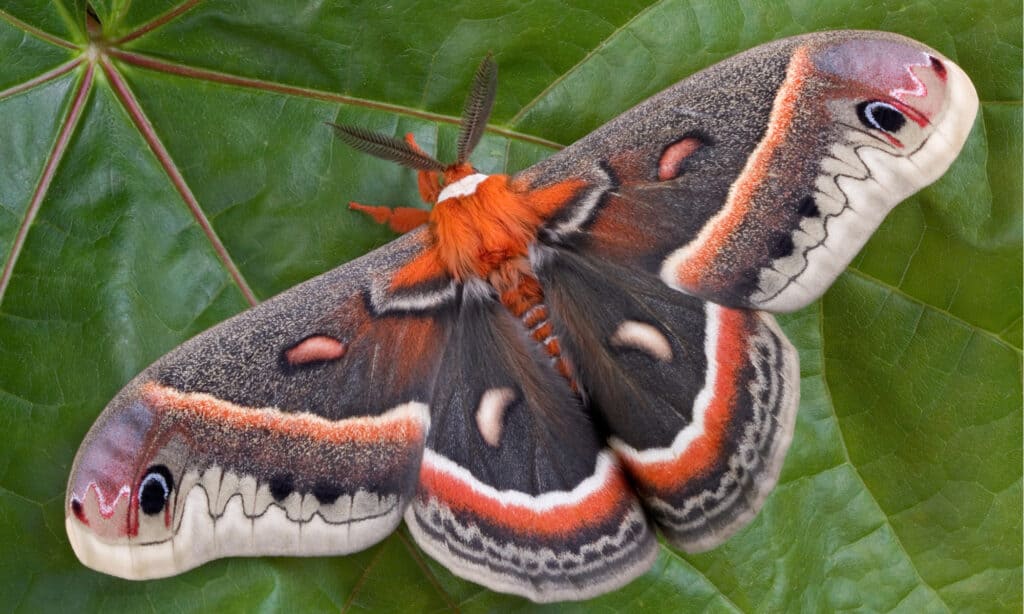
The cecropia moth is the largest native moth species in North America.
©Cathy Keifer/Shutterstock.com
With an impressive wingspan of 5 to 7 inches, cecropia moths (Hyalophora cecropia) are among the largest insects in the U.S. and are North America’s largest native moth, widely distributed across the eastern half of the United States and Canada.
They display striking colors, with deep red bodies and black, white, and red wings. However, their beauty is short-lived, as adult moths live for only about two weeks, during which their main objective is to find a mate and produce the next generation.
Cecropia moth caterpillars can also grow quite large, measuring 4 to 4.5 inches long. Although they are black when they first hatch, caterpillars transition to green with blue, yellow, and orange projections covered in tiny black spikes.
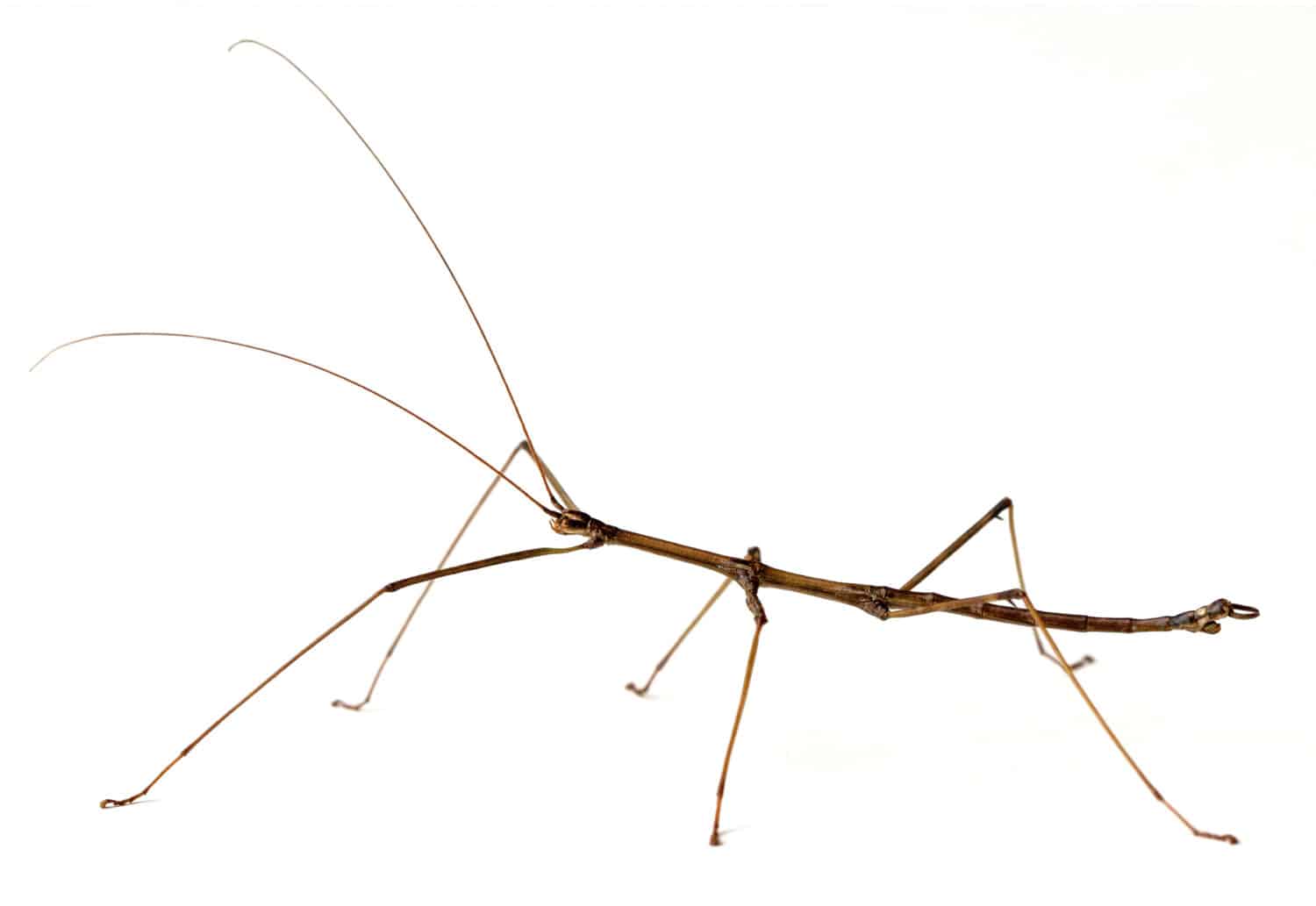
1. Giant Walking Stick: 7 Inches

Giant walking sticks can be tan, brown, rusty brown, and some even have a greenish hue.
©salouw/Shutterstock.com
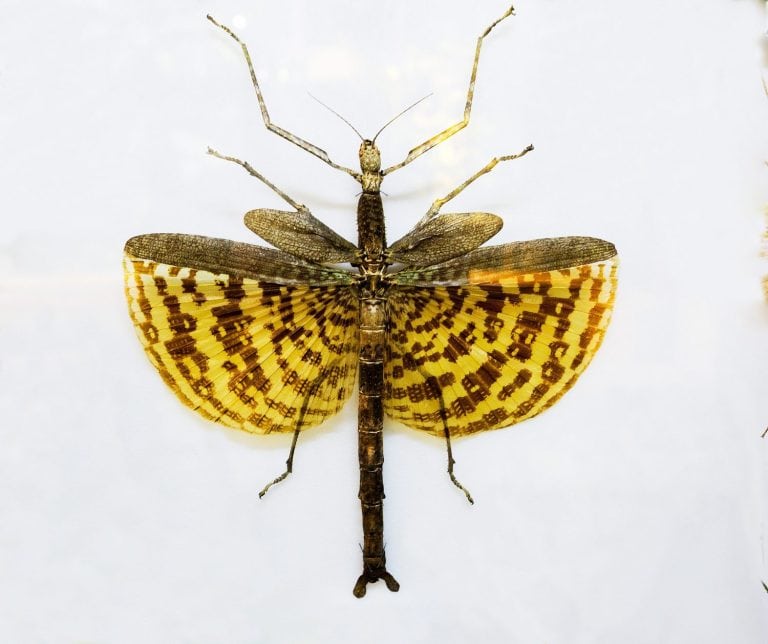
The giant walking stick (Megaphasma denticrus) is the largest insect in North America. This incredible creature can grow up to 7 inches long. They have long, thin bodies that look just like natural sticks, providing excellent camouflage from predators.
Giant walking sticks are primarily distributed across the South Central United States and Mexico.
Despite their enormous size, giant walking sticks feed on leaves and are harmless to humans. Interestingly, giant walking sticks not only resemble sticks but also mimic their movement. When it’s windy, giant walking sticks will sway to look like a real stick blowing in the breeze.