
Quick Take
- Brown-headed cowbirds are brood parasites that lay their eggs in other birds’ nests.
- Their chicks hatch quicker and grow faster as a result.
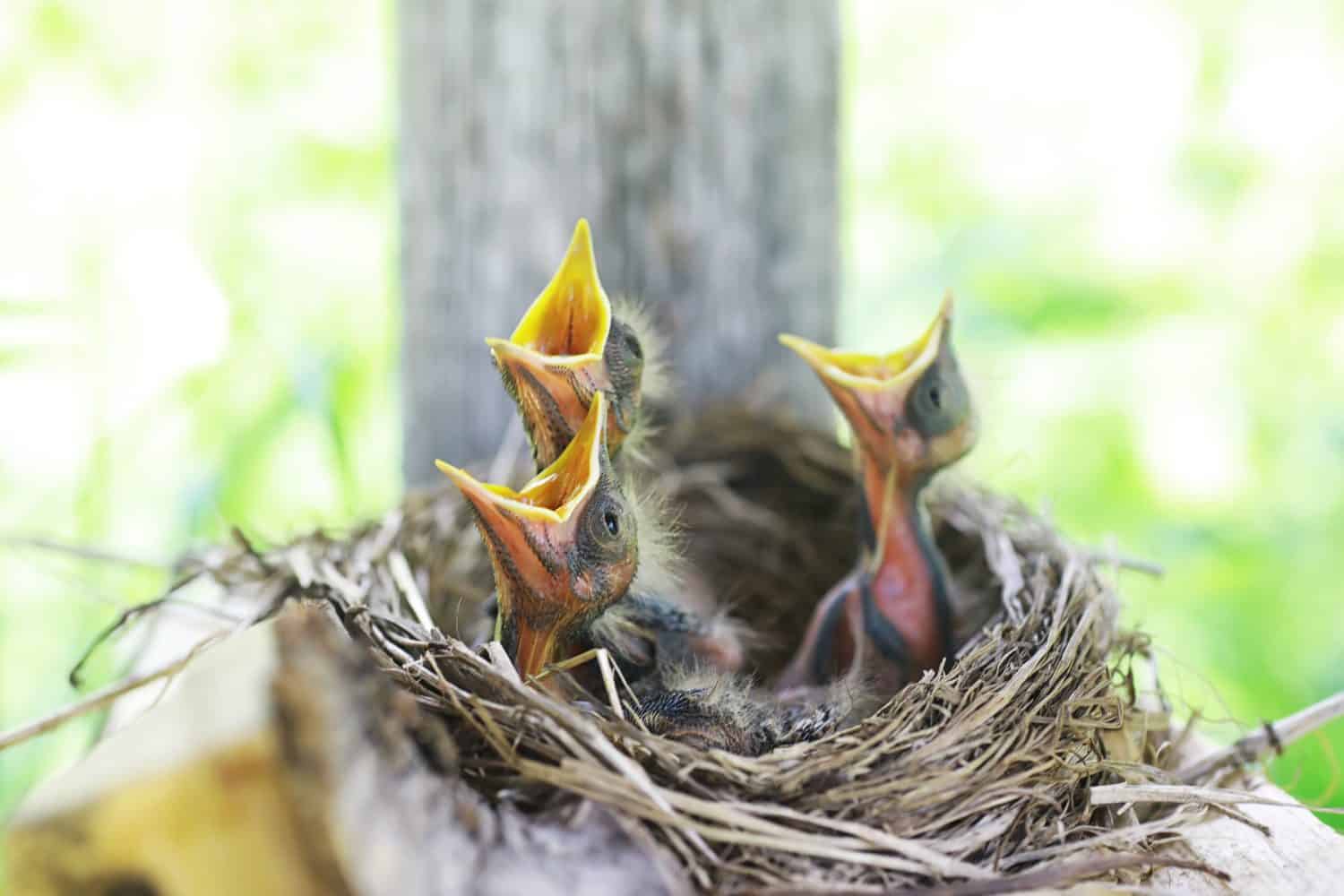
- New research has shown that the cowbird chicks also have stronger neck muscles.
- This means that they can hold their neck up and beg for food for longer.
Brown-headed cowbird chicks have a distinct evolutionary advantage, and all because they can stick their neck out! This bird species lays its eggs in the nests of other birds, leaving the responsibility of raising their young to the host parents. A new study, however, has shown exactly how their chicks outcompete their nestmates.
About the Brown-Headed Cowbird
The brown-headed cowbird (Molothrus ater) lives in the temperate regions of North America and migrates to the southern regions of the USA and Mexico in winter. You will find them in grasslands with low scattered trees as well as on the edges of woodlands, prairies, pastures, and even in residential areas. During winter, they gather in flocks of tens of thousands of birds.

Brown-headed cowbirds have a subtle plumage, so they don’t stand out.
©/Shutterstock.com
They are small, short-tailed birds reaching around 7–9 inches in length and weighing just 0.06 pounds. As omnivores, they forage on the ground for seeds, small fruits, and berries, as well as small creatures such as beetles, grasshoppers, caterpillars, and spiders.
How Does the Brown-Headed Cowbird Raise Its Young?
They don’t! These birds are obligate brood parasites, which means that the females lay their eggs in another songbird’s nest. They are not selective about which nests they use and have been recorded successfully parasitizing over 100 different host species. Their rather nondescript brown plumage allows them to move around host nests without attracting much attention from the resident birds.
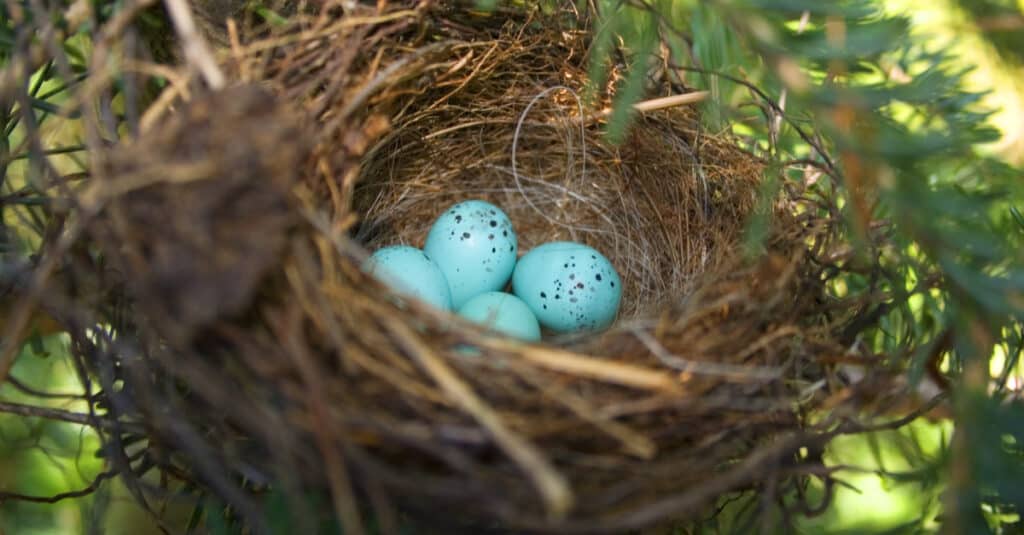
Cowbird females lay their eggs in other birds’ nests.
©Beth Van Trees/Shutterstock.com
One female can lay up to 40 eggs in a season, laying one egg per day. That is a lot of eggs! She uses her energy to produce many eggs rather than making a nest and raising the young herself. The female observes the host nest for a period and then times her egg-laying to coincide with that of the host. Furthermore, she may damage or even remove one of the host’s eggs to reduce competition.
We already know that the cowbird’s chicks have an advantage because they typically hatch early, after just 10 or 11 days, which is quicker than most host species. This gives them a great head start. They also have a loud call, wide mouths, and fast growth. New research has revealed that they have yet another advantage.
Chicks with Long Necks Get More Food
New research has shown that brown-headed cowbird chicks have evolved extra-strong neck muscles. Scientists compared them to prothonotary warbler (Protonotaria citrea) chicks using infrared cameras to film them in nest boxes. When the researchers tapped the nest boxes to mimic a parent arriving, the cowbird chicks held their heads up for an average of about five seconds, compared to two seconds for the warblers.
Researchers also compared the contraction rates of neck muscles in anesthetized chicks. The study showed that the muscles of prothonotary warbler chicks fatigued four times faster than those of brown-headed cowbirds. This enables them to hold up their necks for longer and get more food than their nestmates.