
Quick Take
- Leaf insects are native to South Asia and Australia, and illegal to import to the U.S.
- The rare Phylliidae can cost thousands of dollars.
- These insects naturally blend in with their surroundings, appearing like foliage.
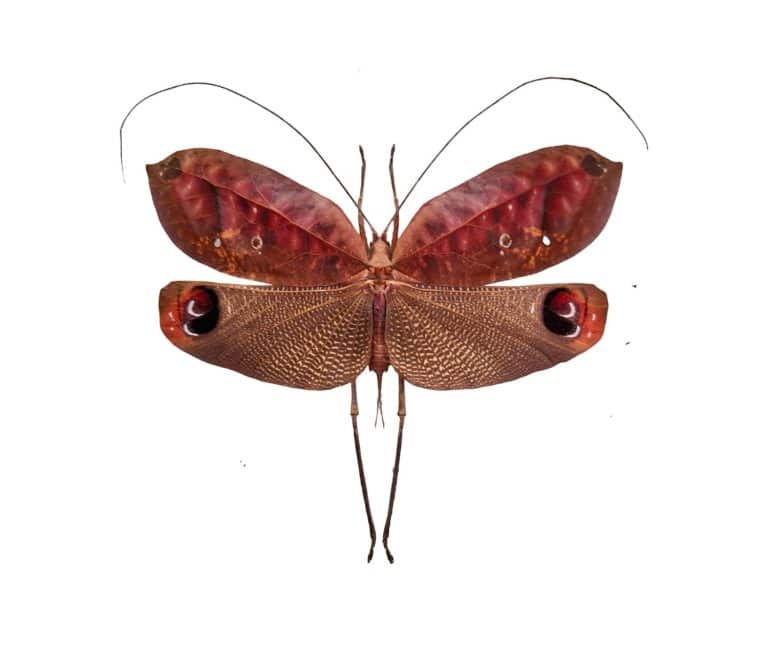
Have you ever heard of the iconic leaf insect? Worth hundreds—even thousands—of dollars, these fascinating bugs can camouflage and blend in with their surroundings. As their name suggests, leaf insects look identical to leaves, with flat bodies and plant-like lobes. In fact, some can even change their color to match their specific environment. For example, during autumn, they might appear like brown, decaying foliage.
Interested in learning more about leaf insects? Let’s dive in.
What Are Leaf Insects?
Leaf insects are bugs that mimic leaves to hide from predators. While many people believe common stick bugs are leaf insects, the true species of leaf insects belong to the family Phylliidae. They are not native to the U.S.
“Leaf insects are really fascinating. They are some of the most camouflaged insects that we know of, and that comes from years of evolution and their efforts to evade predators,” says Ed Dolshun, VP of Business Development and Technical Director from Catchmaster. “Their bodies have even changed to mimic leaves and have done a pretty strong job. They can even mimic leaf veins and seasonal decay to blend in year-round. It is remarkable, really.”
In fact, some of these insects will even develop what appear to be “bite marks,” further mimicking natural foliage.
Leaf Insect Species
Of the family Phylliidae are various species of leaf insects. Some of the most common include the Phyllium siccifolium (common leaf insect), Phyllium jacobsoni (hybrid of yellow/green leaf insect), Cryptophyllium westwoodii, and Pulchriphyllium giganteum (Giant Malaysian leaf insect). Some more diverse species also exist under the genera Microphyllium and Nanophyllium.

Leaf insects are native to Southeast Asia, primarily occurring in tropical regions.
©MWS B U D I/Shutterstock.com
To blend in and appear like leaves moving in the wind, these insects move and sway while they walk.
Ed Dolshun, VP of Business Development and Technical Director from Catchmaster
Phylliidae live in tropical environments from South Asia to Australia. Generally speaking, it is illegal to import a non-native leaf insect species in the U.S., and doing so requires a USDA permit.
No true leaf insect is native to the U.S. However, some similar bugs—often referred to as leaf insects but not truly part of the Phylliidae family—do naturally exist in the country. For example, stick insects, bush crickets, and leaf-footed bugs are close native relatives that exist in America.
How Leaf Insects Camouflage Themselves
True leaf insects naturally mimic leaves. Their flat bodies and leaf-like limbs help them blend in seamlessly. However, these insects also camouflage themselves through mimicry, using swaying motions to appear like leaves blowing in the wind.
Some leaf insects even boast leaf-like “flaws,” featuring what looks like chewed edges or detailed veins. Perhaps most impressive, however, is the insect’s ability to change color over time to match its host plant.
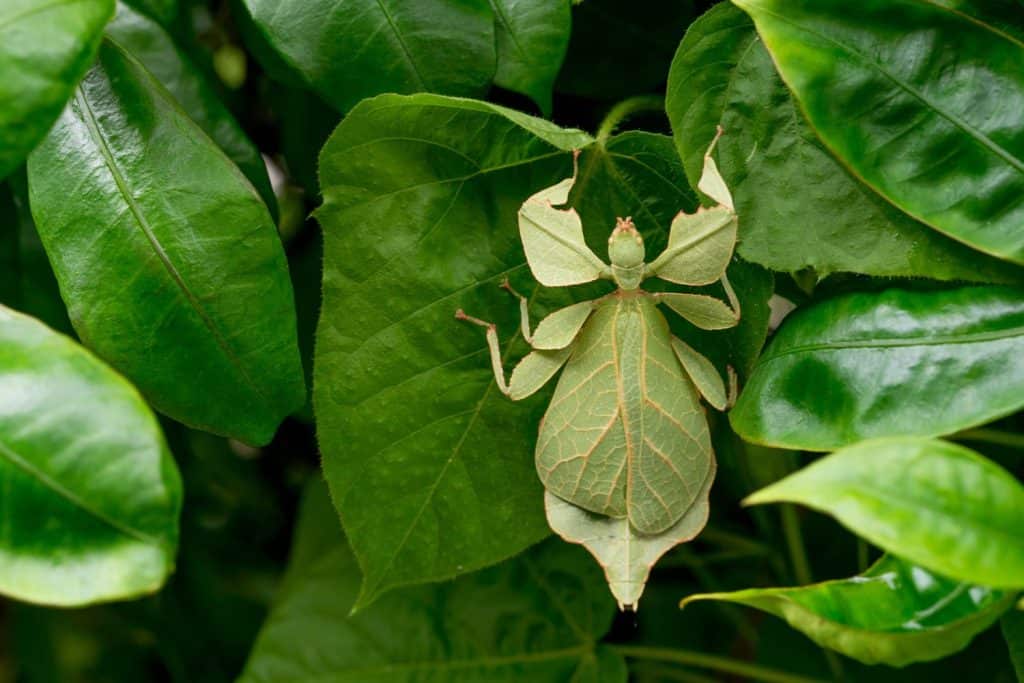
Leaf insects can look identical to actual leaves.
©PeingjaiChiangmai/Shutterstock.com
“The camouflage effects work through a combination of physical and behavioral structures,” Dolshun explains. “To blend in and appear like leaves moving in the wind, these insects move and sway while they walk.”
You might be wondering why, exactly, these insects mimic their surroundings. According to Dolshun, their survival depends on it, as it makes them nearly invisible to their predators. However, he adds, these camouflage abilities also make them more sensitive to their environments.
“These insects require very specific temperatures and diets to survive,” Dolshun explains. Specifically, they thrive in tropical environments, such as rainforests and dense vegetation.
Why Are Leaf Insects So Expensive?
Not just anyone can purchase a leaf insect. In fact, if you’re looking to buy one in the U.S., you will need a special USDA permit. Generally speaking, this is restricted to entities like research facilities, zoos, universities, etc.
Due to their fragile biology and limited breeding success, leaf insect prices can reach the hundreds or even thousands.
“These insects can be pretty expensive simply because supply is always going to be low,” says Dolshun. “They have a low breeding rate, and the mortality rate of nymphs is quite high. These young insects have yet to master the camouflage skill, so they get eaten pretty quickly.”
“Many of these guys cannot be legally caught in the wild, so most breeders have to rely on a finite captive population,” Dolshun adds. “This really pushes the price of these insects up.”
That being said, many experienced hobbyists or research facilities—not casual pet owners—are willing to pay a pretty price for them.
“Most people who are purchasing this insect are not trying to purchase impulse pets but are more likely purchasing them for long-term biological projects,” Dolshun says. “Though I am sure there are some collectors who are just trying to pad their insect collection as well.”