
Quick Take
- Maine chose the moose as its state animal because it already symbolized the state’s wilderness, history, and identity.
- The moose reflects Maine’s conservation story, from population decline and recovery to modern wildlife management challenges.
- Ecologically and culturally, the moose remains a powerful indicator of forest health and Maine’s connection to nature.
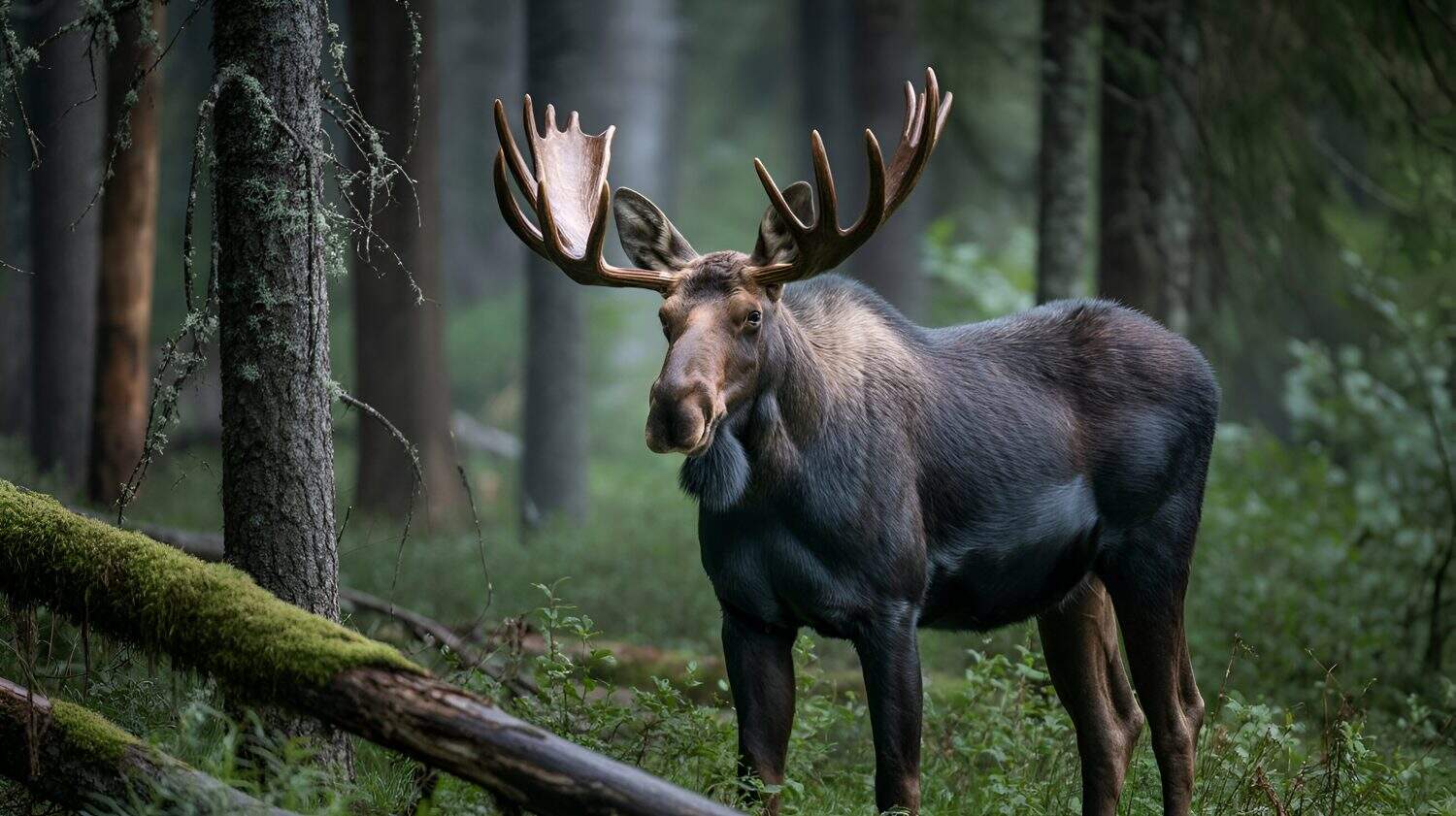
I grew up in Maine. When you’re a boy growing up in Maine, you spend a lot of time in the woods. Pretending, building forts, searching for snakes, and—as you get older—partying. One of my most vivid memories from my high school years is wandering around in the woods behind my parents’ house on a crisp fall day with a couple friends of mine. I have no idea what we were doing out there—just hanging out, I suppose, whiling away a lazy Sunday. At some point, we heard the heavy sloshing of something huge clomping through water. To our left, barely ten yards away from us, a moose was trudging through a swamp.
We all froze. The thing was majestic! Larger than my mother’s minivan. I’d never seen a moose in real life. I’d seen dozens of deer, and I think I’d just assumed a moose was similar, but boy, was I wrong. What a mighty creature this thing was! We watched in awe as it trampled through the swamp and disappeared into the woods. We couldn’t have been more excited even if we’d seen Bigfoot. We were euphoric for the rest of the day, as if we’d just had a religious experience. We still talk about it, three decades later. Maine has a lot of wildlife, but after seeing a moose up close, I completely understand why my home state chose it as its state animal.
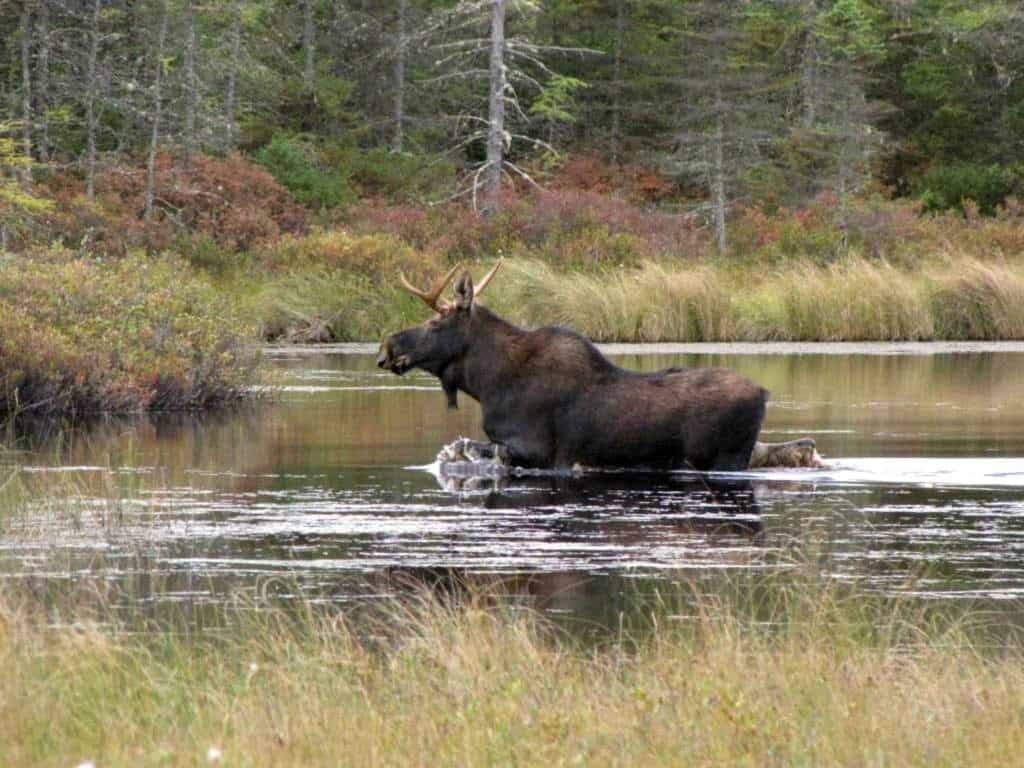
Moose are a central part of Maine’s history.
©Govtaski David, U.S. Fish and Wildlife Service, Public domain, via Wikimedia Commons – Original / License
My own personal encounter aside, no other creature so clearly reflects Maine’s geography, history, and identity. Towering, solitary, and deeply tied to northern forests, the moose symbolizes Maine’s wilderness heritage, its long relationship with natural resources, and its commitment to conservation. And beyond all those reasons, moose are simply fascinating animals.
A Northern Icon
The moose has been part of Maine’s image since long before it became an official state symbol. Long associated with dense forests, cold winters, and remote landscapes, it represents a version of the state that residents recognize immediately: rural and resilient. And while we Mainers love our moose, when Maine formally designated it as its state animal in 1987, the choice reflected far more than simple affection for this charismatic species. It acknowledged the animal’s role in the state’s economy, its presence in Indigenous and colonial history, and its importance as an ecological indicator of forest health. The moose already functioned as an unofficial emblem of the state—the choice was basically a no-brainer.
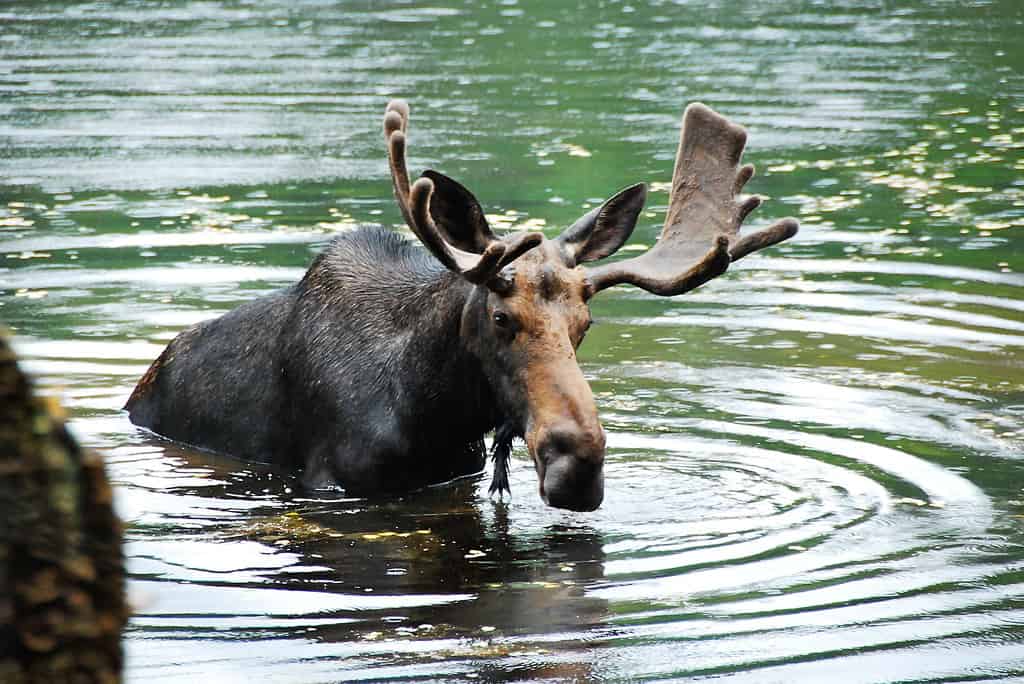
Long before 1987, the moose already symbolized Maine’s forests, resilience, and rural identity.
©R_Berthiaume/iStock via Getty Images
The Legislative Decision
Maine officially named the moose its state animal through legislative action in 1987, relatively late compared to some other state symbols, many of which were adopted much earlier in the 20th century. By the time the moose designation was proposed, Maine already featured the animal prominently in state imagery, including the state seal, which depicts a moose resting beneath a pine tree. Formalizing the moose as a state symbol was less about introducing something new and more about codifying an identity that had long existed. The decision was broadly supported and uncontroversial. The moose was already widely viewed as uniquely representative of Maine, particularly when compared to animals that ranged across many states.
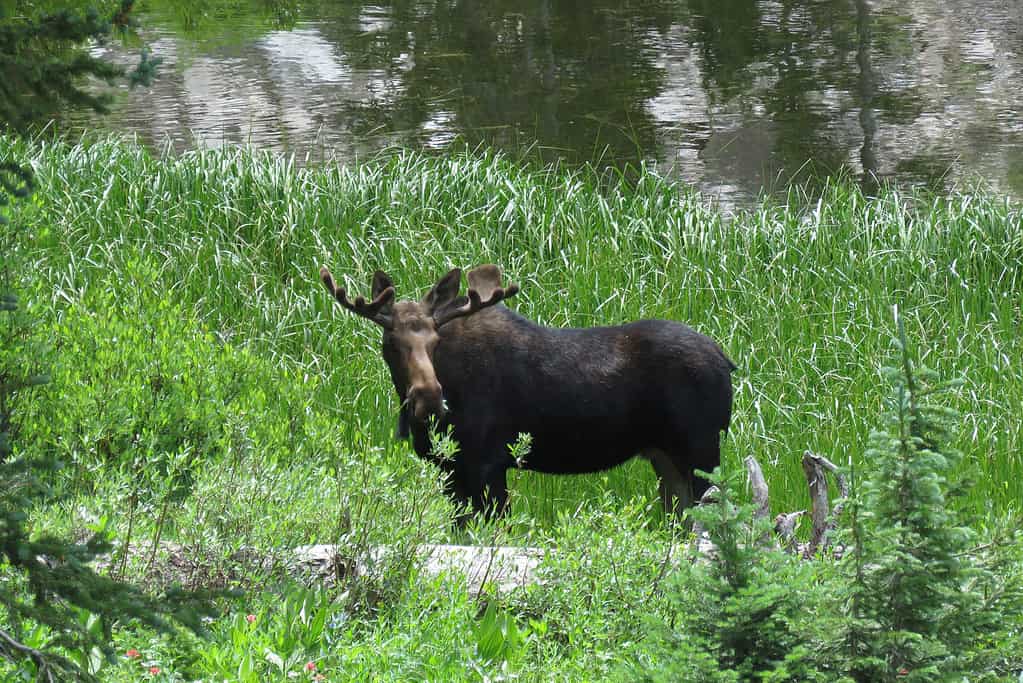
Maine formally designated the moose as its state animal in 1987, codifying a long-standing symbol.
©Joe_Guetzloff/iStock via Getty Images
A Long Presence Before Statehood
Moose lived in what is now Maine long before European settlement. Indigenous peoples, including the Wabanaki nations, hunted moose for meat, hides, and tools—hides being especially valued for their durability. The animal’s sheer size made it an important resource in northern forests. They also held a strong cultural significance in stories and traditions.
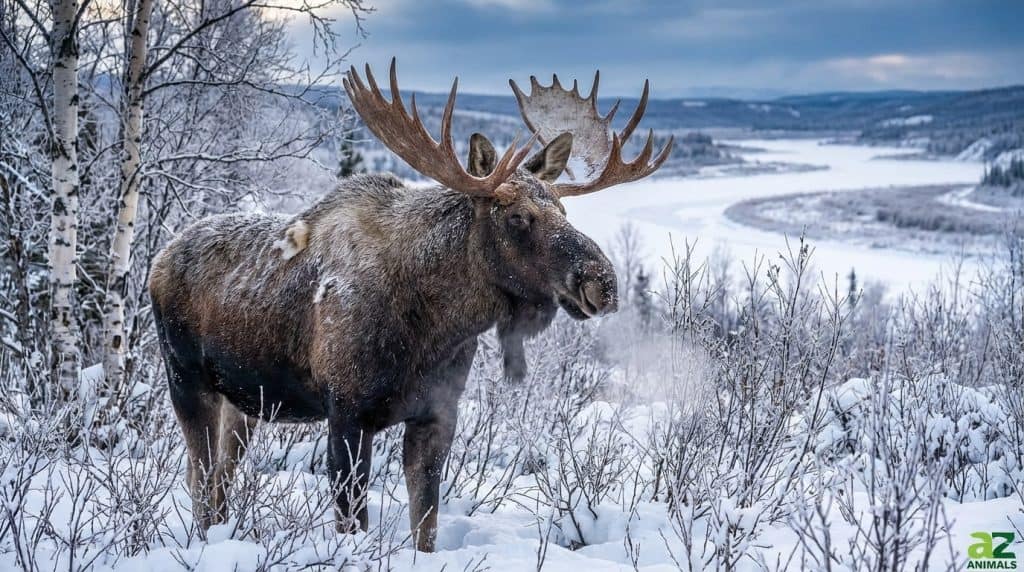
Moose sustained Indigenous communities and early settlers, shaping Maine’s economy and cultural history.
©A-Z Animals
When European settlers arrived, moose quickly became part of the colonial economy. Early accounts describe the animal as abundant, though populations declined sharply in the 18th and 19th centuries due to overhunting and habitat loss. Logging operations and expanding settlements fragmented forests. Unregulated hunting also reduced moose numbers. By the late 1800s, moose were rare in many parts of Maine. But the decline shaped how Mainers came to view the species. Rather than taking abundance for granted, the moose became a symbol of what could be lost without careful stewardship.
Conservation and Recovery
In the late 19th and early 20th centuries, Maine enacted hunting regulations and land-use policies that allowed moose populations to rebound. Restrictions on hunting seasons, combined with forest regeneration after logging, created conditions favorable to moose. By the mid-20th century, the population had grown substantially.
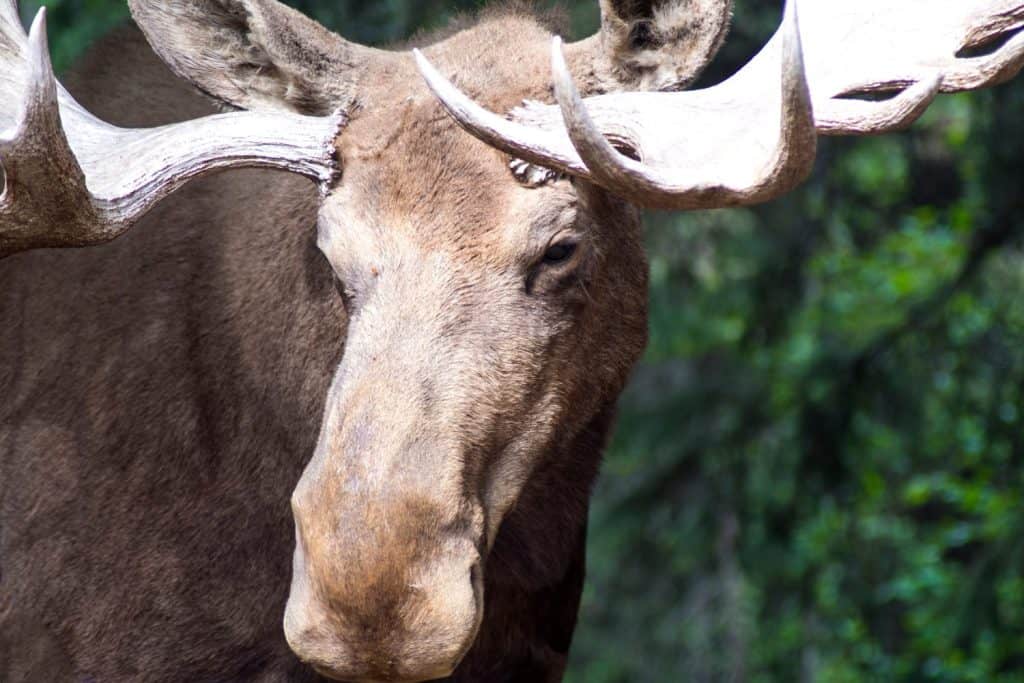
Once nearly eliminated by overhunting, moose rebounded through early conservation laws and forest regeneration.
©Douglas E. Fechter/Shutterstock.com
By the time Maine named the moose its state animal, the species was once again a visible presence across much of the state. This recovery proved that thoughtful management could balance human activity with wildlife conservation, thus turning the moose into a symbol for responsible governance and environmental awareness.
Ecological Importance
Moose are the largest members of the deer family and play a significant role in Maine’s forest ecosystems. Adult bulls can weigh well over 1,000 pounds and stand more than six feet tall at the shoulder. Their height allows them to browse vegetation that smaller animals can’t reach, which works to shape forest growth patterns in subtle but important ways.
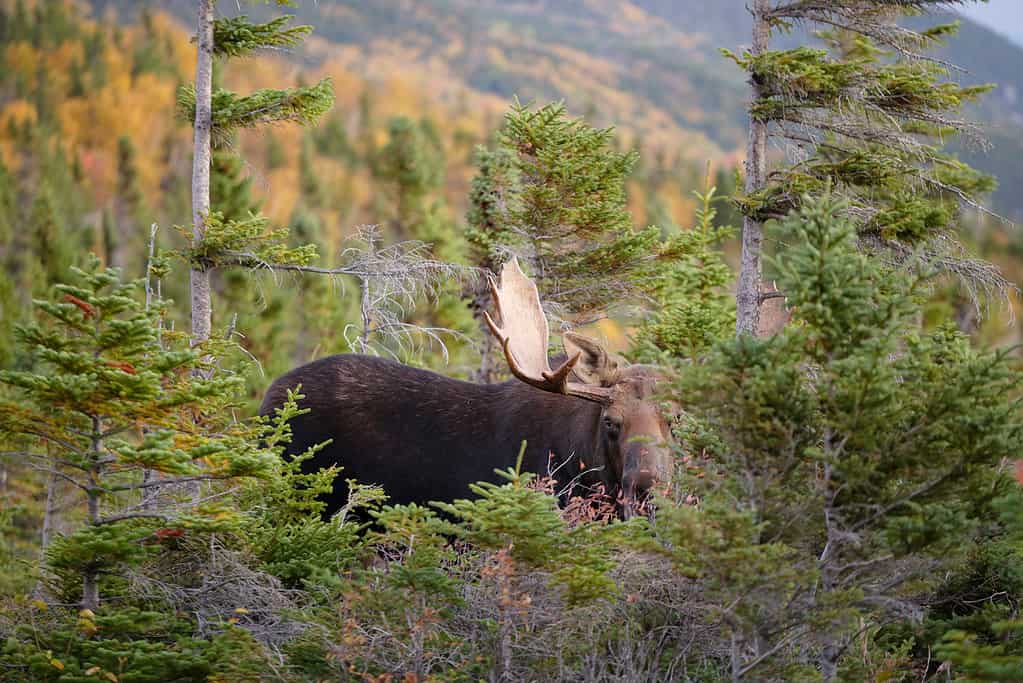
As large browsers, moose shape forest regrowth and serve as indicators of ecosystem health.
©Paul Tessier/Shutterstock.com
By feeding on young trees and shrubs, moose influence which plant species dominate regenerating forests, helping to maintain a mix of vegetation types and supporting biodiversity. But at the same time, moose populations must be carefully managed, as overpopulation can stress habitats. Underpopulation, however, often serves as a warning of broader environmental stresses affecting the ecosystem.
Cultural Significance in Maine Life
Beyond ecology, the moose occupies a central place in Maine’s cultural landscape, well-established long before the legislation was enacted. Moose imagery appears on road signs, business logos, sports team names, and souvenirs throughout Maine. For many visitors, spotting a moose is considered a highlight of a trip to the state, and moose-watching has become a niche form of wildlife tourism.
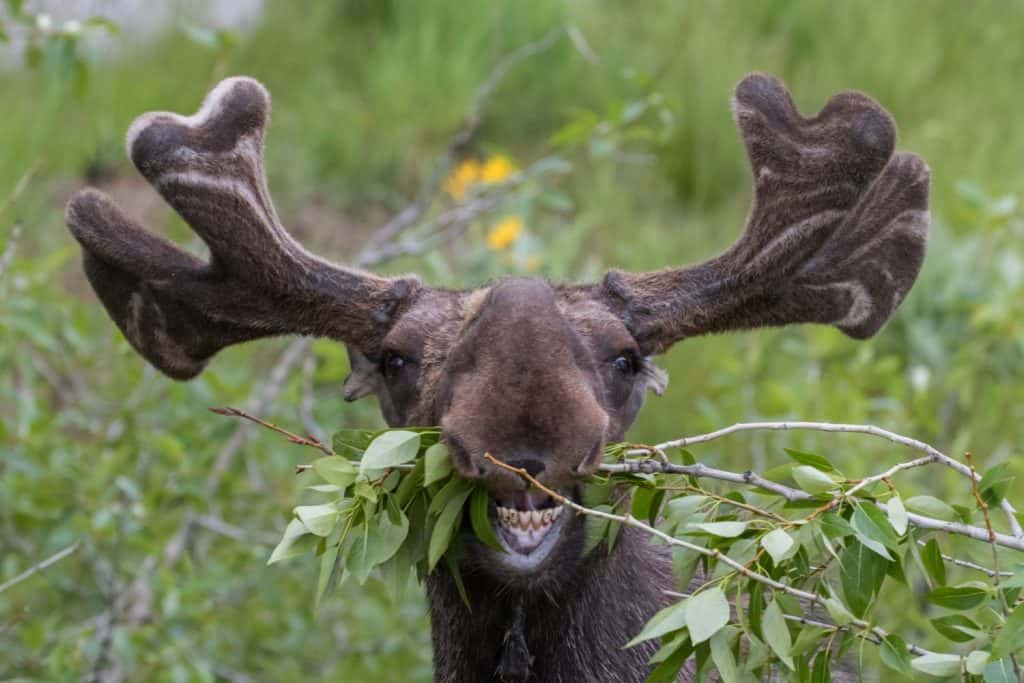
From road signs to souvenirs, the moose is woven into everyday life and Maine’s public image.
©Green Mountain Exposure/Shutterstock.com
Importantly, the moose also represents a side of Maine that stands in contrast to more urbanized states. It evokes remoteness, quiet, and a slower pace of life, qualities that many residents value and wish to preserve. Maine isn’t a state of tall buildings and gridlocked traffic; it’s a state of tall trees and moose clomping through swamps.
The Moose on the State Seal
Although Maine did not officially name the moose as its state animal until 1987, the animal appeared on the state seal much earlier. Adopted in 1820, when Maine achieved statehood, the seal depicts a moose resting in a forest clearing, flanked by a pine tree and a farmer and sailor—an image emphasizing natural resources, labor, and independence.
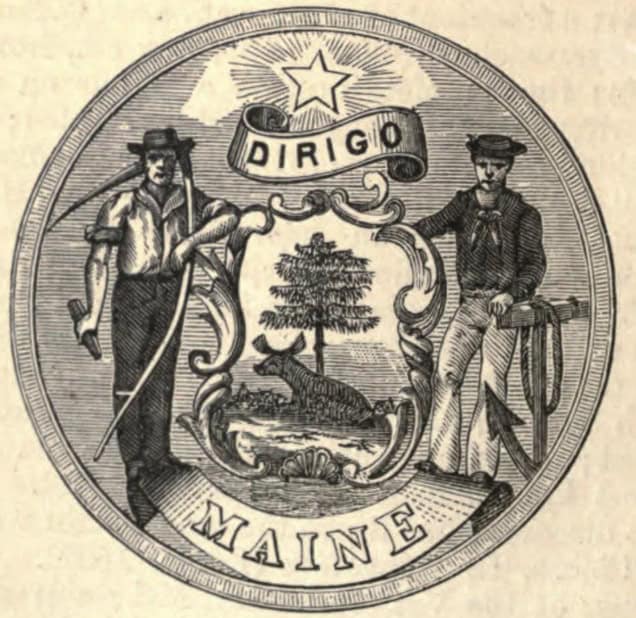
A moose resting beneath a pine tree has appeared on Maine’s state seal since 1820.
©The American Cyclopædia, v. 11, 1879, p. 28., Public domain, via Wikimedia Commons – Original / License
The inclusion of the moose on the seal underscores how deeply embedded the animal was in Maine’s identity from the beginning. The 1987 designation was simply a formal acknowledgment of a symbolic role dating back more than two centuries.
Why the Moose, and Not Another Animal?
Maine has no shortage of wildlife and could have chosen several animals with historical ties to the state, like the white-tailed deer or the Atlantic cod. The moose, however, stood apart because of its strong association with northern forests and its limited range. While deer and cod are found across much of the country, moose are concentrated in a smaller number of northern states, making them a more distinctive symbol. The moose also embodies qualities that Mainers often see in themselves: endurance, self-reliance, and the ability to thrive in challenging conditions. As someone born and raised in Maine, I believe no other animal embodies the spirit of a true Mainer more than the moose.
Does the Symbolism Hold Up Today?
More than three decades after its designation—and two centuries after it was put on the state seal—the moose not only remains a fitting state animal for Maine, but it’s the obvious choice. The species continues to shape conversations about land use, climate change, and wildlife management. In recent years, concerns about parasites, warming temperatures, and habitat shifts have drawn renewed attention to moose health, challenges that have only strengthened the animal’s role as a symbol, highlighting the interconnectedness of Maine’s natural systems.
At the same time, the moose continues to capture the public imagination. It remains instantly recognizable and closely tied to the state’s brand. For residents and visitors alike, the moose represents both what Maine has been and what it hopes to preserve. Today, the moose continues to serve as a powerful reminder of those values, standing as both a literal and symbolic giant in the state’s story. And for three teenage boys, whiling away a lazy autumn Sunday in the woods, it’s a magical portrait of friendship, awe, and pride in their home state.