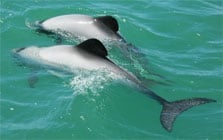

The name Mimmo means “belonging to God.” This moniker, recently given to a wild bottlenose dolphin, is quite fitting, given that he belongs to no one other than the sea. But what has made this dolphin truly remarkable is his ability to feel at ease among the hustle and bustle of water traffic in St. Mark’s Basin. Unfortunately, as researchers keep a close eye on the dolphin while trying to determine who Mimmo is, they also fear for his safety. The hope is that Mimmo will vacate the confines of the lagoon of his own accord and return to the open ocean before grave harm comes to him. To date, however, Mimmo does not seem motivated to depart.
Why Did Mimmo Come to Venice?
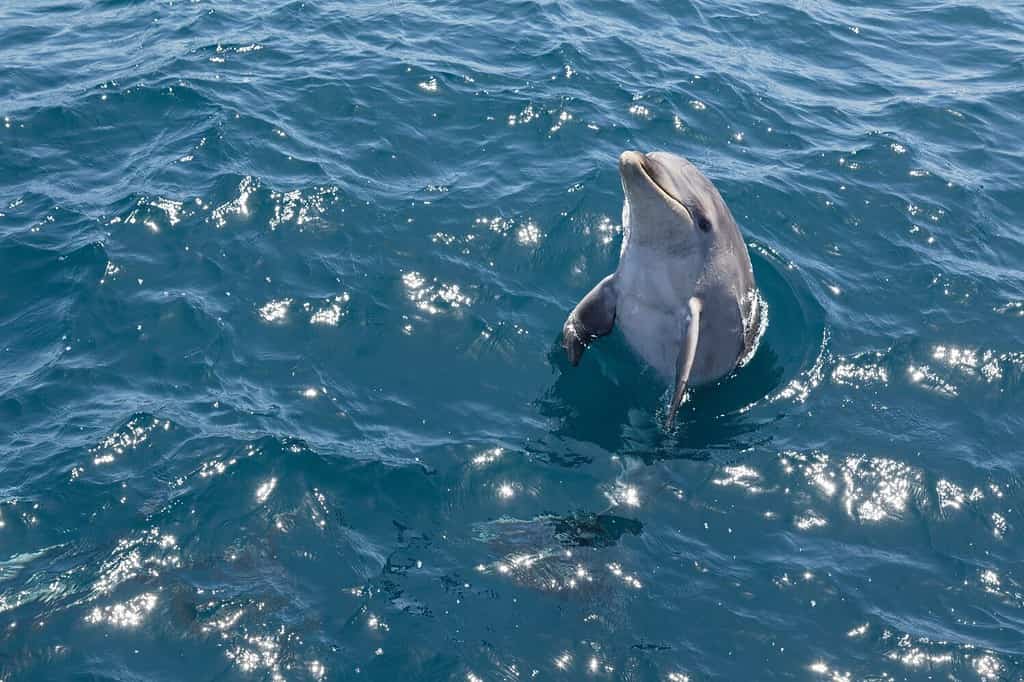
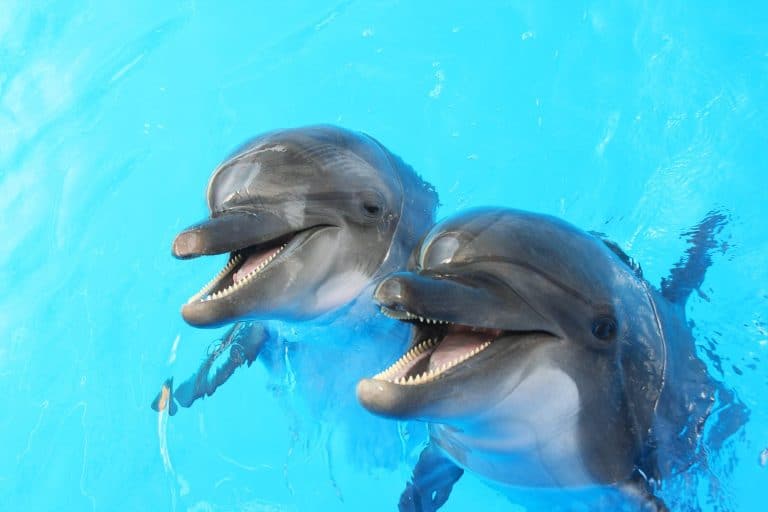
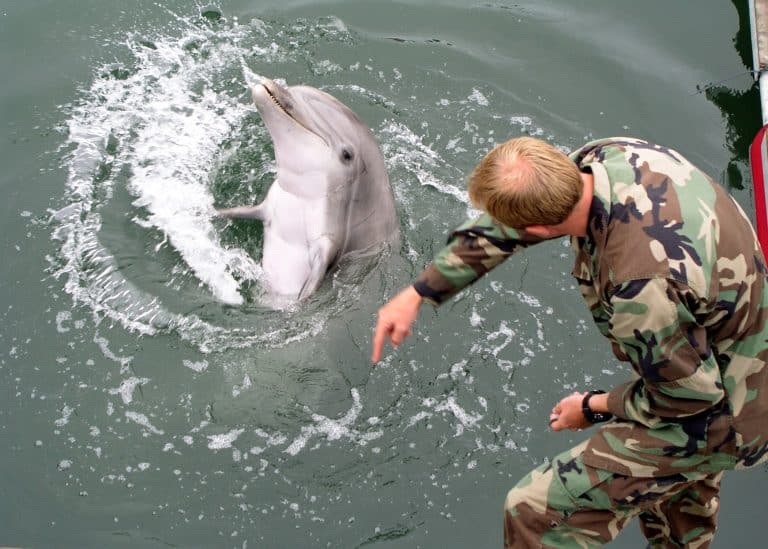
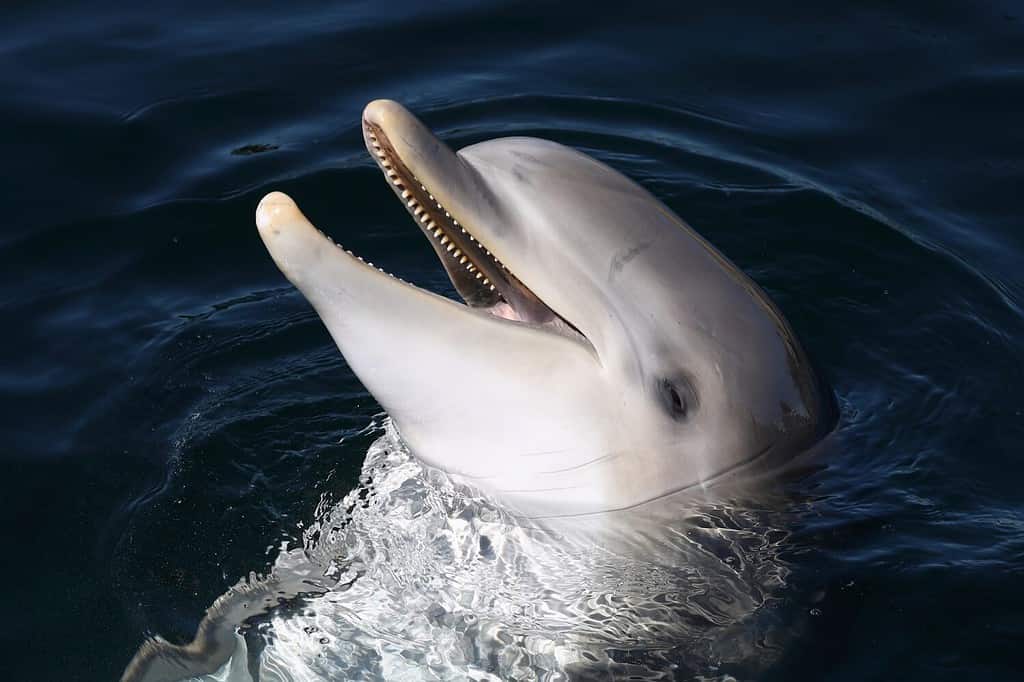
A wild bottlenose dolphin named Mimmo, similar to this dolphin, has made St. Mark’s Basin his home since June.
©Paleokastritsa/Shutterstock.com
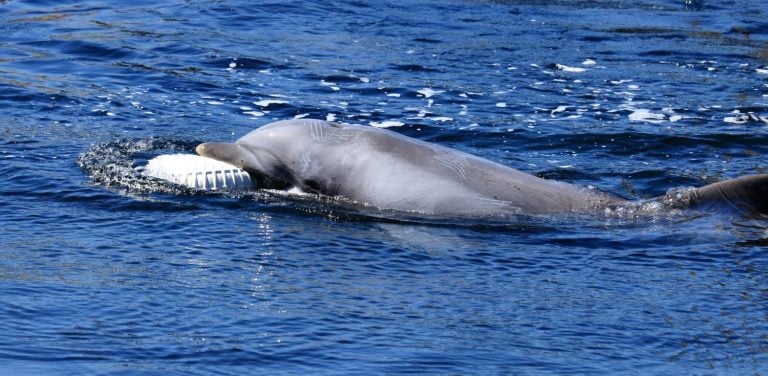
Mimmo, a wild bottlenose dolphin, has been swimming around a Venetian lagoon since early summer, as seen in this YouTube video. After a sailing instructor initially spotted the cetacean in June, his whereabouts were confirmed by experts in July, and the dolphin was then named after the sailing instructor who found him.
It is believed that Mimmo swam into St. Mark’s Basin after following a school of fish into the lagoon. Recognizing there was a plentiful food source in the basin, Mimmo did not leave.
While dolphins are generally seen swimming in pods, some males venture off on their own in search of food or a mate. Mimmo appears to be one of these individuals. He is among about 100 dolphins worldwide observed as “social loners”—dolphins that come into contact with humans and, according to Sandro Mazzariol, a CERT veterinarian, are not fazed by human activity on the water.
“Around 100 cases have been documented around the world in which these animals are absolutely at ease and remain healthy despite not interacting with their peers,” Mazzariol explains via a Facebook post, according to the Associated Press.
To date, Mimmo is not only healthy but is thriving in St. Mark’s Basin. He is so comfortable in his aquatic home that even after low-frequency acoustic equipment was used to bring him back to the open ocean, Mimmo found his way back, remaining in the lagoon ever since.
Is It Normal for Dolphins to Be Seen in Venice?
Bottlenose dolphins were previously seen in Venice in 2021, when water traffic was restricted due to the COVID pandemic.
©RMMPPhotography/Shutterstock.com
Generally, the boat traffic in Venice is enough to keep dolphins out of St. Mark’s Basin. However, this is not the first time a dolphin has been spotted in the lagoon. Two other dolphins have come to explore Venice in recent years, albeit for a much shorter period than Mimmo.
In 2021, two bottlenose dolphins were spotted in St. Mark’s Basin. With boat traffic significantly reduced due to COVID restrictions, the dolphins could swim freely and feed. However, even with fewer boats, experts still feared for their safety. Consequently, they used low-frequency acoustic devices to move the dolphins back to the open ocean. The dolphins did not return.
Mimmo is facing far more boat traffic than the dolphins did a few years ago. This has left experts scrambling to come up with plans to not only lure Mimmo into the deeper ocean waters but also keep him there, given that traditional methods have not proven successful to date.
Why Is Mimmo’s Safety at Risk?
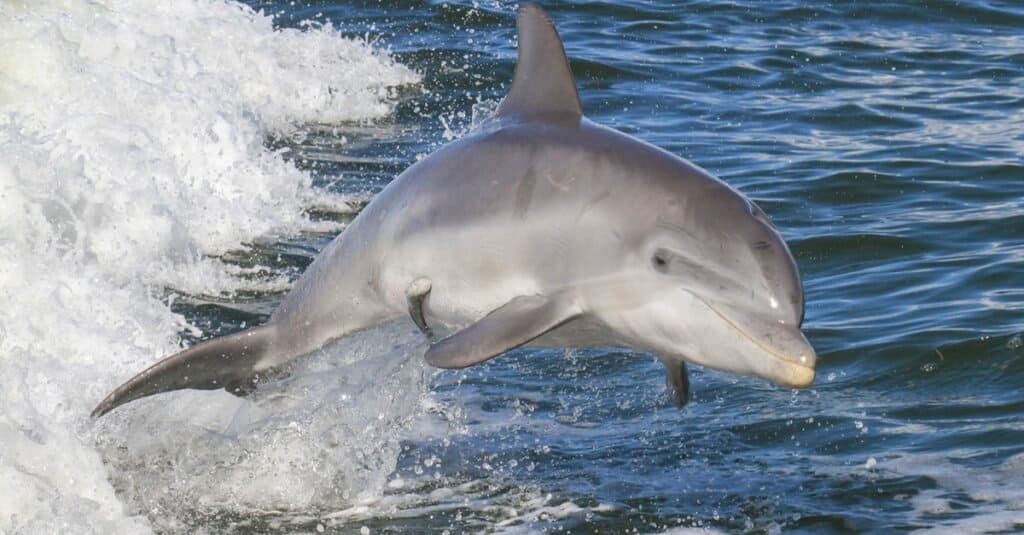
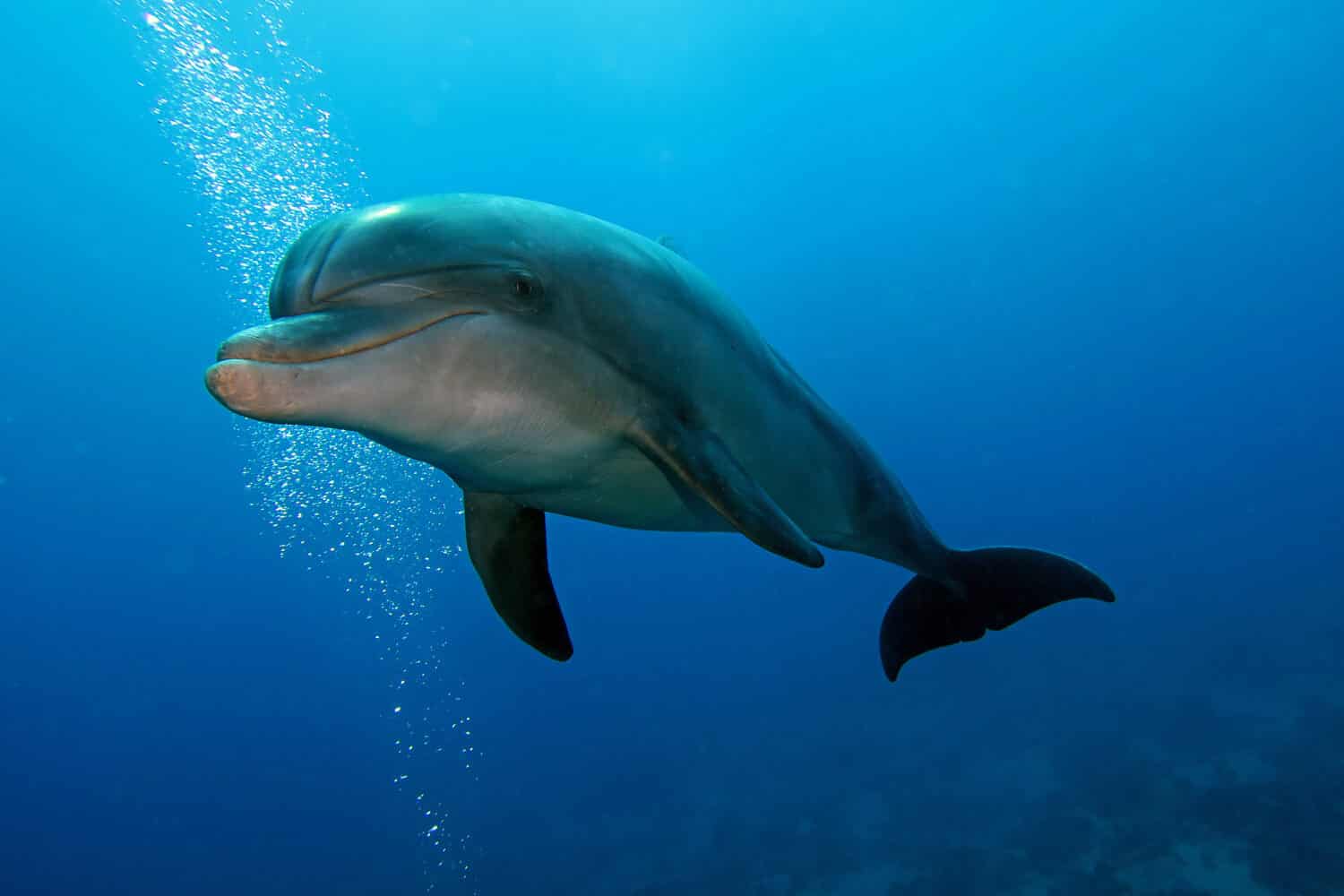
The longer that Mimmo, a dolphin similar to this one, is in St Mark’s Basin, the greater risk he is at for losing his life.
©Tory Kallman/Shutterstock.com
There is no denying that Mimmo has become an attraction in Venice’s lagoon. Since news of his arrival in St. Mark’s Basin, there has been a massive uptick in the amount of water traffic from what is typically seen this time of year. Locals have reportedly been taking tourists to areas where Mimmo is frequently seen to take pictures, or even chasing the dolphin across the lagoon to get a closer look.
This desire to get close to Mimmo has ultimately caused injury to the dolphin. Reports from experts who attempted to use low-intensity acoustic devices to move Mimmo out of the lagoon and into open water just over a week ago confirmed that Mimmo was wounded. The wounds were consistent with being struck with a boat propeller.
Fortunately, the wounds appeared to be superficial, and by all accounts, Mimmo should make a full recovery.
The problem is that, as boat traffic increases, the risk of Mimmo being struck again is very high. The next time this happens, Mimmo may not be as lucky and may instead face life-threatening injuries. Consequently, the longer Mimmo stays in St. Mark’s Basin, the greater the chances that he will not survive.
What Happens When a Wild Animal Becomes a Spectacle

A walrus named Freya, similar to this one, was euthanized in Norway after becoming too comfortable around people.
©Aleksei Verhovski/Shutterstock.com
Unfortunately, the outlook for animals that become a spectacle is rarely good. This is because animals in Mimmo’s position, living in high-traffic areas, are more likely to be injured or killed. Given that he has already been injured, it is not out of the realm of possibility that he will be struck by a propeller again. There is also the possibility that the situation will become unsafe for both Mimmo and the public, which may ultimately lead to Mimmo’s demise.
When wild animals become public spectacles, both their safety and the public’s safety need to be considered. This is what happened in 2022 when Freya the walrus made her way into Oslo Fjord. She quickly became an attraction, drawing people not only from Oslo but also from surrounding areas to watch and record her antics.
It was decided less than a month after Freya’s first appearance that she would have to be euthanized. This was done, according to the government, because the public was getting too close to Freya and Freya was getting too close to the public. There were no feasible alternatives to get Freya out to open water that did not put Freya’s life at risk. Therefore, it was determined that the most humane thing to do was euthanasia.
While this has not been discussed for Mimmo, Freya’s tale serves as a grave reminder of why wildlife should be left alone. Therefore, the hope is that the crowds gathering and the increased boat traffic trying to catch a glimpse will die down, allowing Mimmo to eventually move along to open water.
Why Colder Weather May Be Key to Returning Mimmo to the Open Ocean
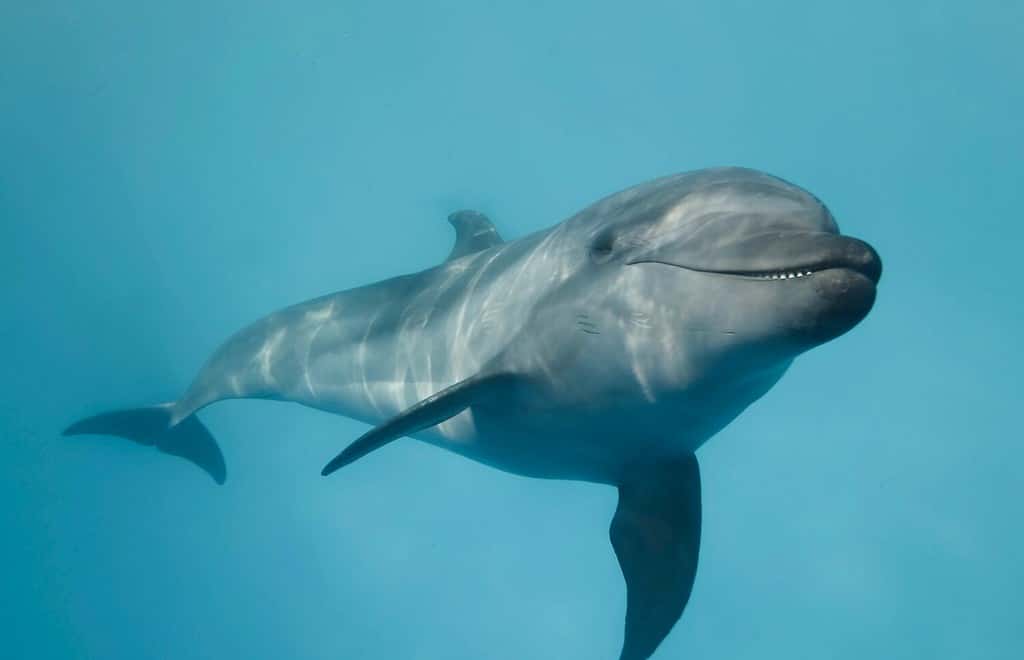
The hope is that Mimmo, similar to this bottlenose dolphin, will leave St. Mark’s Basin as the weather gets cooler and his prey moves out to the open ocean.
©Andriy Nekrasov/Shutterstock.com
Before the situation becomes more dangerous for Mimmo, the hope is that now that temperatures are becoming colder, the dolphin will make the decision to follow his food into the open ocean. Currently, Mimmo has been noted to enjoy a diet of “mullet, sea bass, and sea bream,” according to the Associated Press. But that is because the water temperatures have been warmer, bringing the fish into the lagoon. Water temperatures from when Mimmo was first spotted to where they are currently are as follows:
| Month Of The Year | Average Water Temperature |
| June | 75°F |
| July | 78°F |
| August | 78°F |
| September | 75°F |
| October | 67°F |
| November | 61°F |
As winter approaches and water temperatures dip, the fish will move toward the open ocean in search of warmer water. The hope is that Mimmo will follow the fish and return to the deeper waters as well.
Because attempts to move Mimmo out to open water have already failed, it is unclear what the next steps will be if he chooses not to follow his prey out of the Venetian lagoon. During this wait-and-see period, the hope is that boats will be cautious of the dolphin, with Mimmo doing his best to steer clear of propellers, so that further injury does not come to the dolphin that has been enjoying the summertime and fall in Venice.