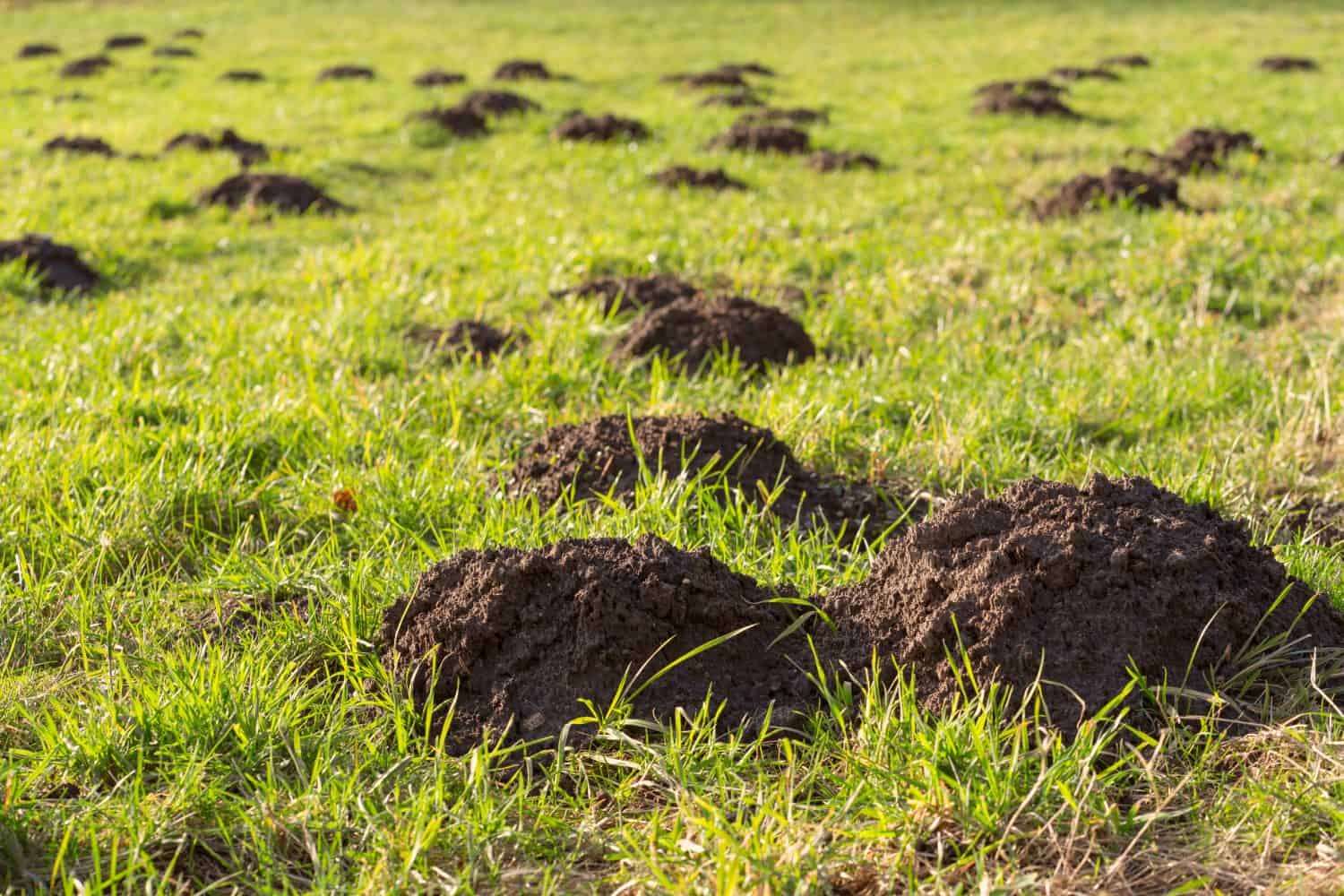

It never fails. Just after a weekend of hard work in the backyard, mounds of dirt appear. Perhaps they are hills, or maybe they are longer passageways, causing the earth to shift and upturn. Both are signs that a pest is in the yard and needs to be dealt with before creating real problems.
The problem is, are they mole tunnels or vole tunnels destroying the yard? This is a question many homeowners ask themselves as they assess the damage. Fortunately, for those who know what they are looking for, the answer can be pretty straightforward. However, there are instances where yard damage can be caused by either a mole or a vole, and further investigation is necessary before solutions are created to remove the unwanted critters permanently.
How Moles and Voles Destroy Yards
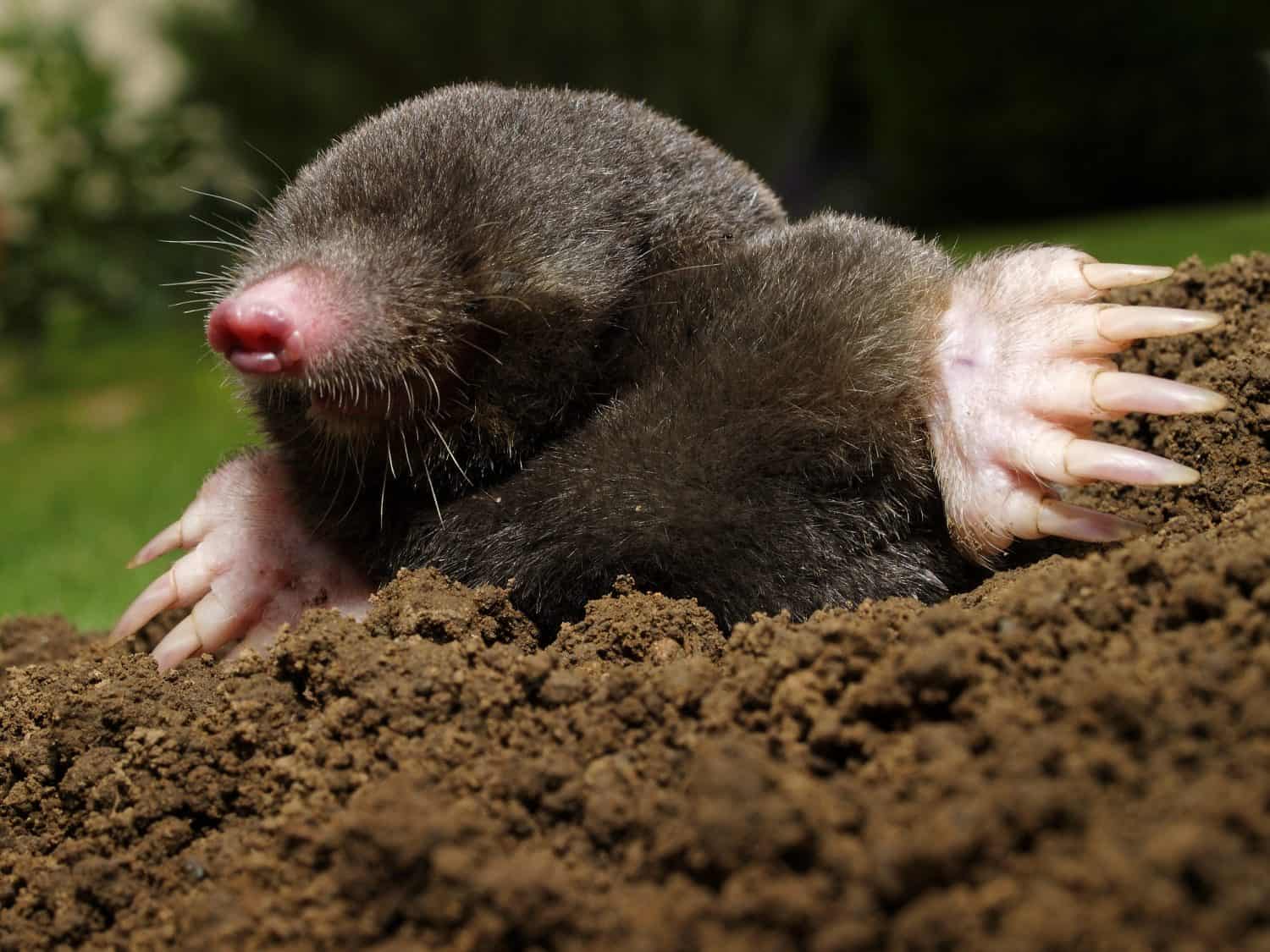
Moles and voles are both very good at destroying yards.
©Grimplet/Shutterstock.com
The last thing that a homeowner wants to see is their yard looking like a disaster after working hard to make it a relaxing sanctuary. However, in some areas, despite a tidy yard, moles and voles will make themselves at home. Fortunately, by just surveying the damage alone, it can become apparent who is to blame for the upturned, unsightly earth that has transformed a green, maintained lawn into a war zone.
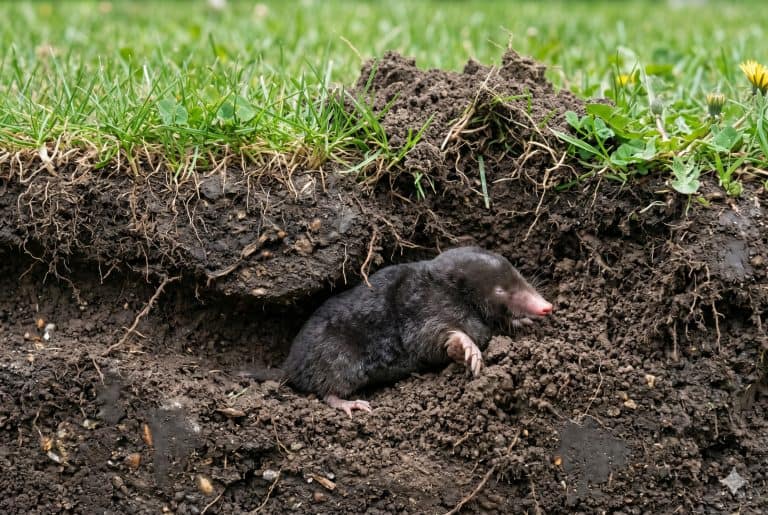
Moles and voles have different methods for destroying a yard. Moles tunnel deep under the ground because they live in their tunnels. Their goal is not to kill the lawn. They are simply pushing excess dirt out of their tunnels. This creates molehills on the property. Depending on how active the mole is, there may be two to three new dirt mounds daily. In a short time, a once flat surfaced lawn can become sprinkled with mole activity if no action is taken.
Voles prefer to burrow just under the surface of the grass and dirt. It is not just burrowing that causes damage in a yard. Voles eat the roots of plants while they burrow. This can kill the grass and surrounding plants in a short period.
If voles are present, they can quickly become a significant infestation due to their high reproductive rates. This means that an entire yard can be destroyed in a matter of months without taking action. Sometimes, however, determining which animal is in the yard can be tricky. But if one is spotted, their physical characteristics can be a dead giveaway due to how different moles and voles look from one another.
Differences in Appearance
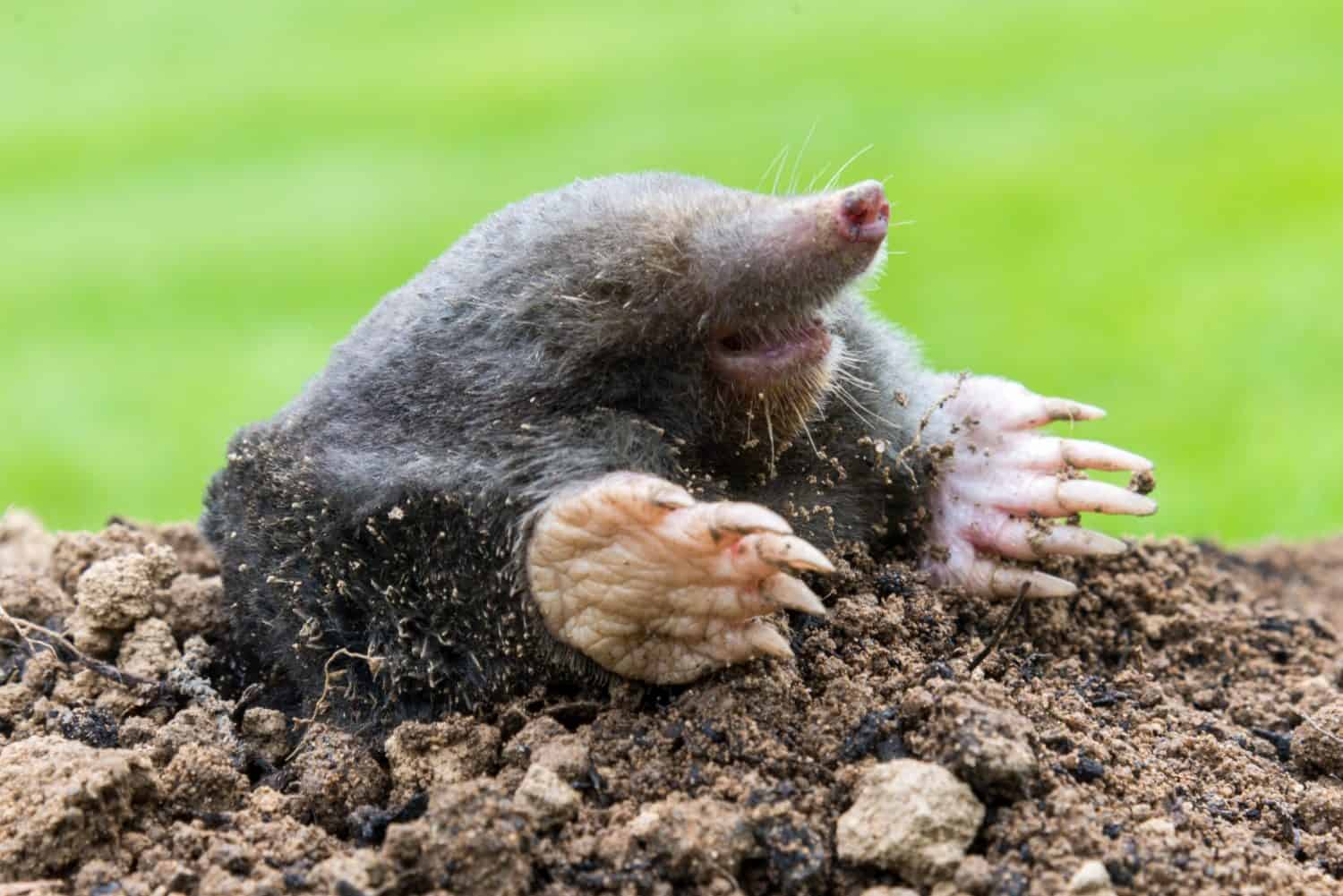
It is easy to identify a mole from a vole based on looks alone.
©kubais/Shutterstock.com
If it is hard to determine whether a mole or a vole is causing damage in the yard, getting a good look at the critter emerging from its time underground can help. This is because moles and voles are very different animals, and their looks are not similar to one another. The ways moles and voles compare to one another are as follows:
| Moles’ Characteristics | Voles’ Characteristics |
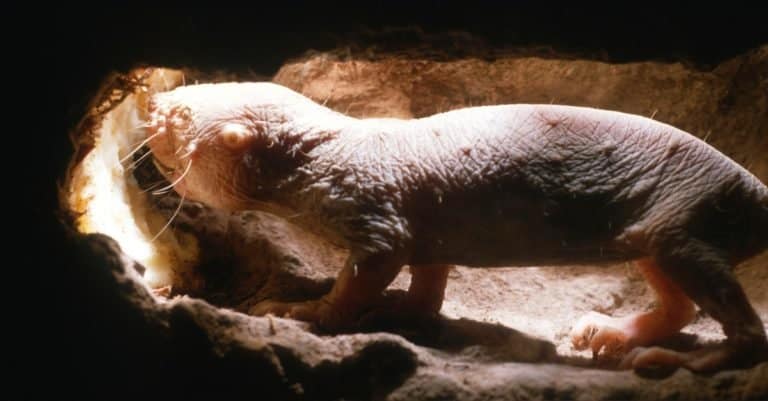
| Elongated head and snout | Small head that is proportionate to the body |
| Eyes and ears are not seen | Eyes and ears are prominent |
| Stubby tail | A small head that is proportionate to the body |
| Paws are large with long claws for digging | Paws are dainty |
| Fur is dark brown and waterproof | Fur is fawn colored |
| Have a full mouth of teeth, including canines and incisors | Have long orange front teeth |
If these characteristics are not enough to differentiate a mole from a vole, perhaps the size difference will be. This is because the two animals are opposites in terms of their length and weight.
Size Differences
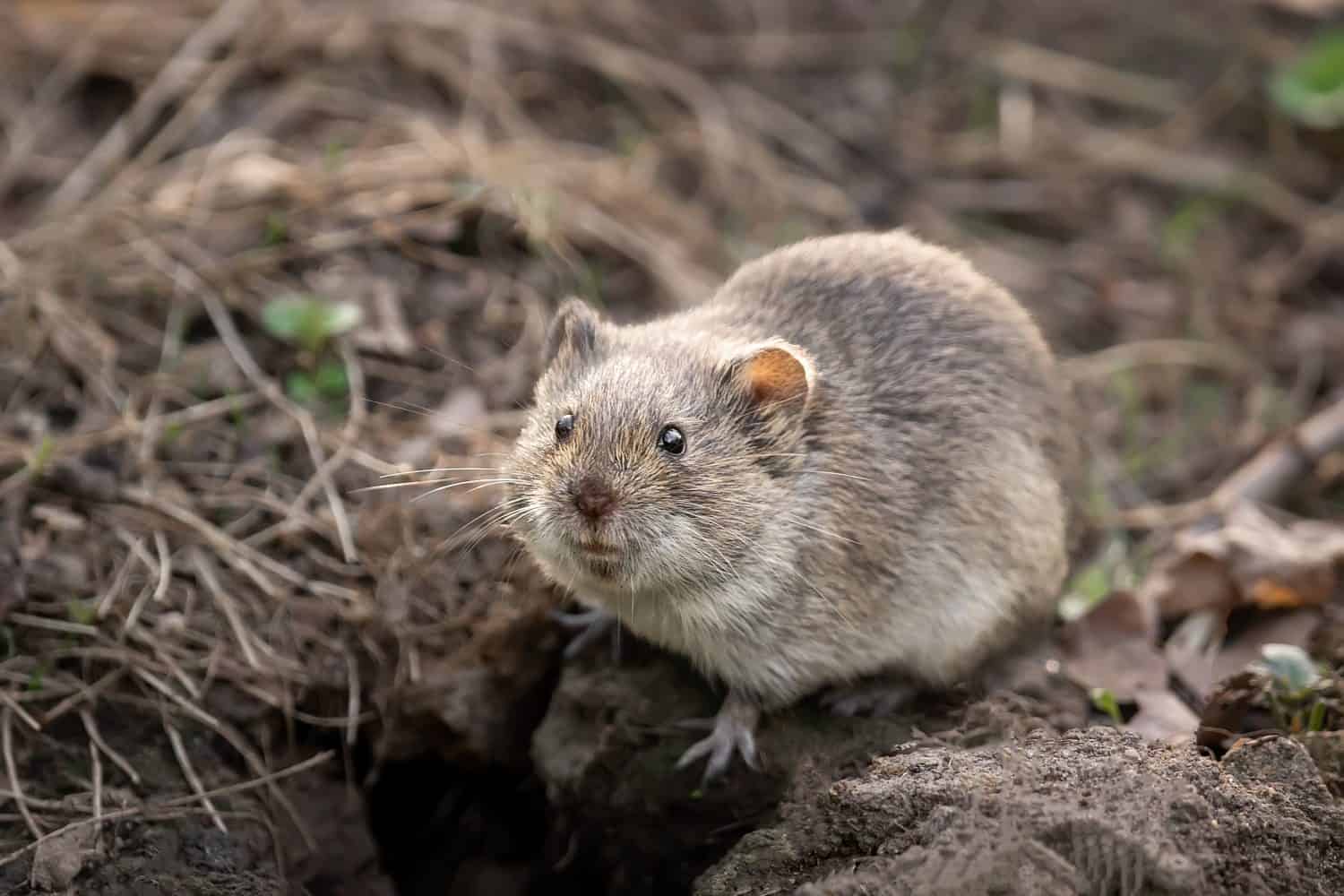
Voles tend to be much smaller than moles.
©BushAlex/Shutterstock.com
Voles and moles may both cause damage to a yard, but they are two distinctly different animals. This could not be truer than when it comes to the size and weight of moles and voles. Moles are distinctively larger than voles. With most weighing between 2.5 ounces and 4.5 ounces, they greatly outweigh voles, which range from 0.7 ounces to 2.3 ounces. Additionally, moles are larger in length. Moles, which are in the family Talpidae, measure between five and eight inches long. Even if the other characteristics of moles and voles are not known, the difference in size is a giveaway regarding whether the critter that looks like a field mouse or the one that is often not seen is the culprit causing all the damage in the yard.
Voles Are Seen Far More Often Than Moles

Voles are active during all hours of the day, making them more likely to be spotted than moles.
©Paul Abrahams/Shutterstock.com
While the mounds of dirt and holes in the yard are an indication of unwanted activity by a mole or vole, it is far more likely that a vole will be seen if they are the culprit behind the destruction than a mole.
Voles do make underground burrows, but they do not live their lives there. Instead, voles are active during both the day and night as they search for food. As they search, they will leave worn paths in the vegetation with their tunneling just below the surface of the dirt. These paths will lead from their burrow to their food source. Therefore, it is not uncommon to see voles running in the yard, if they are, indeed, at fault for the damage.
Moles, on the other hand, are not often seen. They spend 99% of their time underground. This has to do with how territorial moles are and the fact that they cannot get around quickly outside of their tunnels. If a mole does pop its head out of a hole, it will likely be done at night, given that moles are nocturnal animals. This makes the chances of seeing a mole very slim.
There are some exceptions to seeing a mole above ground during daylight hours. In most instances, moles will be seen coming above ground if they are young and are in search of a place to dig their own tunnels, or if construction has destroyed their tunnels and finding their home below ground has proven impossible. In most situations, the best sign that a mole is present is the berms of dirt they leave behind.
Moles Are Insectivores, and Voles Are Vegetarians
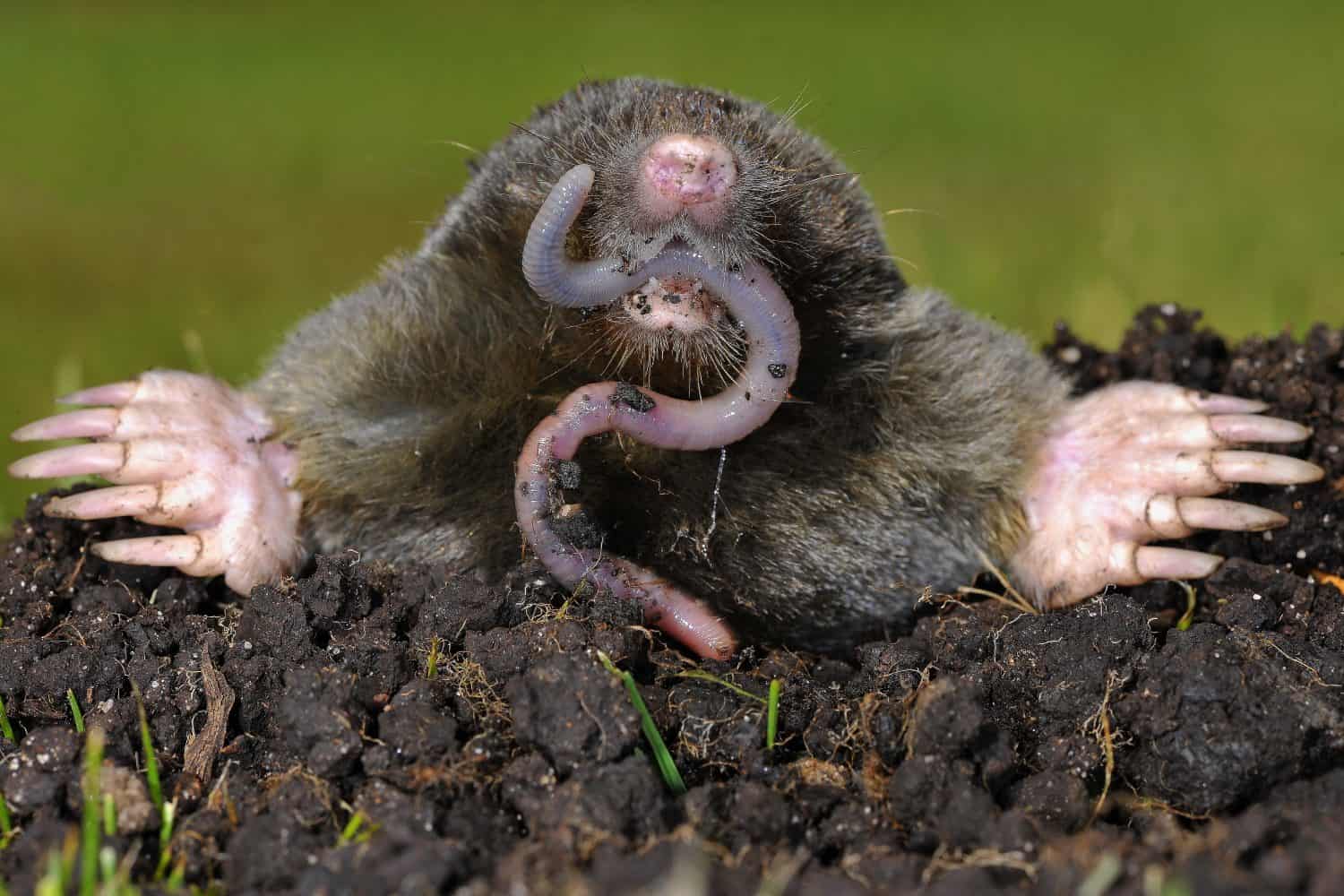
Moles eat insects, grubs, and worms, while voles eat roots.
©CezaryKorkosz/Shutterstock.com
Moles and voles have different diets from one another. It is the varied food sources that cause one of these animals to destroy the yard and its vegetation, while the other creates unsightly dirt mounds and tunnels for other animals to access.
Voles burrow just under the surface of the grass and dirt because they eat the roots of plants. In addition, these vegetarians also eat flower bulbs and young matter from shrubs and trees. This means that not only are voles causing a lawn to die, but the different plants in the yard may become sick or die as well.
Moles are insectivores. They eat earthworms, grubs, and other insects. Moles are not interested in plants or their roots. Instead, they are too busy trying to locate enough food, as moles have to consume 70% to 100% of their body weight daily to be healthy and thrive. Therefore, while no one wants to see molehills in their yards, when it comes to the safety of flowers, trees, and shrubs that are also in the yard, moles may be a better option than voles.
How to Rid the Yard of Moles
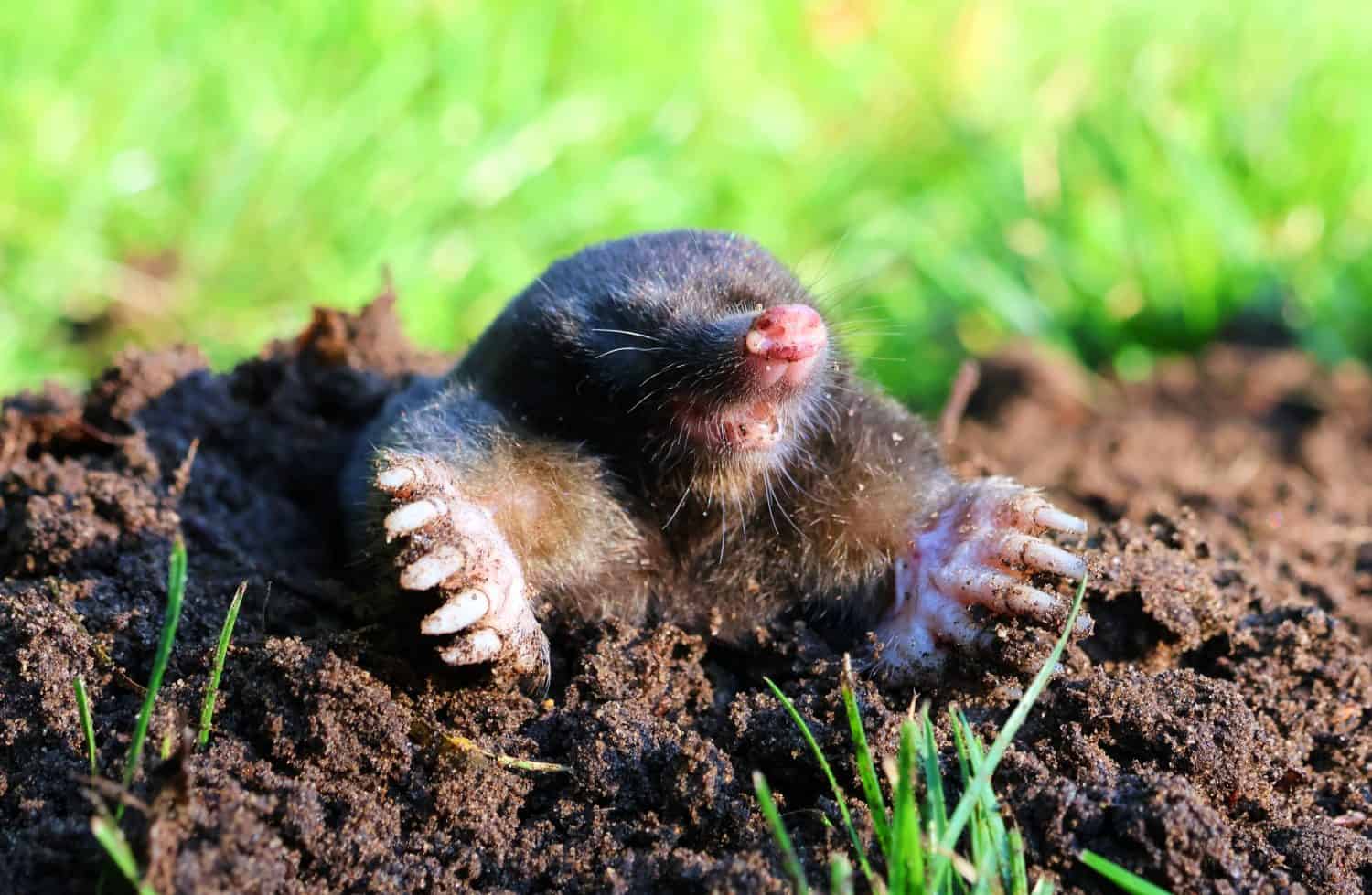
Moles can be easier to remove from a yard than many imagine.
©nipa74/Shutterstock.com
If the situation has gotten out of hand and mole berms are more distinct than grass itself, it may be time to rid the yard of moles. Fortunately, some DIY methods have proven successful in keeping underground animals at bay. Some of the most common and effective methods to remove moles from a yard include:
- Eliminate the moles’ food source by reducing the number of grubs in the yard with soapy water
- Castor oil is a natural repellent, making a castor oil and dish soap mixture to spray on molehills effective
- Planting flowers that are repellent to moles, such as marigolds, garlic, or daffodils, will keep moles from returning to a yard
- Set a live trap in a mole tunnel, and if one is caught, release it in a property far from where it was captured
- Ultrasonic repellents create noises that make moles leave the yard due to the unpleasant sounds
- Maintain a healthy lawn where insects are not likely to congregate
These recommendations are generally all that is needed to keep unwanted moles from returning after creating mounds of dirt in a yard.
How to Rid the Yard of Voles
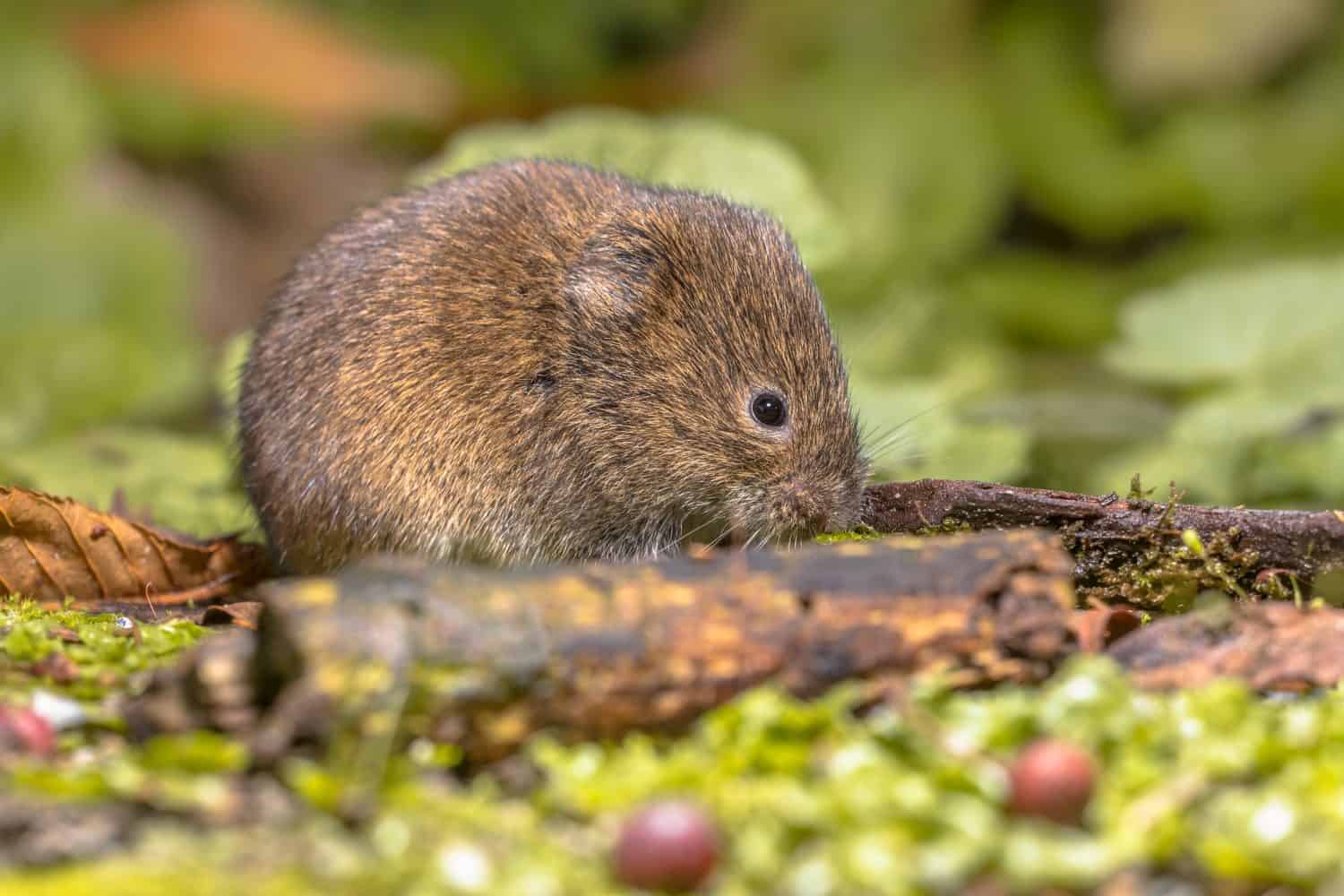
If there are not too many voles in the yard, DIY solutions tend to be effective.
©Rudmer Zwerver/Shutterstock.com
Unlike moles, voles are not in search of insects. Voles prefer to live in areas with a large amount of vegetation, making it easy to find a food source. Consequently, to keep voles from entering a yard or to remove them once they are there, yard maintenance is key. Some of the easiest ways to keep voles from consuming all the plants in a yard include:
- Keep a yard mowed and clear of overgrown shrubs and other vegetation
- Remove any debris in the yard, making it more difficult for voles to find nesting areas
- Use a mixture of castor oil in areas where vole activity is seen, as it is a natural deterrent for the rodents
- Place barriers around plants to keep voles from accessing and eating roots
- Trap voles and set them free in areas far from the yard they were caught in
For most, these methods prove to be effective enough to keep voles out of a yard. But if they continue to return, it may be time to call in the experts for other solutions.
When to Call an Expert
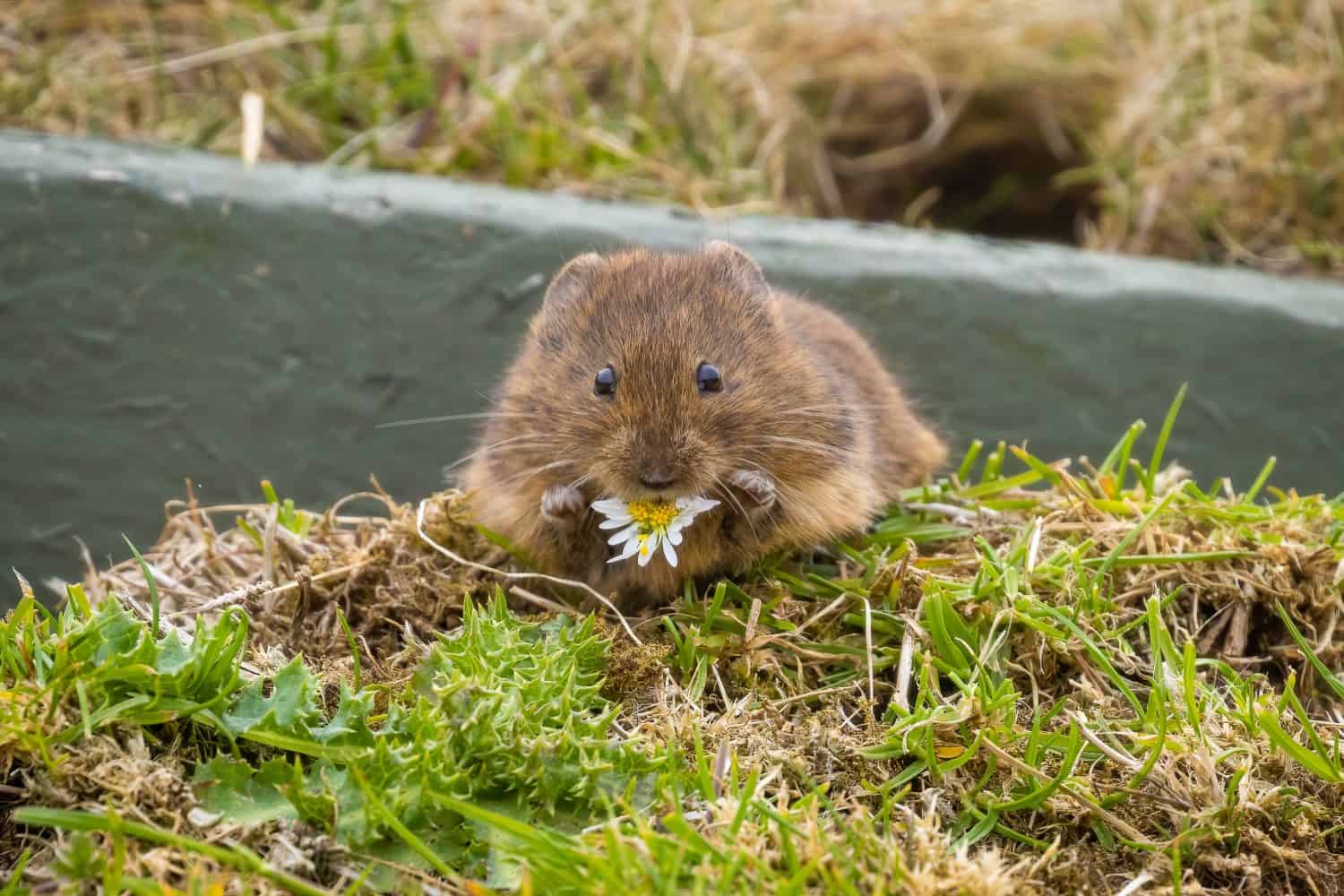
If DIY methods fail to eliminate moles or voles from the yard, it is time to call in experts before the issue becomes too severe.
©Paul Abrahams/Shutterstock.com
DIY methods can be very successful for removing moles or voles from the yard. However, sometimes, an expert is needed to eradicate the problem of both the rodent and the shrew from the landscape. The times when it may be necessary to call an expert out to remedy the situation of a vole or mole destroying the lawn include:
- If the damage is too extensive and DIY methods are not stopping the mole or vole activity
- If it is difficult to determine whether a vole or a mole is the pest wreaking havoc, an expert is necessary to determine which animal needs to be dealt with
- Both moles and voles are present, making the situation far too difficult to treat with DIY methods alone
- DIY methods work in the short term, but a more powerful method is needed that is not toxic to people or pets
Once an expert is called, it still may not be a permanent fix for the mole and vole infestation. If the property has healthy vegetation and a lush, green lawn, both critters will likely return. This means that methods for keeping moles and voles at bay will need to get more aggressive to stop an invasion before it starts.
How to Stop Voles and Moles From Returning to A Property
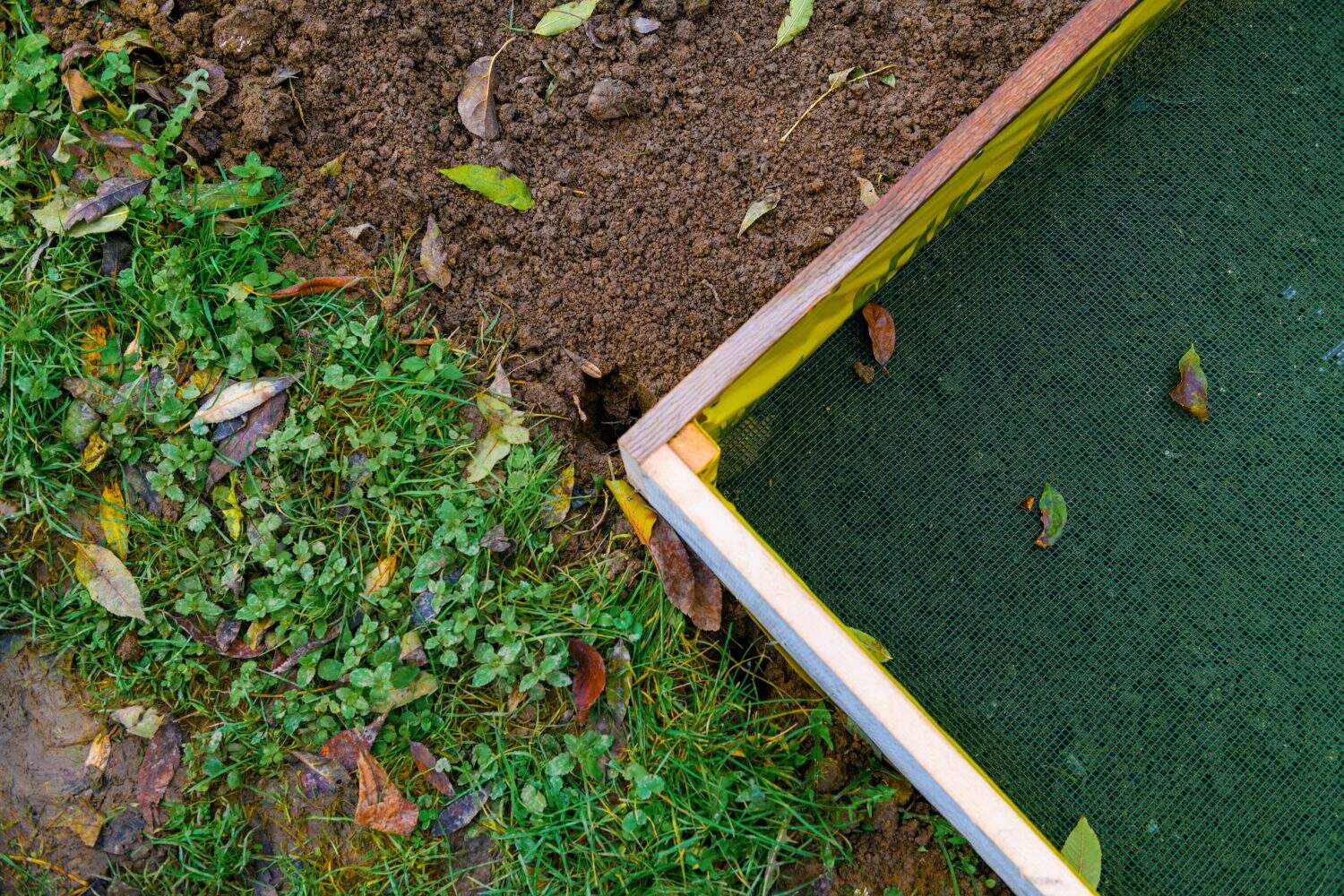
Installing barriers in the lawn is one way to keep voles and moles from returning.
©ABO PHOTOGRAPHY/Shutterstock.com
After money has been paid for an expert to remove voles and moles, the last thing a homeowner wants to see is either come back. Because of this, there are recommendations experts have made over the years to keep yards healthy, but not as appealing for the two creatures. Some ways to keep voles and moles from returning to a property include:
- Keep the lawn constantly mowed
- Keep leaves from accumulating in the yard
- Prune shrubs to keep them from overgrowing
- Remove any trash from the property and keep what is there properly stored
- Installing barriers underground may stop moles from returning
- Place hardware around the base of trees and plants to keep voles from snacking on them
The cleaner the yard, the less attractive it is to either moles or voles. Even with expert treatment and preventative maintenance, however, it may unfortunately be impossible to remove voles and moles permanently. But between consistent upkeep by the homeowner and treatments from experts, the numbers once seen can be dramatically decreased, and those that return may be so few that they are not even seen.