
Quick Take
- Not all monarchs are built to migrate. Only one generation can, and what makes it biologically different from the others is more unusual than you'd expect. Meet the super generation →
- Monarchs navigate thousands of miles to a destination they've never visited, and the mechanism they use challenges assumptions about how animal navigation actually works. Explore their navigation system →
- Three invisible environmental signals tell monarchs exactly when to leave, and ignoring any one of them makes the migration timing impossible to understand. See the three migration triggers →
- One population of monarchs faces a near-certain extinction timeline, and the window to change that outcome is narrower than most people realize. Understand the extinction timeline →
Monarch butterflies are not all the same. Each year, four generations of monarchs are born to complete the migration cycle. Only when the final generation is born does one of the most incredible migrations occur, leaving many to wonder how monarchs navigate thousands of miles south.
Continue reading
Only One Generation of Monarch Butterflies Completes Migration South
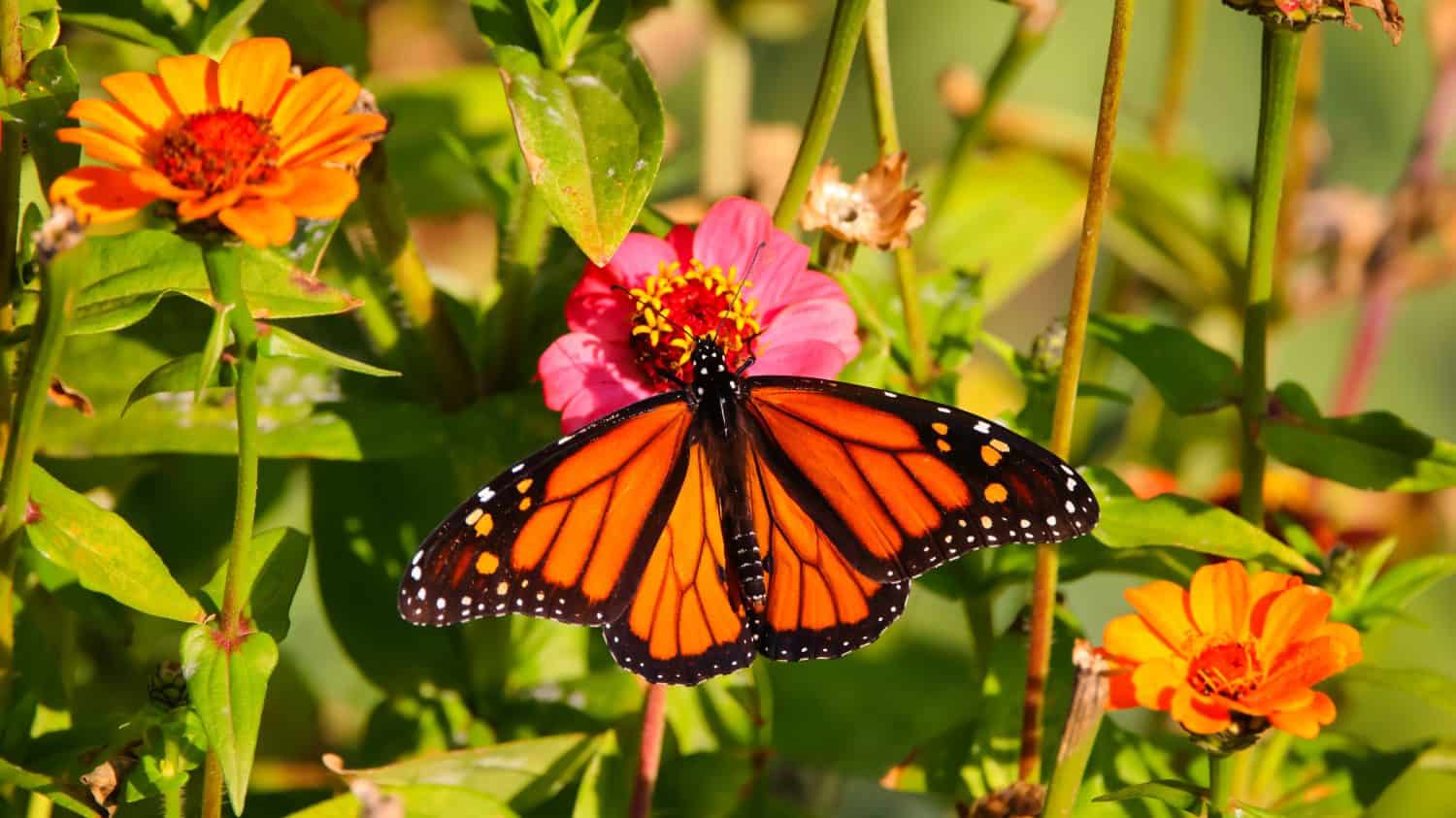
Not all monarch butterflies are born to migrate south. In total, there are four generations of monarchs born each year. The “super generation,” or the fourth generation, is designed to make the long journey south in the fall.

Fourth-generation monarch butterflies complete a massive fall migration.
©iStock.com/Ronda Brady
Unlike the first through third generations of monarch butterflies, which live only two to six weeks, the fourth generation lives for six to nine months. This extended lifespan is due to the butterflies entering a state of diapause. These butterflies do not lay eggs as they mature; instead, they put reproduction on hold.
It is not until the monarchs overwinter that the fourth generation of monarchs lays its eggs. Once this process is complete, the fourth generation ends its life cycle, having completed a monumental migration that the other generations are physically incapable of completing.
How Far Do Monarch Butterflies Migrate?
The distance that monarchs fly during their fall migration depends on whether they are eastern or western monarchs. While both travel long distances, one makes a longer journey than the other.
Western monarch butterflies begin their migration just beyond the Rocky Mountains. They fly south to California’s coast. These butterflies will overwinter in Monterey and San Diego. In total, while most of these butterflies travel hundreds of miles, some migrate nearly 1,000 miles to reach their final destinations.
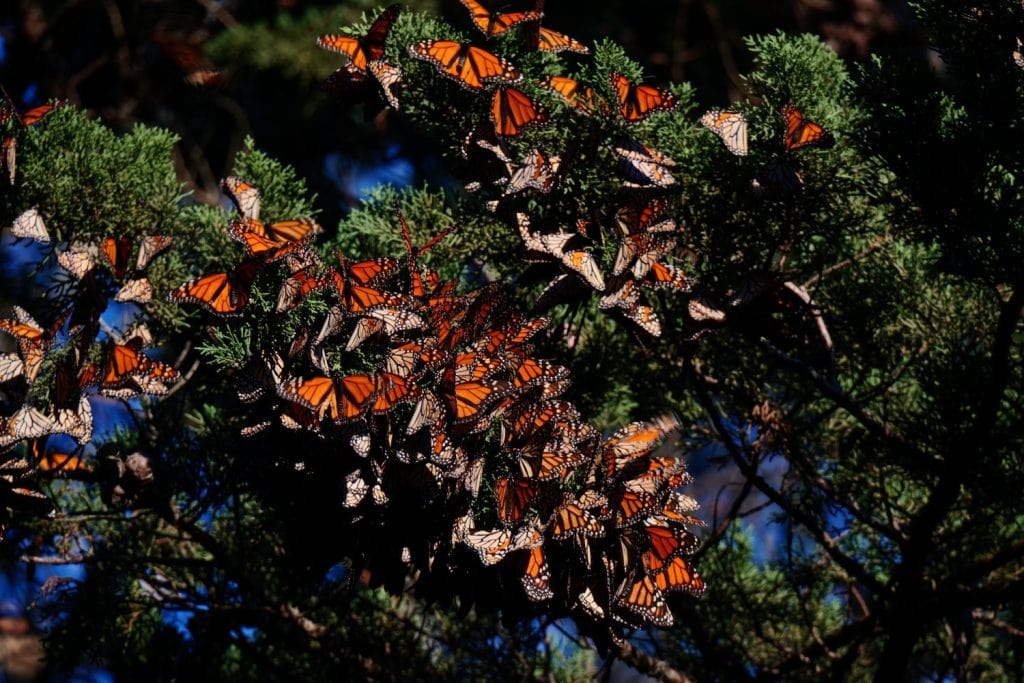
Monarch butterflies can travel up to 3,000 miles during their migration south.
©Michael Barajas/Shutterstock.com
The eastern monarchs that migrate south have a much longer route than their western counterparts. These monarchs start their migration in Canada or in northern U.S. states and make their way south to Mexico. In total, these butterflies will log approximately 3,000 miles, taking up to two months to rendezvous with millions of other monarchs in sunny Mexico.
What Triggers Monarch Butterflies to Migrate
Monarch butterflies do not indiscriminately choose a time to begin migration. Instead, they respond to environmental cues that help them decide when to begin their long journey south.
One of the biggest cues that monarchs respond to is the change in the amount of daylight available. Monarchs only fly during daylight. They will not fly at night. As summer days begin to shorten, this is the first indication that the migration season is coming.

Monarch butterflies are triggered to fly south when days shorten, temperatures drop, and milkweed becomes less abundant.
©Nancy Bauer/Shutterstock.com
With the shorter days, temperatures that were warm in the summer begin to drop. To ensure that temperatures remain consistently pleasant enough to complete the journey south, some monarchs will begin migrating in late August to early September.
Finally, as summer ends, milkweed plants begin to toughen up and die. This can trigger monarchs to begin their migration because when nectar flowers become scarce in the north, they need to find food sources farther south.
It is all of these factors that signal to monarchs that their long journey is about to begin, as they flap their wings and ride the wind to their overwintering locations.
How Monarch Butterflies Navigate Their Migration
As monarch butterflies migrate south, they are following a route that millions of monarch butterflies have followed. Accomplishing this feat is nothing short of incredible, given that the butterflies have never spent the winter in these locations. This begs the question: How do migrating monarchs know where to go?

Monarch butterflies follow the sun and use the Earth’s magnetic field to navigate south.
©iStock.com/dottedhippo
Monarch butterflies navigate their migration south by following the Earth’s magnetic field. Additionally, the position of the sun helps the butterflies to stay on track. During the two-month journey, western monarchs travel to overwinter in California, while eastern monarchs head to Mexico. Along the way, they may veer slightly off course in search of food or due to weather conditions. However, these magnificent butterflies manage to correct course and reach their final destinations, joining millions of other monarchs who have completed the same journey.
Despite understanding the role of the magnetic field and the sun, much is still unknown about how monarchs navigate during migration. Many details of the navigation process remain unknown.
Where the Monarch Migration Can Be Observed
As monarchs make their migration south, there are known locations the butterflies tend to fly through and to on their journey. Therefore, whether you are in the western or eastern monarch migration zone, there are places where you can witness this incredible phenomenon.

Monarch butterflies can be spotted across many states during migration.
©iStock.com/Elenathewise
Some of the best locations to observe monarchs on their southbound migration include:
- St. Marks Wildlife Refuge, Florida
- Virginia Wildlife Refuge, Virginia
- Quivira National Wildlife Refuge, Kansas
- Balcones Canyonlands National Wildlife Refuge, Texas
- DeSoto National Wildlife Refuge, Iowa
- Sonny Bono Salton Sea National Wildlife Refuge, California
- Minnesota Valley National Wildlife Refuge, Minnesota
These are just some of the hotspots recommended by the U.S. Fish and Wildlife Service for viewing monarchs during migration. To find other known monarch locations, citizen watch groups are a great resource. They are consistently on the lookout for migrating monarchs and provide real-time information about the best places to spot these black and orange beauties.
What Can People Do to Support Monarch Butterflies as They Migrate?
As more monarch butterfly habitats are destroyed for agricultural use, infrastructure expansion, and other developments, migration has become increasingly difficult for the butterflies over the last several decades. As a result, roost sizes have declined by 80%. Because of this, people along the monarch butterfly migration path have been encouraged to create backyard oases to help monarchs reach their final southern destinations.
Ways that people can support monarch butterflies on their migration south include:
- Plant milkweed in gardens
- Plant native wildflowers in gardens that are nectar-rich
- Reduce or stop using pesticides
- Spread the word about monarch conservation on social media platforms
Monarch butterflies can be supported on their migration south by creating backyard oases with nectar-rich flowers and avoiding pesticides that can harm them.
©iStock.com/Ronda Brady
Migratory monarch butterflies are listed as vulnerable by the IUCN. Canada has designated monarchs as endangered under the Species at Risk Act. The U.S. Fish and Wildlife Service has proposed listing the butterflies as a threatened species under the Endangered Species Act. A federal threatened-species listing would provide additional protections, but the proposed listing has not yet become final.
These classifications highlight how precarious the monarchs’ situation is. If conservation efforts are not implemented now, eastern monarchs face a 56% to 74% risk of extinction by 2080, while western monarchs face a 95% risk. To keep migrating monarchs from being eradicated, they need help. Then, and only then, will these magnificent migrating creatures stand a chance of survival into the next century.