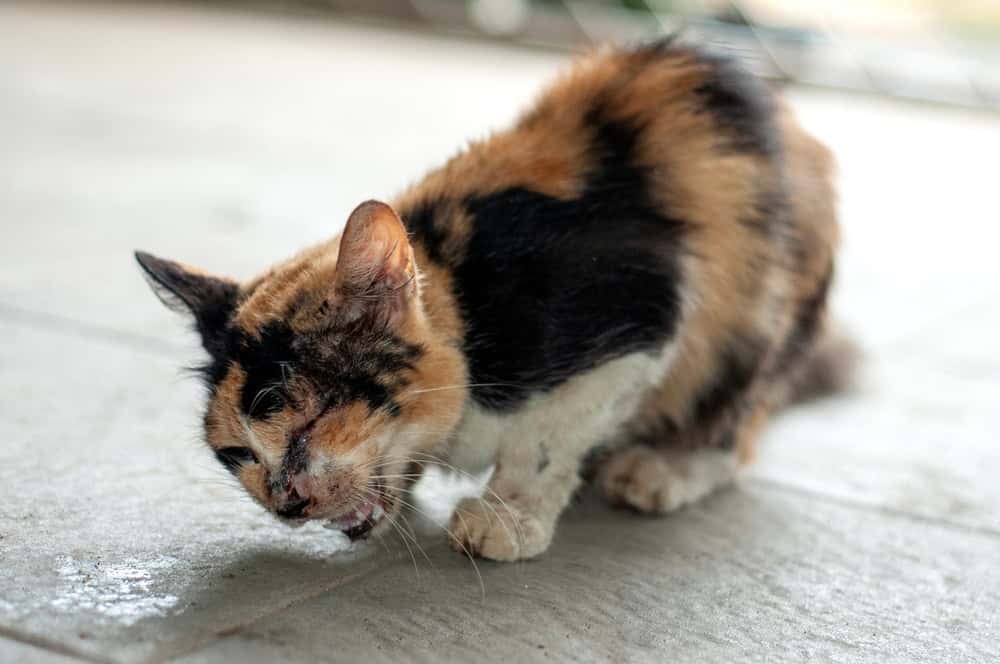

Cats are adorable. The way they purr, slow blink to show affection, or curl up to take a nap on their favorite human’s lap makes it clear why cats can help lower stress for those who care for them. Unfortunately, cats are also very good at hiding when they are not feeling well. This can lead to a variety of symptoms that begin to surface, including vomiting.
While occasional vomiting may not be a huge problem, cat owners whose pets throw up frequently may wonder, “What’s the deal?” It is concerning when this repeatedly happens, which is why seeking medical attention is most often recommended to rule out any underlying health issues that could be the source of the constant stomach upset.
Is Something Wrong?
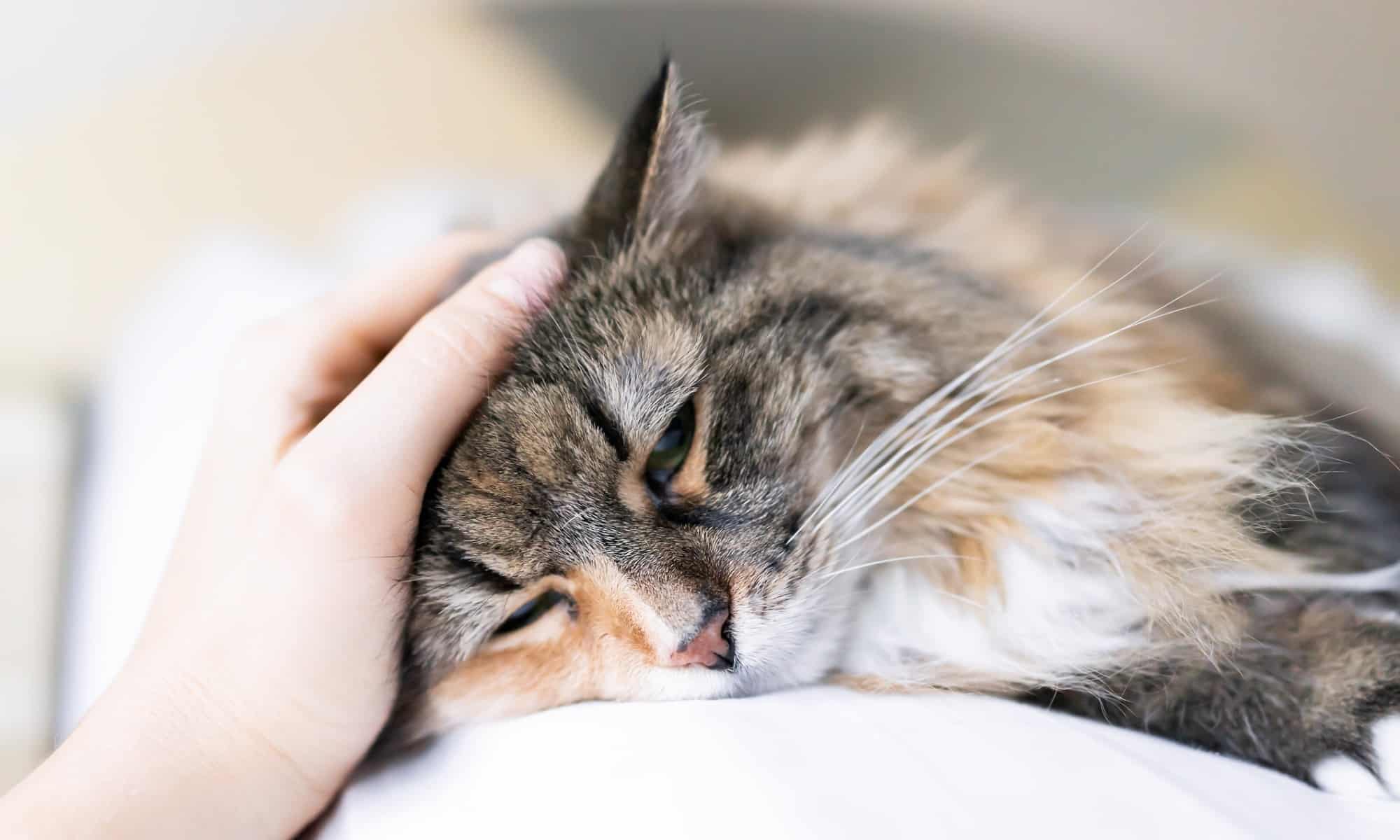
Cats may vomit for a multitude of reasons, not all of which mean there is something wrong with them.
©iStock.com/krblokhin
When cats vomit, it can be scary to witness. The entire body retches to expel the food or foreign body, and some cats are visibly exhausted afterward. According to Dr. Sarah J. Wooten, a veterinarian with over 16 years of clinical experience, a cat vomiting may not be the most pleasant thing. Still, it is not always a sign that something is wrong with the feline.
“Cats can vomit for simple reasons, including hairballs, eating too quickly, or mild dietary indiscretions,” Dr. Wooten explains to A-Z Animals. “Occasional vomiting in an otherwise bright, active cat may not signal a health emergency.”
Dr. Wooten goes on to say, “What matters is the pattern. Frequent vomiting, changes in appetite or energy, weight loss, or anything out of the ordinary should lead to a veterinary exam.”
When these signs are present, it is generally because an underlying health issue needs to be addressed. Some can be benign, while others can be quite serious.
Frequent vomiting, changes in appetite or energy, weight loss, or anything out of the ordinary should lead to a veterinary exam.
Dr. Sarah J. Wooten, a veterinarian with over 16 years of clinical experience
Some Serious Reasons Why Cats Vomit
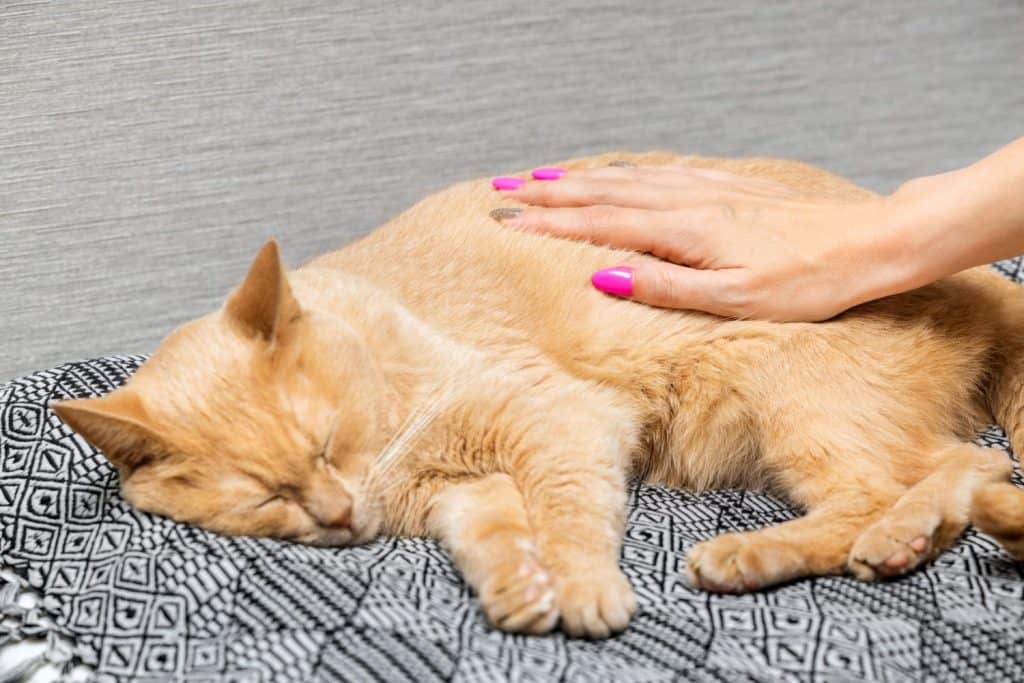
Cats that constantly vomit may have an underlying health issue, have been exposed to toxins, or have swallowed a foreign object.
©Oleg Opryshko/Shutterstock.com
If a cat is consistently vomiting shortly after a meal or after drinking water, it is imperative to get them veterinary care to prevent dehydration. Additionally, the sooner the vomiting stops, the sooner the cat will begin to feel better.
Some of the most concerning reasons why cats vomit, according to Dr. Wooten, include:
- Inflammatory bowel disease
- Food allergies
- Pancreatitis
- Kidney disease
- Hyperthyroidism
- Parasites
- Gastrointestinal obstruction
- Toxin exposure
- Cancer
“Chronic or severe vomiting always deserves a medical workup,” Dr. Wooten says, “because early diagnosis can make treatment more effective.”
Different Types of Food
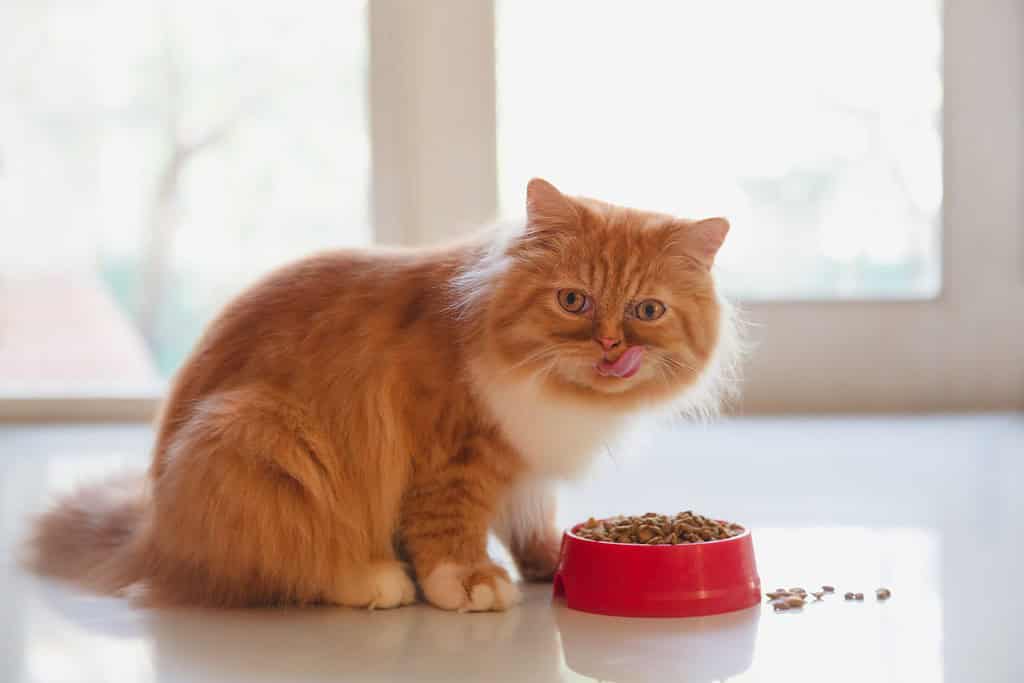
The food that cats eat can cause them stomach upset that leads to vomiting.
©Patrick Foto/Shutterstock.com
Cat food can play a big part in why cats vomit often. However, it is not something as simple as “cheap versus prescription food,” according to Dr. Wooten. There are several factors to consider when trying to prevent stomach upset and reduce how often cats regurgitate their food.
“Food plays a major role in digestive comfort. Cats can react to specific ingredients, protein sources, or low-quality formulations,” Dr. Wooten states. “It is not as simple as cheap food versus prescription food. Some affordable diets are well-balanced, and some premium diets still do not agree with certain cats. What matters is ingredient quality, consistent formulation, and matching the diet to the cat’s age, health conditions, and preferences.”
“As for dry versus wet food, some cats do better with added moisture because it supports digestion and helps move hair through the stomach,” Dr. Wooten continues. “Others tolerate dry food well. Many cats benefit from a combination of both.”
Therefore, it may take some experimenting with both prescription and non-prescription foods, as well as whether they are wet or dry, to find the right combination that helps cats keep their food down and allows them to thrive.
Are Some Cat Breeds More Prone to Vomiting Than Others?
Older cats, specific breeds, or those with underlying health issues are more likely to vomit than other cats.
©EkaterinaShcherbakova/Shutterstock.com
For those with more than one cat in their home, one cat may appear to vomit more than the other. This is a real phenomenon, not just a figment of the imagination. Some cats are more prone to vomiting than others.
“Some cats have more sensitive digestive systems than others,” Dr. Wooten explains to A-Z Animals. “Age, breed tendencies, medical history, and individual quirks all play a role. Cats with food sensitivities, inflammatory bowel disease, or a tendency to eat too fast often vomit more than their feline friends.”
Some cat breeds that tend to vomit more than others include:
- Persians
- Himalayans
- British Longhair
- Scottish Fold
- Burmilla
Knowing that the long hair and skeletal structure of these cats can lead them to vomit more than other cats is something to consider before adopting. They may require more medical care than other breeds, which can get expensive rather quickly.
If a cat has inflammatory bowel disease, managing the condition will likely require both a change in diet and long-term medication. Those who eat too fast may need to eat multiple small meals or use a cat bowl to help them eat more slowly. This is why consulting a vet is so very necessary when a cat continues to vomit and nothing the cat’s owner does seems to improve the situation.
Blood in Vomit Is Not a “Wait-And-See” Situation
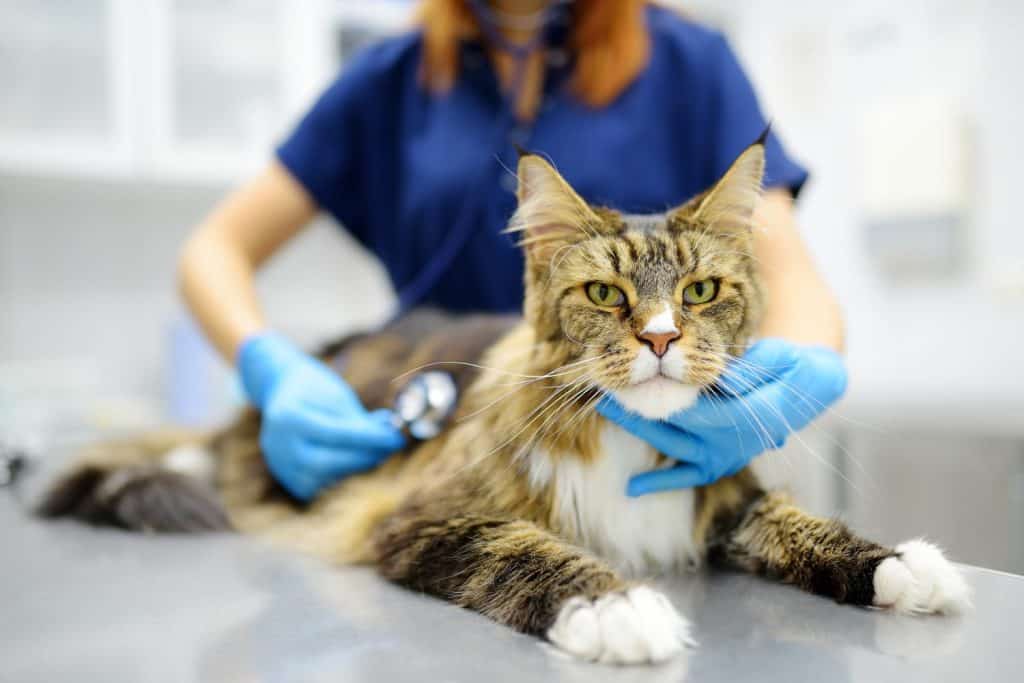
When a cat vomits blood, they should be scheduled for a vet appointment immediately.
©Maria Sbytova/Shutterstock.com
While Dr. Wooten explains that there are some situations where a cat vomiting can be observed to see if it gets better, when there is blood in the vomit, it is never a “wait and see” situation.
“Blood in vomit needs veterinary attention,” Dr. Wooten says. “It can look bright red or dark brown like coffee grounds. Causes range from stomach irritation all the way to ulcers, ingestion of foreign material, clotting disorders, or other serious issues. This is not a wait-and-see symptom.”
Therefore, no matter how faint the blood might be in the vomit, schedule an appointment with the cat’s veterinarian immediately so that care can begin to ease the stomach upset and pain the cat is experiencing.
Steps Cat Owners Can Take to Help Ease Their Cat’s Vomiting
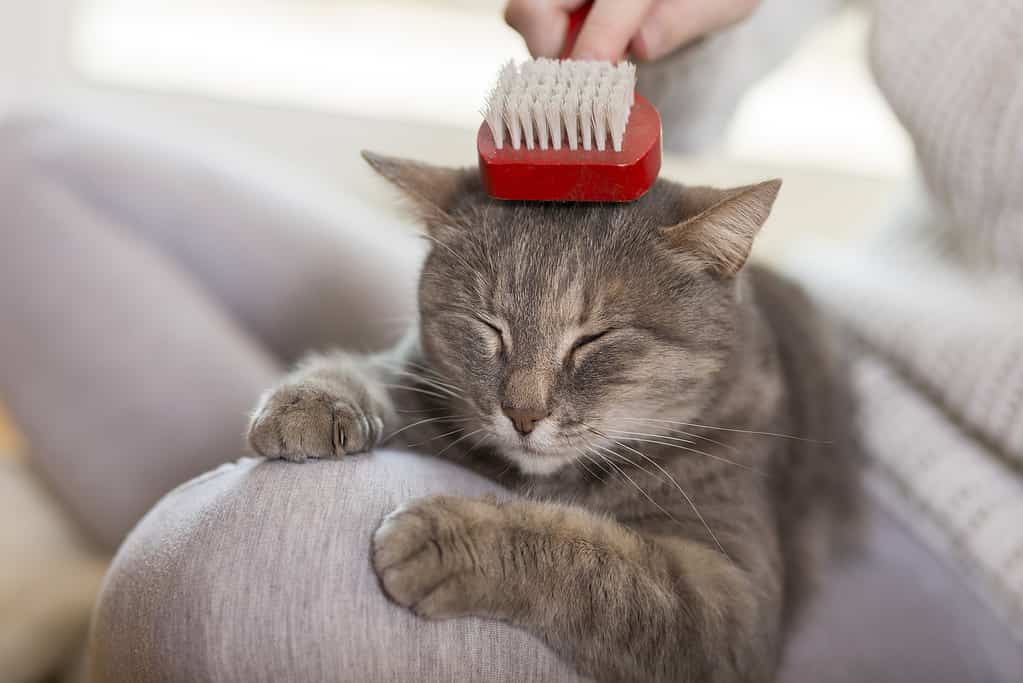
Grooming cats or reducing food portions may help some cats with vomiting.
©vladans/iStock via Getty Images
If a cat is not in apparent pain, is drinking regularly, and has energy, there are some steps cat owners can take to see if they can stop the vomiting without a vet visit. The steps may require lifestyle changes, but they are worth it if they promote keeping food down.
“Start with simple changes like slowing down mealtime, feeding smaller portions more often, and brushing regularly to reduce hairballs,” Dr. Wooten says. “Switching to a highly digestible diet or trying a different protein source can also help.”
However, it is always important to remember that if changes are not seen within a few days or if the vomiting gets worse, a veterinary visit is a must.
“For chronic or escalating vomiting, a vet visit is important,” Dr. Wooten reiterates. “Your veterinarian may recommend lab work, imaging, deworming, prescription diets, anti-nausea medication, probiotics, or other targeted treatments depending on the cause.”
Some cats are prone to vomiting from time to time. But if it happens multiple times per week or more, do not hesitate to take your furry feline friend in for a check-up. Frequent vomiting is a sign that something is wrong and needs to be addressed to ensure your cat has a healthy and long life.