
Quick Take
- Pecking orders are real and chickens form dominance hierarchies that influence daily access to food and water, stress, and social interactions.
- Hierarchy is not always linear, as flocks show flexible, shifting relationships especially with new birds or resource bottlenecks.
- To reduce conflicts, provide multiple feeding and watering stations, separate roosts, and enrichment to lower resource guarding and stress.
If you don’t have your own backyard flock, you may not believe that the chicken pecking order is real, let alone that it’s even more complicated than we give it credit for. Chickens are one of multiple bird species that involve their flocks in pecking orders, or a type of feathered, social hierarchy.
But is pecking order actually a real thing, or are we mistaken in believing in it?
Using scientific research, we’ll take an in-depth look at what pecking orders are, including how chickens build dominance relationships, establish social patterns that help them share coops, avoid constant fights, and how they ultimately share resources.
Learn about pecking orders, including how chickens operate within their unique system.
What Scientists Mean By “Pecking Order”
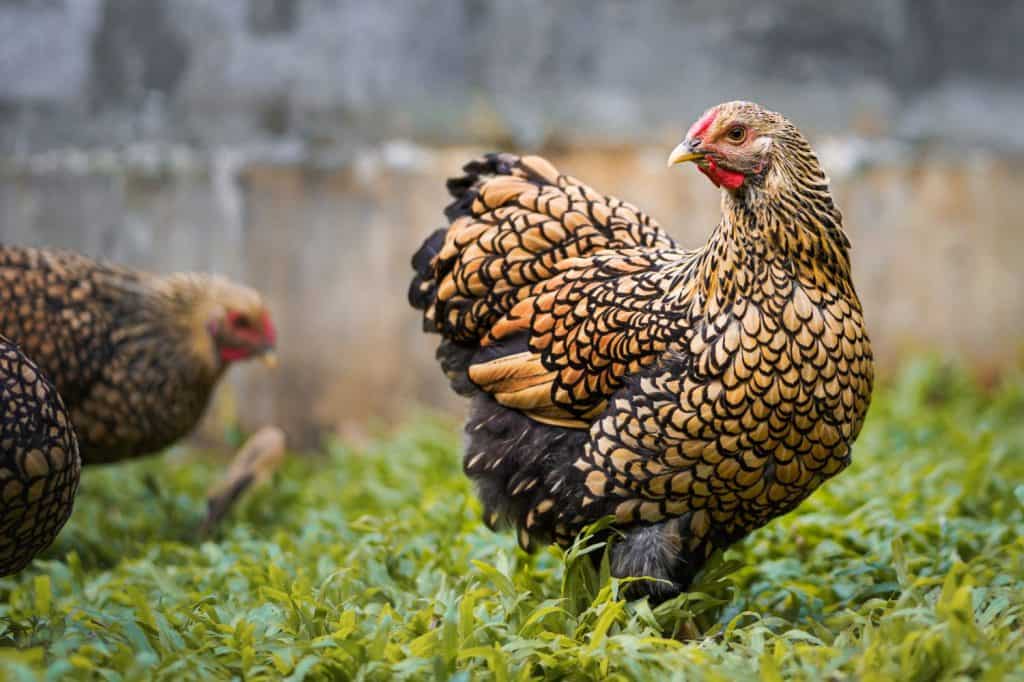
Chickens do indeed engage in a pecking order, which is essentially their form of dominance hierarchy.
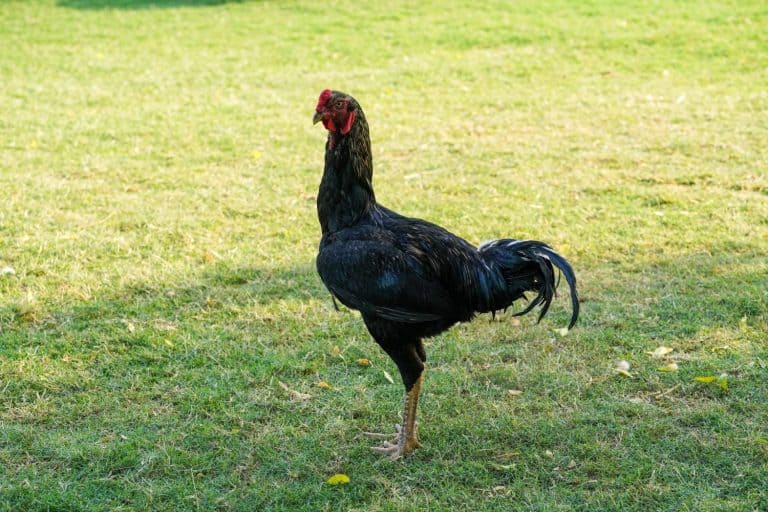
©PAPA WOR/Shutterstock.com
The phrase “pecking order” came from early observations of hens interacting with one another. Scientists watched the same hens repeatedly winning or losing conflicts with the same other hens. That basic idea still holds true today.
Researchers now call these dominance hierarchies, and the Royal Society wrote that these structures influence and ultimately shape stress, behavior, social dynamics, and how animals move through their daily lives, especially among chickens in a decent-sized flock.
However, researchers learned a flock’s hierarchy isn’t always linear. In certain situations, linear dominance is possible, but you can just as easily witness birds who usually avoid conflict altogether until one specific resource or bird is involved. Because of the inconsistencies in this process, pecking order works best as a phrase rather than a linear description.
How Hierarchy Forms In A Flock
Chicken hierarchy forms within a flock through repeated micro-interactions. It can take multiple forms, and many factors matter, including who steps forward, who yields, who gets chased, or who gets ignored. Over time, birds remember these outcomes and start acting as if these rules are set in stone, which reduces the need for nonstop fighting. The flock maintains these social intricacies and sticks to them.
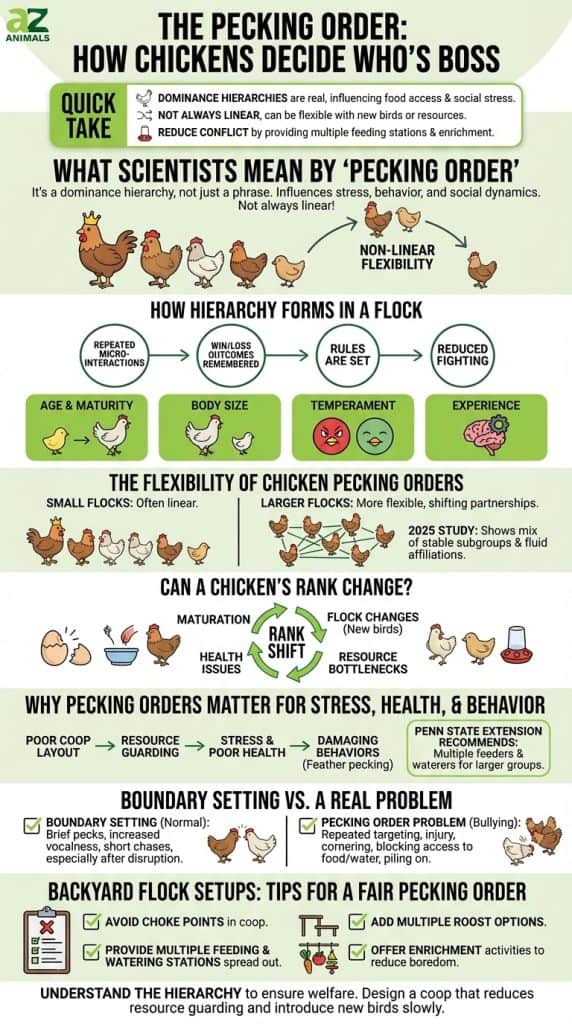
Understanding the chicken pecking order is key to managing a healthy and stress-free flock.
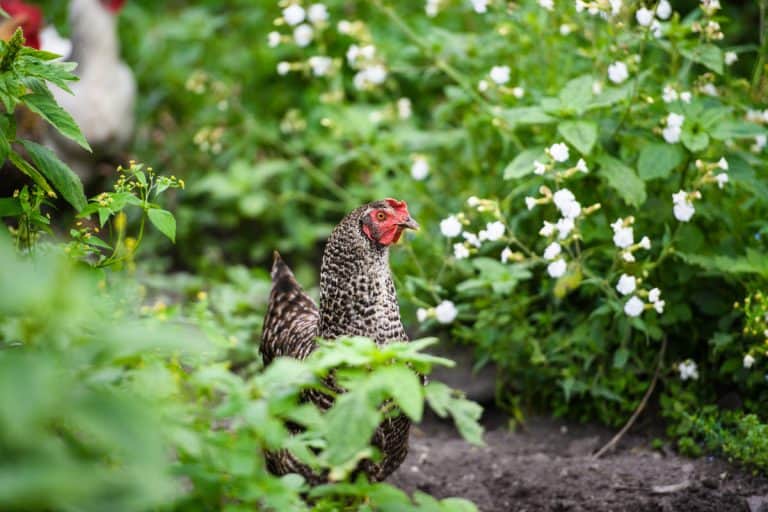
©A-Z Animals
A few things tend to influence how quickly that system forms, including:
- Age and maturity; older birds often act more confident, with younger birds deferring to them more often.
- Body size, as physical presence affects who can actually displace other birds.
- Temperament. All birds have their own personalities; some are more likely to pick fights, while others opt for avoidance.
- Experience. A bird that has been challenged before knows more than one that has not.
There is evidence that chickens recognize individuals within their flock and handle social information in ways that support complicated group living. They aren’t at the same level as humans, but they can still interact in intricate enough ways to build hierarchies like pecking orders.
The Flexibility of Chicken Pecking Orders
Chickens form pecking orders in ways that allow for change and adaptations. In small backyard flocks, you may see a pecking order that resembles a linear hierarchy simply because your birds interact often enough for patterns to settle. However, even birds that are very familiar with one another are capable of changing their social structures.
In bigger flocks, the order can be even more flexible. A 2025 case study questioned whether hens form stable social networks, and it found that, while some stable subgroups and preferred partnerships formed among hens, there was also flexibility in social affiliations, indicating a mix of stable and shifting group dynamics rather than entirely fixed or entirely fluid cliques.
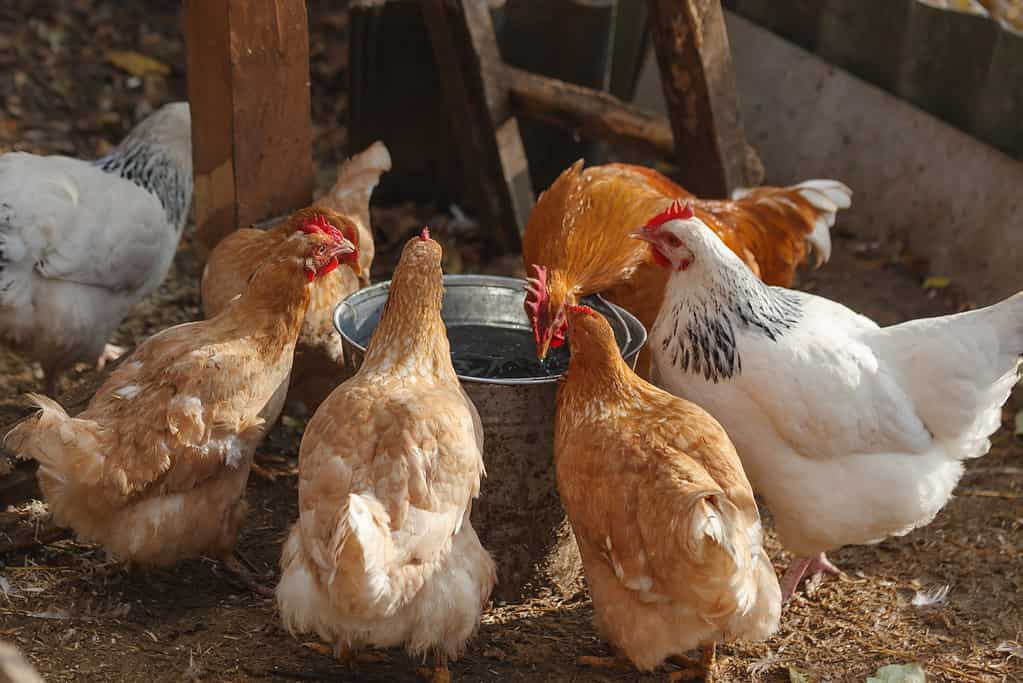
If resources are ever scarce, pecking orders can shift in most flocks of chickens.
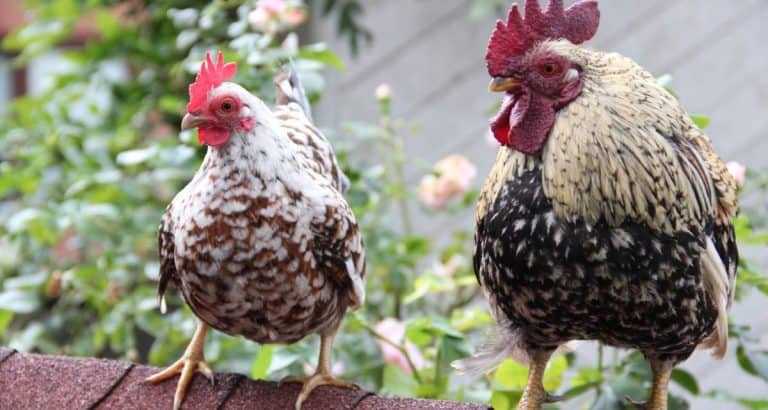
©Olesya Andreeva/ via Getty Images
Flocks regularly gauge one another through spacing, avoidance, mealtimes, and health scares, which is just one reason why pecking orders are not stagnant.
Can a Chicken’s Rank in a Pecking Order Change Over Time?
Backyard chicken keepers often feel confused by pecking orders because rank can shift as birds mature, recover from illness, experience injury, or get disrupted by flock changes. This is especially true if new birds are added to the flock or coop dynamics grow tense during brooding.
A paper published in 2023 noted this fact, describing in detail how rank changes can happen over time, along with a chicken’s individual development, rather than staying the same. And there are very specific contexts in which these rank changes occur.
You’ll often see a flock’s hierarchy shift when you add new birds, remove a dominant bird, confine the flock due to weather or illness, or create resource bottlenecks that force birds into constant, stressful contact. In fact, the notion of stress is very important for flocks and the development of pecking orders.
Why Pecking Orders Matter for Stress, Health, and Behavior
Understanding the average flock’s pecking order is a must, especially if you’re interested in keeping your own backyard birds. Pecking orders can result in some of your chickens stressed and in poor health if your coop layout isn’t suited to them.
For example, a lower-ranking bird can lose access to basic needs, such as food and water, if your setup makes it possible for one or two birds to guard all resources. Penn State Extension wrote on preventing social starvation, recommending enough feeder access and even separate feeder and waterer placements for larger groups, especially as your chickens grow.
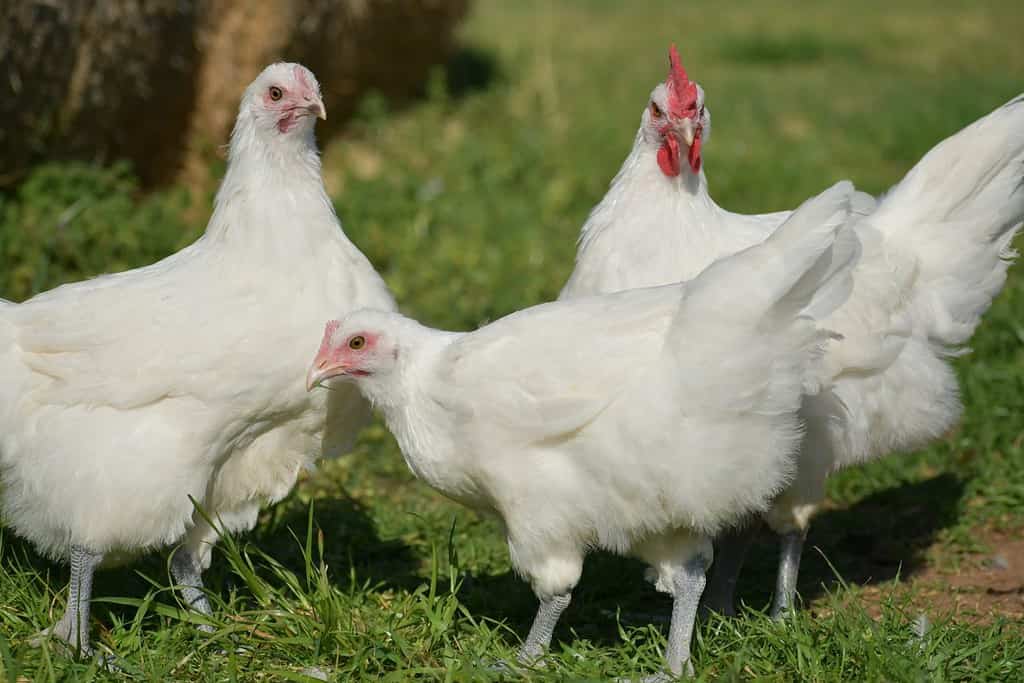
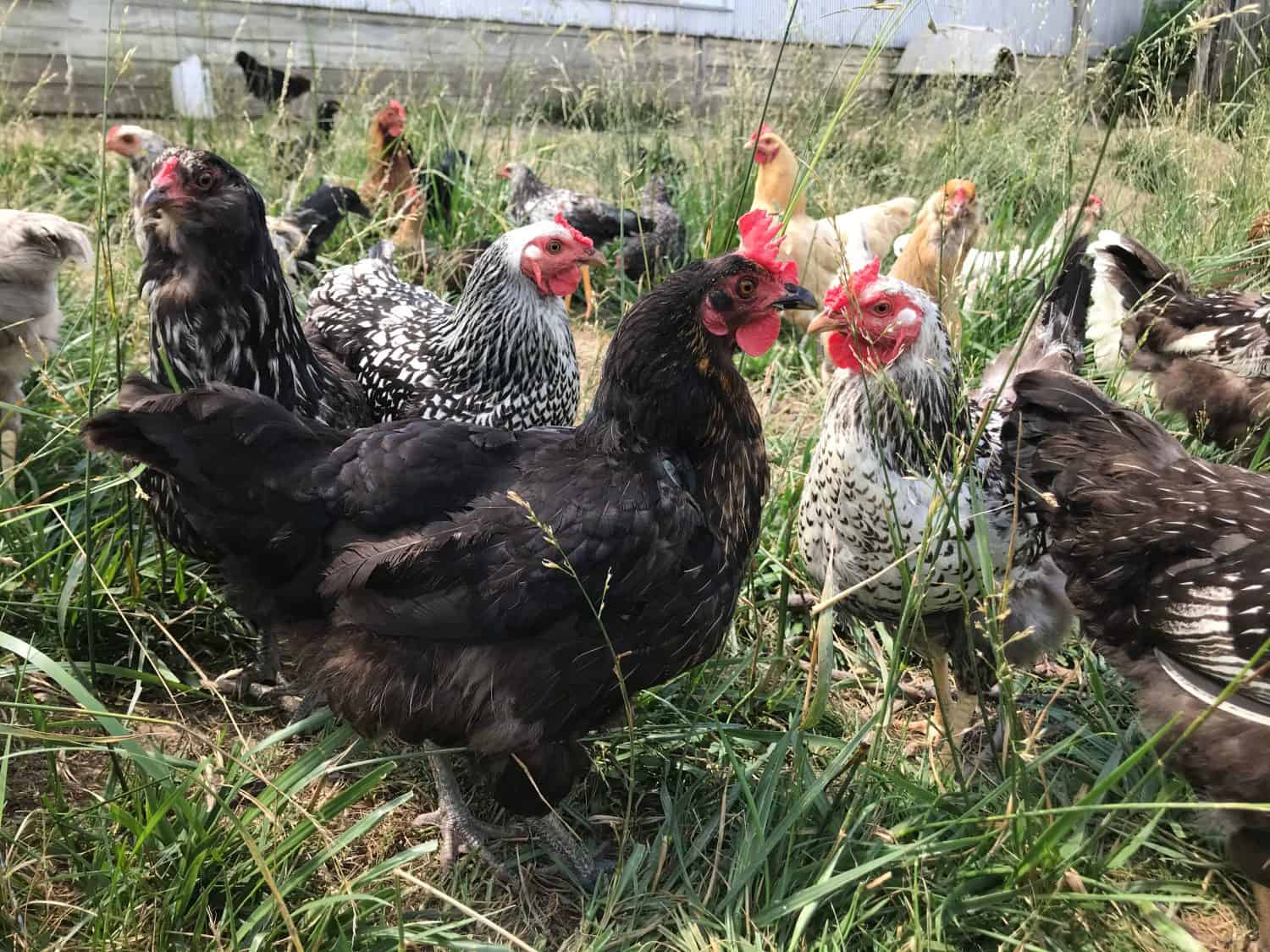
Stress within a flock can harm the overall pecking order and health of backyard chickens.
©Elizabeth Casanova/Shutterstock.com
Additionally, stress within a flock can take on many forms. If a hen hangs back during feeding time, loses weight, avoids the coop doorway, or sleeps in the wrong spot because she can’t safely claim the area she wants, it’s important to reevaluate your flock. Over time, these social pressures can lead to damaging behaviors like feather pecking or starvation.
Boundary Setting Vs. a Real Pecking Order Problem
Not all pecking within a flock is considered bullying. Brief pecks, increased vocalness, short chases round the run, and other signals can be part of a chicken’s normal boundary-setting, especially during adolescence or after a disruption, like a new bird on the block.
However, your pecking order may have a problem if you witness repeated targeting of a particular bird, injury, cornering, or blocking access to food and water. It’s also a problem when the flock starts piling on; multiple birds may join in the fight against one bird, because that can escalate fast and become an unstable flock situation.
At the end of the day, a natural chicken hierarchy is meant to reduce chaos over time. If you witness ongoing fear for one individual within your backyard flock, something needs to change.
What This Means For Backyard Flock Setups
Building a setup for your backyard chickens is simpler than most new flock owners realize. However, there are a few mistakes that many beginners make. Here are some tips for keeping your backyard flock pleased and their pecking order fair.
Choke points within the coop, where one bird can control access to resources, should be avoided at all costs. Multiple feeding and watering stations spread out so no single bird can guard them all is one of the simplest fixes you can try. Adding multiple roost options also helps, as this is one of the easiest places for dominance to turn into daily stress.
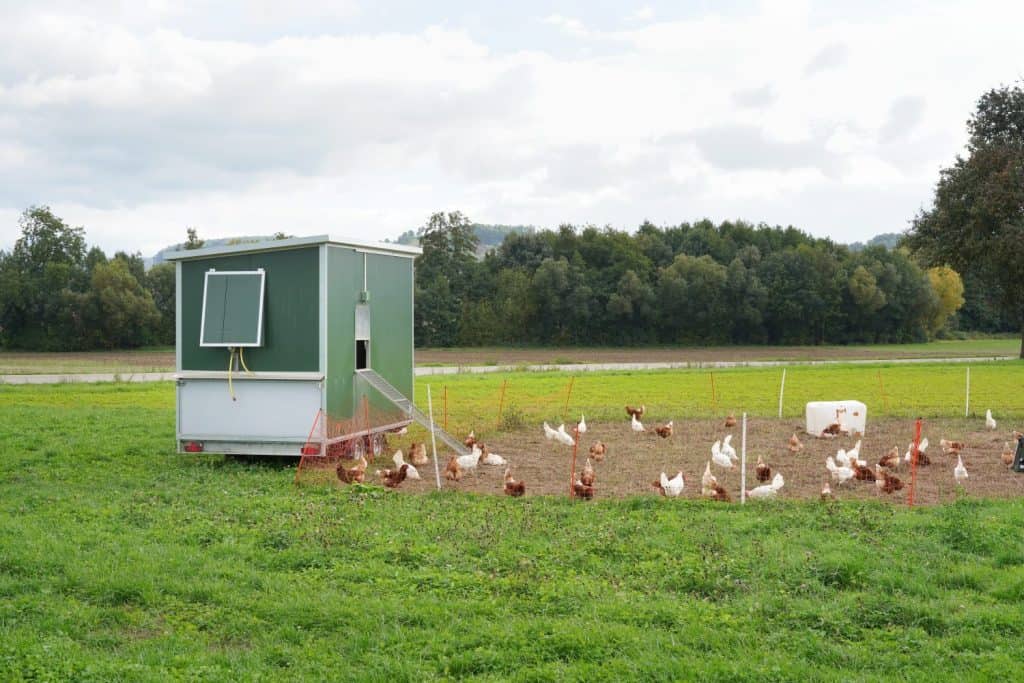
The setup of a backyard coop is vital to keeping a pecking order healthy.
©ThomBal/Shutterstock.com
Enrichment also matters within a flock. Having enrichment activities within a pecking order gives your birds something to do besides pick on each other. Much like people, boredom and an unsafe environment can lead to tense situations, so keep your chickens entertained and they’ll be more behaved!
So, Are Pecking Orders Real?
Chickens form dominance relationships that influence daily food access, relationships, stress, and behavior in ways that matter for their overall welfare. Pecking orders are meant to create positive situations for flocks, but this isn’t always a guarantee.
If you’re planning to care for a flock of your own, design a coop that reduces resource guarding, introduce new birds slowly, and ensure they have plenty of enrichment. You’ll give your flock a way to keep their social system intact without fighting or stress.