
Quick Take
- Zombie worms eat whale bones without a mouth, stomach, or gut, and the method they use to do so is stranger than you'd expect. See how they do it →
- The zombie worm doesn't actually feed on what it breaks down, which raises the question of what the worm is really getting out of it. Explore the symbiotic benefit →
- A single whale death can fuel an entire seafloor community for decades, though this is only possible if a chain of very specific events unfolds in the right order. Trace the whale fall stages →
- Scientists left a whale bone on the seafloor for ten years and found something alarming. Their discovery revealed a warning sign that could quietly unravel deep-ocean food webs. See the alarming discovery →
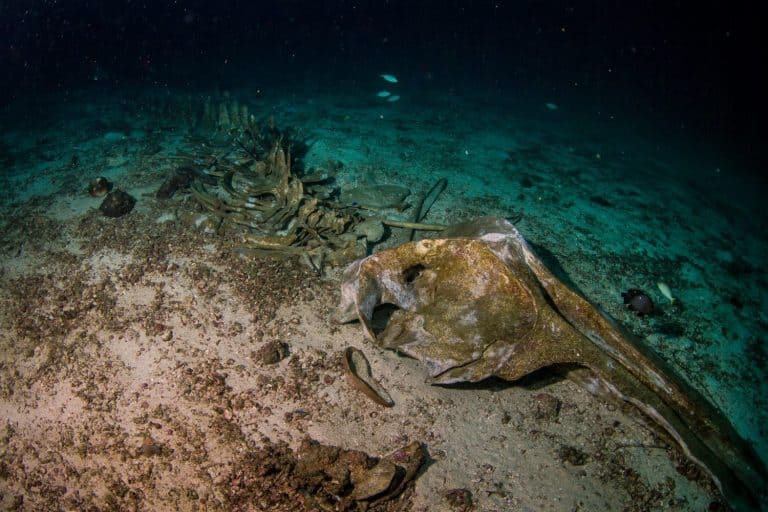
When whales die, they eventually sink to the bottom of the ocean. Over time, the organic material that once made up the whale is stripped away, leaving nothing more than a skeleton.
The ocean floor is not riddled with whale bones, however. So what happens to the whale skeleton? Thanks to the acid-secreting root systems of deep-sea annelids, or Osedax worms, the entirety of the whale body is eventually completely returned to the sea.
Osedax Worms Break Down Whale Bones Without a Mouth or Gut
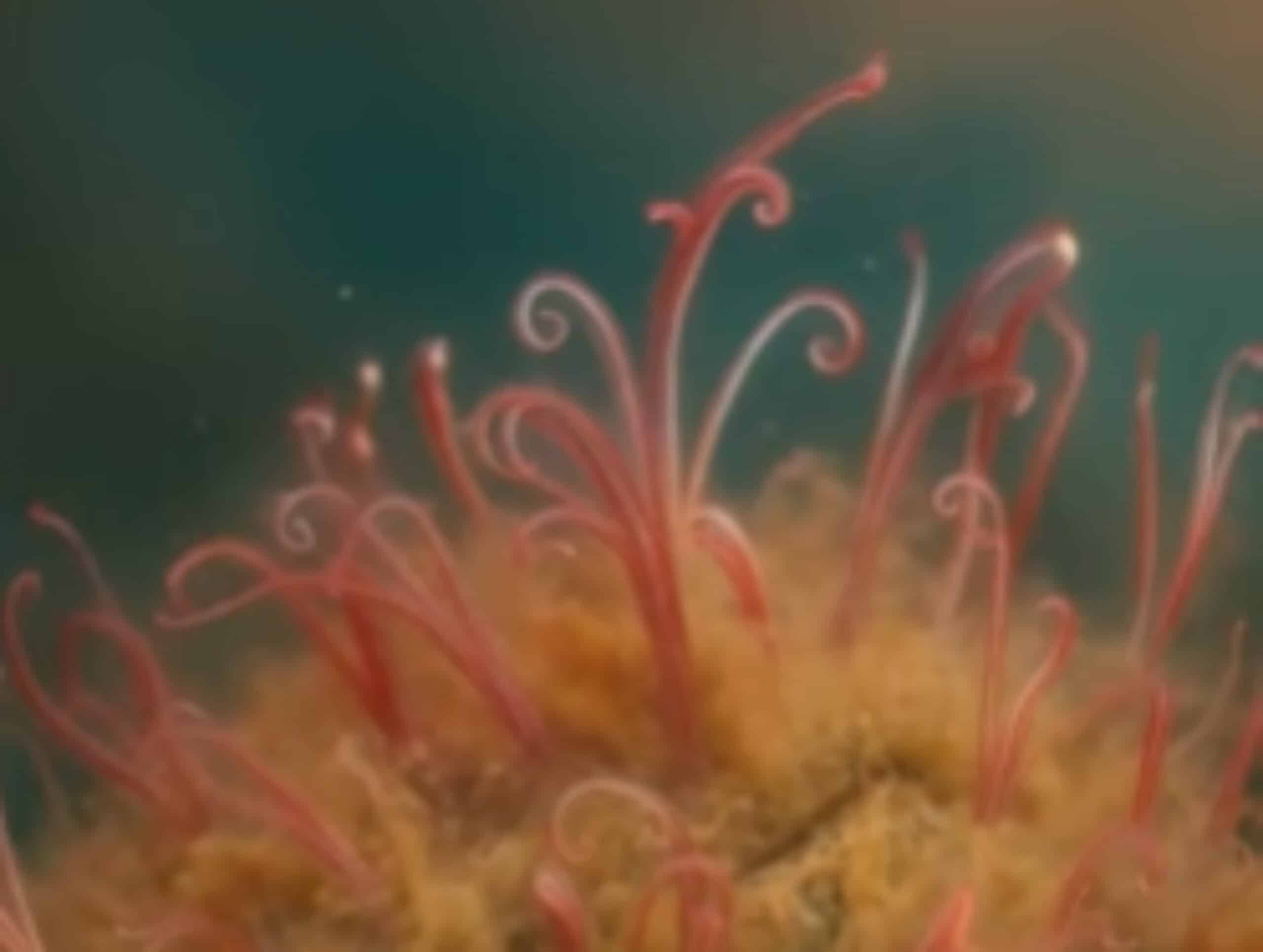
Osedax worms, more commonly known as zombie worms, are not marine creatures often seen by beachgoers. This is because these worms spend their time in the deep ocean, at depths ranging from 30 to 14,000 feet, creating habitats where none existed before.
When a whale dies, there is a lot of organic material that needs to be broken down. Many marine animals participate in this process. But it is the zombie worms that eventually cause the bones to disappear from the ocean.
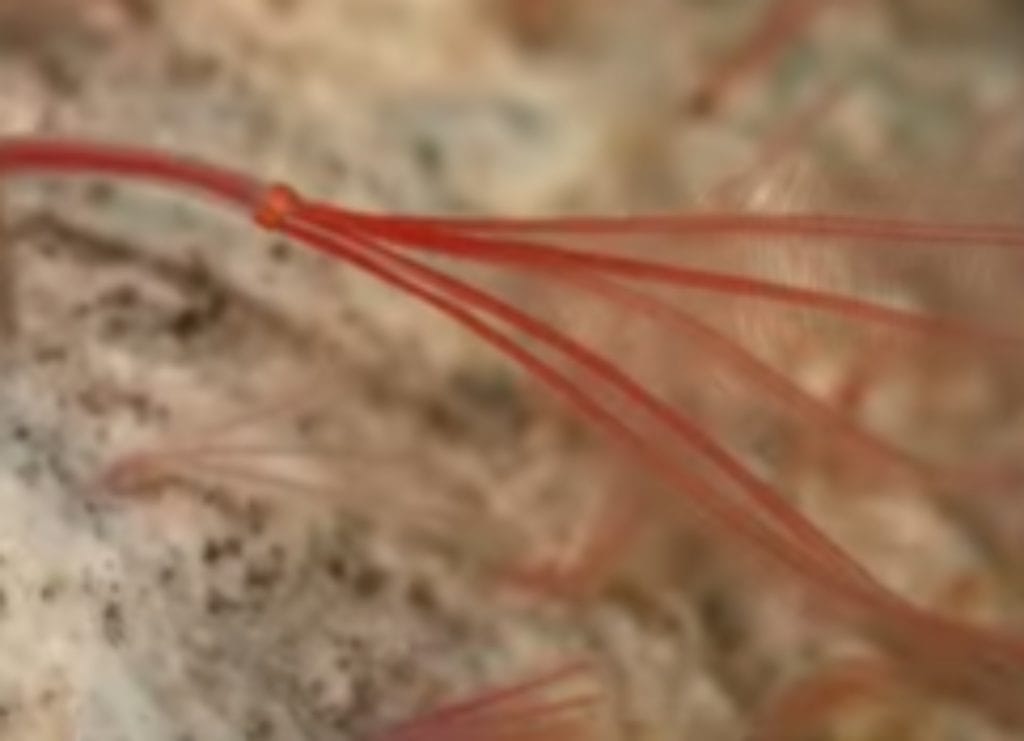
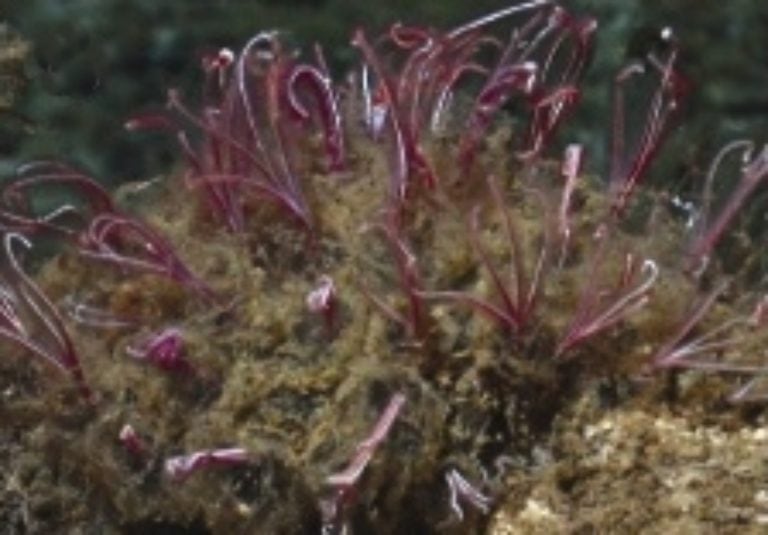
Osedax worms, or zombie worms, attach to whale bones with their root-like appendages.
©aik's muse /YouTube – Original
Given that zombie worms lack a mouth, gut, or anus, this is an amazing feat. Instead, the process of breaking down a whale skeleton begins with the worms rooting into the bone. This is done with the root-like structures of the worms secreting acid to break down the layers of bone. As the worms continue to attach themselves to the whale bones, they create a red carpet-like appearance. Zombie worms don’t digest bone directly. Instead, symbiotic bacteria inside their tissues break down compounds from the bone, allowing the worms to absorb nutrients.
The Symbiotic Relationship Between Zombie Worms and Heterotrophic Bacteria
The zombie worms play an integral role in helping to break down whale bones in the ocean after a whale fall. But they do not do it alone. It is the symbiotic relationship between zombie worms and heterotrophic bacteria that drives the process forward.
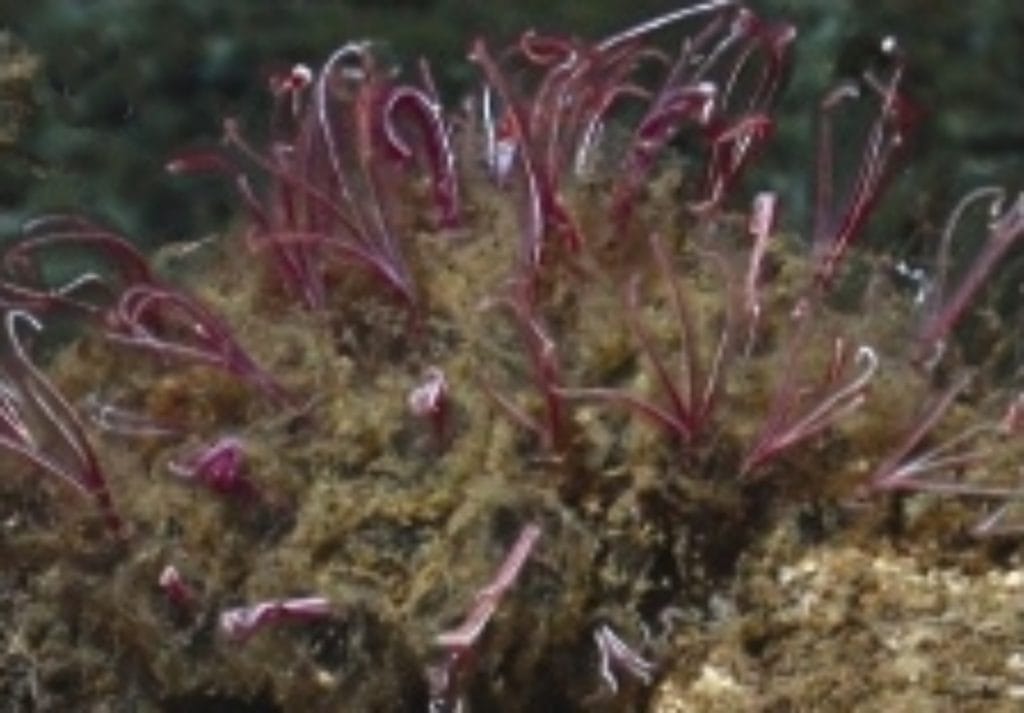
Zombie worms and bacteria have a symbiotic relationship when breaking down whale bones.
©Robert C. Vrijenhoek, Shannon B. Johnson & Greg W. Rouse, CC BY 2.0 , via Wikimedia Commons – Original / License
Zombie worms may be responsible for breaking down layers of bone with their acidic roots, but it is the bacteria that consume lipids and collagen that make up whale bones. As the bacteria metabolize the bone, the zombie worms receive nutrients from the bacteria, which break down the bone’s components into simpler molecules.
Researchers are still studying how this method of transfer works between the two species. But one thing is clear: the two cannot thrive without one another.
Ecological Succession After the Death of a Whale
The death of a whale is tragic for its pod, but it is vital to the ocean’s biodiversity. When a whale dies, it can eventually create an entire community on the ocean floor that may persist for years, despite the area’s previously nutrient-poor conditions.
When a whale dies, it does not immediately sink to the ocean floor. The body can float at the surface for a few weeks while scavengers such as great white and tiger sharks, hagfish, and bony fish eat the blubber. As holes are created in the body and gases escape, the whale will begin to sink.
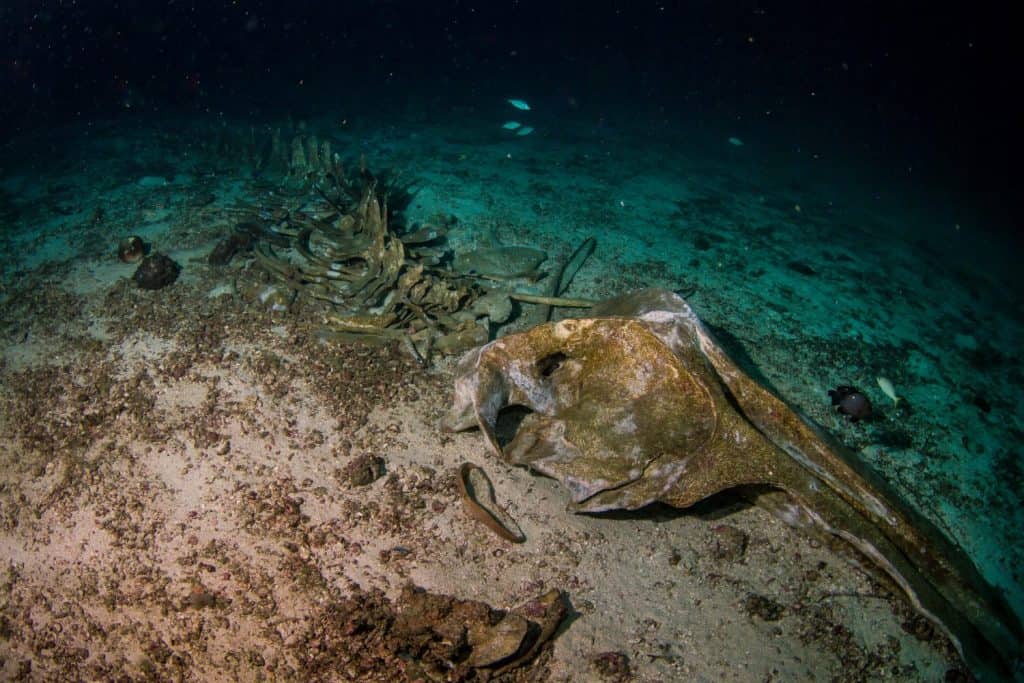
Whale skeleton being broken down by zombie worms and bacteria.
©Sineenuch J/Shutterstock.com
Once the whale has reached the seafloor, a whale fall has occurred. In the early stages of the whale fall, also known as the mobile scavenger stage, sleeper sharks, crabs, lobsters, and other marine life continue to consume the whale’s blubber and muscle. This stage can take anywhere from a few months to up to two years to complete.
The next stage is the reef stage, which lasts about two months and is when the zombie worms come into play. As the zombie worms colonize the bones, they create a microhabitat. Smaller creatures live among the worms, which provide these smaller animals with shelter and protection from predators.
As the zombie worms begin to break down the bones, chemoautotrophic bacteria become the dominant organisms in the whale fall habitat. The bacteria consume the nutrients released from the bones by the zombie worms. This creates the final stage of the ecological succession, the sulfophilic stage, which can last for decades.
Zombie Worms Are Disappearing
Zombie worms play an important role in the marine ecosystem. Therefore, it is concerning that regions of the ocean that were once teeming with these worms are now devoid of them.
A 2024 study showed that zombie worms no longer inhabited the deep sea off the coast of British Columbia. This was demonstrated after a humpback whale bone was left on the seafloor for a decade. Over the course of 10 years, the bone was monitored, but no zombie worms were observed.
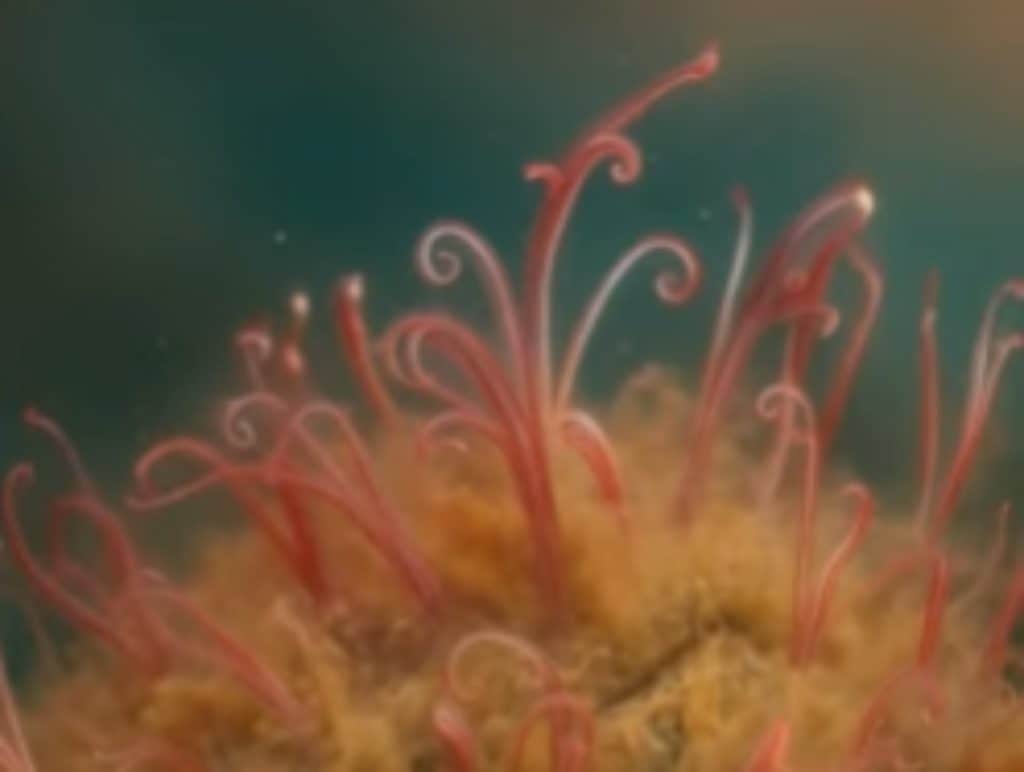
Zombie worms are disappearing from the ocean as a result of climate change.
©aik's muse /YouTube – Original
Researchers believe the absence of zombie worms is due to the increase in oxygen minimum zones. The oxygen-deficient regions of the ocean are becoming larger due to climate change. If zombie worms disappear from areas of the ocean where they were once abundant, whale falls will no longer create “islands” for the seafloor communities that depend on them. Such changes could reduce biodiversity in affected deep-sea ecosystems.