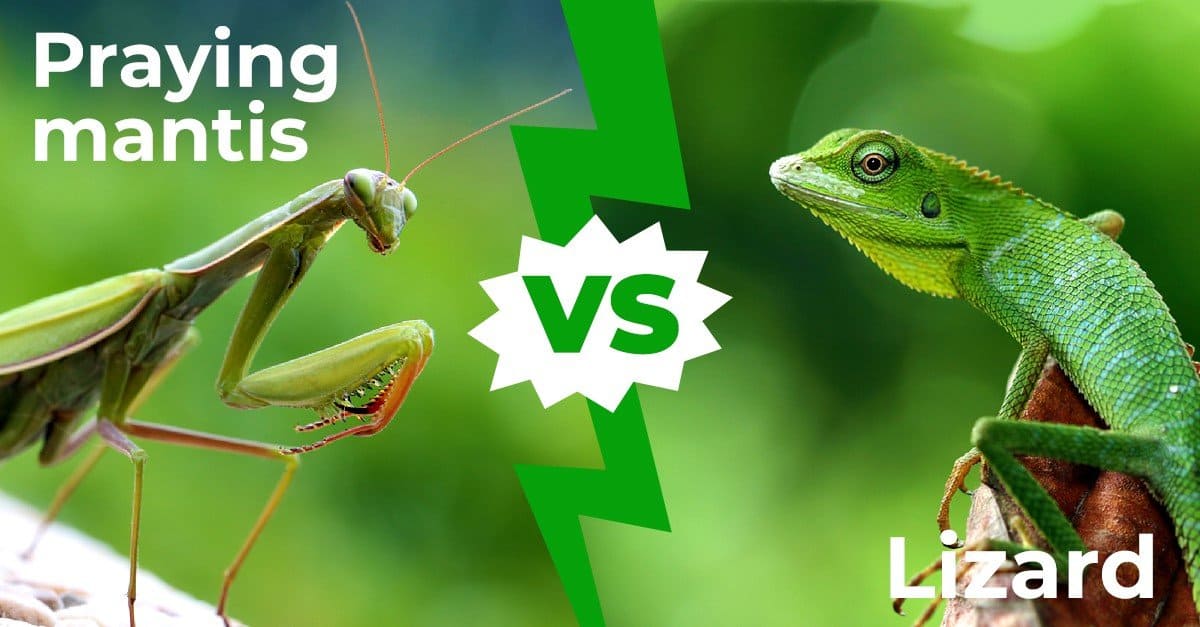

When most people think of ferocious predators, lizards like the Komodo dragon might come to mind with their fearsome jaws and huge build. However, despite being consistently aggressive during hunting, the praying mantis may not even get a second thought. Interestingly, these two animals battle each other more often than you might think, and each one is equally capable of taking the other down. Continue reading to discover the five key differences between lizards and praying mantises.
Comparing A Praying Mantis to A Lizard
| Characteristics | Praying Mantis | Lizard |
|---|---|---|
| Size | 1-6 inches long | 2cm to 10 feet |
| Lifespan | 6 months to 1 year | 1 to 100+ years |
| Habitat | Warmer regions, including deserts, grasslands, and meadows. | Deserts, forests, marshes, rocky areas, and prairies. |
| Number of species | 2,400 | 6.500 + |
| Animal Family | Insect | Reptile |
| Temperament | Varies; can be either aggressive or calm. | Varies; may be friendly or shy. |
The 5 Key Differences Between the Praying Mantis and the Lizard
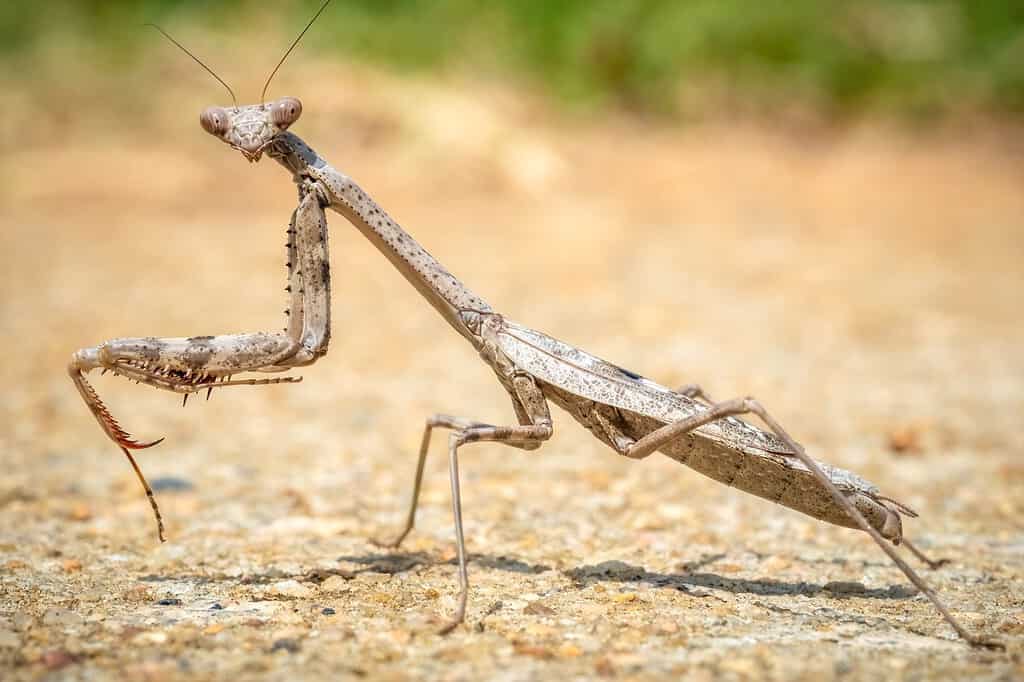
The life span of a praying mantis is six months to one year.
©samray/Shutterstock.com
Praying Mantis vs. Lizard: The Skin They’re In
The most easily identifiable feature of the reptile is its scaly skin. Regardless of which of the many species that you hear about, their skin is layered with epidermal scales. These scales are strengthened by their natural keratin, and they are often quite leathery in their texture. They often display a wide range of colors, including brown, bright green, and even orange.. Some lizards, such as chameleons, can change color to match their surroundings.
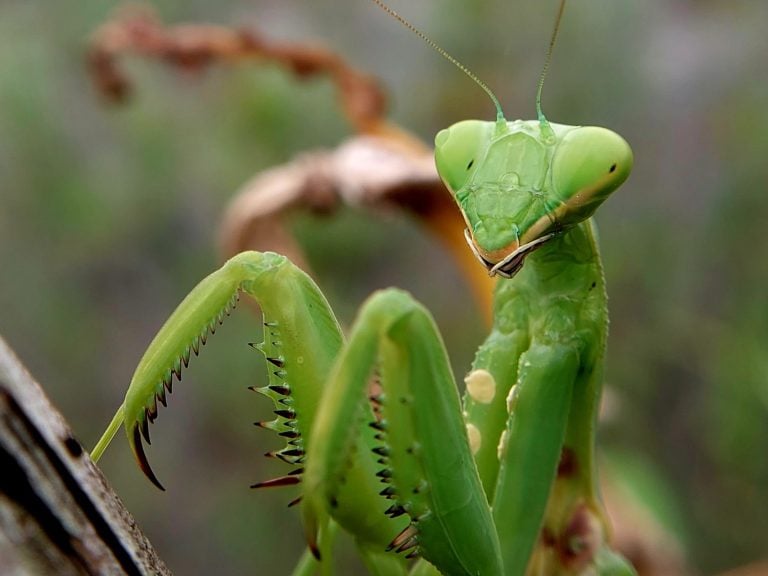
The skin of the praying mantis is nothing more than an exoskeleton, often found in green or brown. These colors are necessary to blend in with leaves and other foliage while hunting. Though they are naturally camouflaged, they cannot change color as most lizards can.
Praying Mantis vs Lizard: Bone Structure
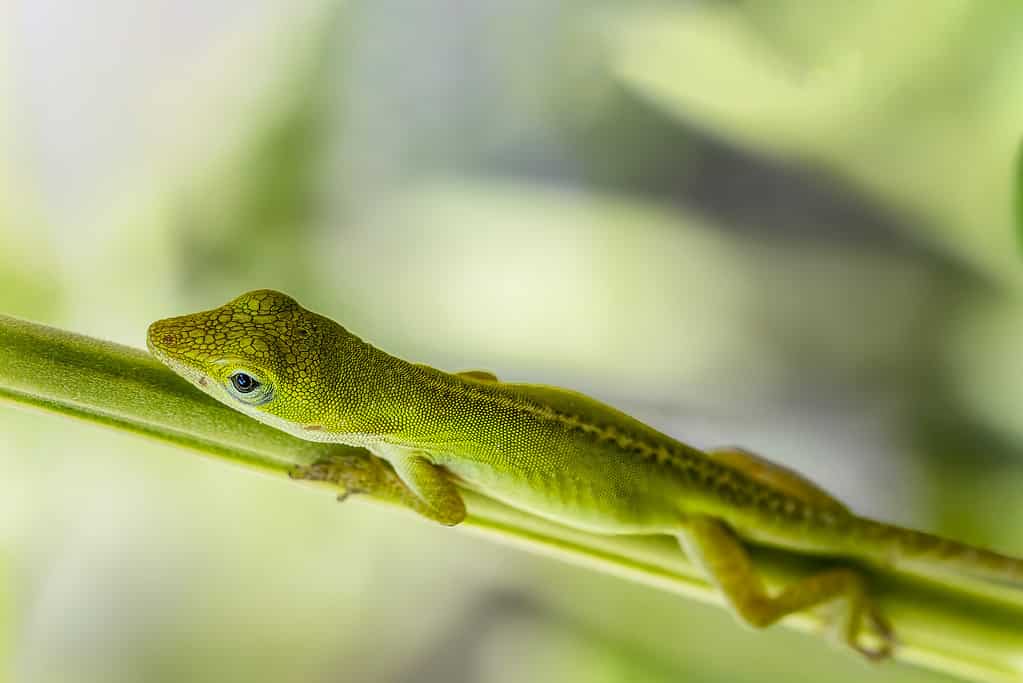
The Green Anole, a lizard native to the Southeastern United States, is known for its ability to change color, typically from green to brown.
©DjMiko/iStock / Getty Images Plus via Getty Images
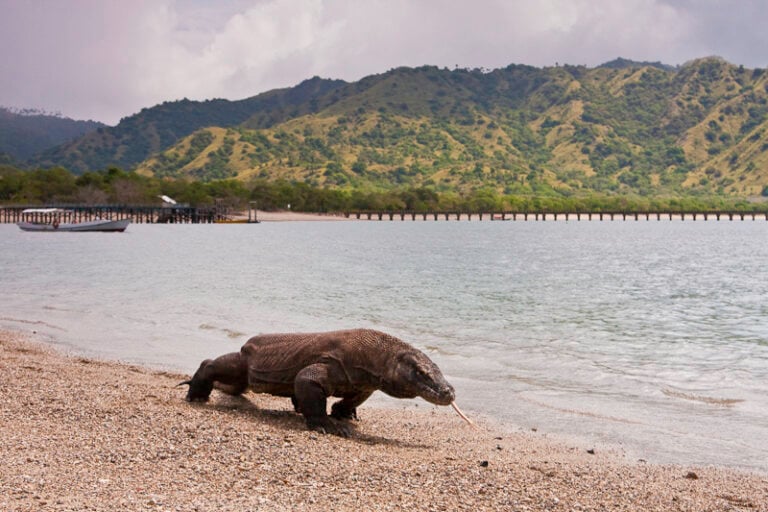
Lizards have a completely internal bone structure, though there are some species that may have bony scales. They are particularly unique from other reptiles in that they have a quadrate bone, which is a bone within the skull that is part of the upper jaw.
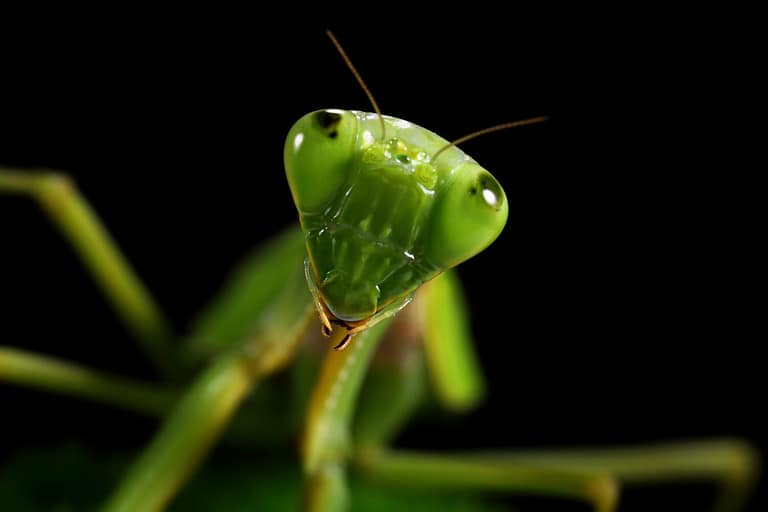
The praying mantis has an exoskeleton. There are no bones inside their bodies because their exoskeleton provides all of the support that they require.
Praying Mantis vs Lizard: Shedding Their External Protection
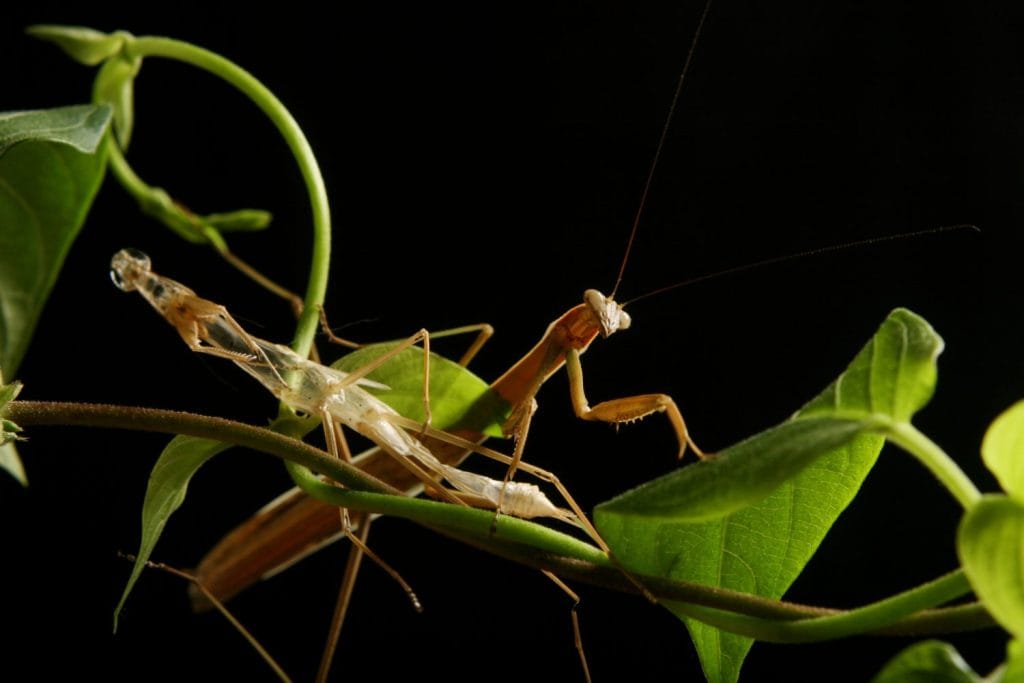
Praying mantises shed their exoskeletons as they grow.
©Fehmiu Roffytavare/Shutterstock.com
Both mantises and lizards shed their skin as they grow. Instead of going through a nymph phase, the praying mantis sheds its exoskeleton when it grows too large for it. This shedding stage is a particularly vulnerable period for the praying mantis, as they are defenseless against attack. The lizard has a unique shedding process that never leaves it unprotected. This reptile doesn’t shed all at once. Instead, lizards slough their skin, shedding it in multiple pieces.
Praying Mantis vs. Lizard: What’s for Dinner?
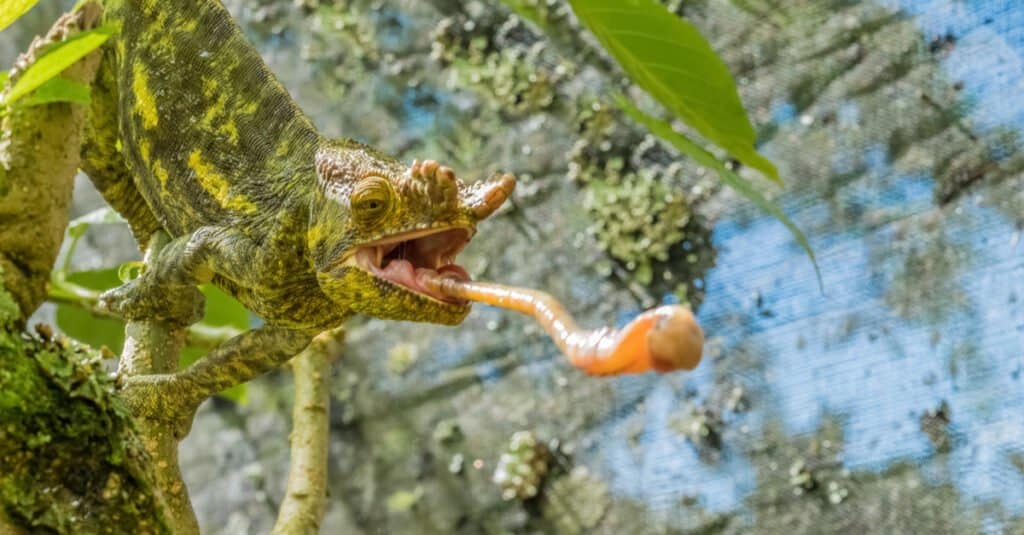
Chameleons shoot out their long, sticky tongues with incredible speed and accuracy to snag insects and other small fare. The tip of the tongue is covered in a highly viscous mucus, which acts like sticky glue to trap prey.
©LouieLea/Shutterstock.com
The praying mantis has a diet that consists primarily of other insects. Many of these insects are also quite delectable to the lizard, like crickets, grasshoppers, butterflies, and beetles. Sometimes, they will even eat other praying mantises. They have an incredibly carnivorous appetite, and there are some species that will feed on birds and small reptiles. Though there are some reports that larger mantises prey on small mammals, there is no credible evidence to support this.
Lizards have diverse diets, ranging from insects and small animals to plants and even other lizards, depending on the species. Some lizards are primarily carnivorous, while others are herbivores or omnivores.
Praying Mantis vs Lizard: Defense Mechanisms
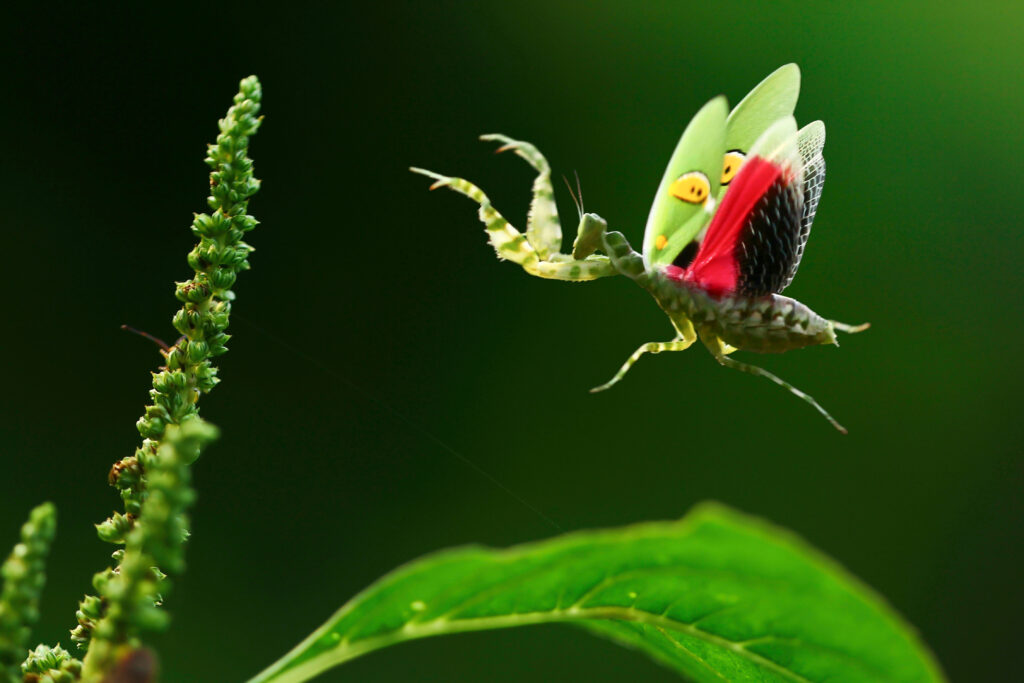
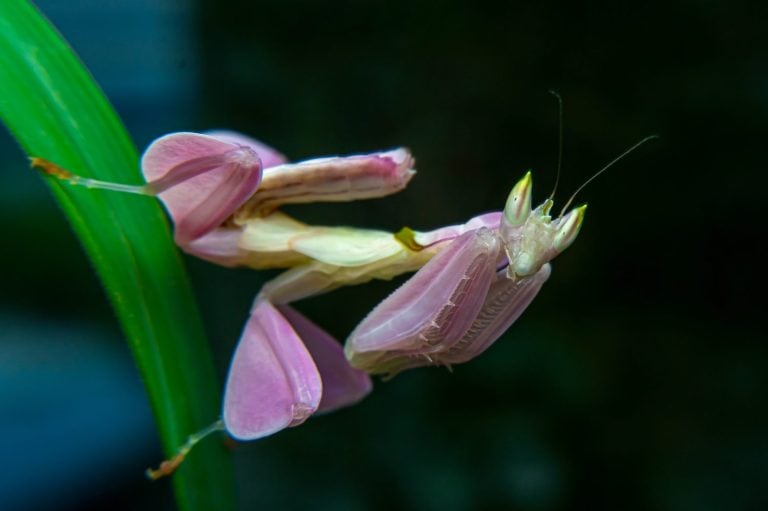
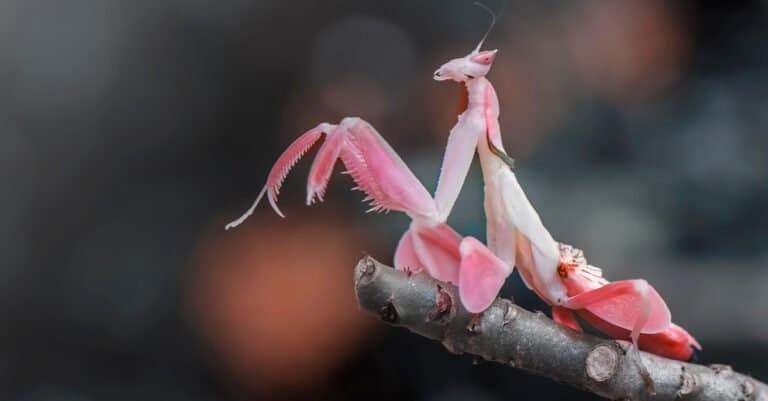
Flower mantises are praying mantises that use a special form of camouflage referred to as aggressive mimicry, which they not only use to attract prey, but to avoid predators as well.
©SemilirBanyu/Shutterstock.com
Many lizards hiss to let predators know that they should stay back. Other methods vary by the particular species, which include puffing up the body, whipping their tail, and changing color, though the latter is a much less aggressive move.
The praying mantis primarily relies on hiding from predators to survive. They’ll use camouflage to blend in better, though they may also use this method to trick unsuspecting prey. Some species have colorful patterns that they use to distract predators.
While these defense mechanisms are effective against many predators, they may not always work against each other. Research has shown that praying mantises can overpower and eat various types of lizards, but depending on the species, lizards may also prey on praying mantises.
Praying Mantis vs Lizard: Behavior
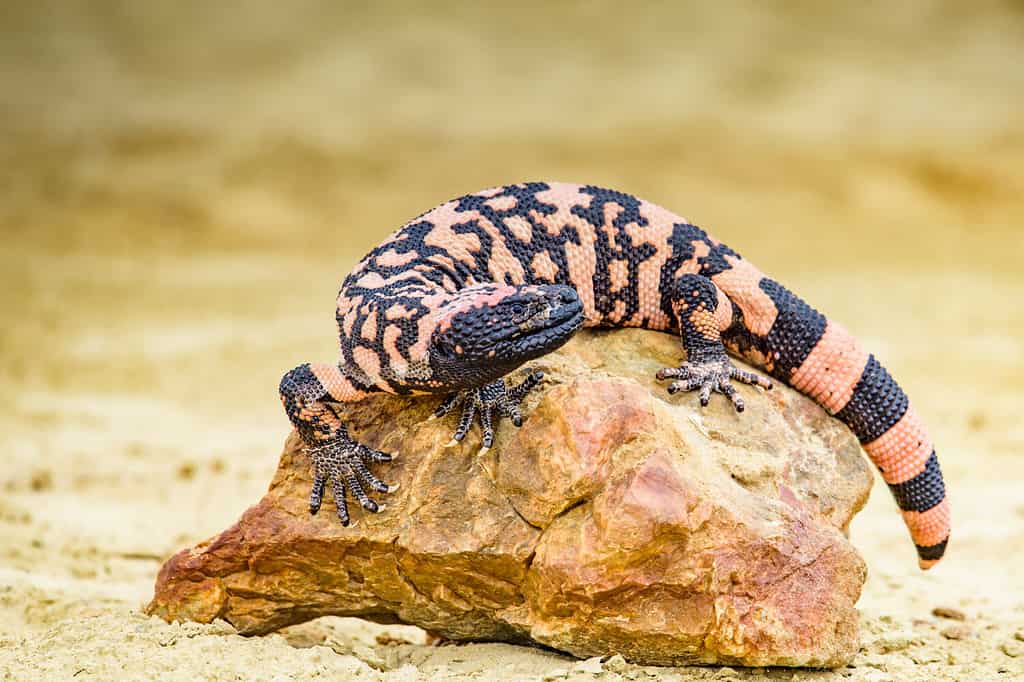
The Gila monster is a beaded lizard known for its distinctive black and orange or pink pattern. Gila monsters are native to the Southwestern U.S. and Northwestern Mexico.
©Vaclav Sebek/Shutterstock.com
Praying mantises’ movements are slow and calculated. When they do travel, their body appears to rock back and forth, a movement that imitates a leaf quivering in the breeze. Many humans consider them to be friendly insects. They are not averse to being held, and some people keep them as pets.
Lizards are also popular pet choices. They tend to be alert, inquisitive, and docile when raised in captivity, even to the point of being petted. But most lizards in the wild are shy and jumpy and will dart away quickly when disturbed. However, a few species of lizards, such as the Gila monster and beaded lizards, are venomous and can also be aggressive.