
Quick Take
- Researchers have identified only two of this slider skink species within a remote Australian wildlife sanctuary.
- The small size and speed of Lerista munuwajarlu render it nearly invisible to traditional ecological observation methods.
- The armless anatomy of this lizard gives it a speed advantage over regional predators.
- Ecologists conducted genetic testing to reconcile taxonomic data following a 10-year break in sightings.
Hundreds of new species were discovered in 2025, with over 850 new marine species documented and many more described by scientists worldwide. Even so, each discovery of an animal previously unknown to science remains just as exciting. This time, the discovery occurred in Northern Australia, where researchers came across an unusual reptile.
The armless slider skink is elusive, hiding in parts of Australia that have not been fully explored. This rarity makes the sighting especially exciting for researchers and, now, for the world. Here’s what we know so far about the rare and elusive Lerista munuwajarlu.
How Was Australia’s New Slider Skink Discovered?
An ecologist from the Australian Wildlife Conservancy discovered the slider skink at the Pungalina-Seven Emu Wildlife Sanctuary. This remote part of Northern Australia is on the Gulf of Carpentaria in Yanyuwa and Waanyi-Garawa country, a refuge for at-risk species native to the region. It’s located just southwest of Kakadu National Park, one of the northernmost protected lands in Australia. Due to its remote nature, few parts of it have been explored, and even fewer species have been spotted.
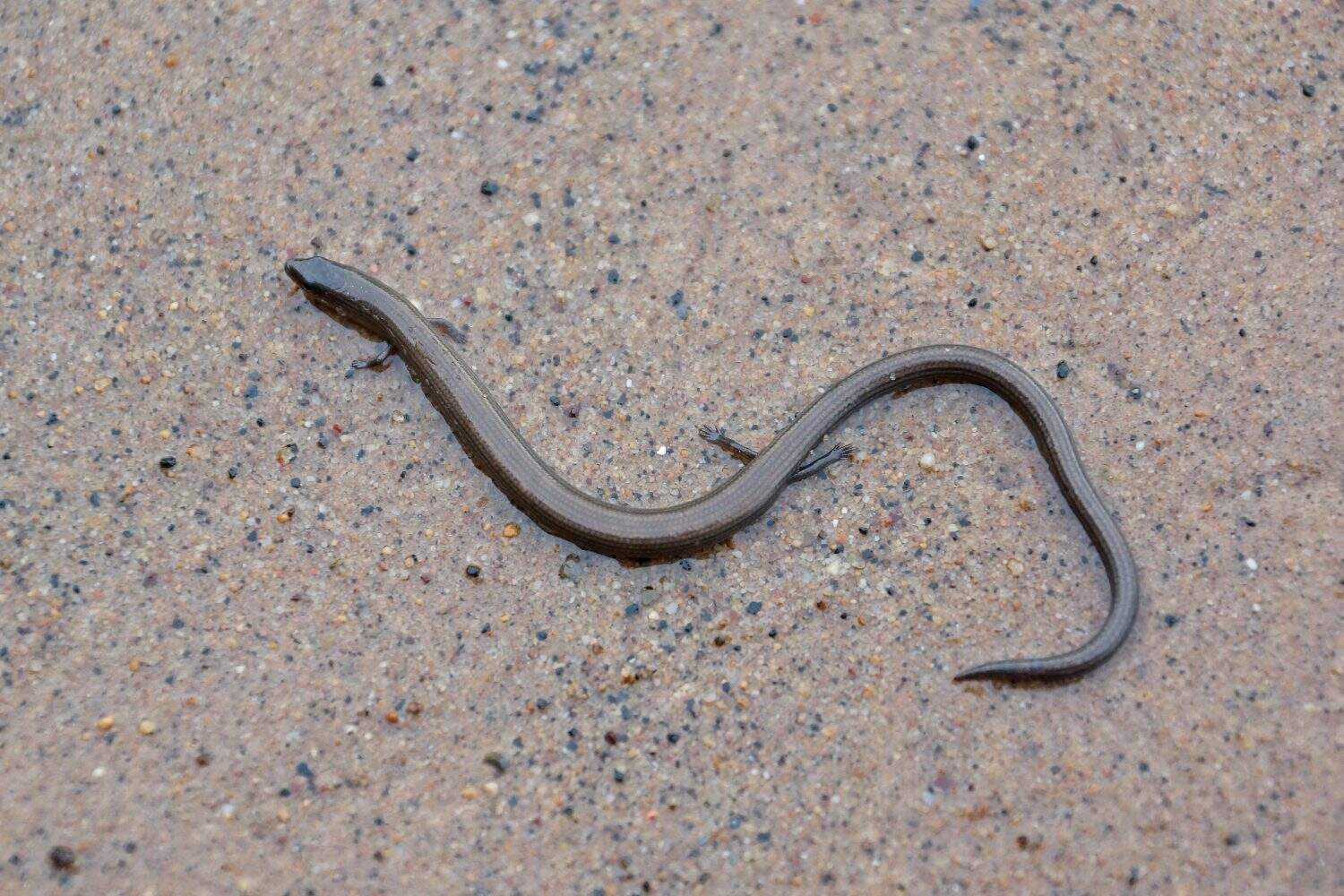
The anatomy of Australia’s slider skinks varies: some have multiple limbs, while others have none and are more snake-like.
©wk1003mike/Shutterstock.com
The slider skink is a sand-dwelling reptile with no arms but two tiny hind limbs to propel it across the ground. It slinks through the sand and is only the second identified of its kind in the last decade. This most recent specimen has helped ecologists confirm the new species. They’ve named it Lerista munuwajarlu. In the native Garrwa tongue, this quite literally means “no” and “arm.” Judging by its appearance, no name could be more accurate. Its appearance also distinguishes it from other slider skink species. A dark brown stripe runs down each side of its body, which is set against cream-colored scales. This combination makes it appear one with the sand through which it slinks.
Australia’s Unique Slider Skinks
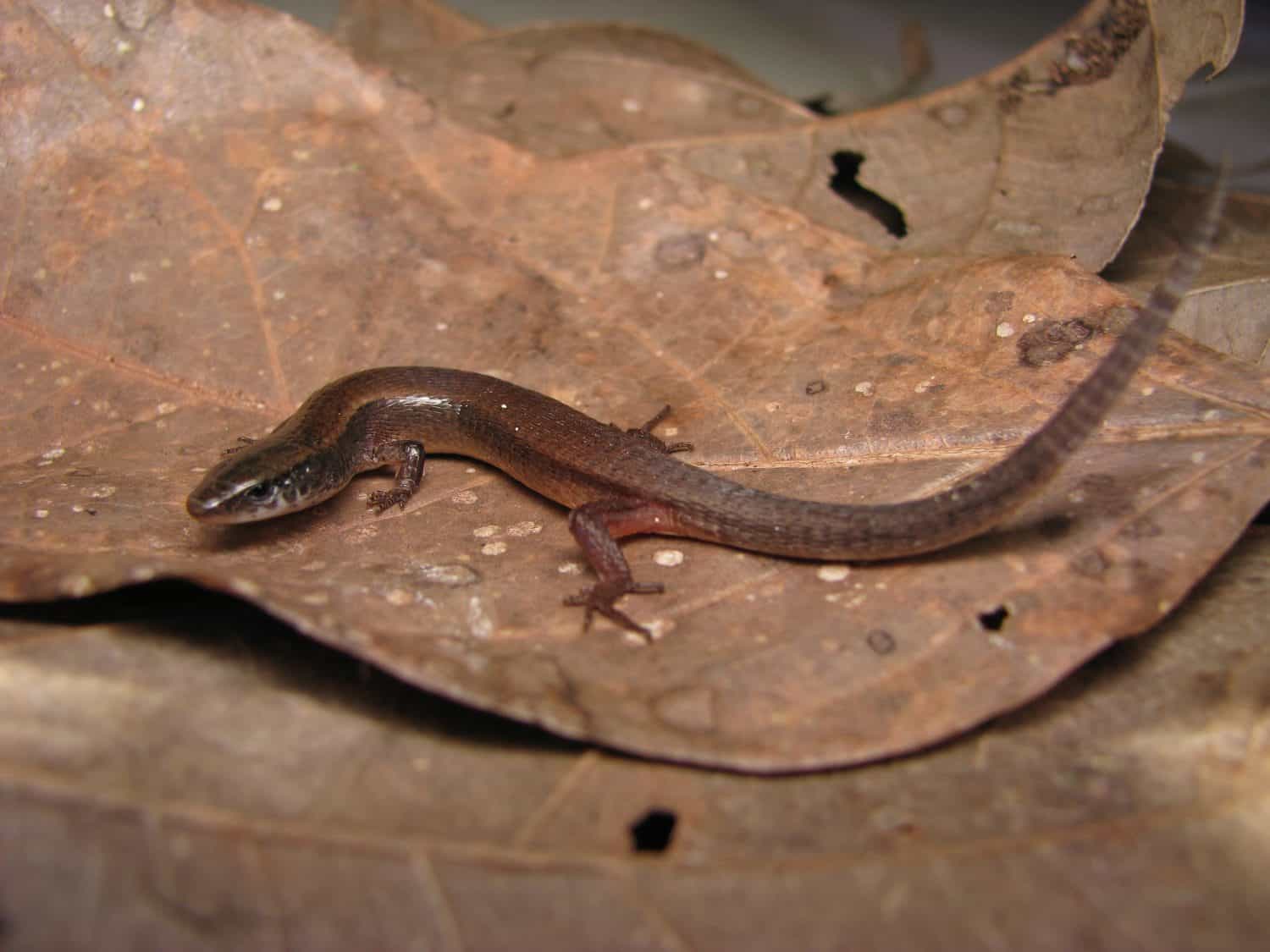
Slider skinks are unique within the genus Lerista and are only found in Australia. These burrowing lizards can easily be mistaken for snakes, but not all are without limbs. Some species have five-toed legs, while others are entirely limbless. Their anatomy partially depends on their habitat; some slider skinks slither through sand, while others move across different types of terrain.
Slider skinks are also a very small species, with most measuring less than two inches in length. This small size, combined with their skittish nature, makes them even more challenging to locate. Their lack of limbs helps them evade predators quickly, making them some of Australia’s speediest reptiles. When threatened, slider skinks burrow deep into the ground, making them virtually invisible. They also burrow to avoid heat, shed their skin, seek moisture, and hunt for prey.
Like many other lizard-like reptiles, slider skinks hunt insects. In the sands of Northern Australia, their prey includes anything from crickets to worms. Larger species sometimes consume mice or other small rodents as well. Vegetation also makes up part of their diet; they occasionally eat leafy greens, vegetables, or fruit.
Why Is the Discovery of Lerista munuwajarlu So Important?
When ecologists found the first Lerista munuwajarlu, years passed before they could confirm it was not just an anomaly. This second finding allows researchers not only to confirm its existence but also to continue studying this new species as a whole. Genetic testing has also allowed ecologists to link the two discovered specimens, despite a 10-year gap. Confirming this helps categorize the findings and opens the door to exploring the relationships between Lerista munuwajarlu and other similar species.
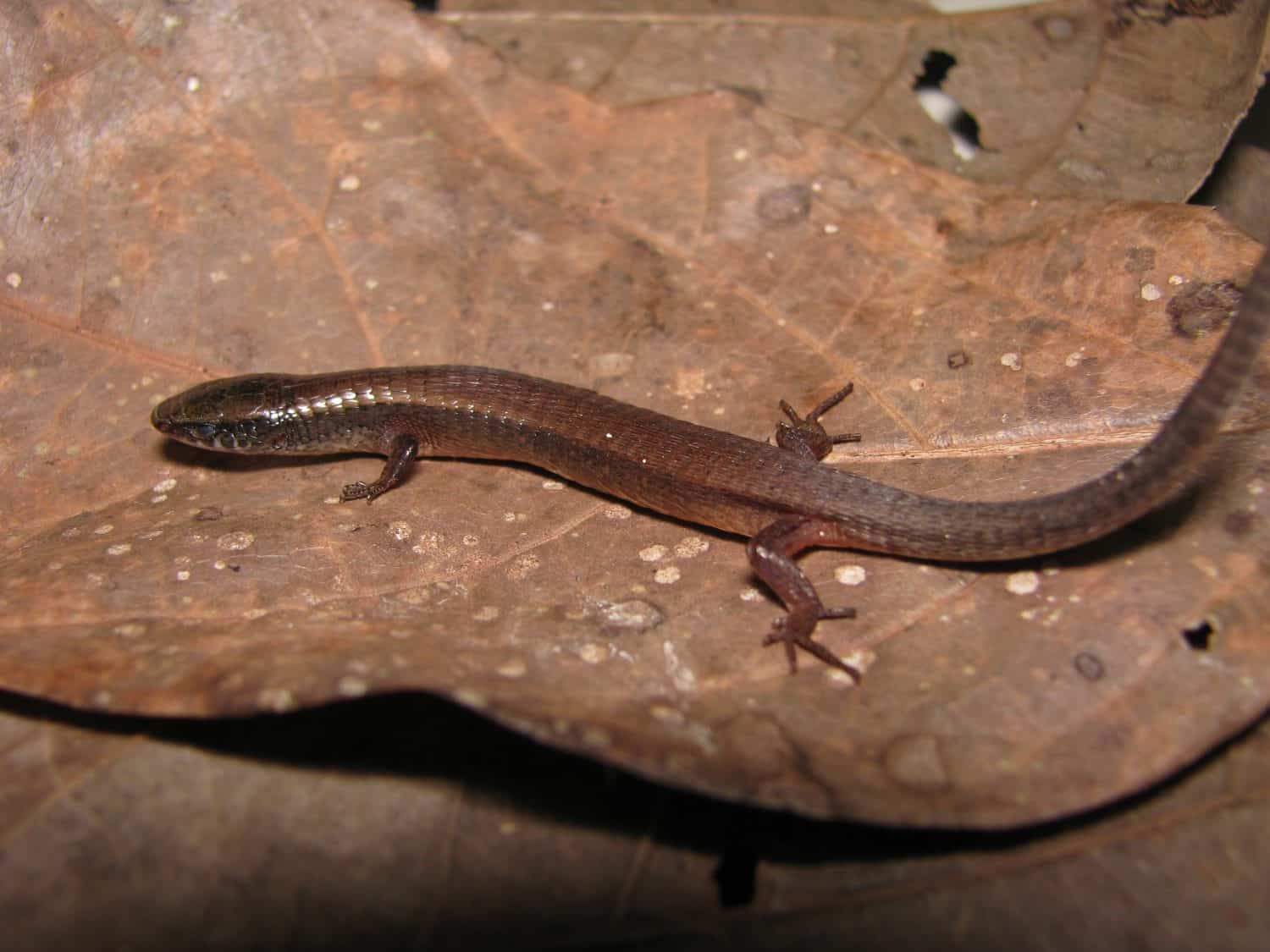
Slider skinks come in a variety of different colors, which some use to camouflage among brush or sand.
©Fabio Maffei/Shutterstock.com
This discovery also promotes further conservation efforts in and around the Gulf of Carpentaria. Efforts have been ongoing to lessen human activity and prevent catastrophic disasters such as forest fires. With so much unexplored territory, the presence of Lerista munuwajarlu is also a positive indicator of a healthy ecosystem. Given the elusive nature of this slider skink species, spotting even a single individual is an ecological miracle. The discovery serves as a crucial link between habitat and species conservation, especially for reptiles.