
Quick Take
- 56 moose are now collared to be tracked to assess survival across Michigan’s Upper Peninsula.
- Moose in the Upper Peninsula experienced significant population loss between 2023 and 2025.
- The process of collaring moose does involve risks to the moose, which is why scientists move quickly to reverse sedation.
- Moose face threats to their survival from things like winter ticks and heat stress, to brain worms and natural predators.
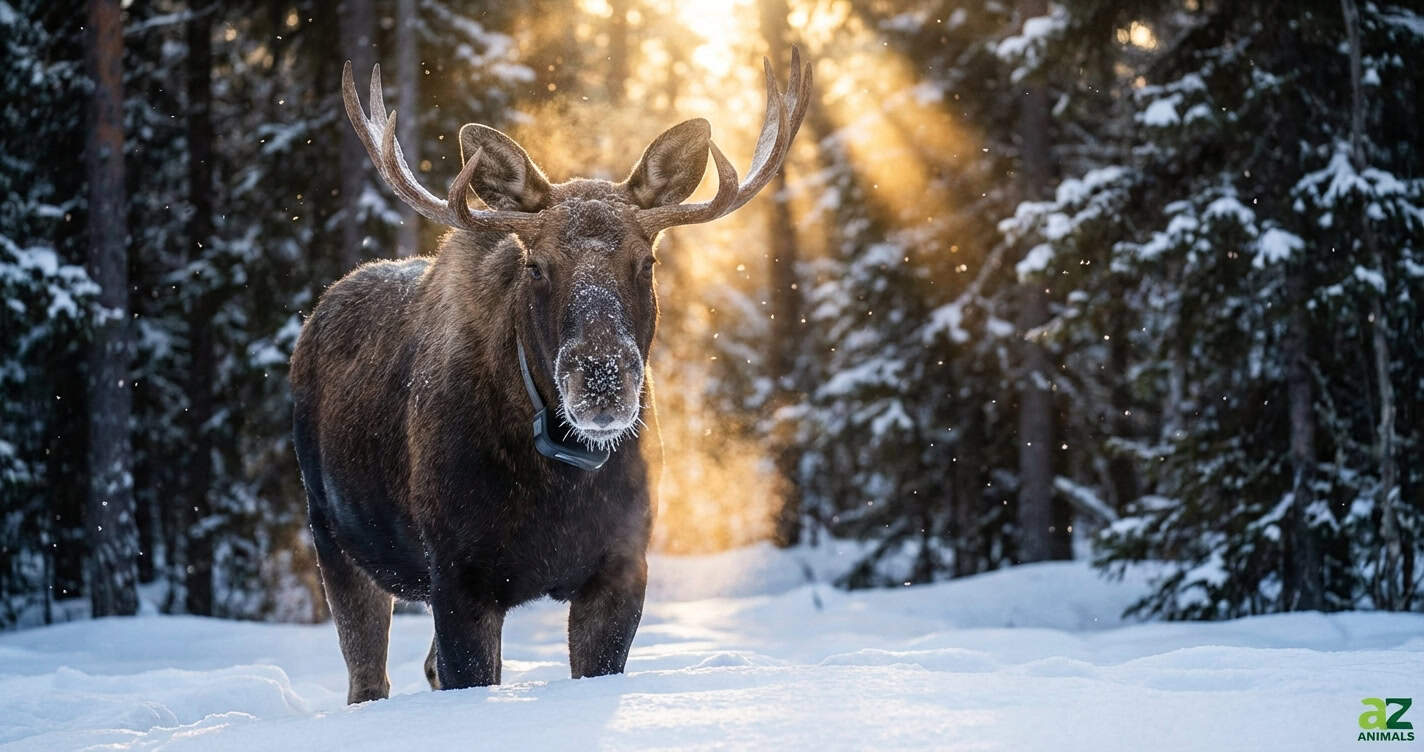
Moose are among the largest big-game animals in Michigan, but have one of the smallest populations. Unfortunately, according to data from the latest aerial survey, the population in the Upper Peninsula has declined significantly over the past two years. Because of this, scientists are tracking Michigan’s moose to understand why some survive and others perish.
Why Michigan’s Moose Need To Be Tracked
Globally, moose are considered a “species of least concern” by the IUCN. However, several moose populations in the United States are declining. One of those populations living in Michigan’s Upper Peninsula has been experiencing population loss of epic proportions in just the past few years alone. Researchers are unclear whether the lower numbers are an actual decline, a shift in where moose are wintering, or both. Because of that uncertainty and the large number of moose dying, the decision was made to track them.
An aerial survey conducted in January 2025 and discussed later that year estimated that there were 300 moose in the western Upper Peninsula core survey range. That was down from 426 in 2023. More surprisingly still, in an area that is considered to be a “low-density moose area,” the estimate of moose living in that region was 146 in 2023. In 2025, that figure dropped to 43.
While it is possible the moose have simply moved out of “core areas” or were in areas in the Upper Peninsula that the survey does not cover, there is no definitive answer as to why the moose population declined. This led scientists to determine that the best course of action was to collar the moose.
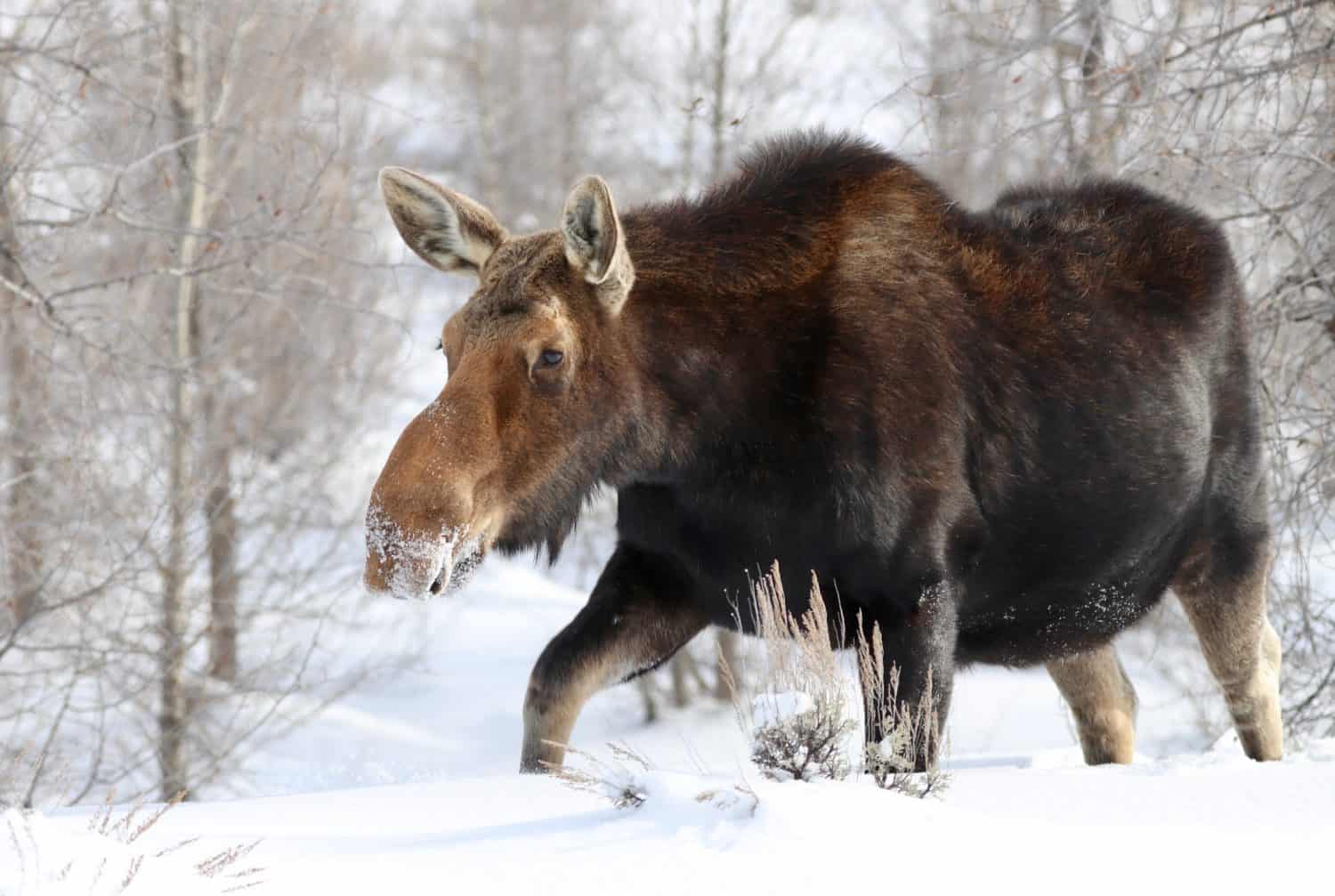
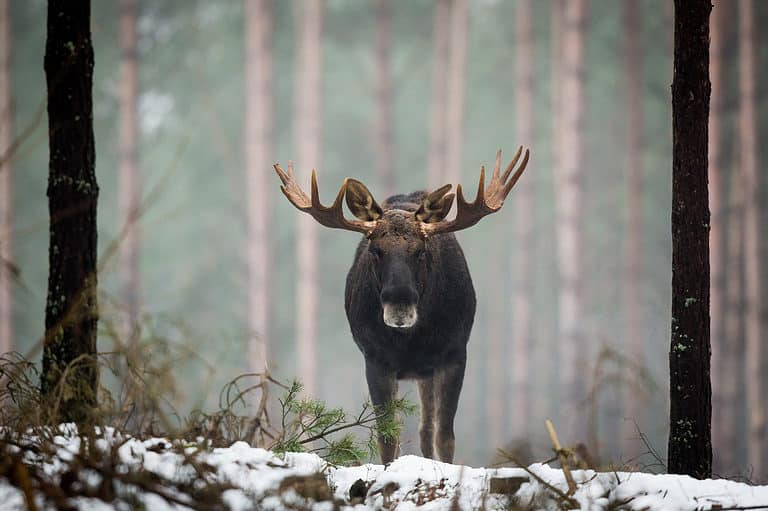
Moose in Michigan’s Upper Peninsula experienced a significant population decline between 2023 and 2025.
©Ariel Celeste Photography/Shutterstock.com
In 2025, there were 20 moose that were collared in the Upper Peninsula. From those moose, 200,000 GPS tracking points were identified. This information was simply not enough to compile the data that the scientists needed to understand the losses this group of moose was experiencing. Consequently, the decision was made to collar more moose, beginning in 2026.
In February 2026, thanks to joint efforts from the Michigan Department of Natural Resources, Keweenaw Bay Indian Community, Northern Michigan University, and the Sault Ste. Marie Tribe of Chippewa Indians, another 41 moose were collared. An additional two who were collared in 2025 were recollared. This led to a total of 56 moose in the Upper Peninsula, with GPS data provided to scientists.
Since the moose were collared in February, they have already provided 22,000 separate GPS points. The hope is that through watching the movements of these massive animals, a better understanding will be gleaned as to why this particular group of moose is faring worse than others.
Collaring Moose Comes With Some Risks
The information scientists hope to learn from collaring moose in the Upper Peninsula could ultimately help the moose population survive. Unfortunately, while generally safe, collaring moose carries some risks. During the February collaring mission, two were lost after they could not be revived from the sedation.
The goal is to always “minimize the risk” to the moose when collaring them. The process involves locating the moose by air and then shooting them with a tranquilizer dart. Once the moose is sedated, another team goes to the site of the moose to collar him or her.
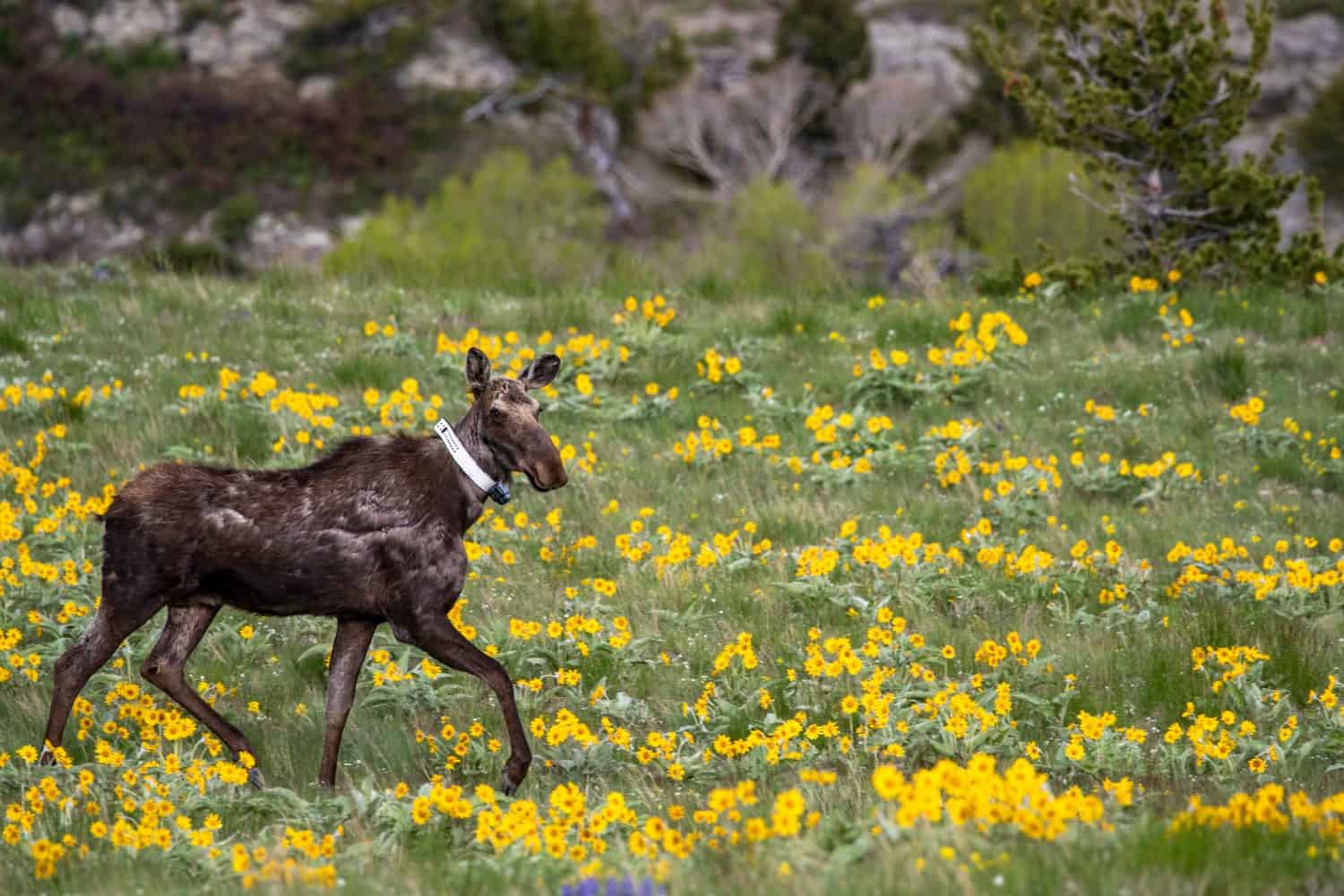
Collaring moose can be dangerous to the moose.
©Danita Delimont/Shutterstock.com
Because moose are large, powerful, and unpredictable when handled, scientists sedate them to protect both the animals and the research team. However, sedating a moose is taxing on their bodies, so scientists move as swiftly as possible to collar the moose and ensure the collar is working before injecting it with an antidote to wake it. The shorter the sedation time, the better.
Unfortunately, two of the moose sedated in February — a mature female and a young male — could not be revived. Given that both appeared to be in good health, the deaths of the two came as a shock. It was not until an autopsy was done on the female that it showed she had diseased lungs and liver, which likely contributed to the inability to revive her. The male appeared to have healthy organs.
While the loss of any animal is tragic, scientists believe that the overall goal of tracking Michigan’s moose will prove insightful. If this is the case, then the deaths of the two moose will not have been in vain.
What Do Scientists Hope to Learn from Tracking Michigan’s Moose?
The moose in Michigan’s Upper Peninsula were once nearly eradicated in the 1800s due to overhunting. It was not until the 1980s that the “Moose Lift” sought to bring moose life back to the Upper Peninsula. In total, 59 moose were moved by air from Algonquin Provincial Park in Ontario to Michigan. It was believed that these moose would easily establish a herd, growing to 1,000-strong by 2000. This happened without any answers as to why.
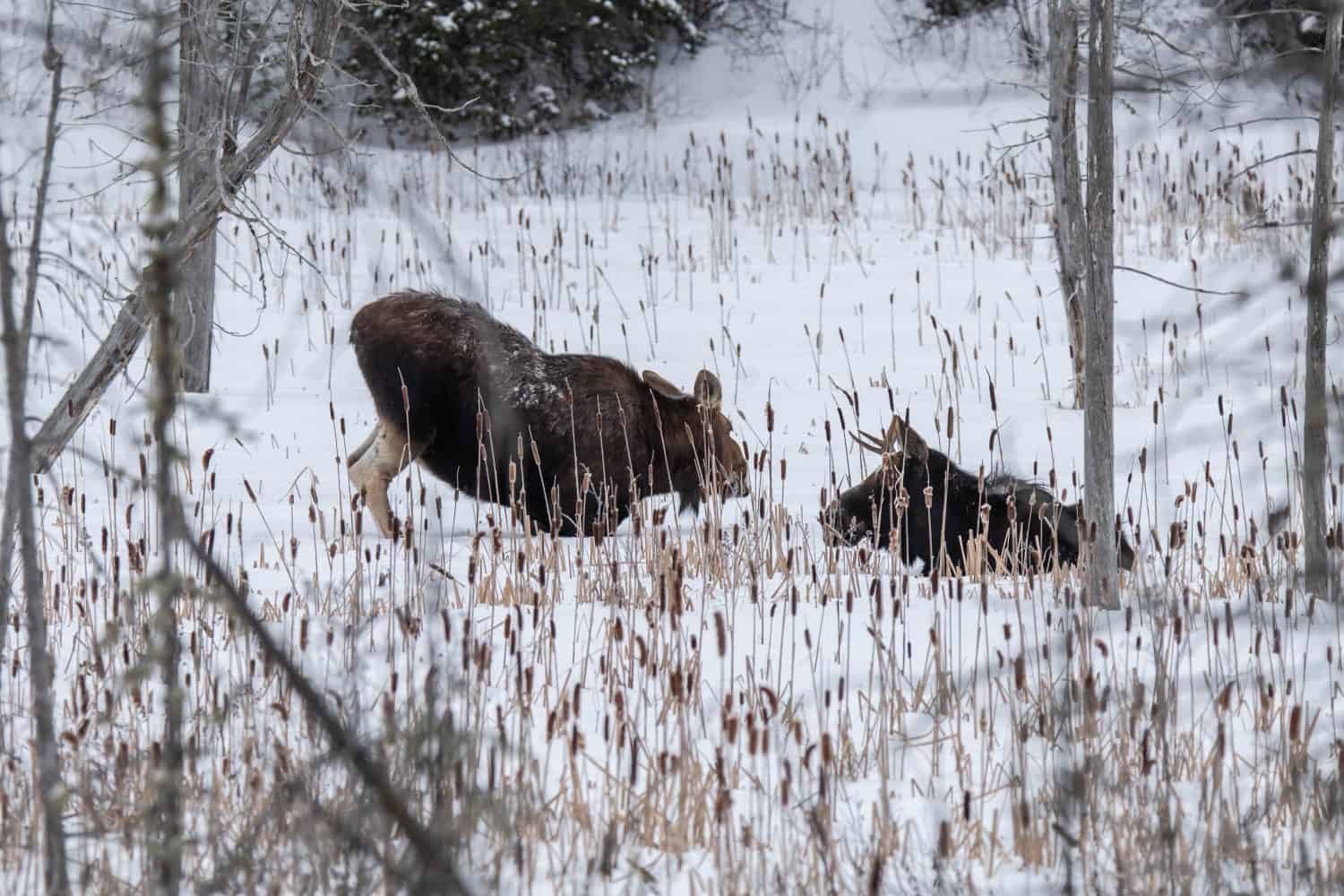
Scientists hope to learn what has caused the offspring of the moose transplanted from Ontario to experience a population decline.
©Tom Worsley/Shutterstock.com
Between 1997 and 2007, the moose herd grew by 10% annually. Beginning in 2009, that number stalled at just 1%. No surveys have been conducted to determine why this occurred. The hope is that by collaring the moose, a great deal of information will be learned as to why reproduction rates changed so suddenly.
Scientists also hope to learn why so many fewer moose are in the Upper Peninsula than were there just two years ago. During the last survey, the moose population was considered to be stable. This is not the case now. Therefore, the more data the scientists have to work with, the easier it will be to develop a conservation plan that will not only keep the population from going regionally extinct again, but hopefully, help it thrive.
Threats That Michigan’s Moose Face
Moose populations are declining in some regions of the United States due to multiple threats. With calves being the most vulnerable, they make up the majority of the population found deceased. However, adult moose face challenges of their own, making no member of the moose population immune to the problems plaguing them today.
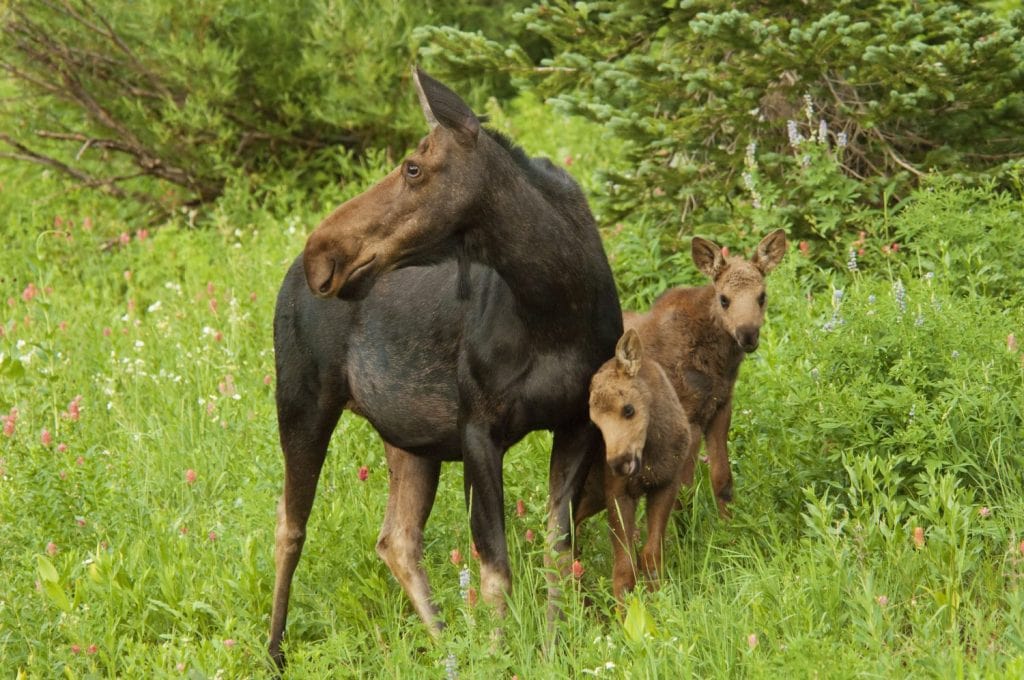
Moose face several threats to their survival, including winter ticks, brain worms, habitat loss, and more.
©MintImages/Shutterstock.com
Some of the most common threats to moose today include:
- Winter ticks
- Brain worms
- Habitat loss
- Heat stress
- Black bears and wolves
- Increase in the white deer population, which has led to the spread of disease
- Busier roadways are making moose sitting targets
With threats like these, it is easy to understand why moose populations are declining. With moose in the Upper Peninsula being collared, the hope is that they will provide answers about which, if any, of these problems are the root cause of their population loss. If it is not one of these, the question remains: what is the culprit?
How Has Climate Change Affected Michigan’s Moose Population?
Climate change has affected weather patterns worldwide. Regions where the warmer temperatures are most often felt are where winters were once very cold and brought multiple feet of snow. In places like Michigan, the winters are now shorter and warmer. This has caused significant problems for moose and could be a contributing factor in the moose population loss in the Upper Peninsula.
Winters in Michigan do not last as long as they did in decades past. Because of this, winter ticks are attaching themselves to moose in record numbers. While moose have always dealt with ticks, the winter brought temperatures in which the ticks could not survive. Therefore, the dead and dying ticks would be shed from the moose, bringing relief to the moose in the winter.
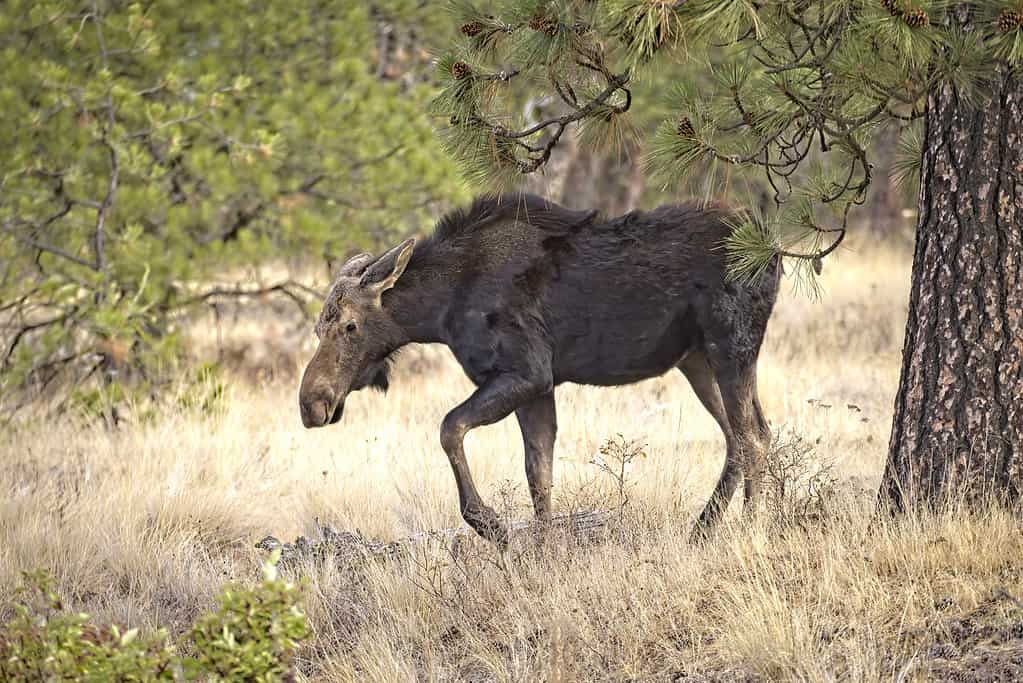
Climate change has led to more moose experiencing heat stress and infestation from winter ticks.
©gjohnstonphoto/iStock via Getty Images
Now, so many winter ticks attach themselves to moose that it is causing moose to lose their lives. This is especially true for calves. In some instances, dead calves have been found with thousands of ticks on their bodies, some reaching the size of a quarter as they feed on their hosts. The ticks have significantly reduced the survival rate of calves, affecting herd size.
In addition to dealing with the ticks, moose have higher rates of heat stress than at any other time in modern history. Heat stress occurs when moose are subjected to temperatures above 57F in the summer and 23F in the winter. Living in these conditions causes moose to stop eating and their immune systems to become compromised.
With less energy, moose also have lower reproduction rates. This leads to a smaller population increase and smaller herd numbers overall. If greenhouse gas emissions are not reduced in the near future, some moose herds may no longer have a future in regions of the U.S. where they have historically roamed.
Why Collaring Large Animals Provides Invaluable Information For Scientists
Collaring large animals, especially those for which little information is known, provides invaluable data to scientists. It may just seem like GPS points are provided, but those GPS points give insight that otherwise would not be known. In turn, conservation and wildlife management plans can be made to help large animals survive.
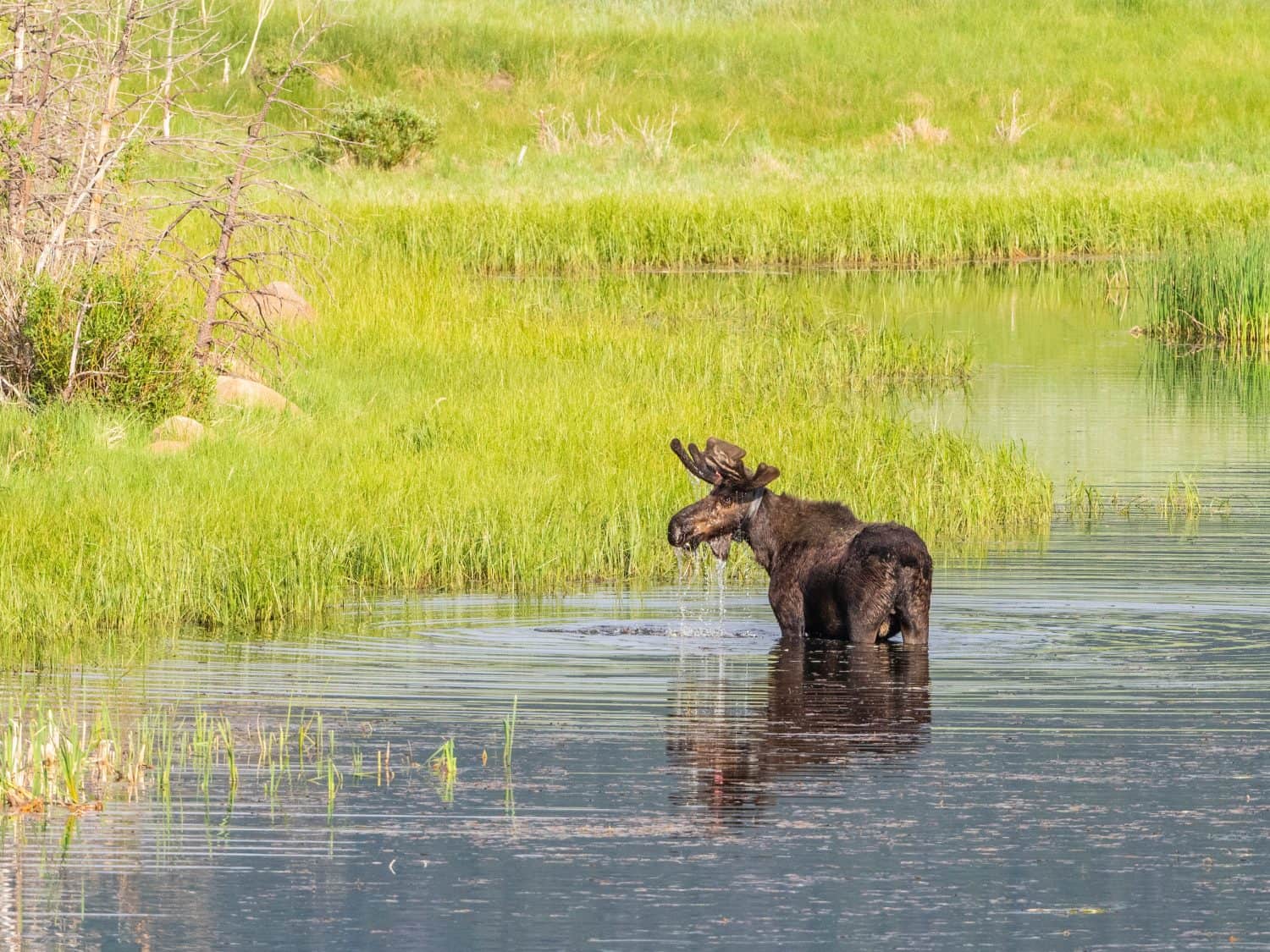
Collaring large animals, such as moose, gives scientists a better understanding of their habits, migration patterns, and more.
©William Eugene Dummitt/Shutterstock.com
Some of the benefits of collaring large animals include:
- Tracks animal movements, helping scientists better understand migration patterns and how animals use the habitat they live in
- Mating patterns and where animals feed can be discovered via collaring
- Watching where the animals move can help decrease human and animal conflicts
- Understanding seasonal movements can help scientists better formulate conservation plans for specific animals
Simply tracking moose in Michigan’s Upper Peninsula is not going to save them. However, the hope is that by gathering information on where they roam, where they feed, and their reproductive habits, answers will be provided about population loss. It is only then that a plan can be put into place to conserve the moose in a region where they were once lost due to overhunting, before they go regionally extinct again.