Quick Take
- Ruby-throated hummingbirds migrate about 2,000 miles annually from North America to the Yucatan Peninsula and back.
- Up to 70% of juveniles and 40% of adults perish along migration due to starvation, weather, and predators.
- Climate change shifts timing and food availability, making backyard feeders and native gardens key for their migration success.
Each year, thousands of species participate in migration for a variety of reasons: to find more abundant food sources, escape harsh weather conditions, or head to breeding grounds. It is estimated that billions of animals migrate from one spot to another annually.
While the fact that animals can remember instinctively how to get to and from their destinations, some animals prove to be a bit more fascinating than others. In fact, one migration feat still amazes scientists, and it involves one of the tiniest birds on the planet. The migration habits of the ruby-throated hummingbird seem like they should not be successful. Yet, each year, these fast-flying birds complete their journeys, leaving many in the scientific community scratching their heads as to how such a long migration is possible.
Ruby-Throated Hummingbirds Successfully Migrate 2,000 Miles Annually
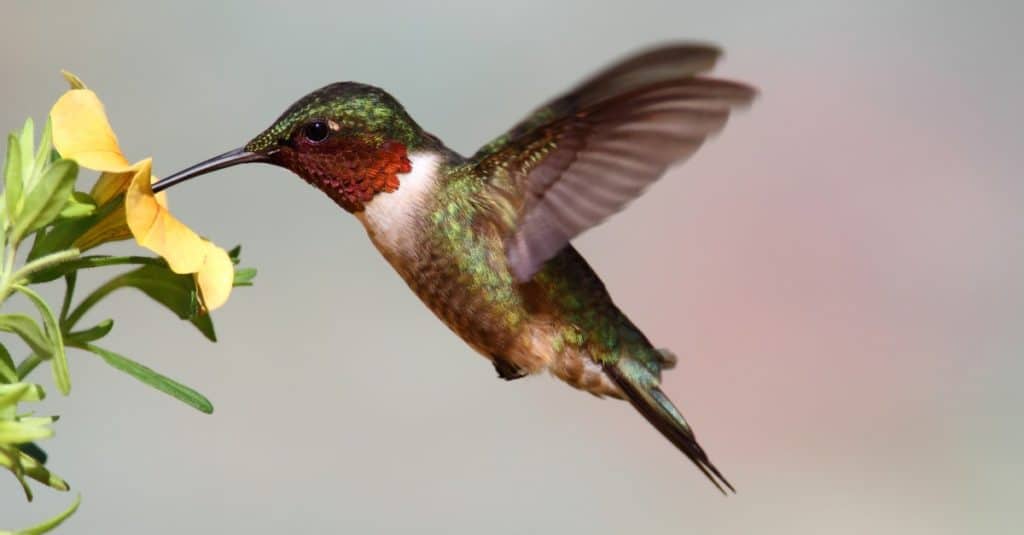
Ruby-throated hummingbirds will fly 2,000 miles annually on their migration journey.
©Steve Byland/Shutterstock.com
Hummingbirds are among the tiniest birds in the world. Yet, the ruby-throated hummingbird undertakes a massive migration journey annually. These metallic-green and ruby-red-throated birds fly from North America to the Yucatan Peninsula and back each year, for an average total migration of 2,000 miles. Given their small stature, this seems like an impossible feat. However, thanks to instincts and environmental cues, most of these birds survive.
Unfortunately, a large portion of hummingbirds do not. It is estimated that up to 70% of juvenile and 40% of adult ruby-throated hummingbirds perish along their migration path due to starvation, predation, and ever-changing weather.
Despite the challenges ruby-throated hummingbirds face, they continue to migrate, spending the colder months in the warmth and sun of Mexico and South America. Then, when it is time to return to raise the next generation of hummingbirds, they return to their habitats in the United States and Canada, only to start the process of migration again several months later.
How Long Do Ruby-Throated Hummingbirds Fly So Far?

Ruby-throated hummingbirds can fly hundreds of miles on just one leg of their migration journey.
©Bonnie Taylor Barry/Shutterstock.com
Part of what makes the migration of the ruby-throated hummingbird so fascinating is the fact that they can travel great distances without stopping. The key to this ability is an anatomical change that occurs before the hummingbirds begin their long flight. Without this evolutionary adaptation, flying hundreds of miles in one stretch would be nearly impossible.
On the most extended leg of the migration journey, ruby-throated hummingbirds fly over the Gulf of Mexico. This stretch alone is 500 miles and can take between 18 and 22 hours, depending on the weather. To have the stamina to complete this many miles in one undertaking, the hummingbirds’ internal organs, including their hearts, increase in size.
The process of increasing internal organ size is accomplished as the ruby-throated hummingbirds increase the amount of body fat they carry before migration. While more weight is often seen as a hindrance during long journeys, without the extra body fat to rely on, the hummingbirds would never have the energy or strength to fly so far over the Gulf without stopping.
Despite adaptations and advantages, these beautiful hummingbirds meet plenty of obstacles along the way, which is why such a large percentage of the tiny birds perish as they attempt to make their voyage.
Obstacles Ruby-Throated Hummingbirds Face During Migration

Ruby-throated hummingbirds face multiple obstacles during their migration journey.
©Ramona Edwards/Shutterstock.com
Flying hundreds of miles at one time is a daunting task, no matter how large or small the bird. Any migratory animal faces obstacles as they move back and forth from their wintering grounds to their breeding grounds. The ruby-throated hummingbird is no exception.
The biggest obstacles ruby-throated hummingbirds face during migration include:
| Obstacle Ruby-Throated Hummingbirds Face | Explanation Of Obstacle |
| Starvation | Lack of nectar or insects along the migration route causes some hummingbirds to lose their lives before making it to their final destination. |
| Weather | Storms can knock hummingbirds off their path (hundreds of miles in some instances), forcing some to try to land on the water, where they drown. |
| Light Pollution | Those who travel at night can become disoriented and knocked off track. |
| Predators | As the tired ruby-throated hummingbirds land for a break along the journey, they become easy targets for birds of prey and even bullfrogs. |
| Temperature | Lower temperatures over the water prove to be a challenge for the hummingbirds. |
Given all of these challenges, it is quite a feat that the majority of traveling hummingbirds complete their migration. Part of their success is due to reliable resting and refueling locations, some of which have been part of the migration path for centuries.
Where Do Ruby-Throated Hummingbirds Rest and Refuel as They Migrate?
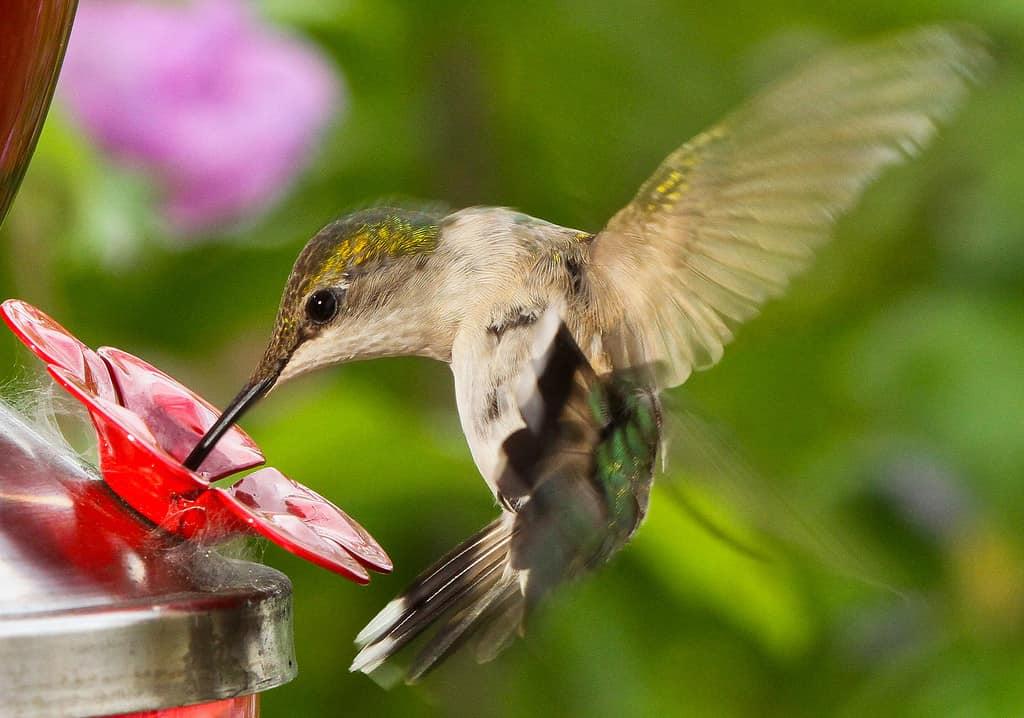
Ruby-throated hummingbirds will rest where they have both food and water, which can be in nature or even in backyards.
©Hooplion/iStock via Getty Images
Ruby-throated hummingbirds have timed their migration to align with the blooms of their favorite flowers along their path. As tubular, nectar-rich flowers in a variety of bright colors bloom, the hummingbirds take advantage of the food that gives them energy for their weeks-long journey.
As the ruby-throated hummingbirds fly for hours on end, it is not uncommon to see them take a much-needed break along the Atlantic coastline or even along the coast of the Gulf of Mexico as they prepare for the longest leg of their journey. Many will come into backyards seeking native plants and flowers to feed on, much to the delight of homeowners.
During this time, ruby-throated hummingbirds take the opportunity to rest. The birds enter torpor, a “hibernation-like state” that allows them to conserve energy. They sleep both during the day and at night (timing depends on when they arrive to feed). This period of rest can last from one to 15 days; once refueled, the birds are off again to complete their migration.
How Climate Change Is Affecting Ruby-Throated Hummingbirds’ Migration
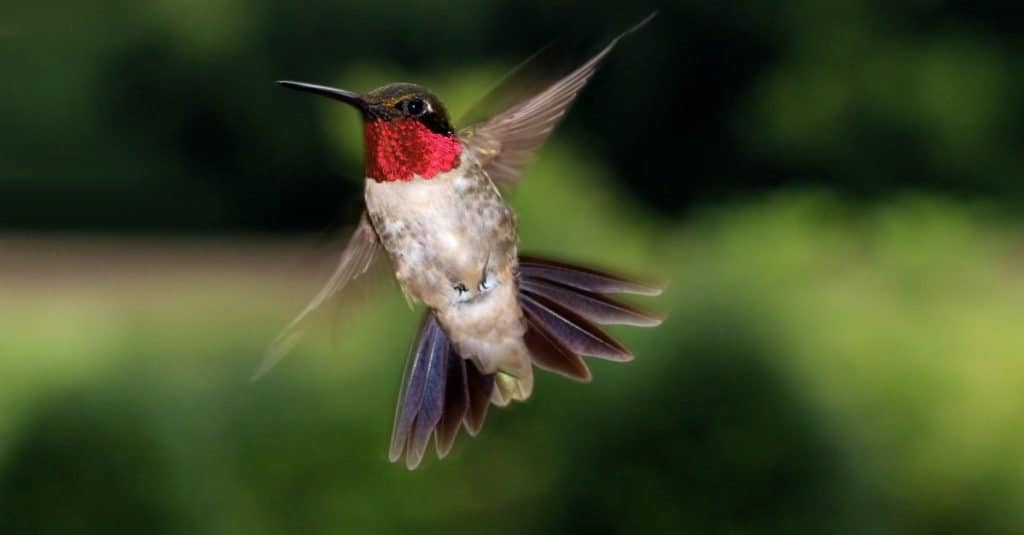
Ruby-throated hummingbirds are changing their migration patterns due to climate change, causing their food sources to be available at different times of the year.
©Ramona Edwards/Shutterstock.com
Historically, ruby-throated hummingbirds followed a specific migration pattern, flying south from Canada and the United States between August and October, and arriving in the Yucatan Peninsula by November. As spring started in North America, the hummingbirds migrated back north between March and May, arriving no later than early summer.
However, as a result of climate change, the migration patterns of the ruby-throated hummingbird have been impacted. Instead of following historic timelines, the hummingbirds are arriving in North America earlier. They are departing for South America and Mexico later, with the weather no longer signaling when migration should begin. Consequently, conservationists are concerned about the long-term impacts of climate change on birds, particularly because arrival times do not necessarily align with the flower blooms they rely on for nectar.
If ruby-throated hummingbirds followed the migratory timeline of centuries ago, they would have fewer food sources available to them on their arduous voyage. While some species may be able to migrate as their ancestors did, it is becoming clear that many cannot. Due to these changes, the ruby-throated hummingbirds have become reliant on people providing assistance for a successful migration.
How Ruby-Throated Hummingbirds Can Be Helped on Their Migration Journey
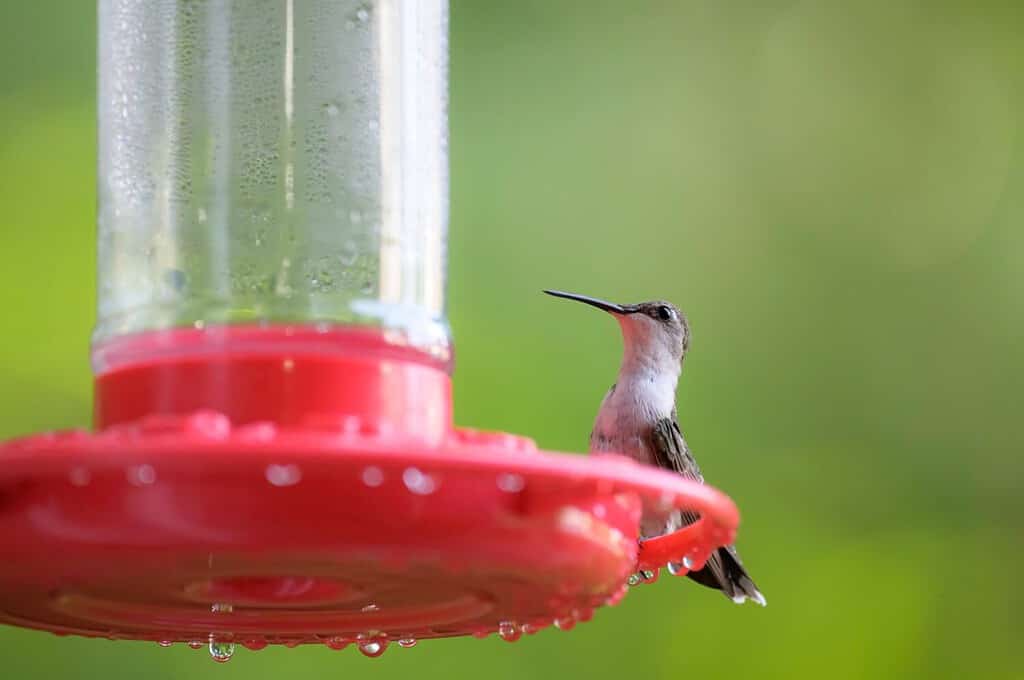
Putting out feeders and planting native plants can help ruby-throated hummingbirds on their migration journey.
©LHolmes Photography/Shutterstock.com
There is no denying that ruby-throated hummingbirds are facing tougher migrations as a result of climate change. As temperatures remain milder year-round, the flowers that produce the nectar needed to complete their journey are less bountiful. Without help, the ruby-throated hummingbird’s migration success rates will decline, impacting the habitats they live in and their overall population.
Fortunately, assisting these hummingbirds is relatively easy. The most effective ways to help the ruby-throated hummingbirds include:
- Understand the migratory patterns of the birds to recognize when they will be in your geographic region
- Install hummingbird feeders that provide nectar and insects to the small birds
- Create a backyard habitat complete with native plants that provide nectar to the hummingbirds
As climate change has altered the migratory patterns, ruby-throated hummingbirds have become more dependent on backyard hummingbird havens. The more oases they find on their route, the better their chances of survival.