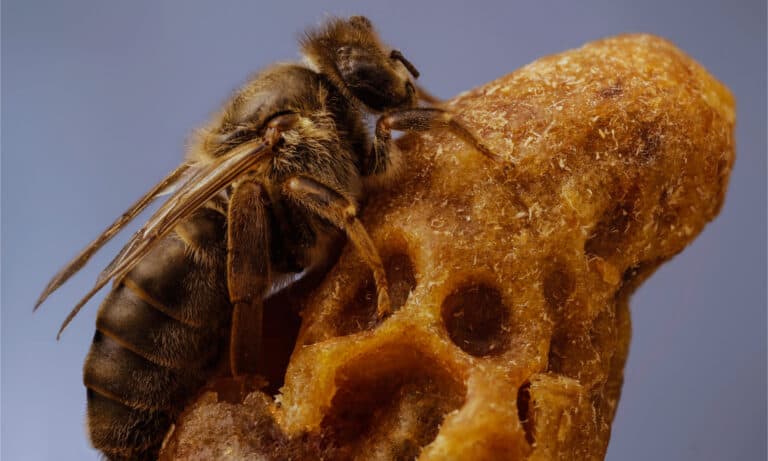
Sports fans know what the Mexican wave is — also known as just “the wave.” When stadiums are packed with cheering fans, they raise their arms in succession, creating a flowing wave through the audience. It gained international fame at the 1986 World Cup in Mexico, hence the nickname, though it was first documented at sporting events in North America in the early ’80s. But long before soccer fans were doing it, part of the animal kingdom already had this move down pat: the Himalayan giant honeybee (Apis laboriosa), the largest honeybee in the world.
Swarms of these honeybees perform the Mexican wave for a very different reason than humans do, but the resulting motion looks uncannily similar. BBC Earth recently shared a video of these synchronized views on YouTube, which has more than one million views.
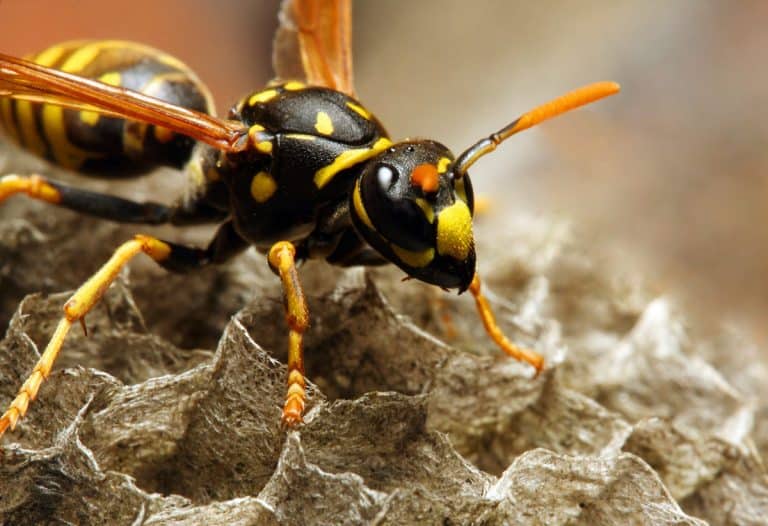
These giant bees build their nests on the sides of cliffs in the Himalayas. In one cliff pictured in BBC Earth’s video, over two million bees have made their homes. But unlike typical hives, which are made of hexagonal wax called honeycombs, these hives are entirely exposed. This means the bees must use their bodies as a defense mechanism. Although these hives are inaccessible to humans or larger predators without some help, they still need to defend themselves from hornets — vicious winged predators that hunt bees.
A Defense Mechanism
The bees will line up several rows deep to form a defensive shield. “As soon as one bee realizes a hornet is approaching, they lift their abdomen up in a threat display,” stated the BBC Earth video. This action creates rippling movements through the colony, closely resembling the Mexican wave. It’s truly beautiful seeing these shimmering waves throughout the hive. Unless you’re a hornet, of course.
“This coordinated visual display shows the hornet that it is dealing with an army rather than a single soldier,” BBC Earth notes. “It’s enough to blur out the individual and stop the hornet from attacking.”
How incredibly cool is that?! In the comments, people were amazed at seeing nature at work. “An impressive defense tactic, without physical strength or chemical spraying. Ingenious is nature!” one person commented.
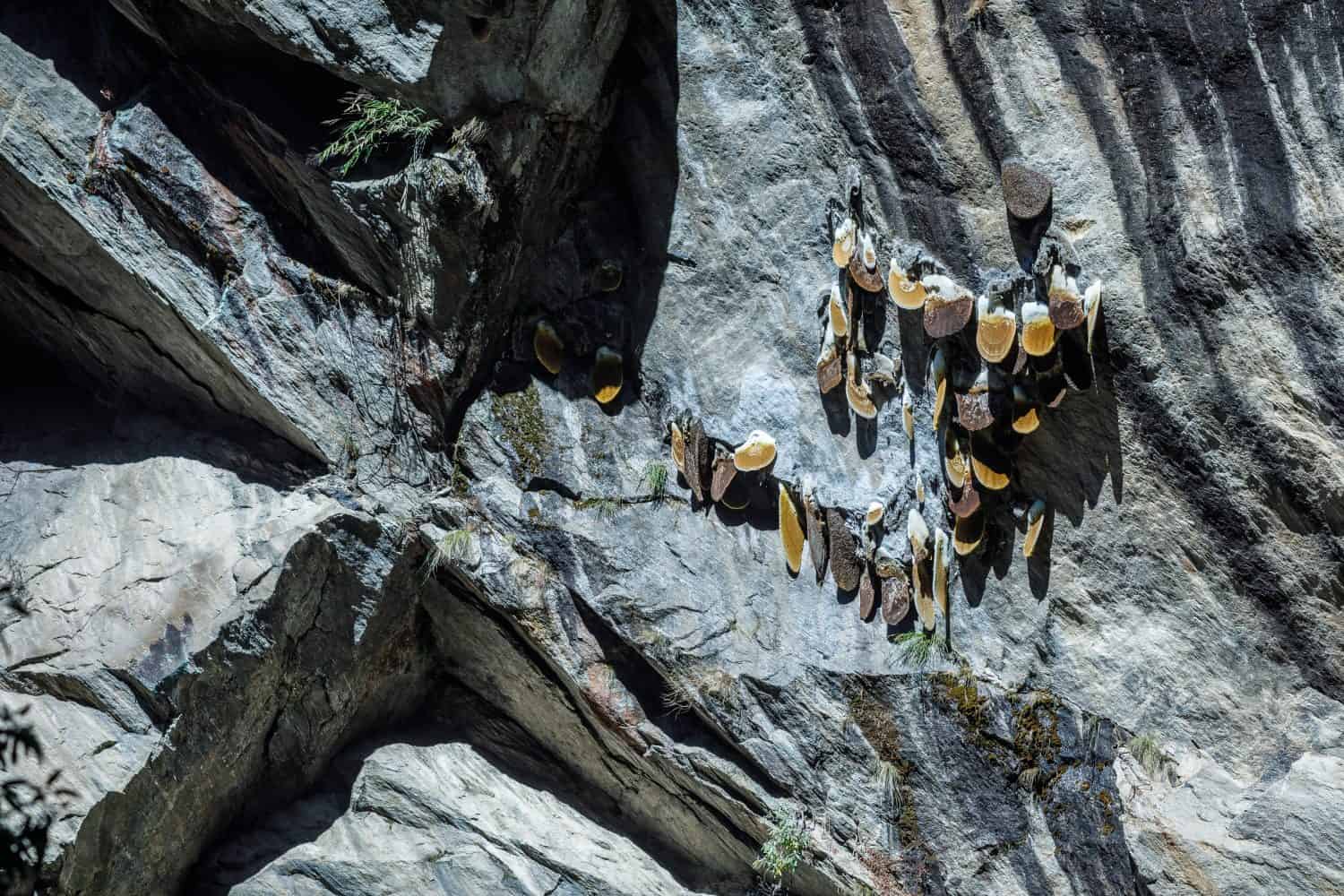
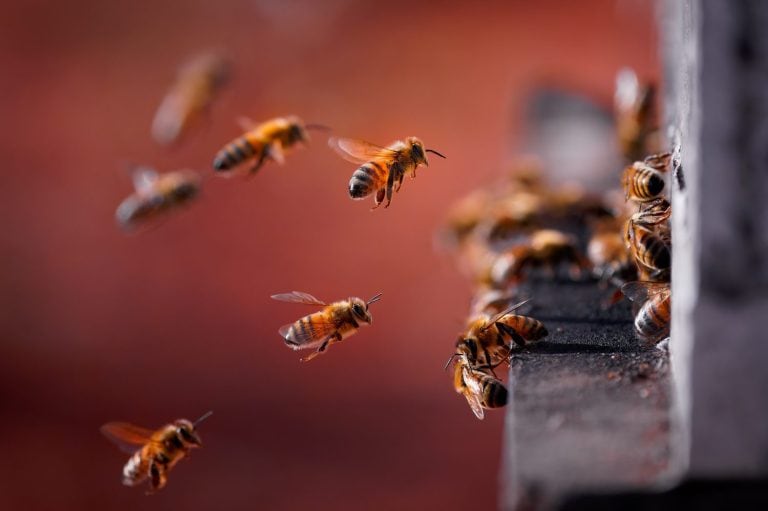
Giant cliff bees form their hives on the sides of cliffs in the Himalayan wilderness.
©sergey kolesnikov/Shutterstock.com
“Bees truly are incredible insects!!” another said.
Giant honeybees aren’t the only bees with effective defense mechanisms. Japanese honeybees have an interesting tactic to defend themselves against Asian giant hornets: they will literally heat up.
These honeybees can withstand temperatures two degrees higher than a giant Asian hornet, which they use to their advantage. If a hornet gains access to the hive, the honeybees will lure it into the center. When the hornet takes its first victim, hundreds of honeybees descend to cover the hornet and buzz, generating enough heat to raise the temperature to 114°F, essentially cooking the hornet. This is called “bee balling” and is just another example of how powerful bees can be when they work together.
Habits of Giant Honeybees

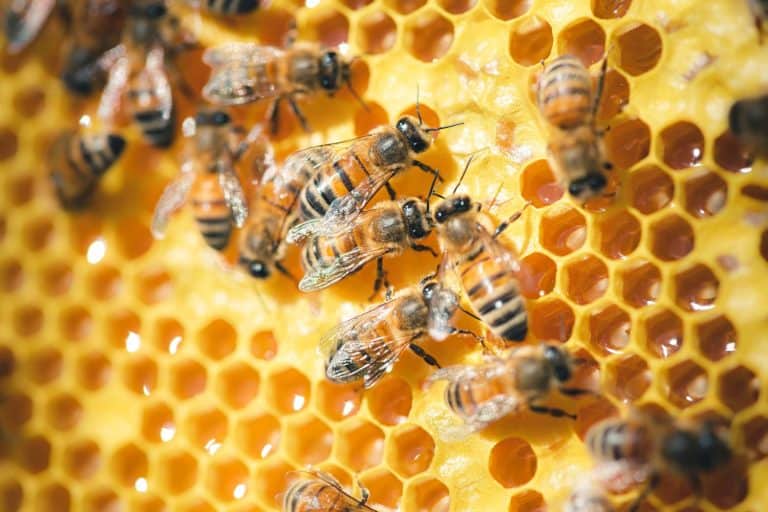
Honeybees can defend themselves when working together.
©MagicBloods/Shutterstock.com
Himalayan giant honeybees reach up to 3cm in length, building their nests along vertical rock faces that are between 2,500 and 4,100 meters above sea level. They are resilient in harsh conditions, building their honeycombs along the undersides of cliffs. They will feed on the nectar of wild rhododendrons and wildflowers, leading to “mad honey” in the spring, which is infused with toxins known for their psychoactive and medicinal effects, according to Pollinator Partnership.
Each bee colony can contain up to around 50,000 bees, which work in unison to create mesmerizing waves, perform intricate dances to signal where food can be found, and follow migration habits that have them returning to the same cliffs every year. It took humans millions of years to decide to do a synchronized wave, yet bees just naturally do it.
Even the “honey hunters” in Nepal, who collect honey from these bees, look to them with respect. Collecting honey is an ancient tradition, which begins with spiritual rituals to show respect and smoke to make the bees evacuate. Then, they will climb homemade rope ladders and guide a long pole with their feet to collect honey into a basket, making sure to leave many hives intact to preserve the species. It can be a dangerous job, which is why it must be done with care and attention.

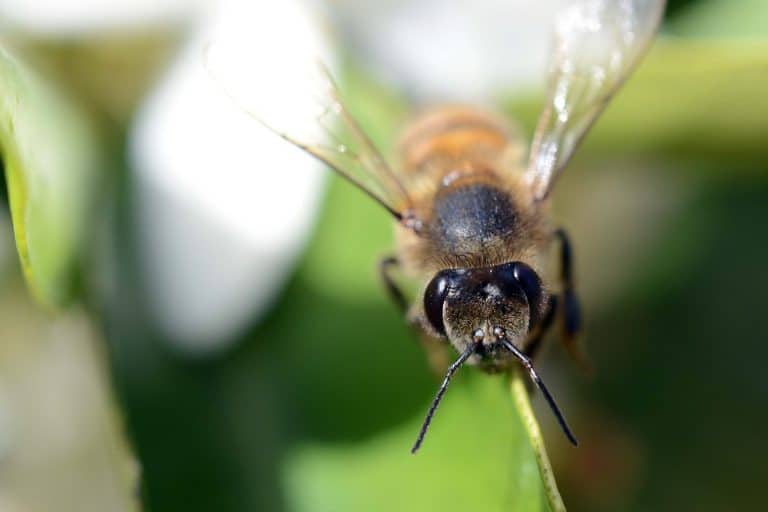
The Apis laboriosa is the world’s largest honey bee.
©Muddsar Ashraf/Shutterstock.com
Thanks to climate change, deforestation, and growing hydroprojects, there has been a steep decline in giant honeybee colonies and honey. Additionally, tourists unintentionally cause damage when trying to mimic the ancient honey-hunting practices, inadvertently harming the bee colonies and the ecosystems these bees support.
You may not live in Nepal, but you can help protect bees of all kinds by supporting organizations that create bee habitats and pollinator gardens; planting bee-friendly blooms and trees in your garden; avoiding harmful chemicals on your lawn; and learning more about these fascinating creatures with help from organizations like The Bee Conservancy.