
Quick Take
- The emperor penguin's heart does something no other bird's can before a dive, and it is the opposite of what you would expect from an animal about to push its limits. See the pre-dive surge →
- At its deepest, this penguin's heart rate drops below what doctors record in a medically induced coma, and yet the bird keeps hunting. Explore the extreme heart rates →
- Three separate physical adaptations work together to keep the emperor penguin alive at depth, yet most diving birds share none of them. Discover the three adaptations →
- Losing the ability to fly turns out to be the trade that made the emperor penguin the most dominant underwater hunter in the entire avian world. Read how flightlessness pays off →
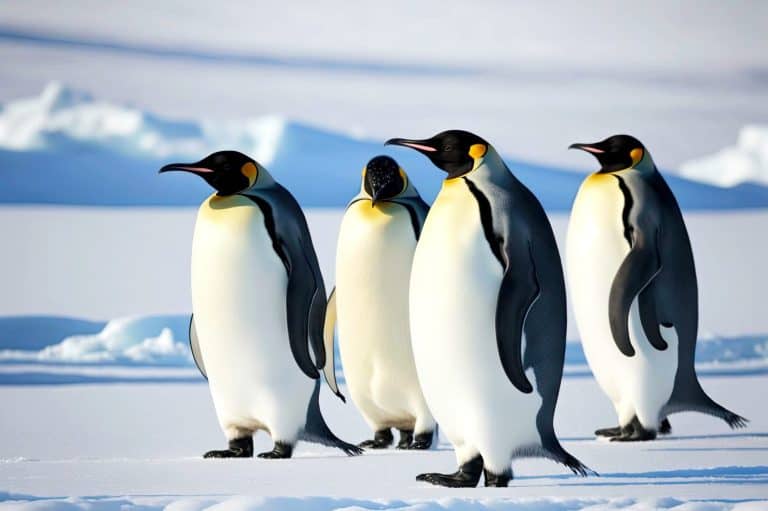
Deep beneath the Antarctic ice, a silent contest for survival unfolds. The emperor penguin, a bird that waddles awkwardly across the polar plain, transforms into a creature of extremes once it slips beneath the surface. In 2007, biologist Barbara Wienecke documented a record-breaking dive: one emperor penguin descended 564 meters over 1,850 feet enduring nearly 28 minutes without a breath. No other bird comes close.
From Awkward Waddler to Underwater Athlete
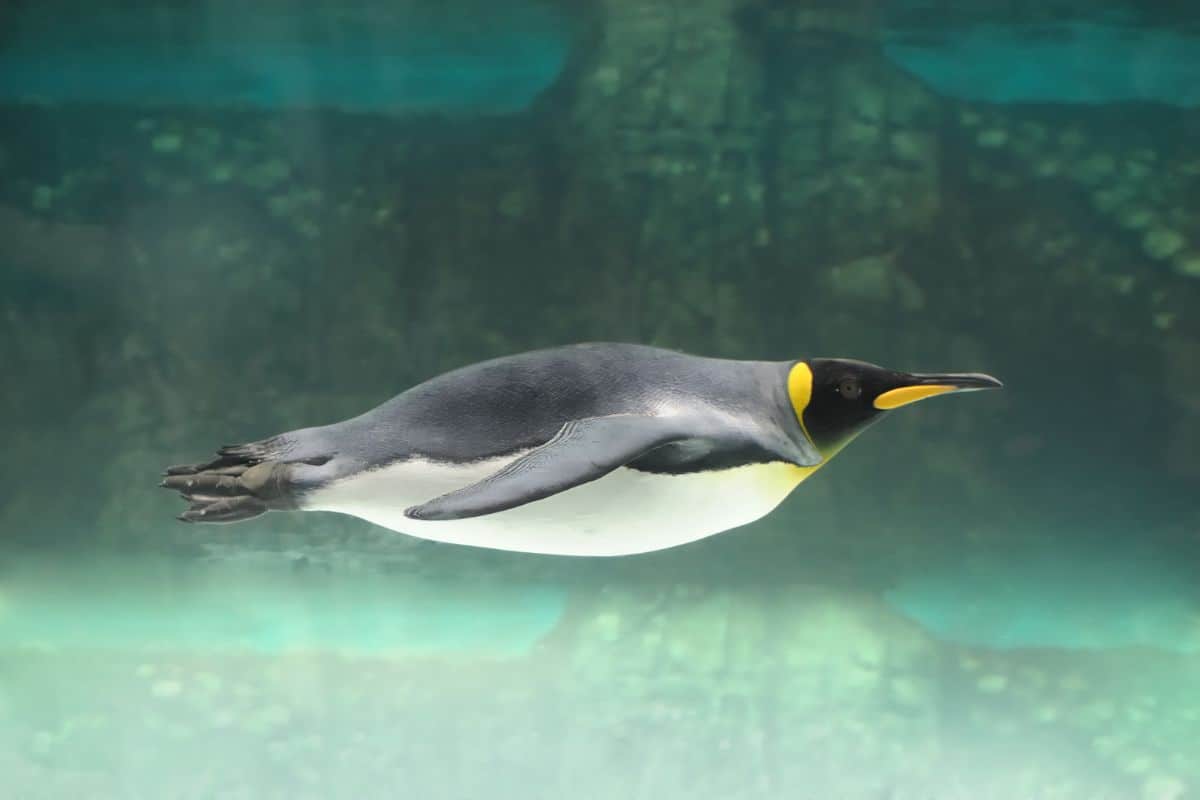
On land, the emperor penguin barely hints at its aquatic mastery, but underwater it rivals submarines in its ability to glide for long stretches. Satellite tracking in the Ross Sea and careful scientific tagging have recorded dives of over 500 meters, more than 1,600 feet, with regular hunting trips lasting up to 18 minutes at depths where sunlight all but disappears. For perspective, that’s like pressing pause on breathing through an entire TV episode while descending to a depth where few creatures venture.
Scientists have described the emperor penguin as the avian world’s most extreme diver. Neither ducks nor cormorants, and not even other penguins, approach these feats. The explanation isn’t only in its muscle or lungs, it starts with the penguin’s heart.
The Heart That Outperforms All Other Birds
Before plunging, the emperor penguin doesn’t slow down its heart actually races, a burst of hyperventilation that loads its blood with vital oxygen. Electrocardiogram measurements in McMurdo Sound have recorded surface heart rates peaking at 256 beats per minute, a pace that matches a human’s during all-out exertion.
Once submerged, the shift is dramatic. The heart rate plunges, dropping far below resting levels. While the emperor’s resting heart beats at about 73 per minute, underwater it slows to 57. Diving even deeper, the rate plummets further. For dives beyond the bird’s aerobic limit, heart rates dip to an average of only 41 beats per minute and, in the final stretch of the longest dives, can fall as low as six even three beats per minute for several minutes at a time. Researcher Jessica Meir documented a heart rate of just three beats per minute in one remarkable 18-minute dive.
For context: at its slowest, the emperor penguin’s heart beats less often than a human’s in a medically induced coma, all while the bird keeps swimming and hunting in darkness and cold.
Surviving the Depths: A Suite of Radical Adaptations
This heart-slowing trick is just the beginning. The emperor penguin’s survival depends on another critical adjustment: selective blood flow. During long dives, the bird constricts blood vessels to nonessential organs and muscles, especially those in the flippers, redirecting oxygen-rich blood to the heart, lungs, and brain. This “dive response,” first described in the 1940s by physiologists Scholander and Irving, is present in many diving animals, but emperor penguins take it farther than any other bird. Ducks, cormorants, and even most other penguins don’t achieve such dramatic bradycardia.
The emperor penguin also wields two more vital advantages. Its hemoglobin can still bind oxygen even when blood oxygen levels are extremely low, a trait rare among birds. And its bones are uniquely reinforced, allowing it to resist crushing pressures. At record depths, the pressure is 57 times greater than at the surface. Without this adaptation, the penguin’s skeleton would collapse under the weight.
Evolution’s Unlikely Champion of the Deep
The emperor penguin is grounded on land, unable to fly like its avian cousins. But evolution has made a trade: grounded species often win dominance elsewhere. The penguin cannot soar in the sky, yet it has become the undisputed champion of underwater avian endurance, able to chase fish and squid in the inky cold of Antarctic depths. Judging by the thriving colonies along the White Continent’s coast, it’s a bet that’s paid off for thousands of years.
The extreme biology of the emperor penguin stands as a reminder that the most remarkable adaptation is not always the most obvious. Sometimes, the heart must slow almost to a stop so life’s wildest journey can speed ahead.