
Quick Take
- Research has determined that migrating birds can sleep during flight.
- Perching birds can adhere to branches without exerting energy.
- Birds at the edge of a flock do not get as much rest as those in the center.
Birds (Aves) are the most widely distributed vertebrates, found on every continent, including Antarctica. The vast majority of bird species are diurnal, meaning they are active during the day and sleep at night. Only a small percentage of birds are truly nocturnal, while others may be active at dawn or dusk or migrate at night. One thing all birds have in common, however, is their need for rest and sleep. Continue reading to discover the advantages of feet that lock onto branches, unihemispheric sleep (sleeping with one eye open), and even sleeping in flight.
How Do Perching Birds Sleep?
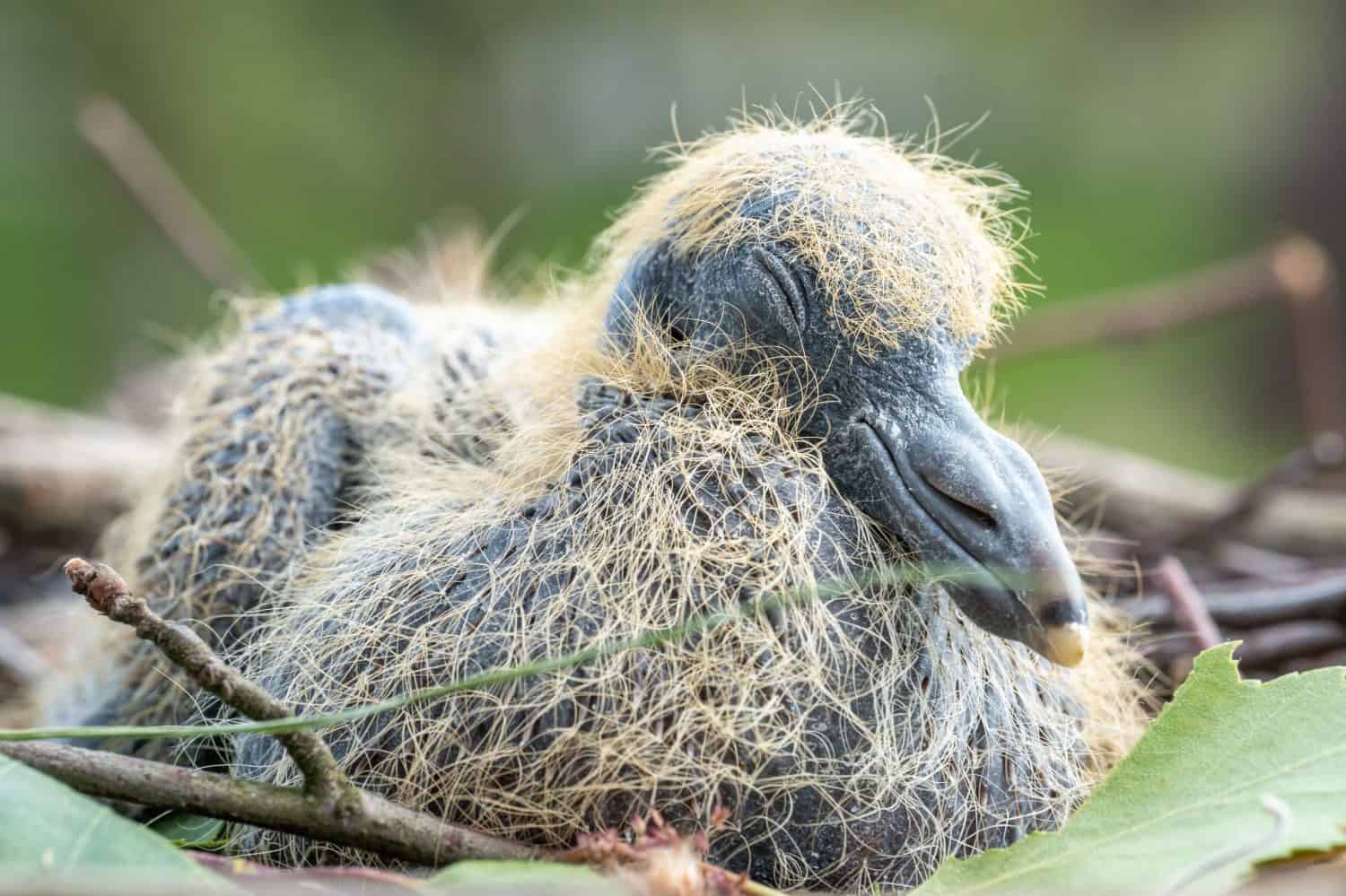
Most birds only sleep in nests when they are actively protecting eggs or offspring. Contrary to popular belief, nests are nurseries rather than year-round homes, and they are usually abandoned after the young fledge because they can become unhygienic and attract predators.
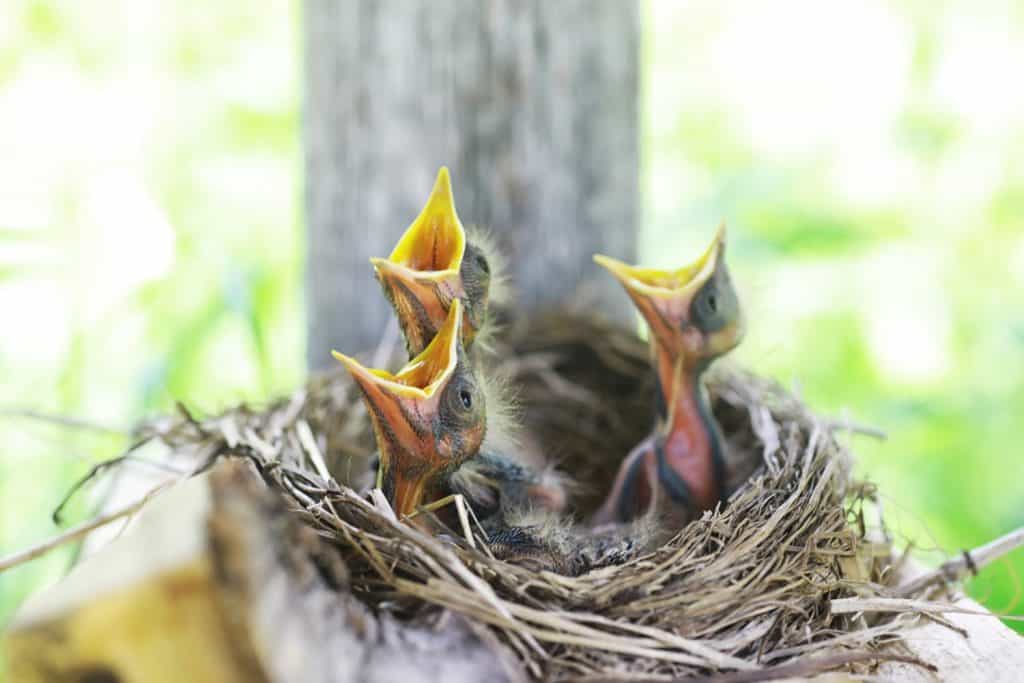
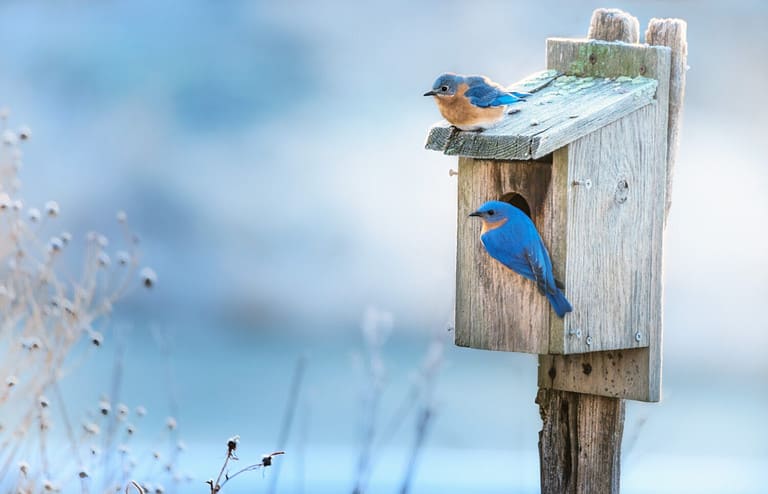
Contrary to popular belief, birds do not typically sleep in nests.
©alexkich/Shutterstock.com
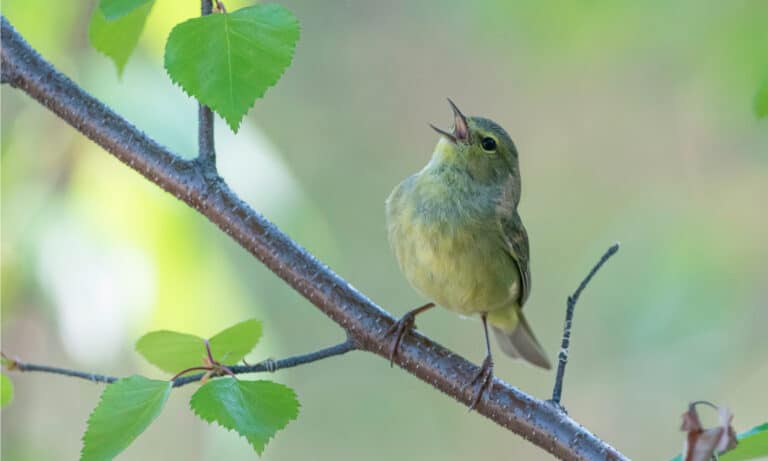
The majority of all bird species sleep while perched on branches or wires using a special flexor tendon locking mechanism that keeps their toes tightly locked without muscular effort. This adaptation, which makes the toes clamp automatically when the bird squats, allows them to continue to grip the perch, even during deep sleep.
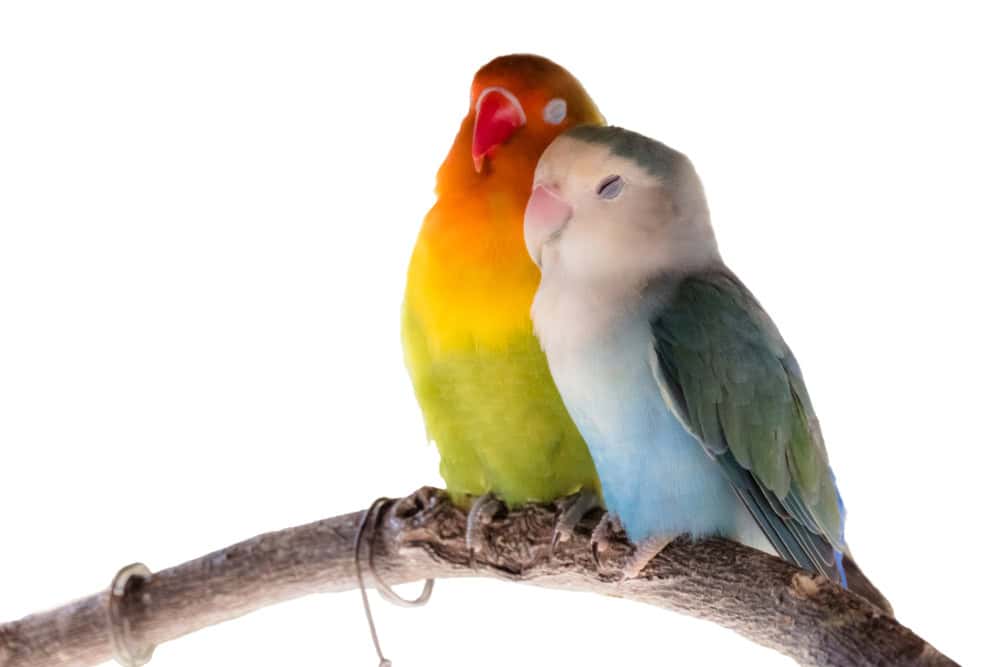
Most birds sleep on a perch with both eyes closed.
©JakPhos/Shutterstock.com
What is Unihemispheric Sleep?
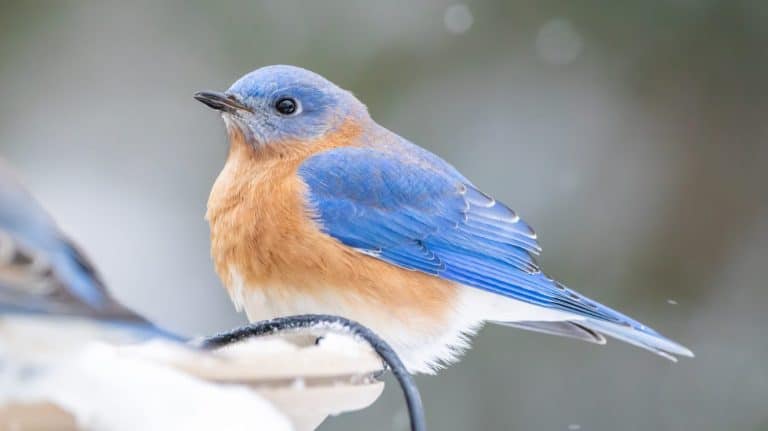
Most songbirds (Passeriformes), like robins and jays, sleep between 8 and 12 hours at night with both eyes closed while tucked away in safe, sheltered locations. However, other birds, including waterfowl (Anatidae) and swifts (Apodiformes), tend to sleep with one eye open, an adaptation called Unihemispheric slow-wave-sleep (USWS).
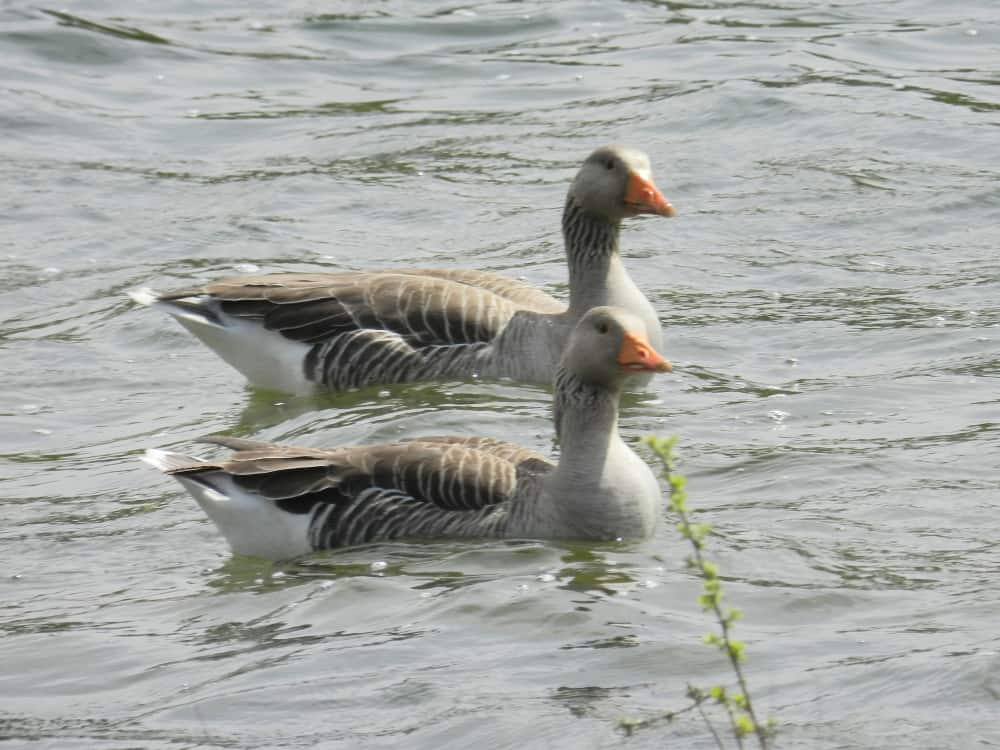
Waterfowl, like these graylag geese, will sleep with one eye open if they find themselves on the edge of the flock.
©Millie Bond – Copyright A-Z Animals
These birds use this technique to guard against predators, especially when on the edge of a flock or during long migrations. When so exposed, they can use USWS to rest one half of their brain while the half that is connected to the open eye remains alert.
Can A Bird in Flight Sleep?
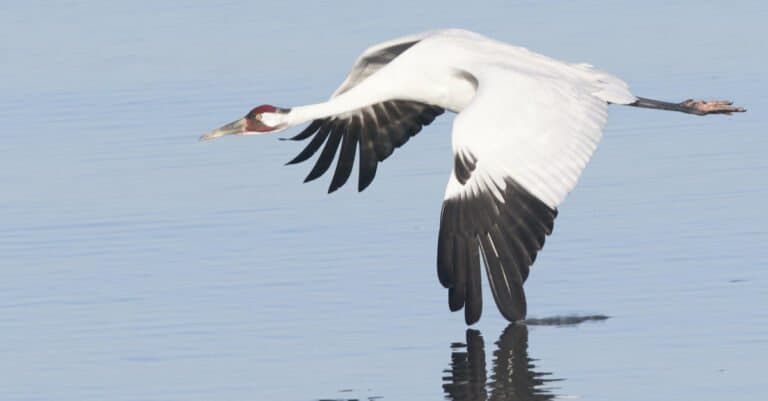
Although it seems unlikely, birds can sleep while in flight. Research has confirmed that some birds, particularly long-distance migrators like frigatebirds (Fregatidae) and swifts (Apus apus), can sleep during flight.
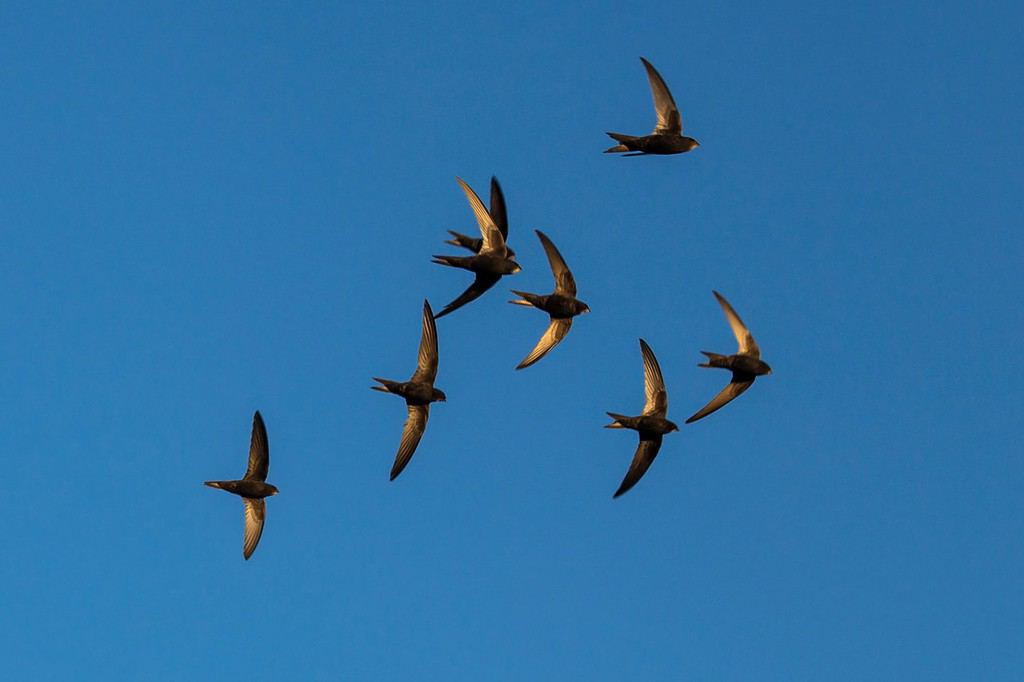
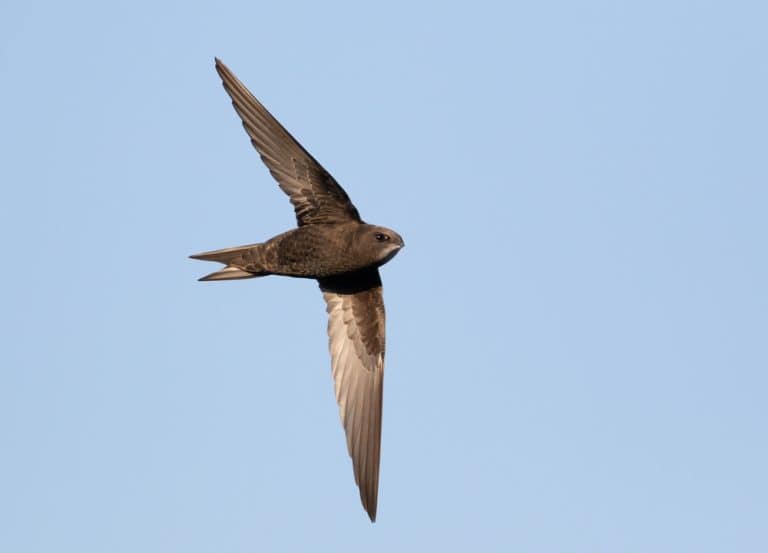
For swifts, which spend up to 10 months of the year airborne without landing, unihemispheric sleep is essential.
©Sokolov Alexey/Shutterstock.com
These birds use USWS by closing one eye and keeping the other open to watch for obstacles, all while maintaining aerodynamic control and staying on their flight path.
USWS typically occurs during slow, upward spirals in thermal updrafts, rather than when the birds are rapidly flapping their wings. This adaptation allows birds to cross oceans or deserts without stopping.
Where Do Birds Sleep?
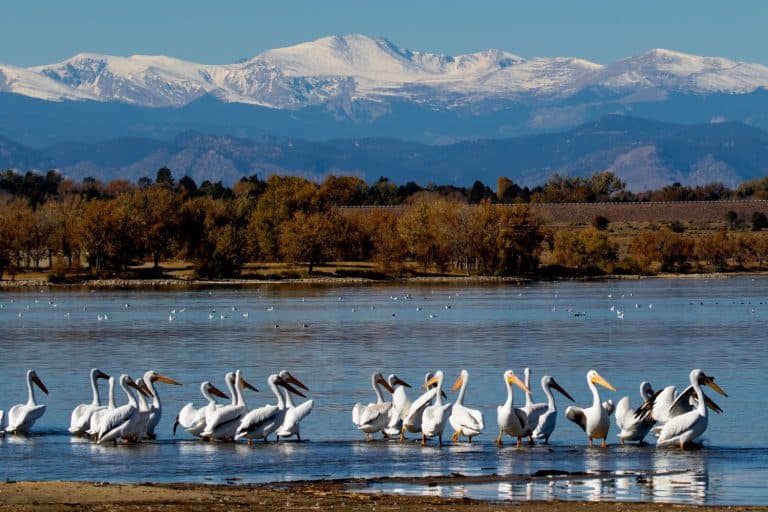
Although some birds roost communally in large flocks for warmth and protection against predators, others sleep alone or in pairs, especially during the breeding season. Communal roosting is particularly common in colder weather as birds can lose body heat rapidly.
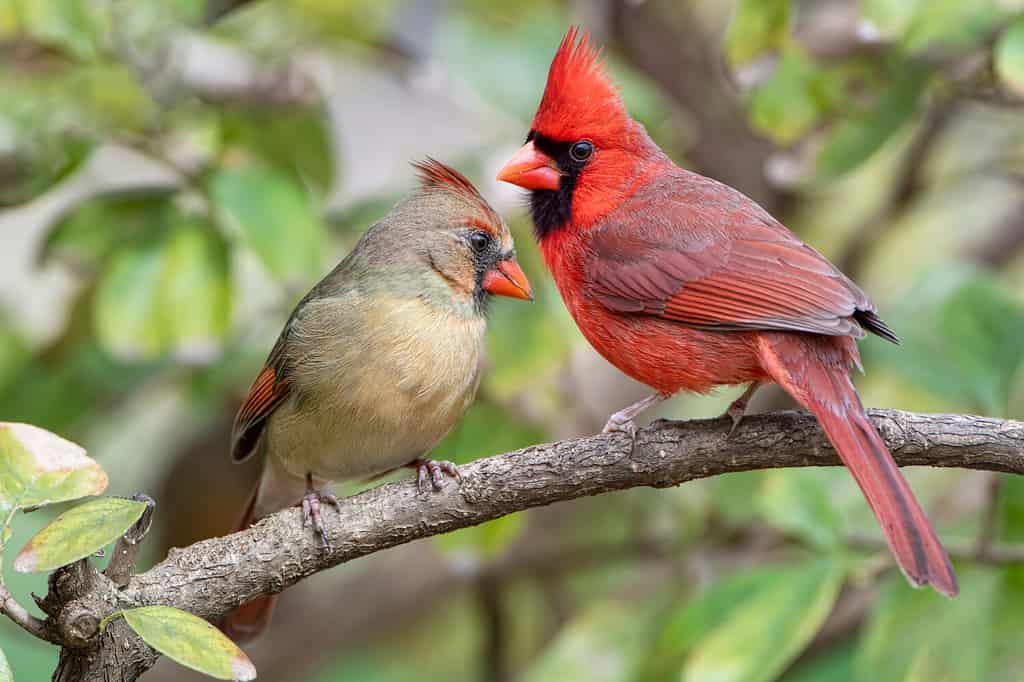
While many bird species huddle together for warmth and safety, others sleep in pairs or alone.
©Bonnie Taylor Barry/Shutterstock.com
Songbirds like cardinals and finches sleep deep within thick, evergreen trees or shrubs for protection, while chickadees, nuthatches, and woodpeckers use old tree holes to escape the cold and predators.
Ducks, geese, and swans often float in groups on open water, which provides a safety buffer against land-based predators. Other birds, like pigeons and starlings, sleep on manmade structures, including under bridges and eaves.
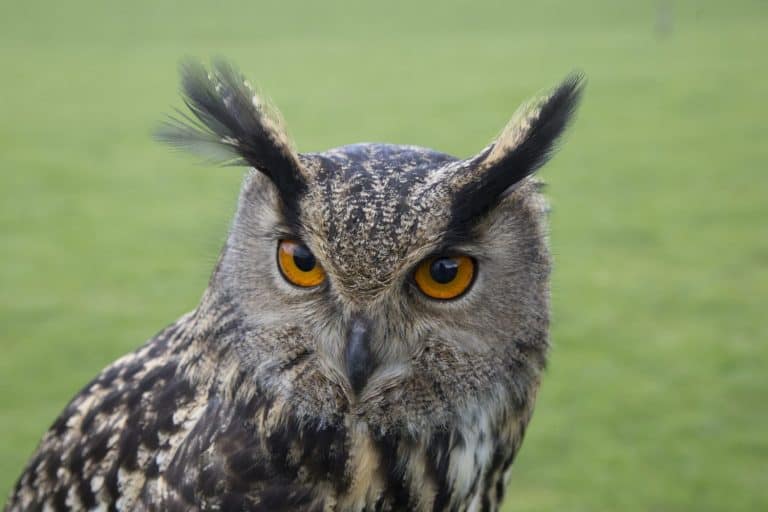
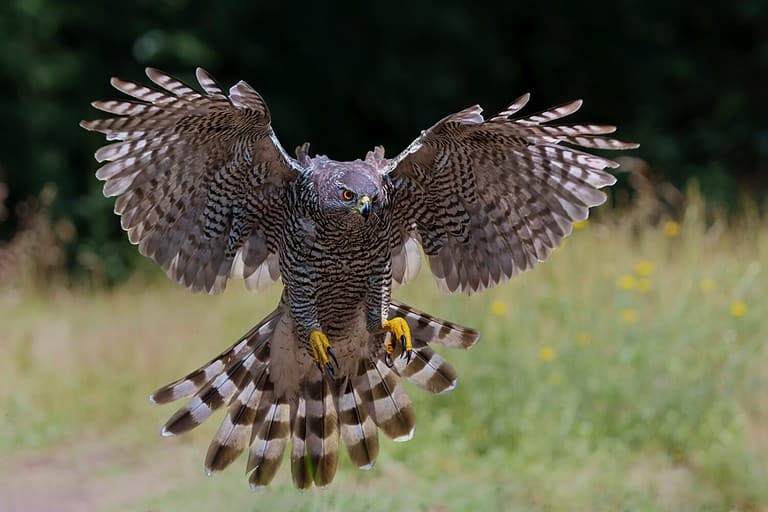
Ground-dwelling birds like quail and pheasants sleep in dense, low vegetation, while raptors such as hawks and owls perch on high branches.