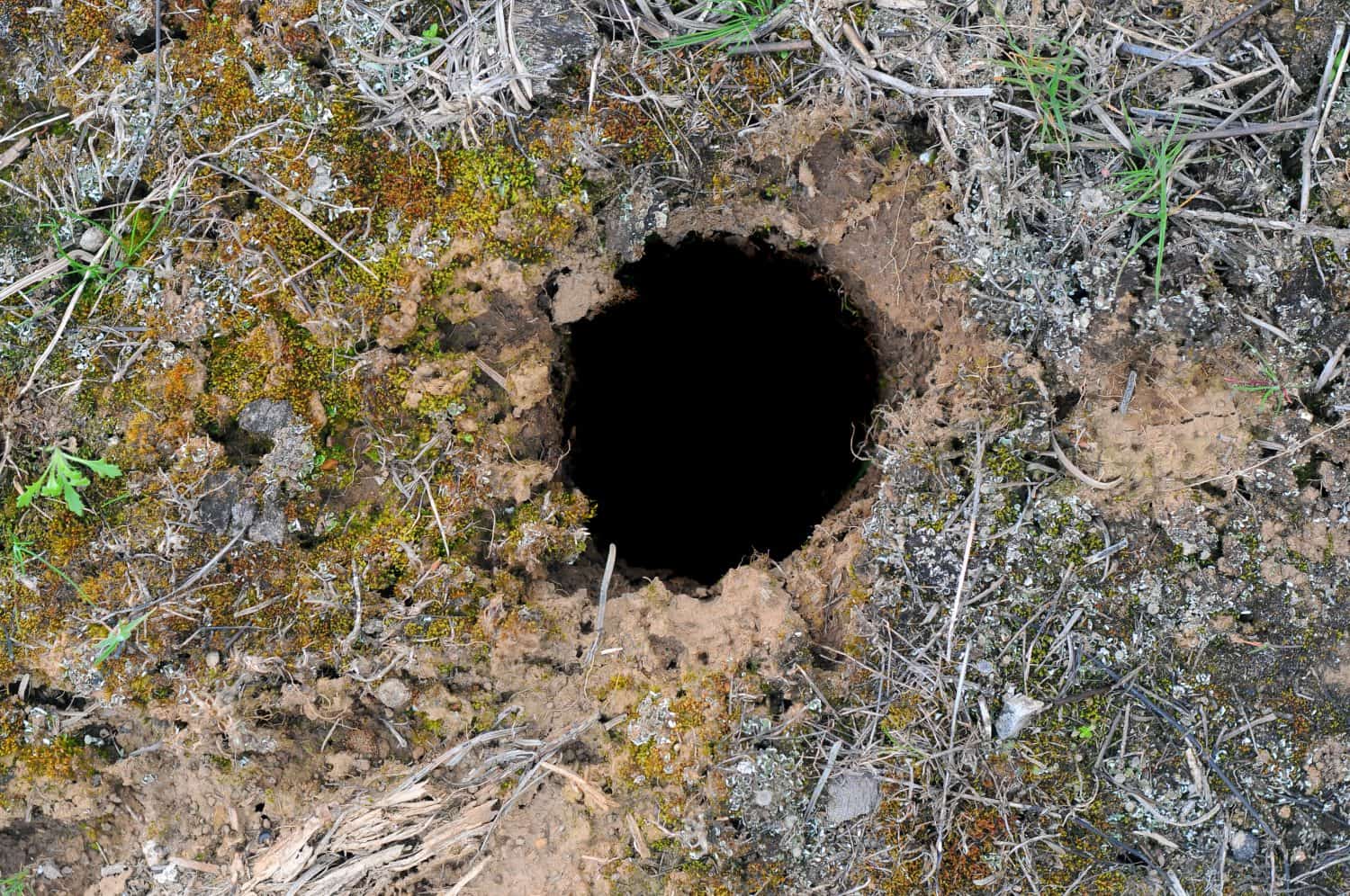

Often times, homeowners wake to find holes in their lawn (usually after a weekend of hard work in the yard). Sometimes it is very easy to identify the animal responsible for the yard damage and remedy the situation quickly. Other times, the critter does not show its face, or the hole shapes are not easily identifiable. This can leave homeowners wondering if they are dealing with a snake or a rodent, questioning what exactly is living underground.
Characteristics Of a Rodent Hole Versus a Snake Hole
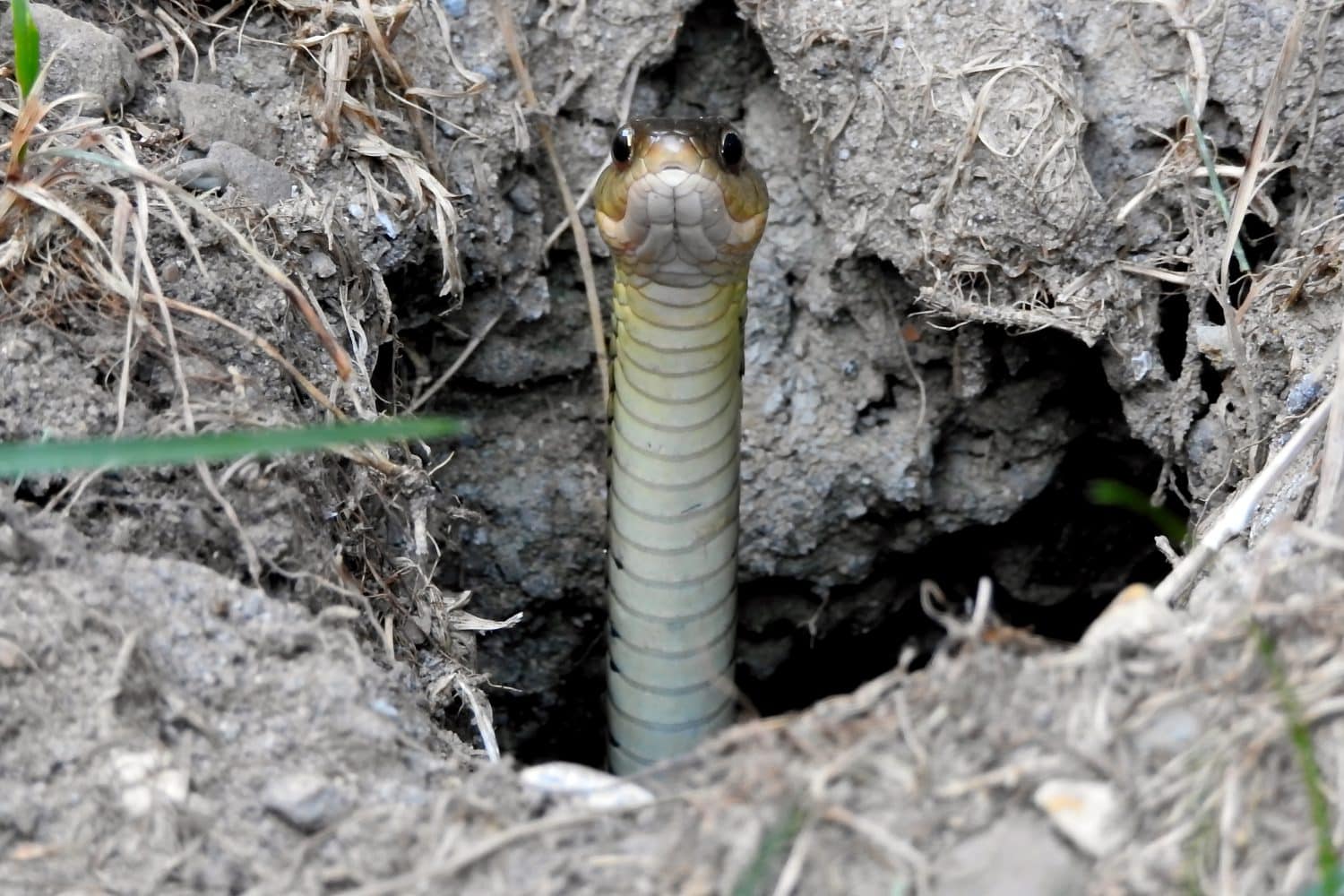
Snake and rodent holes look markedly different from one another.
©mhagen Photography/Shutterstock.com
One of the biggest frustrations as a homeowner is dealing with underground animals. While they mean no harm, they can cause significant cosmetic damage to a yard, which can be quite expensive to repair. This is why quickly getting to the bottom of who is responsible for the digging is necessary to mitigate destruction before a complete yard overhaul is required.
The first step is to investigate the hole or holes in the yard. There are some clear differences between a rodent and a snake hole. Some of those differences are:
| Rodent Hole | Two to three inches wide | Generally found in more compact soil near other holes or berms | Dirt is freshly dug | Claw marks may be present around the hole | Piles of dirt may be next to the hole |
| Snake Hole | No larger than the size of a quarter | Generally found on the border of a lawn near rocks and vegetation | No dirt around the hole | No digging marks present | Hole will be smooth without excess dirt outside |
The biggest difference is that while rodents do their own digging, snakes will only occupy holes where the original tenant has vacated. Snakes cannot dig holes, which is reflected by the lack of a dirt pile near the opening of the hole.
But even if the responsible party can be narrowed down to a snake or a rodent, figuring out which species is in the yard can be easier said than done.
Rodents And Snakes That Are Most Responsible for Creating Holes in a Yard
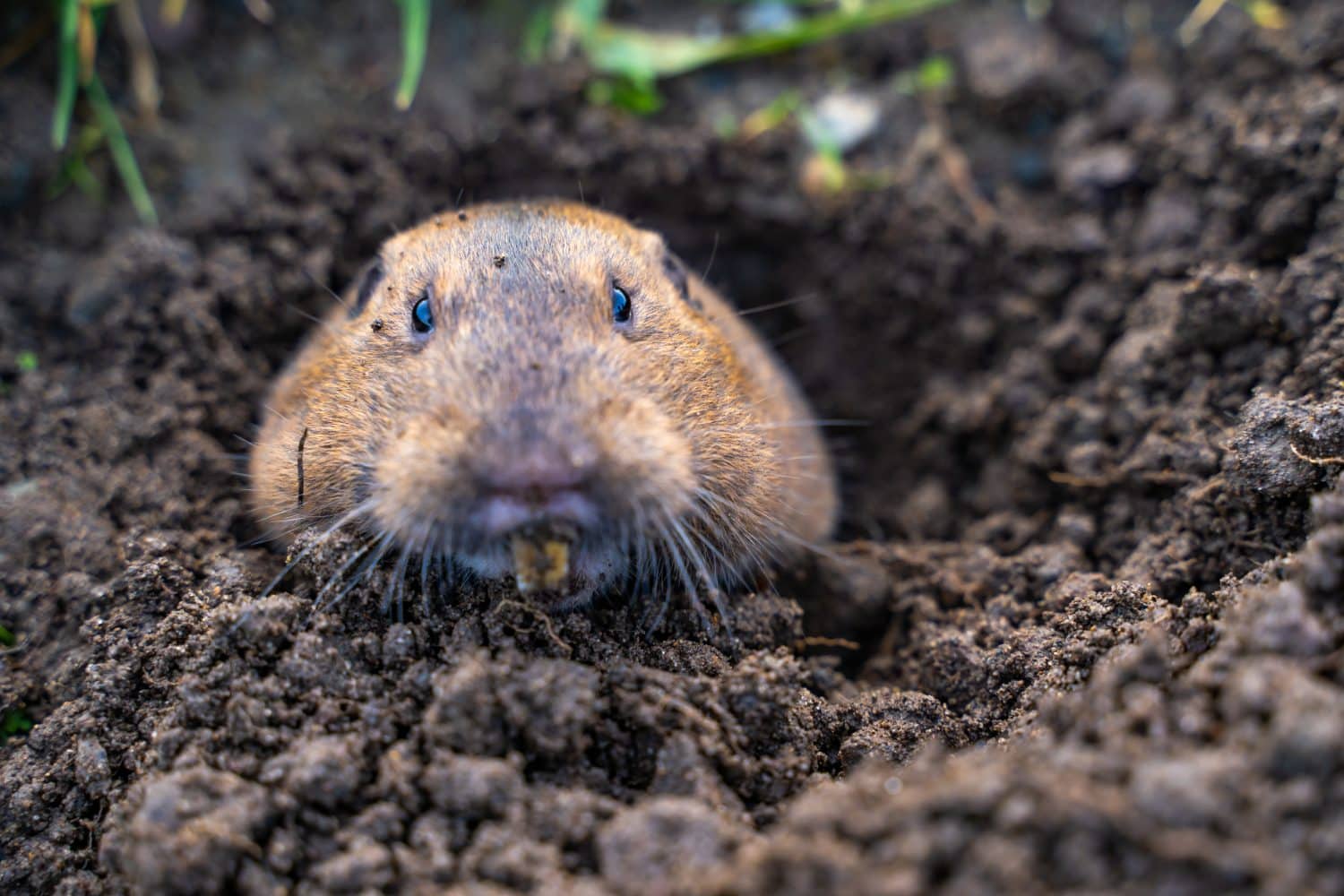
Pocket gophers are one of the rodents responsible for holes in a yard.
©Iv-olga/Shutterstock.com
As one or more holes begin to show up in a yard, homeowners may be curious not only about whether it is a rodent or a snake causing the damage, but also what type of rodent or snake is responsible. While there are other animals that could also be digging holes in your yard, there are universal usual suspects that can be found nationwide, wreaking havoc in a back or front yard.
The most common rodents responsible for digging holes in a yard include:
- Moles
- Pocket gophers
- Voles
- Groundhogs
- Eastern chipmunks
- Ground squirrels
The snakes that will often take over the holes already dug in a yard include:
- Garter snakes
- Rat snakes
- King snakes
- Redbelly snakes
- Northern water snake
While these snakes can grow fairly long and large, it is worth noting that none of them are poisonous. However, it does not mean they will not bite if picked up or threatened.
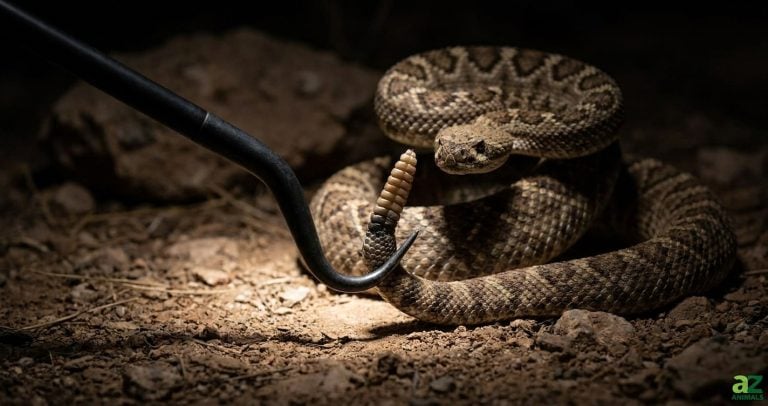
A few snakes, such as the rattlesnake, copperhead snake, and the cottonmouth snake, will also seek refuge in holes in a yard. These are all poisonous snakes. Therefore, if a snake appears to be the new resident on your property, it is best to contact experts who know how to handle snakes safely. This way, the snake can be relocated, and no harm will come to the homeowner.
Identify The Animal By Looking Around the Hole for Clues
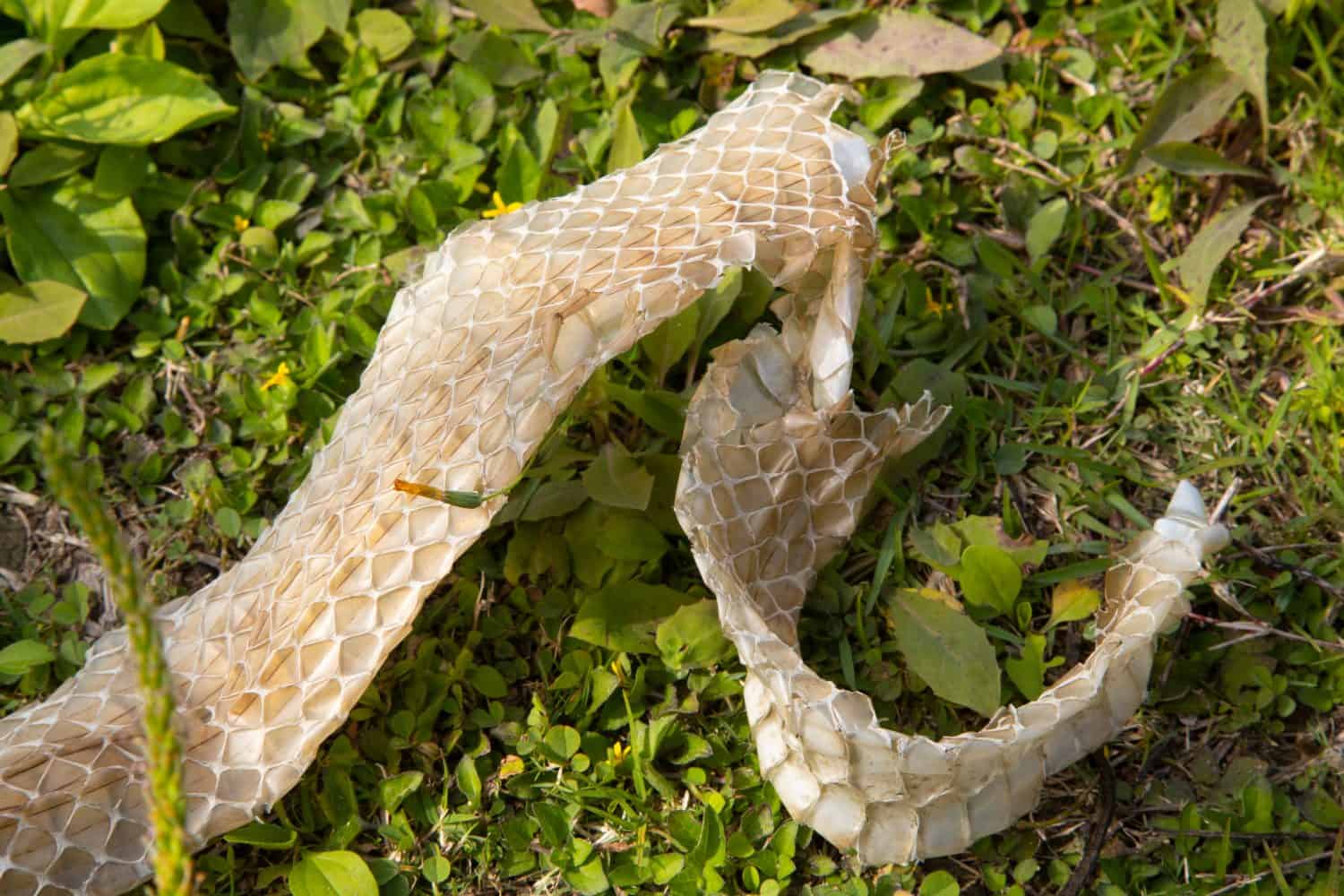
Shedded skin is a good indicator that a snake is living in a hole in the yard.
©off5173/Shutterstock.com
While there may not be a clear indicator of whether a snake or a rodent is digging holes in the yard based on the hole alone, the responsible animal may leave clues near the hole that can point homeowners in the right direction.
Some of the best indicators to determine what animal is digging in the yard include:
- The size of the hole itself is important, as a smaller hole generally belongs to a snake, while larger holes are typically homes to rodents
- Dirt piled up around the hole points to a rodent
- Shed snakeskin near the hole means a snake is likely living below the ground
- Multiple berms near the hole indicates rodent activity
- Dark feces with white tips are an indicator that a snake is present
Even after investigating the hole and examining other clues to help point to a culprit, the answer is not always clear. This is when a game camera can come in handy to get a picture of not only the animal coming and going from the hole, but what other animals are making rounds in the yard throughout the day and night.
Install A Game Camera to Identify the Animal Making Holes
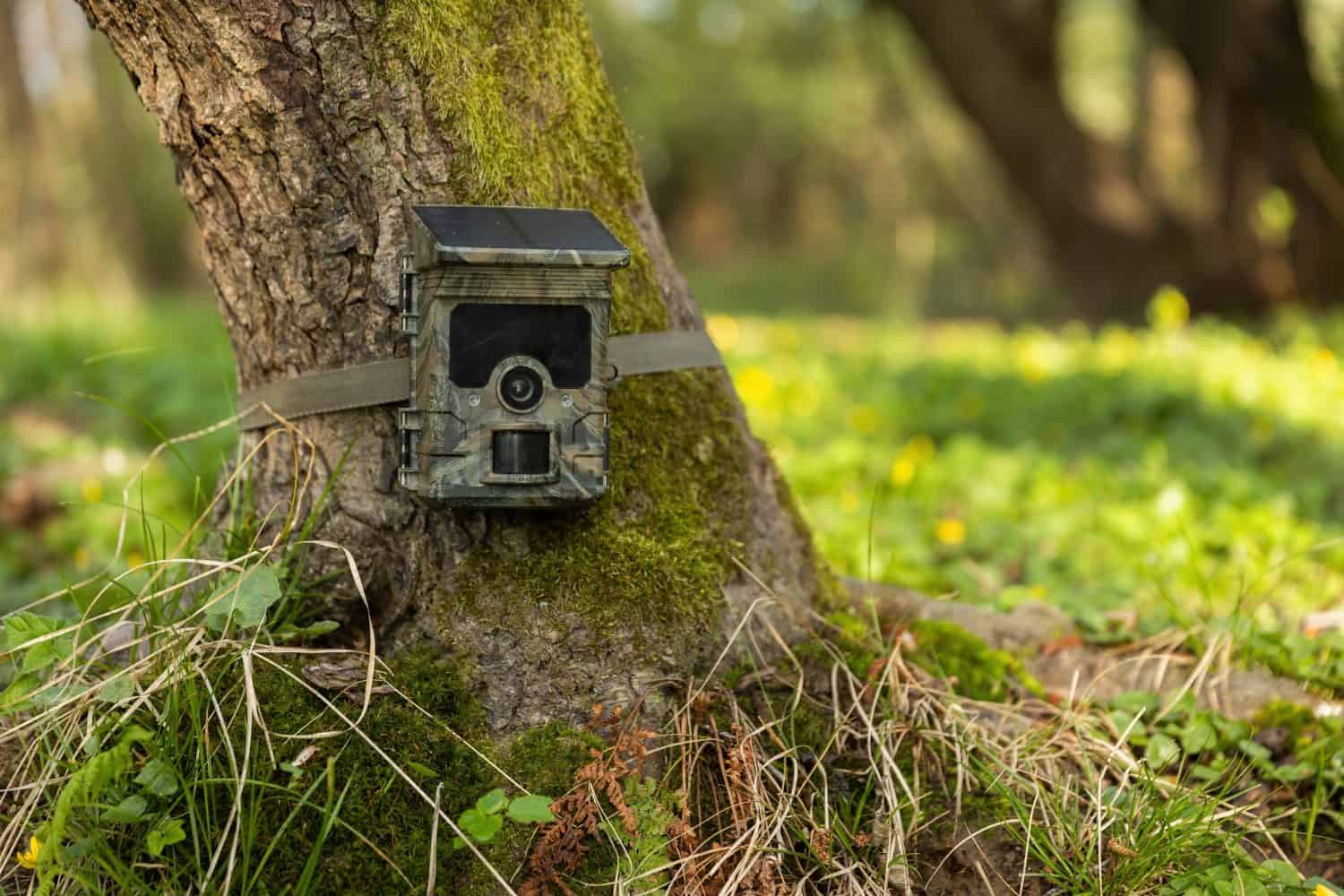
Setting up a game camera two to three feet off the ground is an easy way to determine if a snake or rodent is living underground.
©WildMedia/Shutterstock.com
It may be that even with keeping an eye on the hole in the yard, the snake or rodent responsible has not shown its face. Perhaps the creature prefers to be active during very early or late hours. Maybe they’ve managed to avoid being seen in their comings and goings throughout the day. No matter what the case may be, a great way to determine the animal that resides in the mystery hole is to install a game camera.
The best way to set up a game camera near a hole in the yard:
- Place the camera two to three feet off the ground
- Use a camera that has a continuous recording option, as rodents and snakes may not cause the motion activation sensor to be triggered
- Have motion detection monitor trigger from at least 100 feet away from the hole
- Choose a weather resistant camera so that rain or shine, the movement around the hole in the yard can be captured
- Camera should have night vision capabilities
In addition to using the game camera, experts also recommend placing bait in an area between the camera and the hole to lure out the animal destroying the yard. However, this could have some unintended consequences, such as other animals being lured into the yard. Therefore, it may be worth setting up the camera first to see if anything is caught on film. If not, moving to bait might improve the chances of catching the culprit on camera.
Call Out an Expert for Positive Identification of the Underground Animal
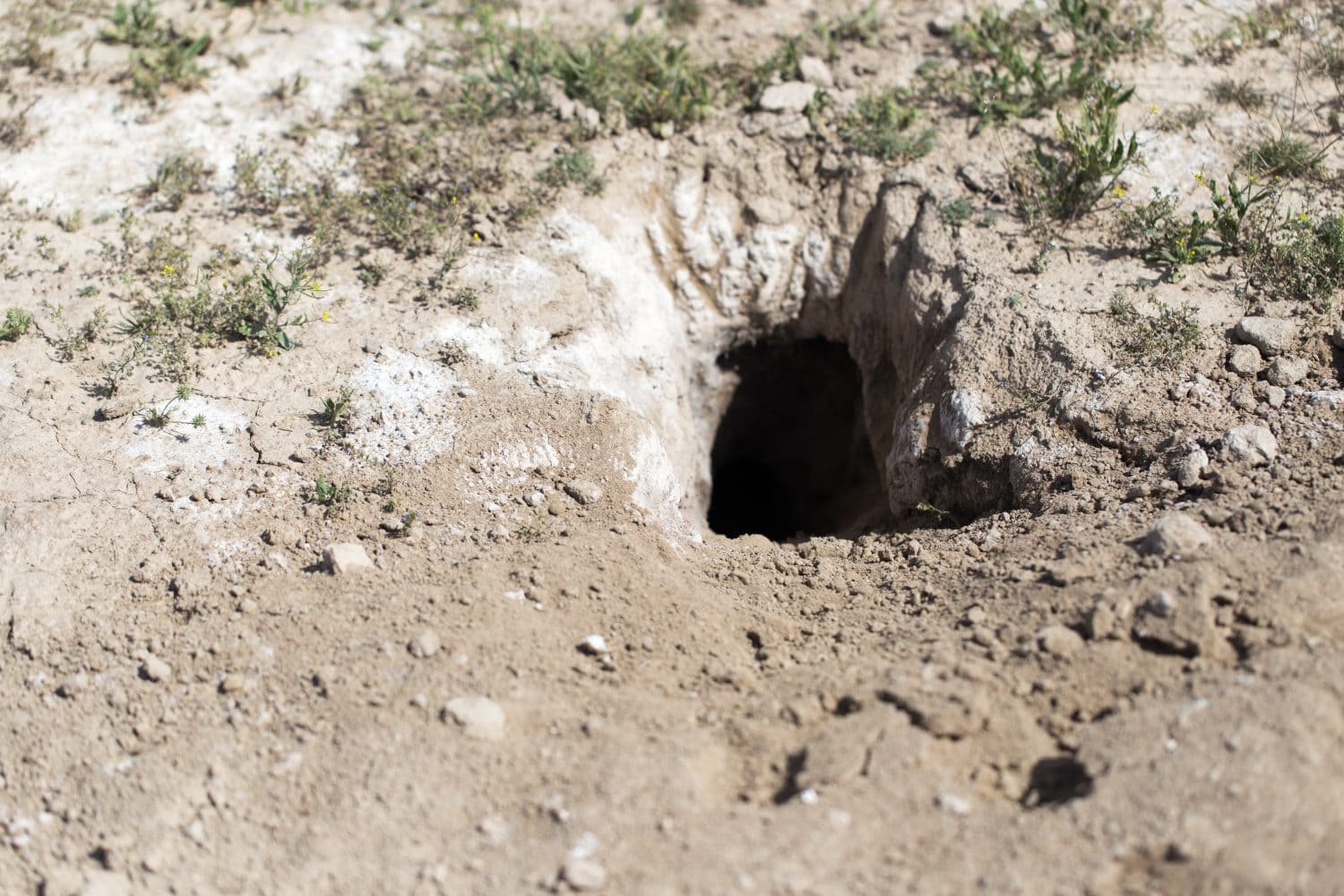
If the animal associated with the hole cannot be identified, consulting an expert is recommended.
©schankz/Shutterstock.com
Unfortunately, even after a thorough investigation, homeowners can remain uncertain about the animal causing holes in their yard. If there is only one hole and no domestic animals can access it, homeowners may want to leave it be. However, there are times when issues arise that require more expertise than homeowners typically have. This is when an expert needs to be called out for proper identification.
Homeowners will want to call an expert out to investigate their yard and holes when:
- There is so much damage that extensive repairs are necessary. Not knowing the culprit may mean that even after fixing the cosmetic problem, the issue of damage will arise again.
- There has been no sighting of the animal, but subsequent holes are being dug.
- If it is suspected that both snakes and rodents are in the yard, an expert can give the best advice for removing and/or eradicating them.
It should be noted that if it is unknown what animal is responsible for a hole in the yard, both an exterminator and wildlife authorities may need to be called to assess the situation. By having both give their opinion and recommendations, you’ll have all the information you need. Additionally, the animal in question can be relocated to an outdoor space with plenty of room to roam.