
Quick Take
- Moose antlers can grow up to one inch per day during peak growth season.
- A layer of soft velvet covers the antlers, supplying blood flow as they grow.
- The velvet shedding stage is necessary to prepare moose, elk, and deer for rutting season.
- By winter, most moose have shed their calcified antlers by January.
Few animals are more majestic than those bearing a crown of antlers. Moose bear these head adornments particularly well; they also grow them faster than any other animal. A full antler rack signifies power, strength, and maturity among its herd, and for these species, bigger is always better.
After these magnificent antlers grow, they also shed. The process is gruesome, irritating, and looks like a scene from a horror movie. But for the moose, it’s just another chance to grow even larger antlers the following season. And while the finished product is a fascinating sight, the process of how these antler racks are grown is mind-blowing.
Antler Growth Is Fueled by Hormones
At the root of a moose’s antler growth is one primary hormone: testosterone. This plays a key role not only in mating rituals but also in the antlers that attract females’ attention. Antler growth occurs primarily in the spring when there’s more daylight. The sun triggers a moose’s body to create more testosterone in anticipation of rutting season. Antler growth begins and continues as the days lengthen into the late summer. During this time, moose swiftly grow new antlers. In fact, they produce the fastest-growing antlers in the world.
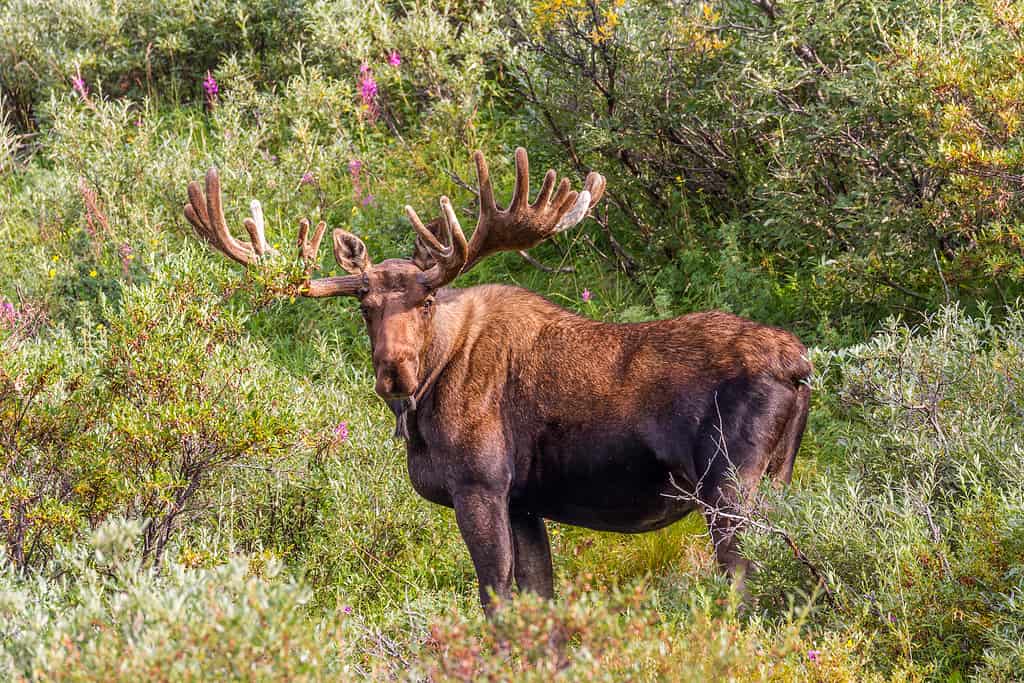
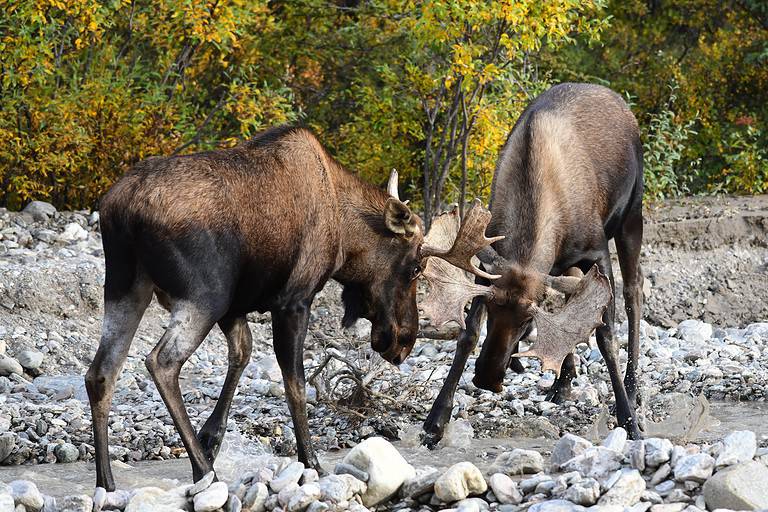
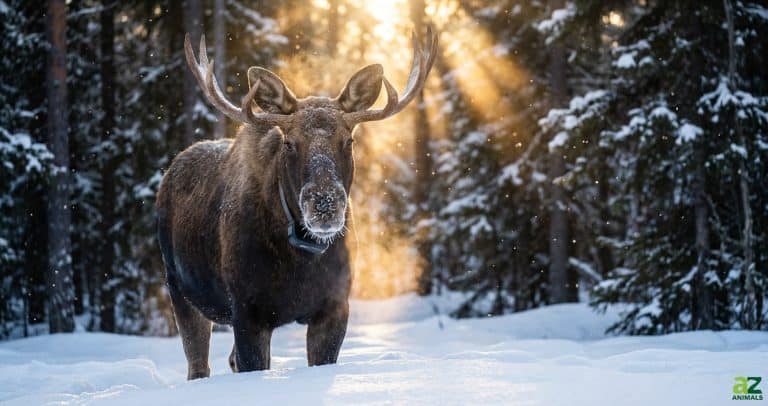
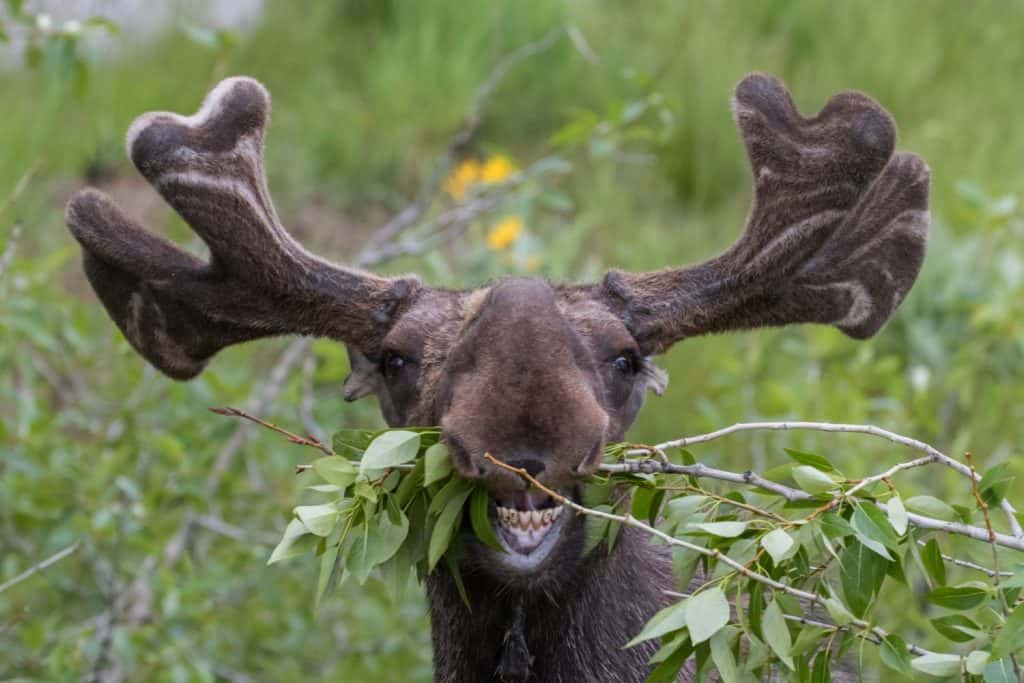
In the spring, a moose’s antlers are covered in soft velvet, which supplies blood flow.
©JacobLoyacano/Shutterstock.com
Stem cells in the stump of the antler, also known as the pedicle, continue to be stimulated until testosterone levels surge between August and September. This officially signifies the completion of antler growth, and the impressive structures remain the same size up until shedding. Testosterone cuts off the blood supply to the antlers, causing the velvet covering to fall off. The result is a pair of hardened, calcified antlers, which are ready to be used in rutting fights during mating season. After the breeding season is over, the antlers become more of a hindrance than a help. Moose typically shed their antlers between December and March, with most individuals losing them in January.
Shedding Velvet Is a Gruesome Sight
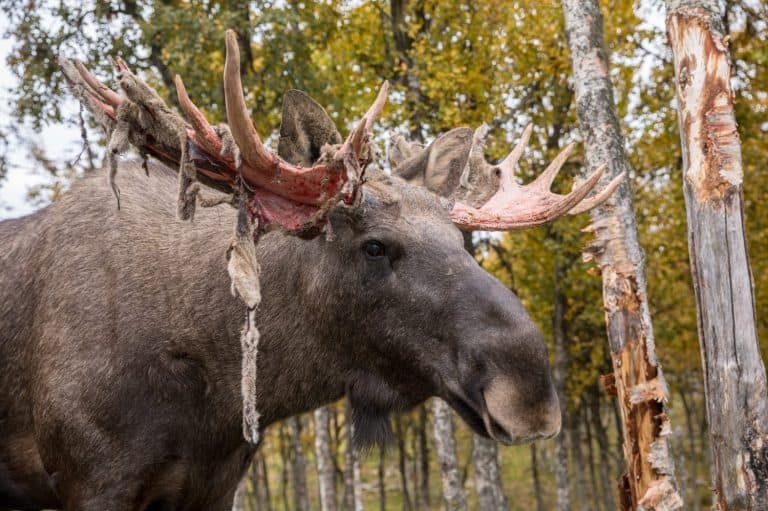
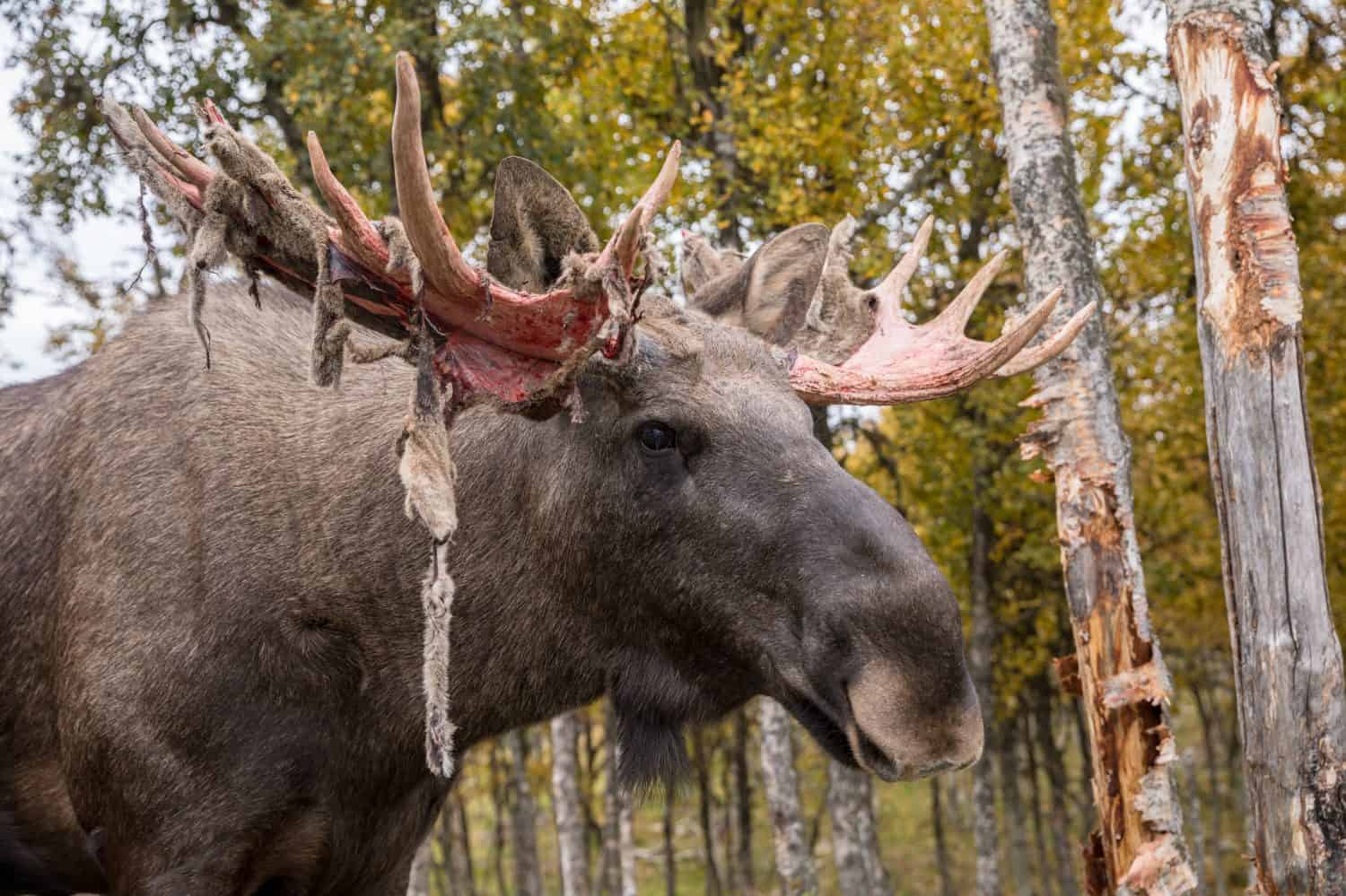
Moose sightings in the spring and early summer show antlers covered in a fine, soft layer of fur. This velvet hides a complex and vast network of blood vessels. This blood supply is circulated throughout the antler, helping it to grow rapidly throughout the summer and into the fall. During this time, a moose has the highest level of testosterone, just before it becomes increasingly aggressive during the fall rutting season. As moose prepare for mating rituals and competition against other males, their testosterone surges, essentially killing the blood vessels hiding beneath the velvet.
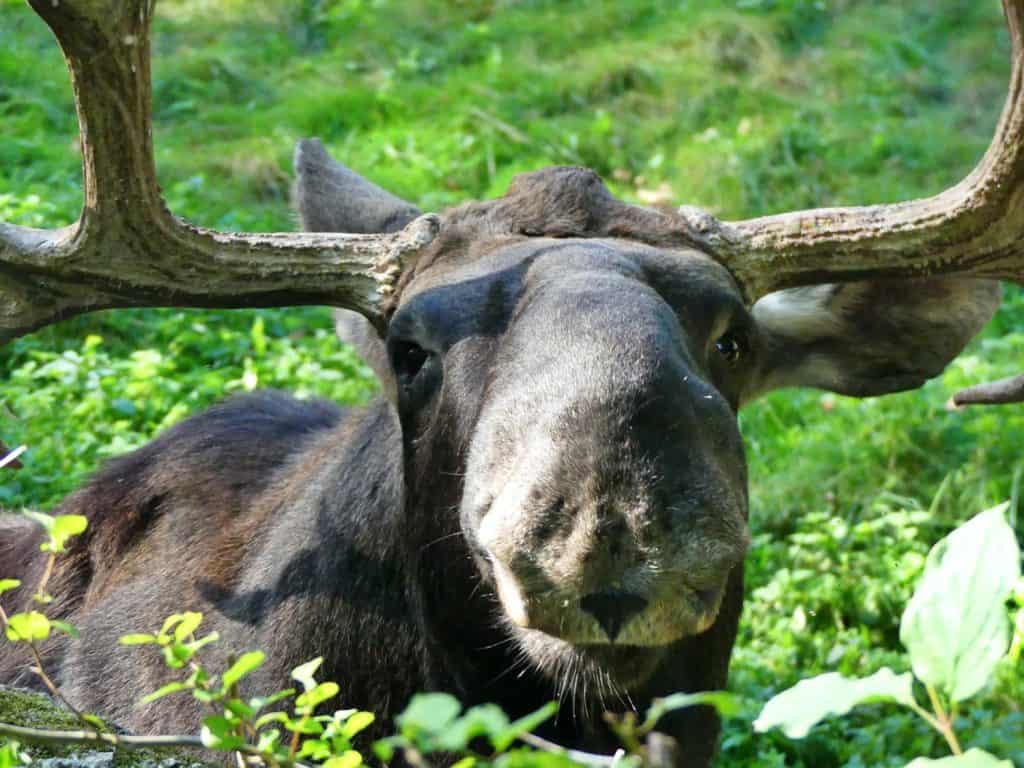
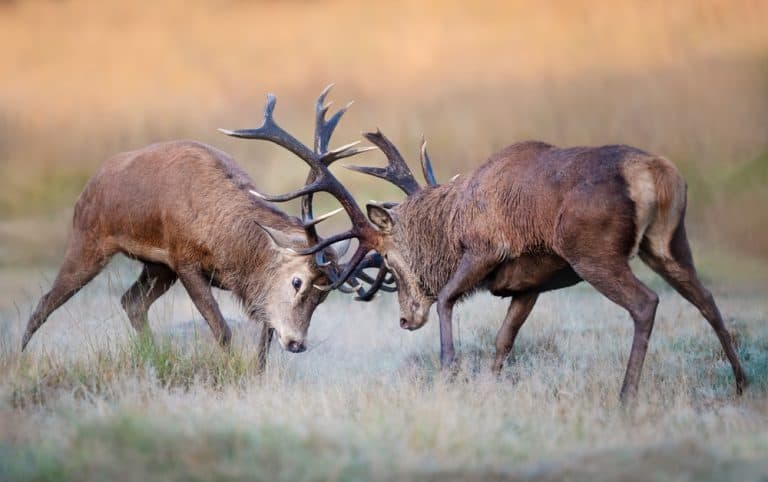
By the start of rutting season, antlers have shed their velvet and resemble coarse, calcified racks.
©Lukasz Szalkiewicz/Shutterstock.com
The process is altogether irritating for the moose, which carries itchy, shedding antlers for several weeks. In an attempt to remove the velvet more quickly, moose may rub them against trees, the ground, or even thrust their antlers at other males in acts of dominance. Since the velvet acts as a skin over the antlers, it sheds in uneven, patchy pieces. More often than not, these pieces remain hanging off the moose’s antlers until every blood vessel has died off. The result is a macabre visual, with bloodied skin hanging from enormous antlers. Though the process isn’t painful for the moose, the sight is gruesome nonetheless.
Antlers Differ Between Species
Moose enter their prime around 7 years of age. This is when their antlers are likely to be at their biggest, and their testosterone levels are the highest. Prior to this, they still grow antlers each season, but they’re not nearly as big as a mature bull’s. In comparison, white-tailed deer typically reach their prime antler size between 4 and 7 years old. Antler growth in both species is triggered by seasonality and testosterone, though deer grow smaller antlers than moose.
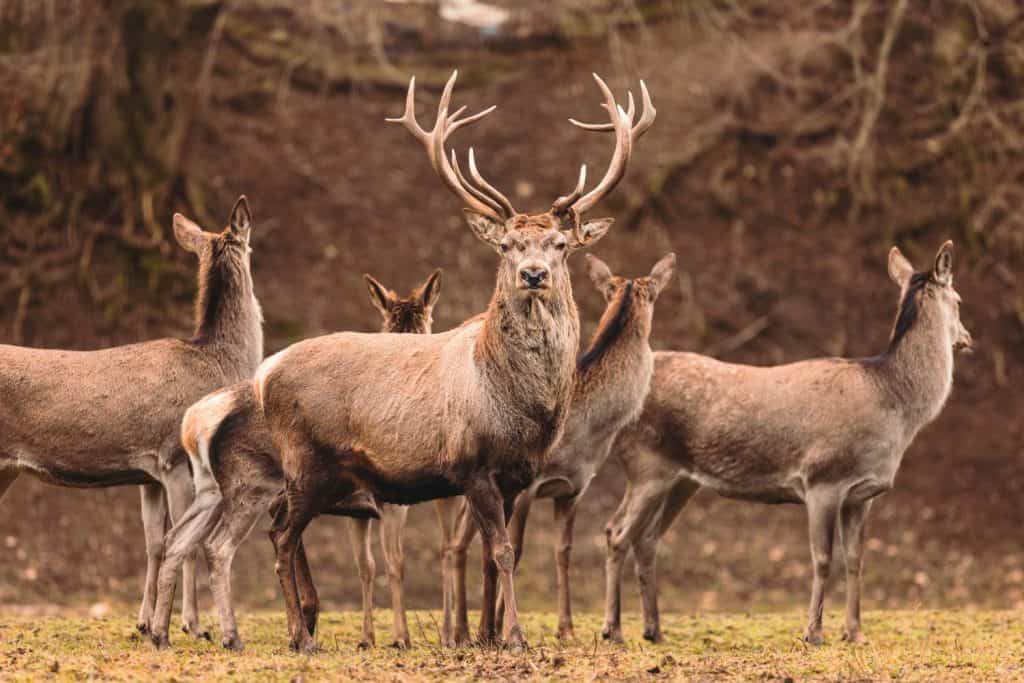
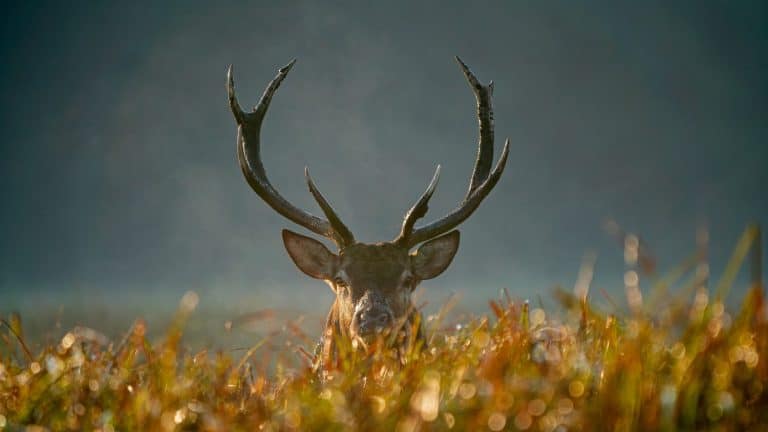
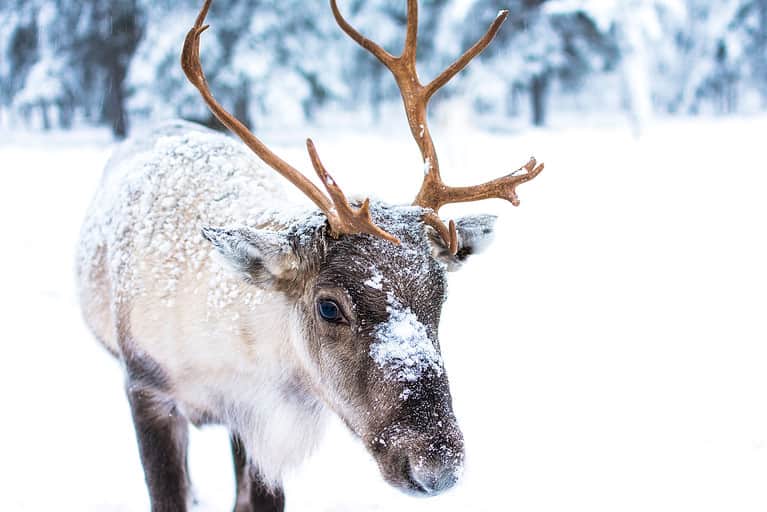
Deer antlers are taller, with each tip coming to a sharp point at the end of the rack.
©MAD.vertise/Shutterstock.com
The antlers of a deer are also far more delicate, while the palmate (shovel-shaped) size of a moose’s antlers makes them stronger and less likely to break. The antler-growing process is the same, but the results are dramatically different.
Antler Growth Decreases as Animals Age
As both species age, their antlers stop growing as quickly and as large. Testosterone levels naturally decrease after peak maturity, leaving moose and deer with antlers that are smaller than those of a bull or buck in its prime. For the aging moose, this also means rutting season offers fewer wins and fewer mating opportunities. As moose age beyond their prime, typically after 7 years, their antlers may become smaller, less palmate, and less dense. During this time, a moose’s antlers begin to resemble those of a deer or elk due to their branches or points.
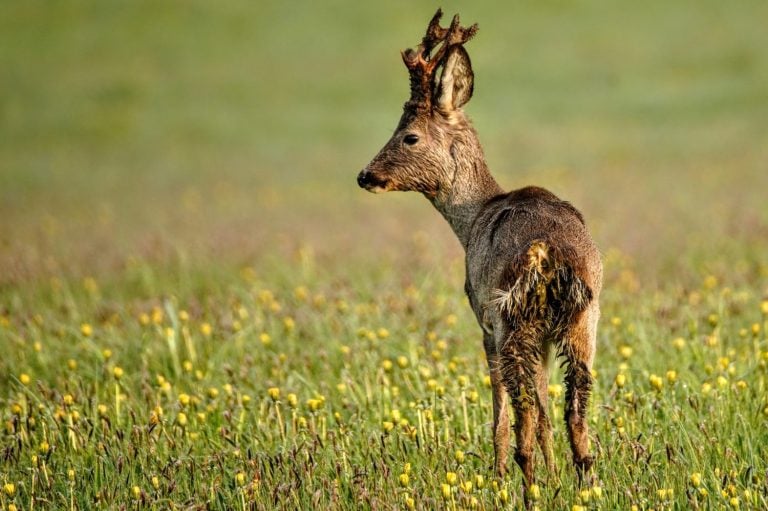
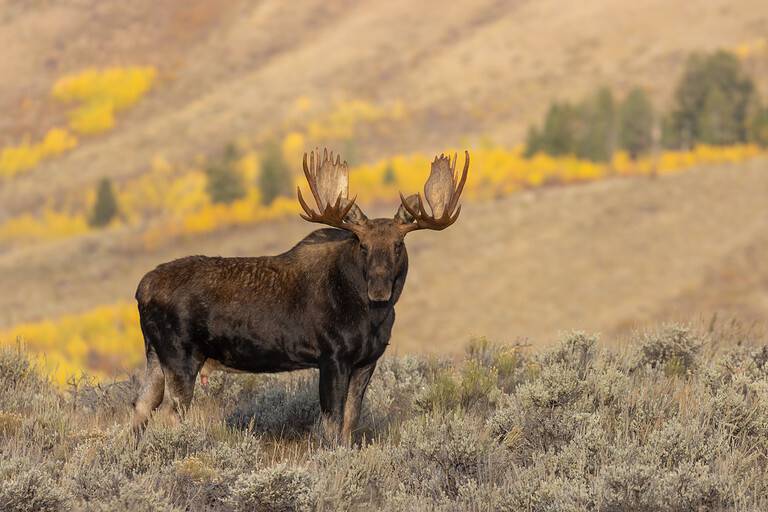
The younger or older the moose, the smaller its antlers.
©Green Mountain Exposure/Shutterstock.com
Antler growth across species is also influenced by diet, habitat, and nutrients. Elk, deer, and moose shed their antlers at different times throughout late fall, winter, and early spring, depending on species, age, and region. This yearly shed comes to an end with the brittle, weighty antlers falling off the moose’s head. This typically occurs after long bouts of back-and-forth shaking. The result is instant relief for the moose, a potential prize for antler hunters, and a new chance for the animal to be crowned king in the summer. Watch a moose shed its antlers and see the unbelievable process for yourself.