
Quick Take
- A total of 38 sympatric species in zoos were tested with a fake rattlesnake.
- The snake was controlled remotely, and researchers alternated between using its rattle and gauging reactions.
- Scientists discovered that captive-born animals recognize rattlesnakes despite having zero ancestral contact for generations.
We’re all born with a built-in system for detecting danger. It’s one thing that makes us so similar to wild animals. Throughout the animal kingdom, this response, called reflexive avoidance, is responsible for our survival. It kicks our fight-or-flight response into high gear, alerting us to run or stand our ground. In animals, this reaction is often lifesaving during predatorial hunts. Without it, the species would lack survival instincts and the ability to escape danger.
To test this theory further, a group of scientists devised a brilliant experiment using a sound that commonly incites fear in animals. The anxiety-inducing noise was none other than the infamous rattlesnake shake, a sound many liken to a knock at death’s door. Here’s how the animals reacted.
The Study: How Effective is a Rattlesnake Tail as a Deterrent?
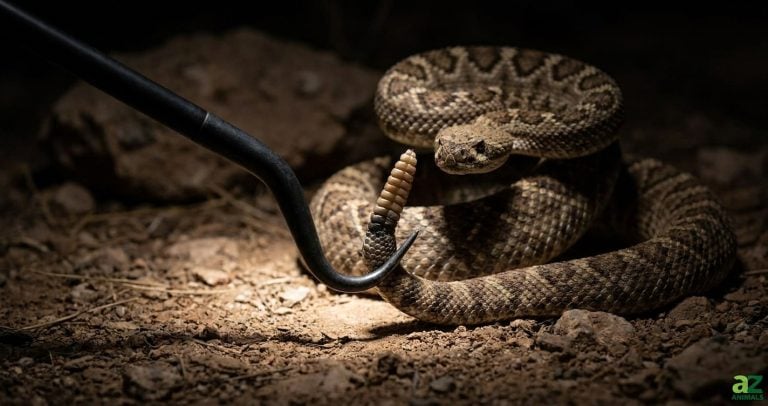
The star of the PLOS ONE study is a 3D-printed rattlesnake replica. Researchers made this as accurate as possible, including a rattle that sounded eerily like the real thing. Its shape and colors were matched to those of the real animal, and it was given a circuit board and a vibration motor. During the study, the fake rattlesnake was operated remotely. This allowed researchers to observe animal reactions without interfering with the process.
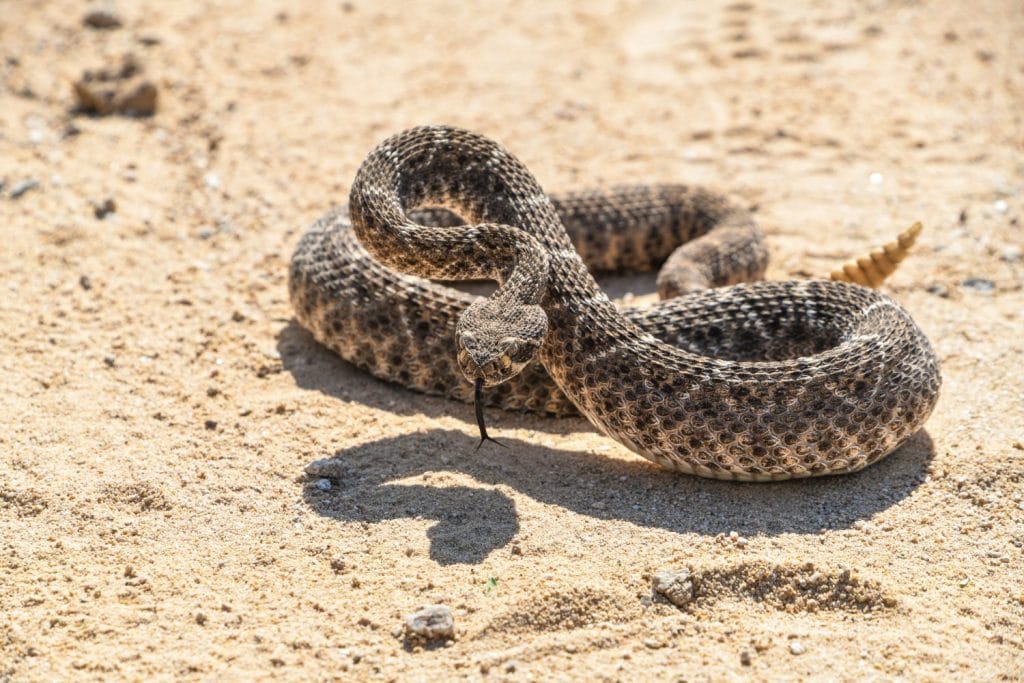
A robotic rattlesnake with a realistic-sounding rattle was used to test zoo animals’ reactions.
©Clint H/Shutterstock.com
In the first test, researchers placed food in front of a collared peccary (Pecari tajacu). As a control, the first feeding was performed without the rattle’s sound. Instead, the fake rattlesnake was merely placed near the collared peccary’s food bowl. After recording the results of the first test, the food and the rattlesnake were deployed once again. This time, researchers used the rattle to determine if the sound would deter the collared peccary from its meal. The results were definitive, and all signs pointed to reflexive avoidance running deep among animals in the same region.
The Innate Fear Within Animals of Familiar Predators
Researchers tested 38 species in zoos to assess their hypothesis. All species were sympatric with the rattlesnake, meaning their native habitats overlap. The theory was that, because of the daily threat these animals face, their responses should adequately match the level of danger they sense. Rattlesnakes are the perfect predator by which to measure this fear level. Its silent presence often goes unnoticed, but its rattle is familiar to many of the tested species. This study relied on evolution and instinct and tested whether or not that was innate enough to save an animal’s life.
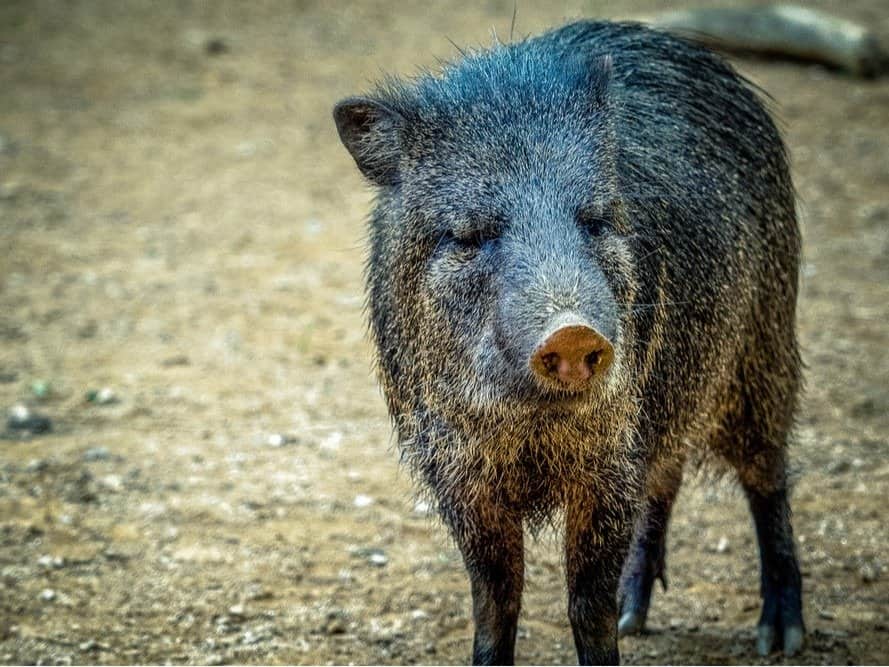
One of the most notable species tested was the collared piccary, which is sympatric with rattlesnakes.
©Elias Garrido/Shutterstock.com
The results of the study showed that reflexive avoidance was present in animals native to rattlesnake habitats, suggesting an evolved or learned response to the rattle sound. While not every species in the study reacted to the rattlesnake without its rattle, many showed fear responses as soon as they heard its sound. This supports the idea that certain predator-associated sounds can elicit avoidance behaviors in animals that have evolved or learned exposure to those predators. Rather than being muscle memory, it’s an intrinsic reflex to danger that is likely passed down through generations. This trait ensures survival, even for those who may not encounter predators such as rattlesnakes.
Fear is an Evolutionary Trait
In humans, the sense of fear or impending doom was handed down to our hunter-gatherer ancestors. This same instinct, meant to keep us alive, is passed down in animals, as well. This adaptation causes surges in adrenaline, temporarily enhanced senses, and, often, clarity for many species. In animals such as gazelles, fear incites bursts of speed that help them outrun predators. In other species, such as birds, this response alerts them to take flight and flee the source of danger. This is precisely what was proven with a 3D rendering of a predator.
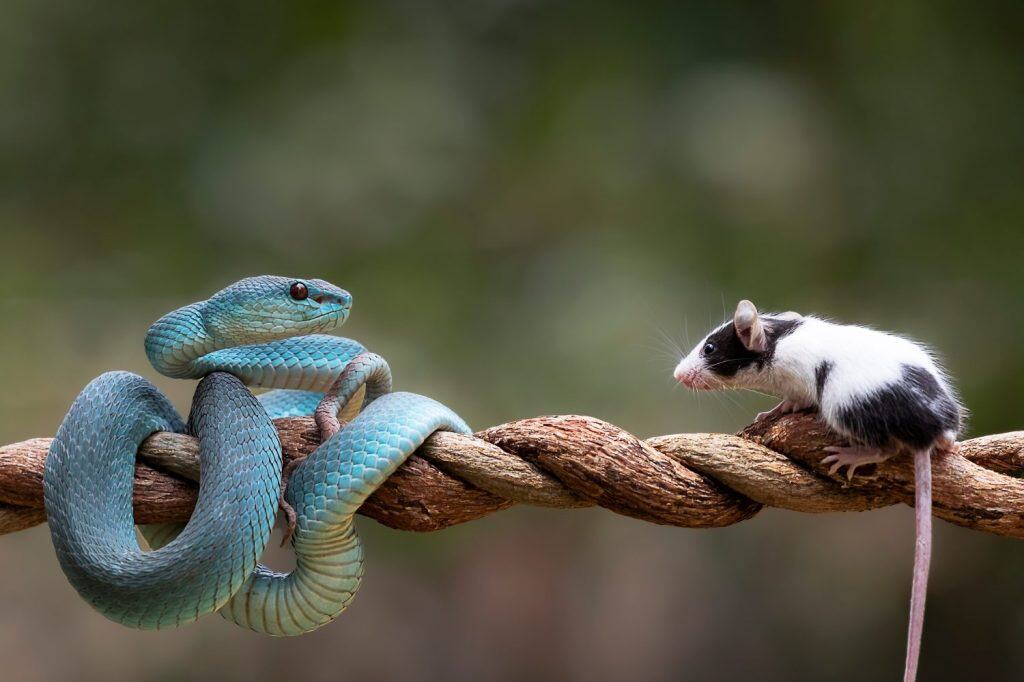
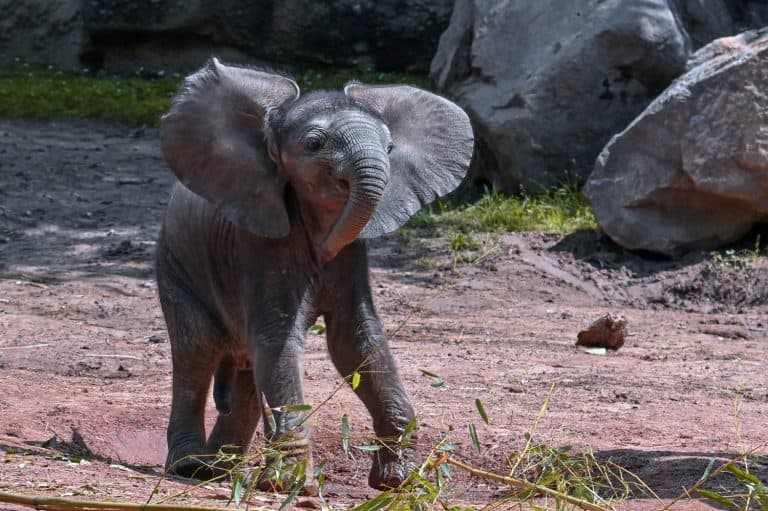
Fight-or-flight is an innate response to predators in the animal kingdom, not unlike the fear humans feel.
©lisdiyanto suhardjo/Shutterstock.com
While we all have this instinct, it is likely felt differently across species. Humans have complex emotions, meaning fear is actually felt on an emotional level. In animals, “fear” is typically a warning signal that activates in their brains, prompting them to move, attack, or hide. Though it may not present as a feeling, it’s an indicator to escape the area. For some species tested, the fear of rattlesnakes may have been learned through previous encounters. In others, it may be an innate sense, evolved to teach animals to naturally fear a dangerous predator.