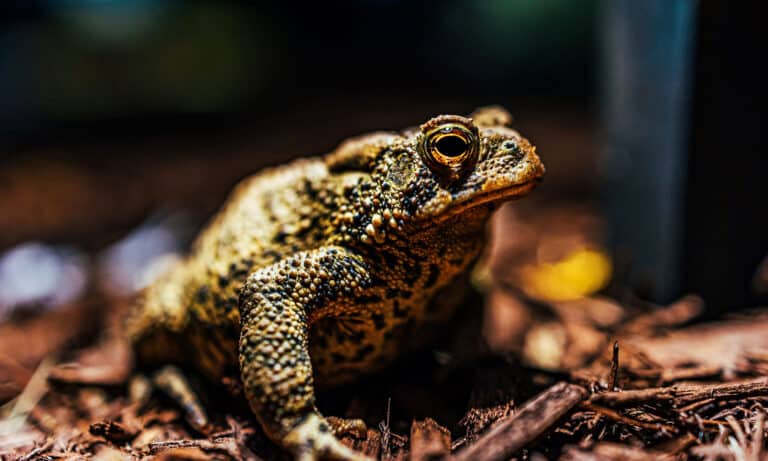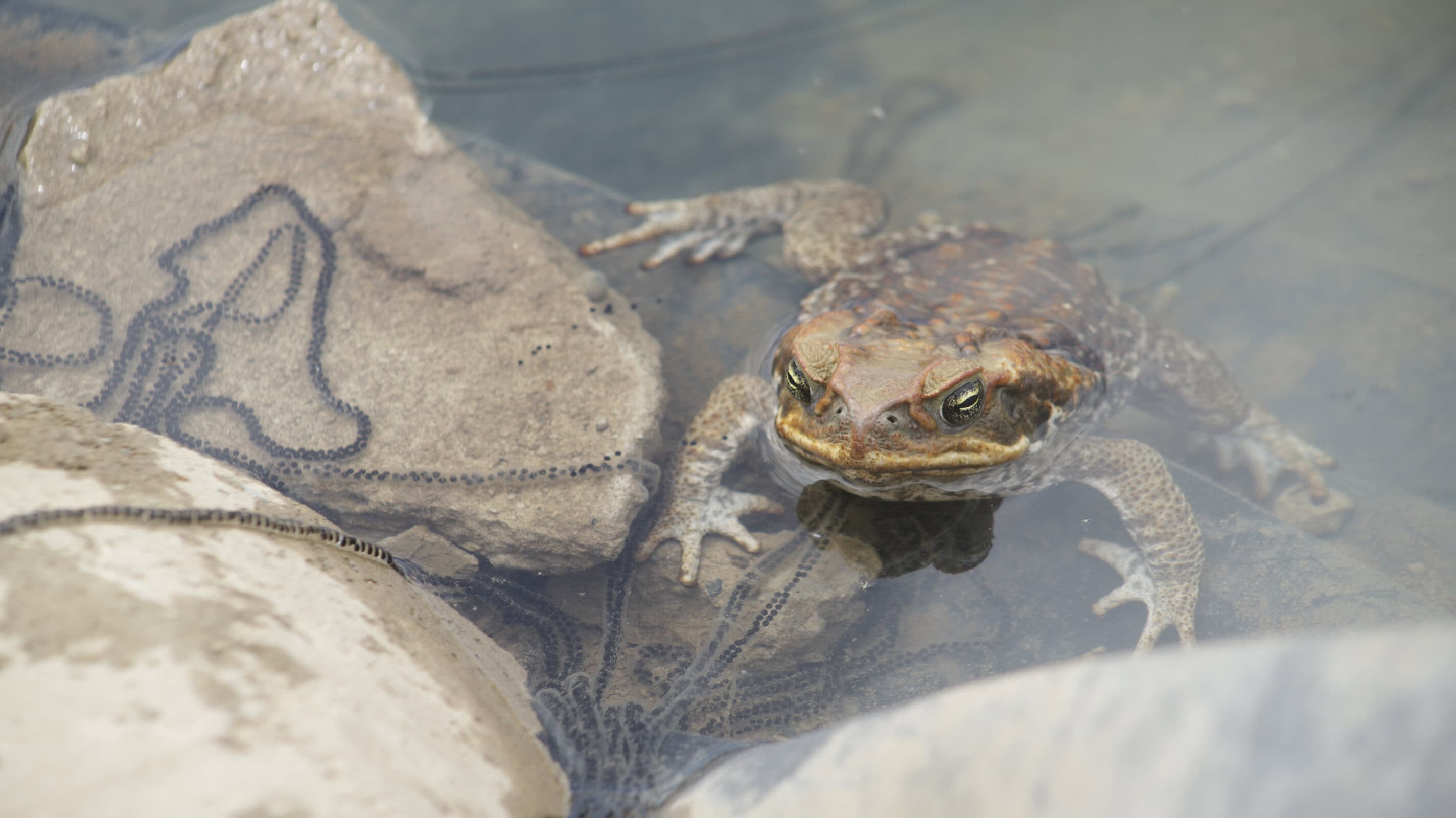

Often found in suburban backyards, cane toads are likely to elicit quite the reaction from anyone who stumbles across them, thanks to their large, warty appearance. Native to Central and South America, cane toads were originally introduced in places like Florida and Australia as a means of pest control. But the cane toad’s uncanny ability to adapt to its new surroundings, combined with its rapid reproduction abilities, soon led to them becoming a type of pest themselves: invasive pests.
In Australia, 102 cane toads were introduced from Hawaii in 1935 and bred to control cane beetle populations. Eventually, 2,400 cane toads were released into Australian sugar cane fields. Today, Australia is home to around 200 million cane toads. Florida’s invasive cane toad population has also expanded significantly since their introduction to the southeast state, though not to the same degree as in Australia.
Nature’s Toxic Toad
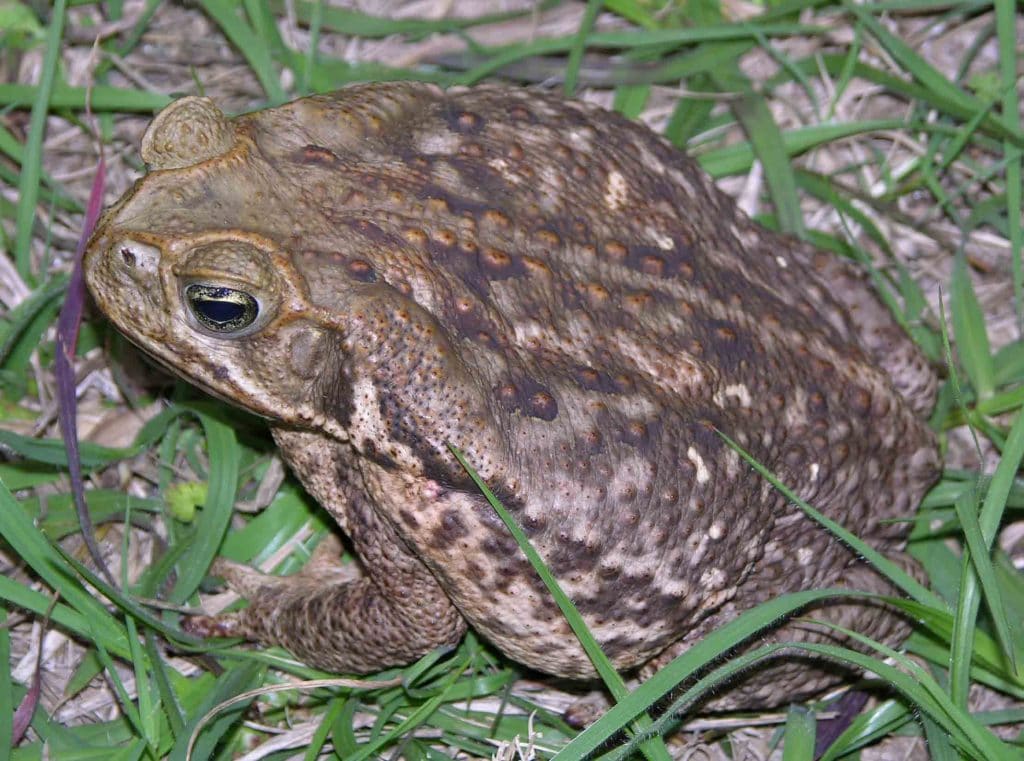
Adult cane toads emit a toxic substance from glands above their shoulders.
©S.A. Johnson, UF/IFAS
Growing up to nine inches long and weighing as much as four and one-half pounds, cane toads are not your ordinary amphibian. Aside from their large size, it’s their toxic nature that lands them on most people’s “least wanted” list. Though toxic from birth, cane toads hit maximum toxicity as adults when parotoid glands on their shoulders are capable of producing a milky-white substance called bufotoxin.
This toxin can be lethal to animals that ingest or even bite cane toads. Though cane toads can’t shoot the bufotoxin, they can emit large quantities of it when the glands are put under pressure. The toxin can also cause serious reactions in humans who handle the toads.
But cane toads don’t start life as big, warty baddies. Instead, they make their first appearance as jewel-like strands that captivate and intrigue. These are not your typical toad eggs.
Starting Life as a Strand of Thousands
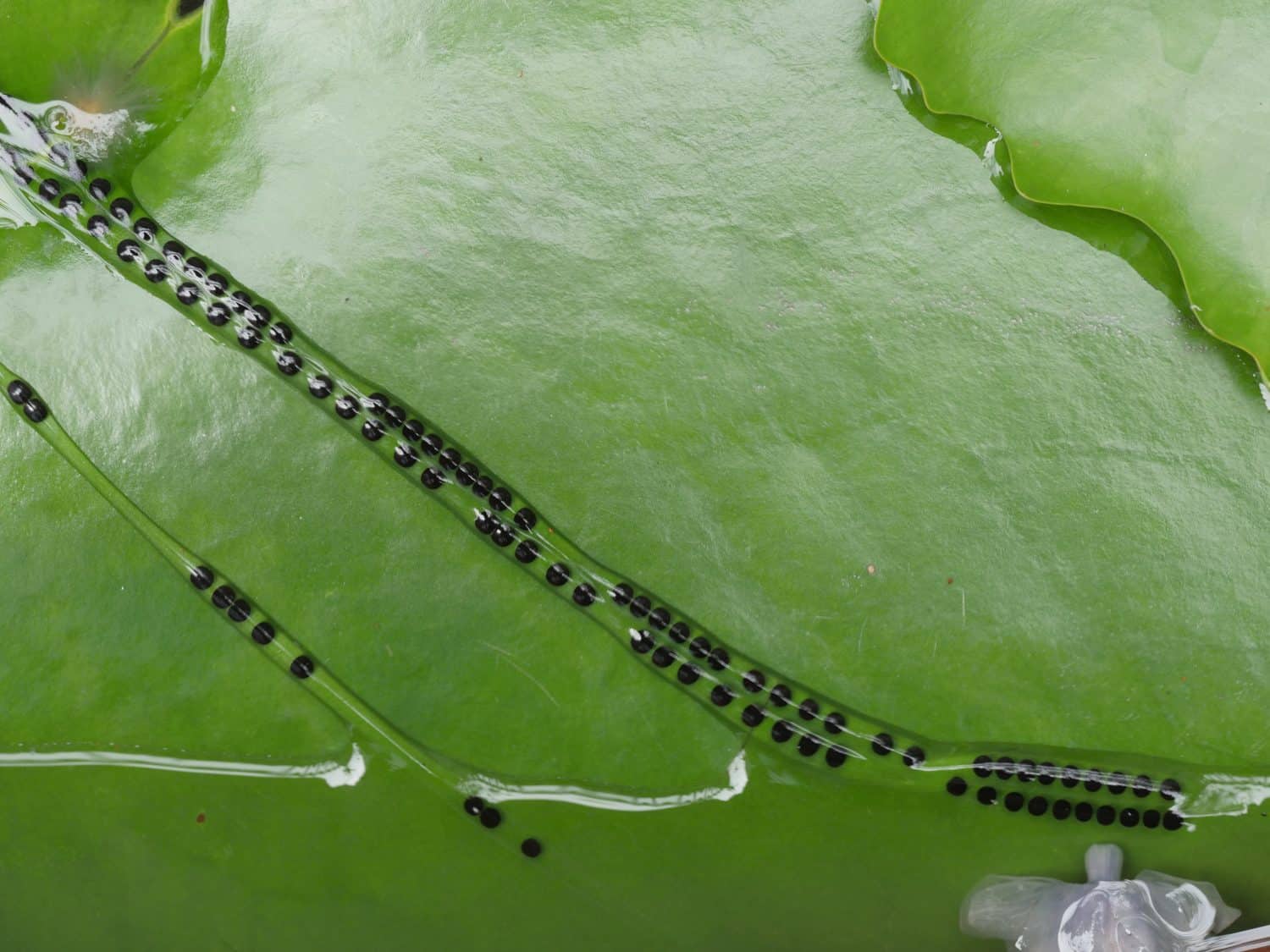
Every adult cane toad began life as a tiny black, toxic dot.
©Huaykwang/Shutterstock.com
Female cane toads are capable of reproducing up to two times per year, and can breed year-round in climates that offer warm enough temperatures. According to Dr. Steve A. Johnson, Professor and Interim Chair of the Department of Wildlife Ecology and Conservation at the University of Florida, cane toad breeding is water-dependent and triggered by rainfall. Air temperature also plays a role, with the “warmer spring and summer months between March and August seeing the most breeding activity in Florida,” notes Johnson.
Once males fertilize the eggs, females lay them in gelatinous strings that can reach up to 35 feet long and contain up to 30,000 soft eggs. The jelly casing acts as a protective barrier. Despite their tiny size, cane toad eggs are toxic as well. Predators that consume them will likely get sick, and some can even die.
Once the egg strands are in the water, it then takes another 24 to 72 hours for the eggs to hatch into tadpoles. How quickly the eggs hatch depends on the water temperature, with warmer temperatures resulting in faster hatching times.
What’s the Story Behind These Unusual Eggs?
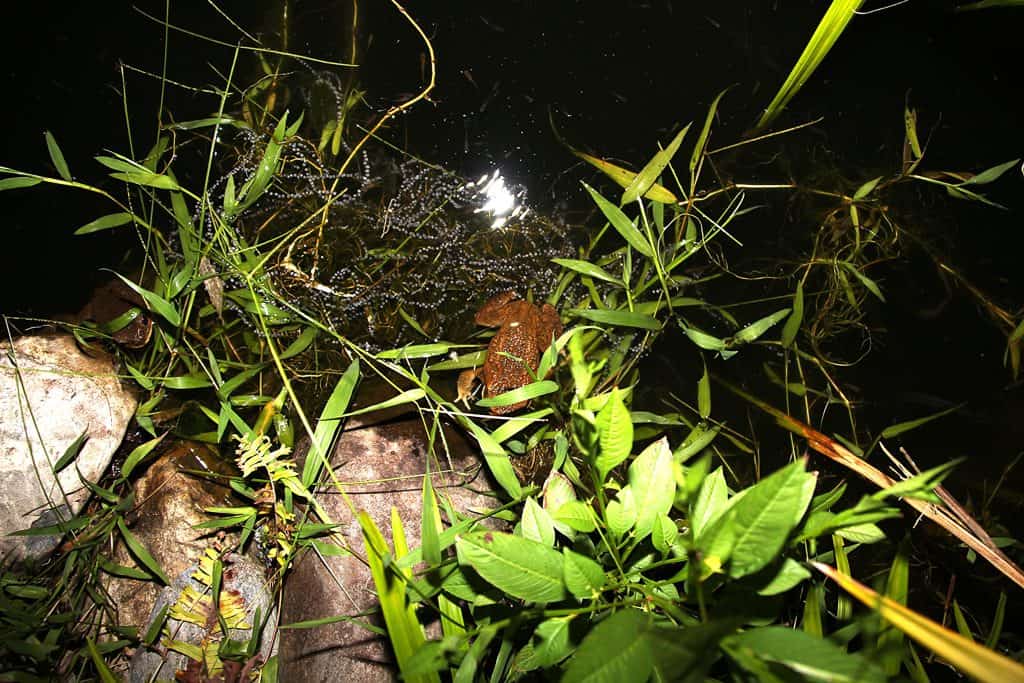
Cane toads lay their eggs in long double strands that are usually seen wrapped around debris in shallow water.
©S.A. Johnson, UF/IFAS
It is not unusual for frog eggs, like those of the cane toad, to be laid in water. What makes cane toad eggs unique is their long, string-like nature. Only one other species of toad, the Southern toad, uses a similar technique. These gorgeous eggs are different from the small clumps or foam masses laid by most other frogs.
Cane toads lay their eggs in distinct double rows. When multiple females lay their eggs in the same spot, the strands can look like a tangled mass. However, if you pick up one of the double-strands, you can easily separate it from the rest to reveal its ropey structure.
From Egg to Tadpole to Toadlet
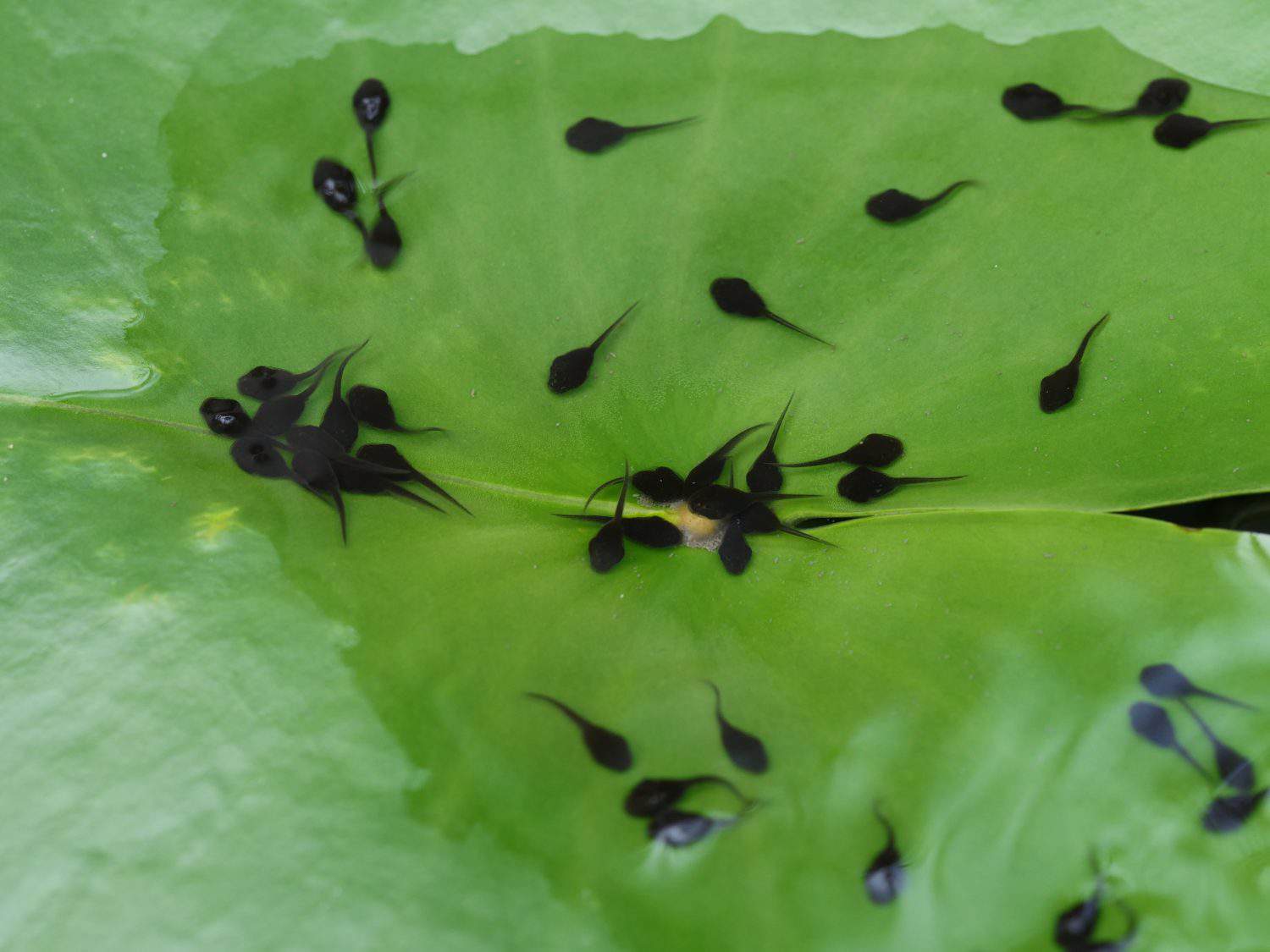
Newly hatched cane toad tadpoles arrive two to three days after eggs are laid.
©Huaykwang/Shutterstock.com
Newly hatched cane toad tadpoles are small, black, and toxic. They can be lethal to predators that consume them. Cane toad tadpoles feed on algae and other plant material in the water. They’ll stay as tadpoles between three to 20 weeks, with water temperature playing a critical role in how quickly tadpoles turn into toadlets, which is their next stage of growth. Warmer waters prompt faster growth.
From Toadlet to Adulthood

Tiny toadlets bear little resemblance to their future self, but are still toxic to animals and humans.
©Andrew Allen Photography/Shutterstock.com
Toadlets are about one to two inches long and resemble many other toads when they’re small. Their initial appearance doesn’t really hint at how big they will become. They often reach their adult size in less than one year in tropical climates like Florida. In colder regions, it takes them a bit longer to reach full size.
Just like eggs and tadpoles, toadlets are toxic to other animals that come in contact with them or eat them. Once cane toads reach adult size, they’re capable of reproducing as soon as 18 to 24 months of age. Once they do, they help contribute to the ever-growing population cycle of the invasive cane toad.