


B
Species Profile

Black Rat Snake

Pantherophis obsoletus

Barn-climbing rodent patrol
Seth LaGrange/Shutterstock.com
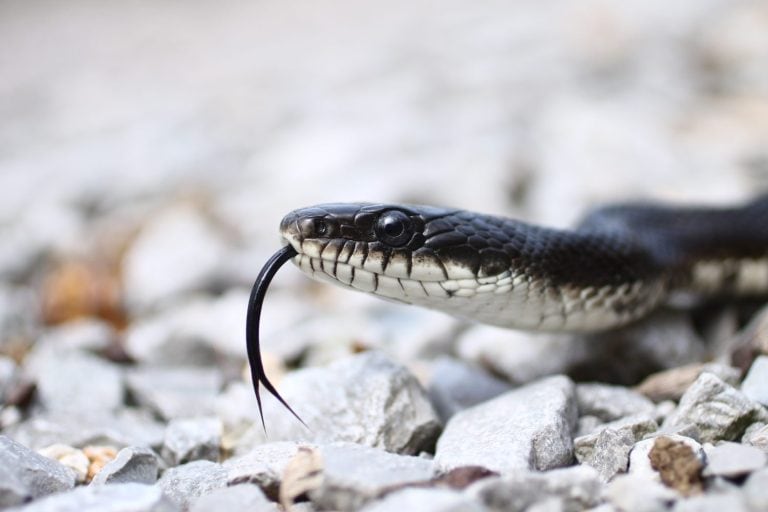
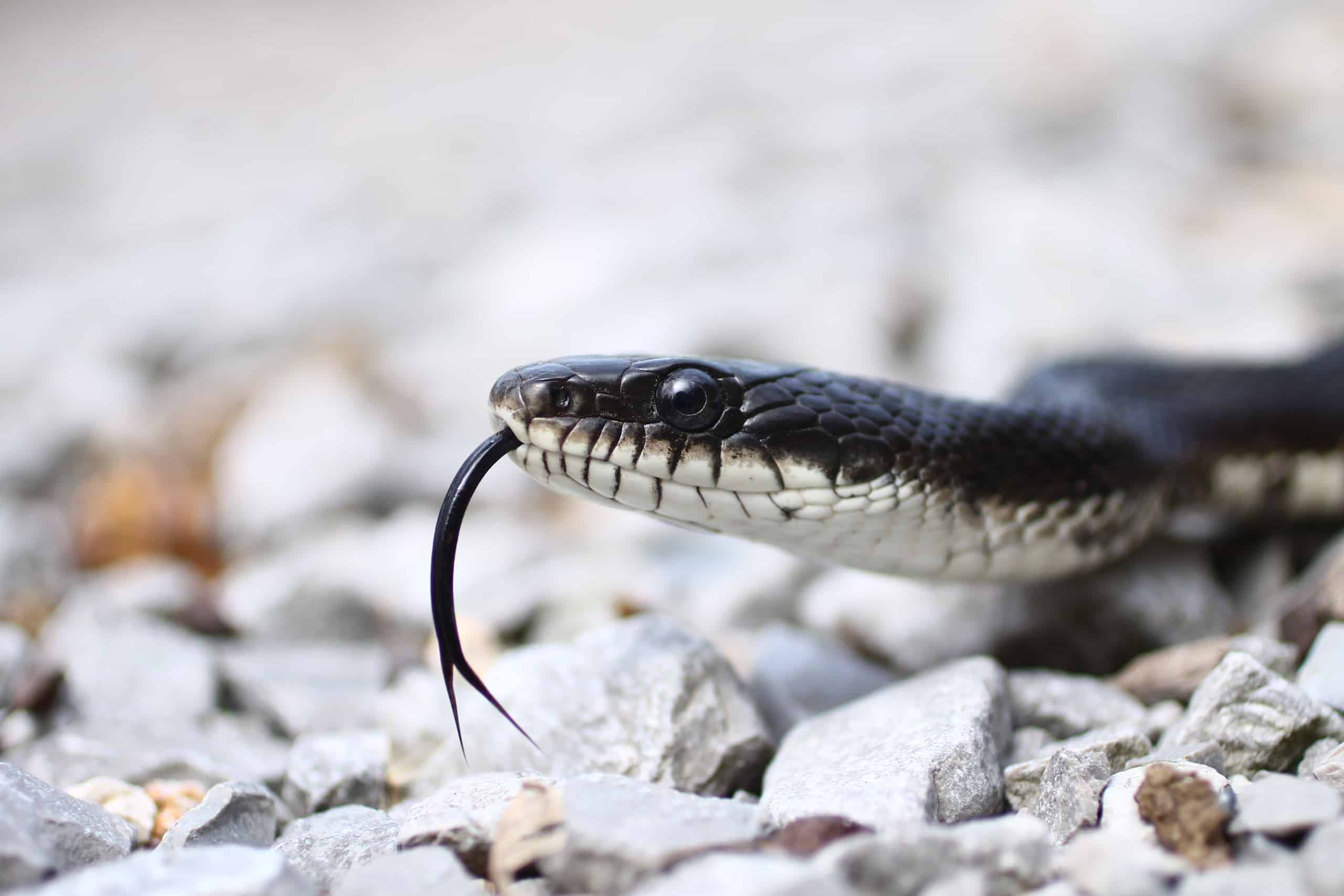
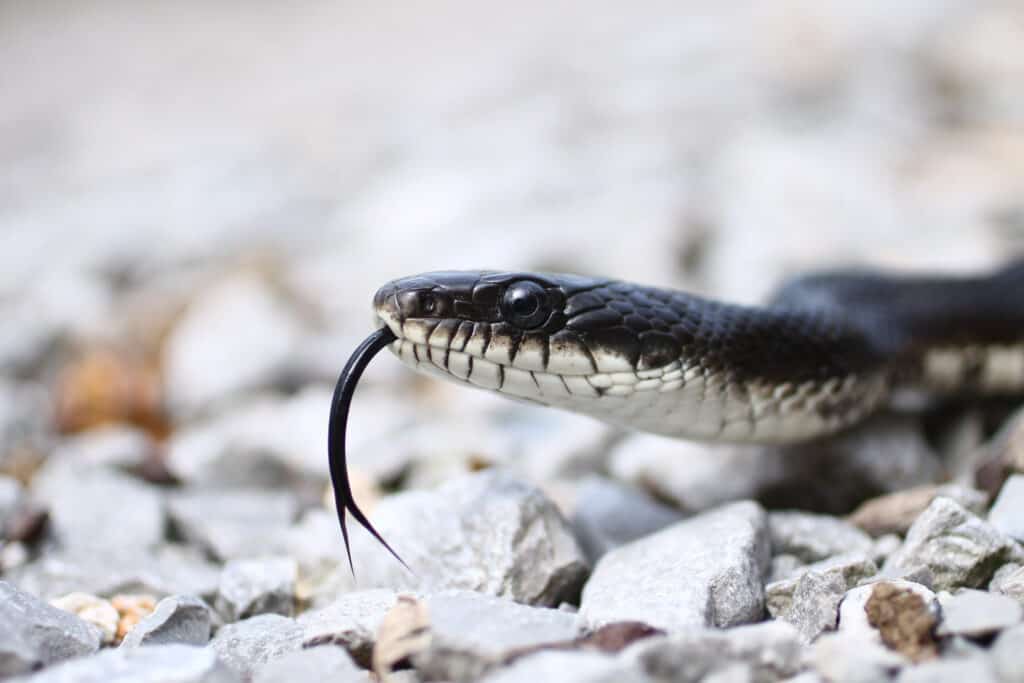
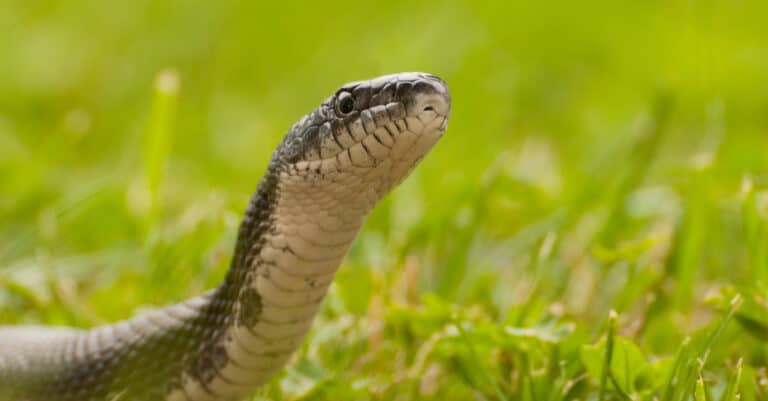
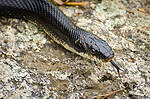
A black rat snake flicks its tongue

At a Glance

Wild Species
Also Known As Black snake, Chicken snake, Pilot snake, Pilot blacksnake, Common blacksnake
Diet Carnivore
Activity Diurnal+
Lifespan 12 years
Weight 2.5 lbs
Status Least Concern
Did You Know?

Size: adults commonly ~107-183 cm total length; exceptionally up to ~256 cm has been reported for the complex (Ernst & Ernst, 2003).

Scientific Classification

A large, nonvenomous North American colubrid commonly known for climbing ability and for preying on rodents (hence “rat snake”). Adults are often dark/black in much of the range; juveniles are typically patterned with blotches that may darken with age. Taxonomy and common-name usage vary regionally, with several closely related species involved.

Kingdom
Animalia
Phylum
Chordata
Class
Reptilia
Order
Squamata
Family
Colubridae
Genus
Pantherophis
Species
obsoletus

Distinguishing Features

  • Nonvenomous constrictor; long, fairly robust body
  • Adults often mostly black with a lighter/white chin and throat; juveniles more distinctly blotched
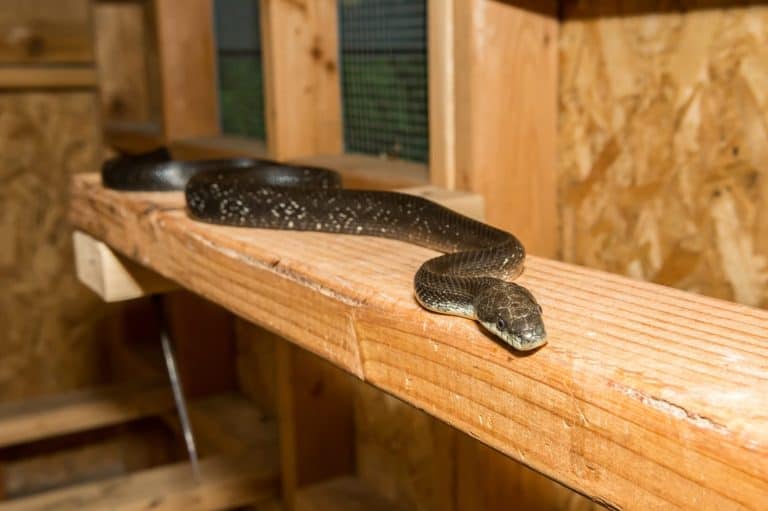
  • Excellent climber; commonly encountered in trees, rafters, and sheds
  • When threatened may vibrate tail, hiss, or emit musk; can flatten head/neck slightly

Did You Know?

Size: adults commonly ~107-183 cm total length; exceptionally up to ~256 cm has been reported for the complex (Ernst & Ernst, 2003).

Color shift with age: juveniles are gray/tan with dark dorsal blotches; many adults become much darker (often nearly black) through ontogenetic melanism, especially in parts of the range.

Climbing specialist: routinely hunts in trees, rafters, and barns; strong ventral scales and body "concertina" movements help it ascend rough vertical surfaces.

Reproduction: typical clutches are about 6-27 eggs (reported for the obsoletus complex), usually laid in early summer in rotting logs, compost, or other warm cavities (Ernst & Ernst, 2003).

Longevity: commonly ~10-15 years in the wild, but can exceed 20 years in captivity when protected from predation and starvation cycles (Ernst & Ernst, 2003; general husbandry records).

Unique Adaptations

  • Ontogenetic melanism (age-related darkening): juvenile blotches can fade as melanin increases, potentially improving concealment in shaded forests and aiding heat absorption in cooler seasons.
  • Excellent climbing mechanics: the long, muscular body and large ventral scutes provide grip and allow controlled upward "ratcheting" on bark, masonry, and rafters.
  • Flexible diet and jaw kinesis: like other colubrids, highly mobile skull/jaw elements allow swallowing of relatively bulky prey (e.g., adult rats or large birds).
  • Chemical tracking: relies heavily on tongue-flicking and vomeronasal sensing to follow rodent runways and locate nests in complex three-dimensional habitat.
  • Egg-laying in warm, decomposing substrates: selecting rotting logs/compost can provide stable incubation temperatures and humidity without parental care (reported broadly for the complex; Ernst & Ernst, 2003).

Interesting Behaviors

  • Arboreal foraging: climbs trees and structures to raid bird nests and hunt squirrels, birds, and bats in addition to rodents (diet shifts with size).
  • Constriction: subdues prey by coiling and tightening; then typically swallows head-first to reduce resistance from limbs or fur.
  • Defensive mimicry: may vibrate the tail in dry leaves (audible "buzz"), flatten the head/neck, strike repeatedly, and release strong musk-behaviors that can resemble a rattlesnake threat display at a distance.
  • Site fidelity and shelter use: frequently reuses favored hiding places (rock piles, hollow logs, building voids) and may share winter dens/hibernacula with other snakes in colder parts of the range.
  • Thermal behavior: basks near den entrances or on warm substrates in spring/fall; retreats to shaded refuges in mid-summer heat.
  • Human-associated hunting: often patrols barns, feed rooms, and woodpiles where rodents concentrate-one reason it's frequently encountered around farms.

Cultural Significance

Black Rat Snake (Pantherophis obsoletus) is linked with barns and farms across eastern and central North America. People often protect it for killing rats and mice; it is used to teach that harmless snakes help people.

Myths & Legends

In Appalachia and the Ozarks, "pilot snake" stories said a long black snake led other snakes to winter dens or guided venomous snakes. These tales often name Black Rat Snakes (Pantherophis obsoletus).

Barn guardian superstition (rural eastern U.S.): a resident "black snake" in the barn was considered good luck and a sign of protection because it kept grain stores safe from rats and mice.

Rattlesnake rival tales (American folk belief): black snakes were popularly said to hunt, kill, or "whip" rattlesnakes-an enduring piece of countryside storytelling tied to their bold defensive displays and frequent overlap with pit viper habitat.

In North America, "hoop snake" stories said a black snake bit its tail and rolled like a hoop to chase people downhill. These stories were often confused with large dark rat snakes (Pantherophis obsoletus).

Stories blamed Black Rat Snakes (Pantherophis obsoletus) — large, not poisonous 'black snakes' found in barns — for stealing milk from cows and taking many eggs from bird nests in rural tales.

Conservation Status

LC Least Concern

Widespread and abundant in the wild.

Population Stable

Protected Under

  • Not listed under CITES Appendices (no international trade controls specific to Pantherophis obsoletus).
  • United States: not listed under the U.S. Endangered Species Act (ESA) at the federal level; regulatory status varies by state (some states protect native nongame snakes or restrict take/collection).
  • Species biology notes (Pantherophis obsoletus; commonly treated as part of the Western/Eastern Ratsnake complex): adult total length commonly ~106-183 cm; reported maximum ~256 cm; oviparous with typical clutches in the ~5-27 egg range; strong climber and frequent user of forest edge/wooded riparian habitats and human structures (barns/attics) while hunting rodents. Reported maximum longevity exceeds 20 years in captivity (values >30 years documented in herpetoculture/collection records); wild longevity is typically lower. (Commonly cited synthesis sources include Ernst & Ernst, 2003, Snakes of the United States and Canada; and regional life-history accounts in state wildlife guides.)
  • HUBS (Western/Eastern Rat Snake complex conservation landscape): Across the complex (often split into P. obsoletus, P. spiloides, P. alleghaniensis, P. quadrivittatus), global IUCN statuses are largely Least Concern due to wide distributions and ecological flexibility. The most consistent rangewide pressures are habitat loss/fragmentation (agriculture/urbanization), road mortality (infrastructure), and persecution. Notable at-risk units tend to be at the edge of the range or in highly fragmented regions-e.g., some Canadian populations historically treated within this complex (e.g., 'Gray Ratsnake' populations) are listed under Canada's Species at Risk Act (SARA) at Threatened status, reflecting severe local fragmentation and road mortality even when the broader species complex remains globally LC.

Life Cycle

Birth 12 hatchlings
Lifespan 12 years

Lifespan

In the Wild
5–20 years
In Captivity
10–33 years

Reproduction

Mating System Polygynandry
Social Structure Solitary
Breeding Pattern Transient
Fertilization Internal Fertilization
Birth Type Internal_fertilization

Behavior & Ecology

Social Den (hibernation site) Group: 1
Activity Diurnal, Crepuscular, Nocturnal
Diet Carnivore Rodents-especially rats and mice (murid rodents), reflecting the species' frequent use of barns, woodlots, and edge habitats where these prey are abundant.
Seasonal Hibernates 2 mi

Temperament

Secretive/avoidant when undisturbed; relies on crypsis, climbing, and rapid retreat to cover.
Defensive repertoire includes body inflation, S-shaped neck/forebody posture, tail vibration (often against dry leaves), cloacal musk release, and striking when handled or cornered; intensity varies by individual and context (Greene, 1997; Ernst & Ernst, 2003).
Black rat snakes (Pantherophis obsoletus) shift activity and defensiveness with temperature, habitat openness, and human disturbance: surface and day/dawn-dusk activity in moderate temps, more active at night and more defensive when hot, handled, or exposed.

Communication

Hiss/exhalation produced by forced air movement when threatened Non-vocal-cord sound), commonly used as a defensive signal (Greene, 1997
Chemical communication via tongue-flicking and vomeronasal Jacobson's organ) sampling; sex pheromones guide mate searching and courtship (general snake mechanism; documented broadly in colubrids, including Pantherophis/rat snakes) (Mason, 1992; Parker & Mason, 2011
Tactile signaling during courtship Chin-rubbing, body alignment) and during male-male combat (body pressing/'wrestling') associated with mating competition (Greene, 1997; Ernst & Ernst, 2003
Visual/threat displays Body inflation, head/neck elevation, striking posture) and substrate-borne signaling via tail vibration that can create audible rustling in leaf litter (Greene, 1997; Ernst & Ernst, 2003
Olfactory deterrence via cloacal musk; functions in defense and may incidentally convey individual identity cues Ernst & Ernst, 2003

Habitat

Biomes:
Temperate Forest Temperate Grassland Wetland Freshwater
Terrain:
Hilly Plateau Plains Valley Riverine Rocky Karst +1
Elevation: Up to 3280 ft 10 in

Ecological Role

Mesopredator (generalist predator of small vertebrates; important nest predator in some habitats).

Rodent population suppression (reduces abundance of agricultural/commensal rodents in barns, fields, and forest edges) Regulation of small-vertebrate communities (predation on rodents, birds, and lizards) Energy transfer within terrestrial food webs (links small-mammal/bird biomass to higher predators that consume snakes)

Diet Details

Main Prey:
Rodents Small mammals Birds Bird eggs Bats Lizards Amphibians +1

Human Interaction

Domestication Status

Wild

Not domesticated. Black Rat Snake (Western/Eastern Rat Snake complex, Pantherophis obsoletus) is a wild, nonvenomous snake that often lives near farms, barns, woodpiles and old buildings because of rodents. People sometimes tolerate or encourage it for rodent control. Captive breeding for pets is not true domestication.

Danger Level

Low
  • Nonvenomous bites (can be painful and may cause superficial lacerations/bleeding; greatest risk is secondary infection if not cleaned).
  • Defensive musking/fecal discharge (nuisance/odor; may trigger mild irritation if it contacts eyes or broken skin).
  • Zoonotic risk common to reptiles (e.g., Salmonella) from handling/poor hygiene; risk reduced by handwashing and avoiding cross-contamination.
  • Human-snake conflict risk: often mistaken for venomous species and killed; also sometimes treated as a 'nuisance' when found in attics, barns, chicken coops, or crawlspaces.
  • Rare constriction risk to very small pets (e.g., nestling birds/eggs; small rodents), not a meaningful threat to adult humans.

As a Pet

Suitable as Pet

Legality: Black Rat Snakes are usually legal to keep in much of the U.S. if bought captive-bred or legally taken, but state and local rules vary; some places ban taking wild snakes or require permits—check wildlife laws.

Care Level: Easy

Purchase Cost: $50 - $250
Lifetime Cost: $2,000 - $7,000

Economic Value

Uses:
Ecosystem services (rodent control) Pet trade (captive-bred animals) Education/outreach (nature centers, schools) Research/monitoring (herpetological surveys, ecology)
Products:
  • non-lethal pest suppression via predation on commensal rodents (service value)
  • captive-bred juveniles for the hobby/education market
  • interpretive programming specimens (zoos/nature centers)

Relationships

Predators 11

Red-tailed Hawk Buteo jamaicensis
Red-shouldered Hawk
Red-shouldered Hawk Buteo lineatus
Great Horned Owl Bubo virginianus
Barred Owl
Barred Owl Strix varia
Eastern Kingsnake Lampropeltis getula
Raccoon
Raccoon Procyon lotor
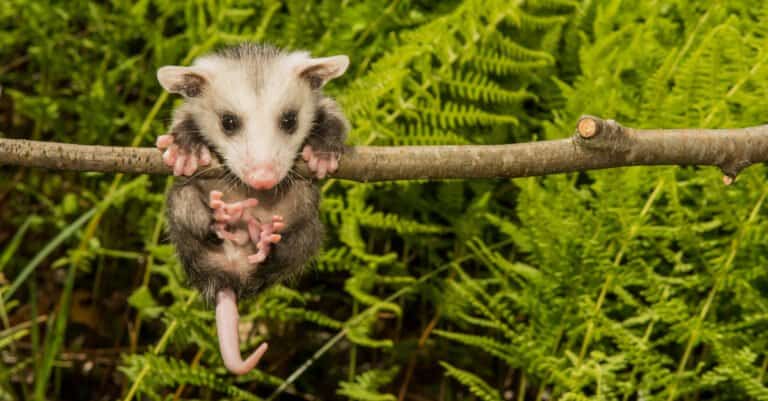
Virginia Opossum Didelphis virginiana
Striped Skunk Mephitis mephitis
Red Fox
Red Fox Vulpes vulpes
Coyote
Coyote Canis latrans
Domestic cat
Domestic cat Felis catus

Ecological Equivalents 5

Animals that fill a similar ecological role in their ecosystem

Eastern Rat Snake
Eastern Rat Snake Pantherophis alleghaniensis Very similar ecology within the rat-snake complex: semi-arboreal, occupying edge and forest habitats, and frequently using human structures (barns, attics). Strong overlap in prey (small mammals, birds, and eggs) and similar life history; adult size commonly overlaps with Pantherophis obsoletus.
Gray Rat Snake Pantherophis spiloides Uses similar temperate forest and forest-edge habitats and climbs to reach bird nests. Juveniles are patterned and adults darken, like Pantherophis obsoletus. Their ranges overlap extensively where they meet in the interior East and Midwest.
Corn Snake
Corn Snake Pantherophis guttatus Shares genus-level traits: constriction, a rodent-focused diet, and use of cover and human structures, but is typically smaller-bodied. Useful ecological comparator for the rodent-control niche; both are nonvenomous constrictors that commonly take Peromyscus spp. and commensal rodents around buildings.
North American Racer
North American Racer Coluber constrictor Overlaps geographically in many areas and uses similar habitat mosaics (old fields and edges). Although racers are active foragers (not true constrictors), both consume small vertebrates and are common, large diurnal snakes; racers can compete for prey and habitat space.
Gopher Snake
Gopher Snake Pituophis catenifer Similar functional role as a large, nonvenomous rodent specialist in open and edge habitats. Both are frequently found near agricultural settings and can provide rodent-control ecosystem services. They have comparable adult body size ranges in many populations.

Types of Black Rat Snake

1

Explore 1 recognized types of black rat snake

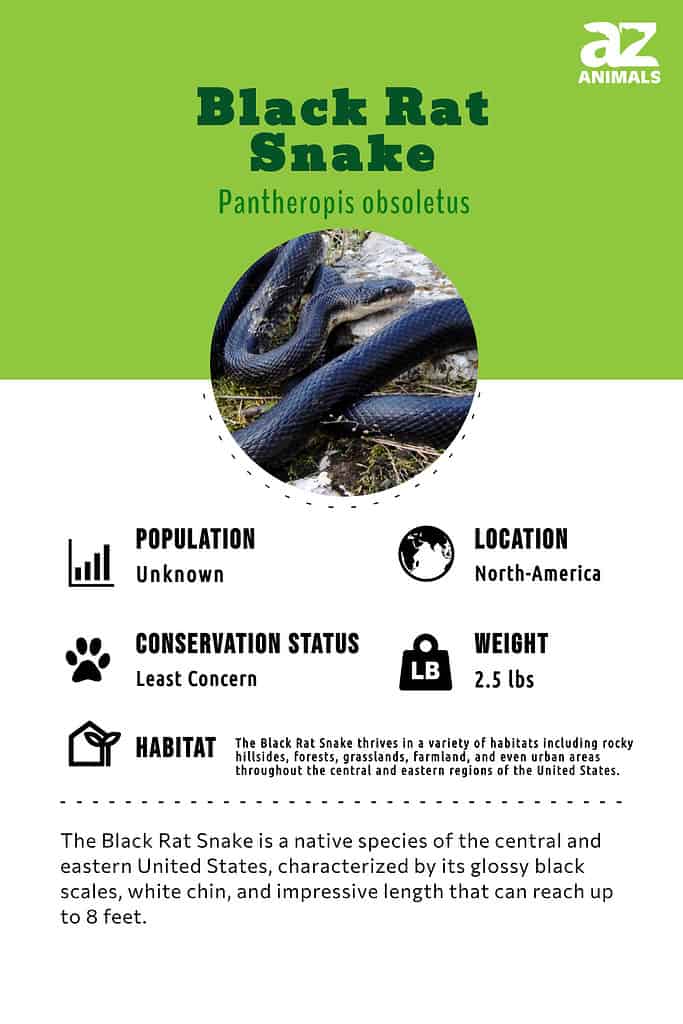
The Black Rat Snake is a native species of the central and eastern United States, characterized by its glossy black scales, white chin, and impressive length that can reach up to 8 feet.

At eight feet, black rat snakes are one of the longest snakes living in North America.

Black rat snakes are native to the central and eastern portions of the United States including South Carolina, Ohio, Kentucky, and other states. They are carnivores with a diet of mice, frogs, birds’ eggs, and, of course, rats. This reptile spends its wintertime brumation in a den with other types of snakes. A juvenile has a pattern of gray and black scales but gradually becomes all-black as it grows into an adult.

4 Amazing Facts
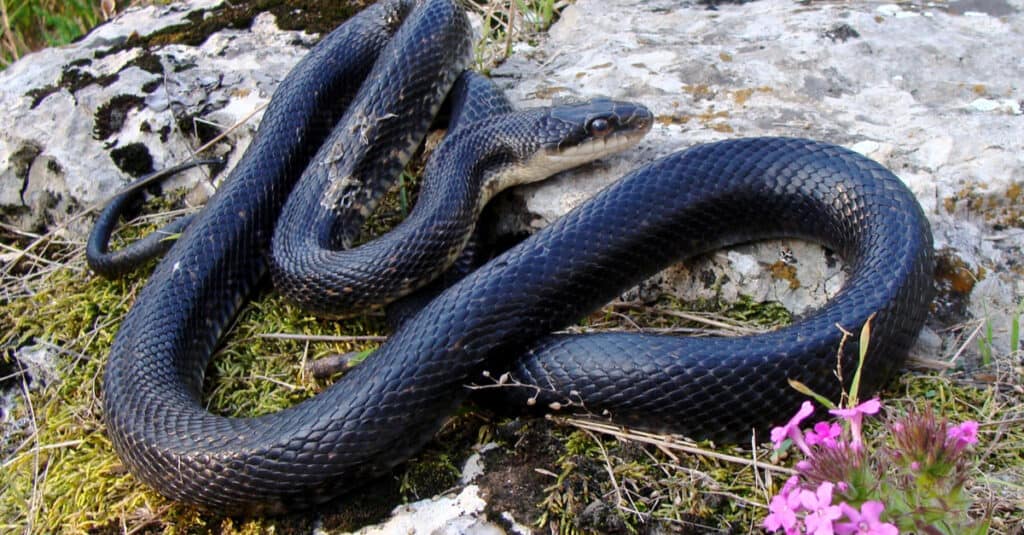
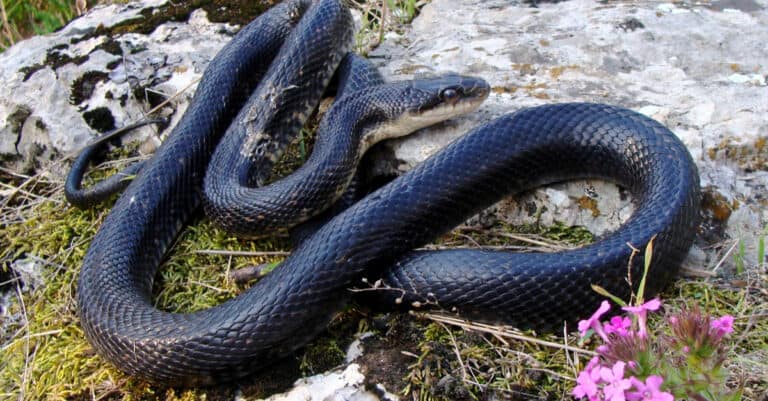
An adult rat black snake peaks over a rock

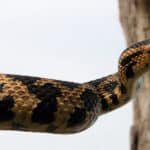
It demonstrates exceptional climbing skills and occasionally seeks refuge within the crevices of tree trunks.

  1. It’s sometimes called a pilot snake because of the mistaken belief that it guides venomous snakes to a suitable den in the winter
  2. It is an expert at climbing trees and sometimes hides in the crevices of a tree trunk
  3. When it’s agitated this snake may shake its tail as a warning to a predator to retreat
  4. It’s valued in Ohio as a snake that helps keep the rodent population under control

Evolution and Origins

Pantherophis obsoletus, commonly referred to as the western rat snake, black rat snake, pilot black snake, or simply black snake, is a nonvenomous member of the Colubridae family. This species is indigenous to central North America and does not have any recognized valid subspecies.

Black rat snakes originate from the central and eastern regions of the United States, adapting to diverse habitats such as rocky hillsides and flat farmland, and exhibiting adaptability to a broad range of elevations.

Visitors to the Maryland Zoo in Baltimore can observe black rat snakes in the Tree exhibit within the Maryland Wilderness area.

Where to Find Them
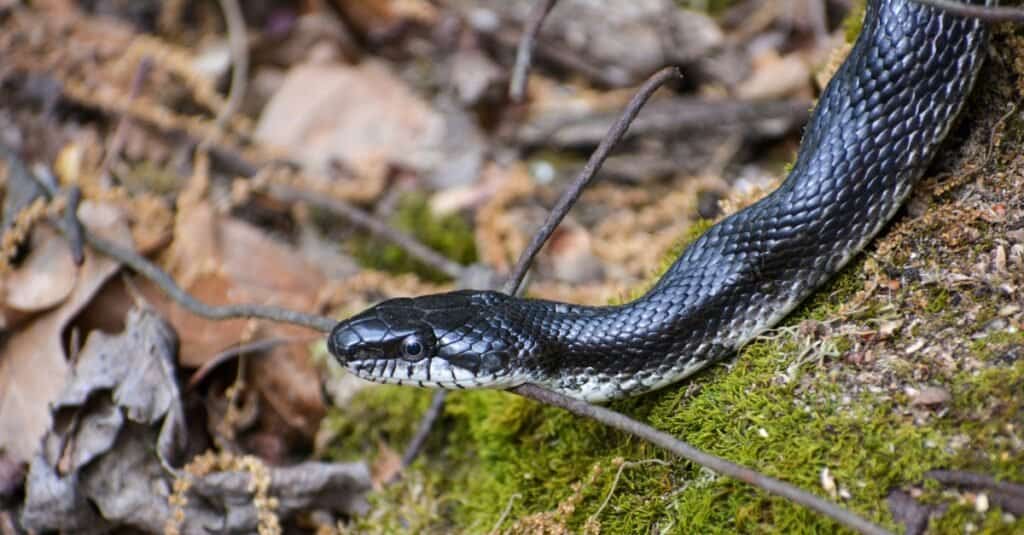
Where Do Snakes Live

These serpents originate from the central-eastern region of North America within the United States.

These snakes are native to the central-eastern portion of the United States in North America. They are especially plentiful in Ohio and Missouri. Notably, the black rat snake is one of two black snakes in South Carolina that grow to be five feet or longer.

These snakes can live in a number of different habitats including farmlands, rocky areas of land, hillsides, and forests. These reptiles occupy areas with a temperate climate. This means they have to go into brumation in the winter months when it gets cold. Generally, they begin to go into brumation in the month of October and stay in their shelter until March.

A widespread myth about this snake relates to its wintertime brumation. It’s sometimes called a pilot snake. The myth goes that these snakes pilot venomous snakes to a den where they can go into brumation for the winter. Though these snakes sometimes share a den with venomous snakes in the wintertime, they don’t serve as a guide for snakes in search of a den!

These snakes are especially active in the spring and summer seasons. They begin breeding in April and May. They’re great climbers, so they’re often spotted in trees in pursuit of prey.

Scientific Name
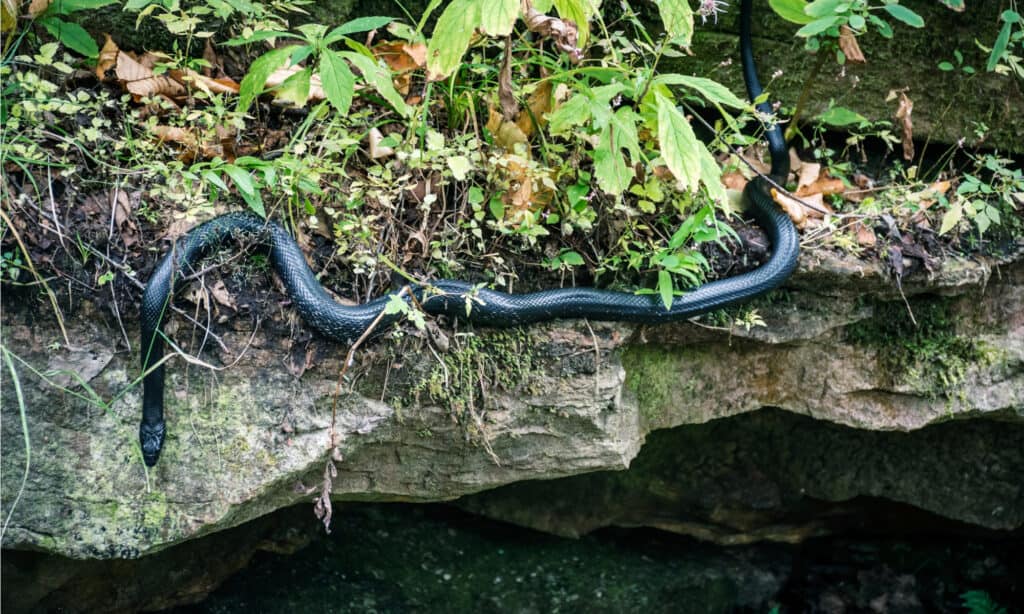
black rat snake

The scientific designation for the black rat snake is Pantherophis obsoletus.

Pantherophis obsoletus is the scientific name of the black rat snake. It’s also known as the western rat snake and the pilot black snake. The Latin word Pantherophis translates to “predator of all snakes.’”Generally speaking, this means it’s a snake that hunts a variety of prey.

The Latin word obsoletus translates to the phrase “falls into disuse.” This refers to the fact that it loses its juvenile color pattern as it grows into an adult.

Its family is Colubridae, and it belongs to the Reptilia class.

Population and Conservation Status

The IUCN Red List of Threatened Species reports the population of adult black rat snakes as at least 100,000. They have a status of Least Concern, and their population is described as stable.

Appearance and Description
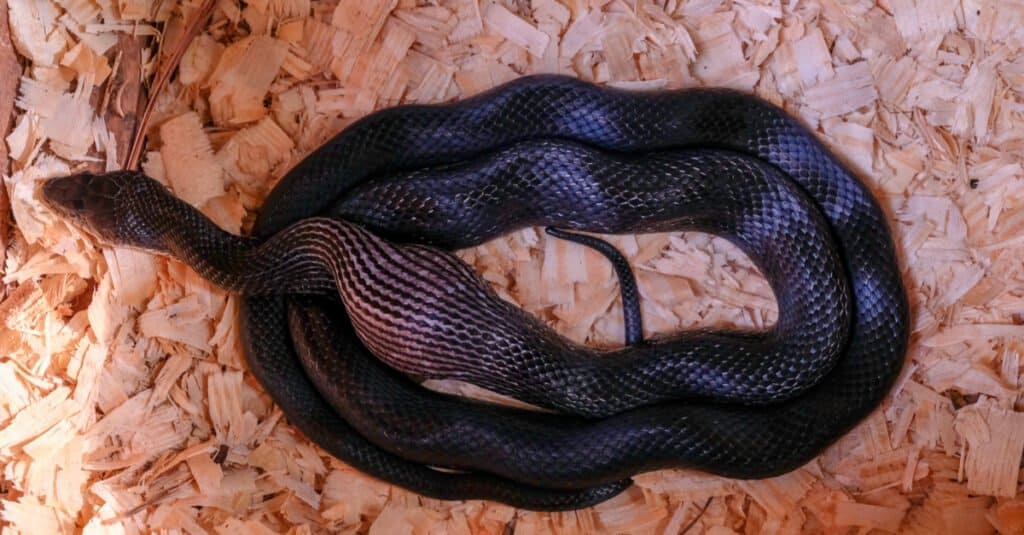
A black rat snake, also called a chicken snake, swallows a chicken egg in the nest in North Caroliana. The snake has a wedge-shaped head that's larger than its body.

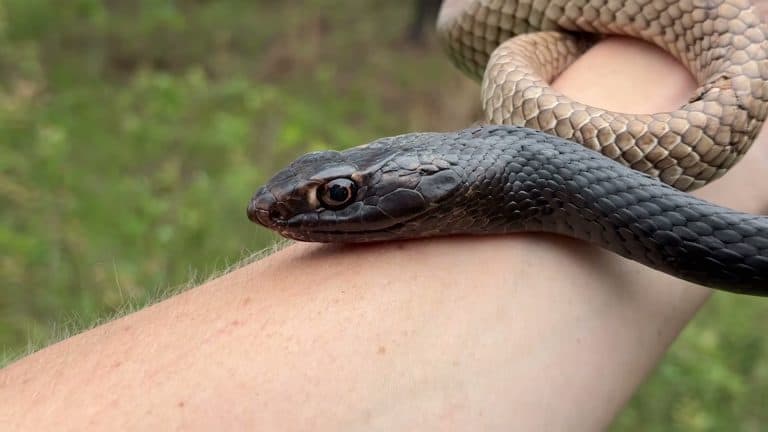
A fully grown black rat snake displays glossy black scales on its dorsal side and a checkered pattern of gray or tan on its ventral side.

An adult black rat snake has shiny black scales on its back along with a gray or tan belly in a checkered pattern. In addition, adults have white on their chins and necks. Baby and juveniles, on the other hand, have a pattern of black and gray blotches. These gradually turn black as the snake becomes an adult.

The size of this snake can vary, but they range from three and a half to eight feet long. A juvenile measures about one foot long as it emerges from its egg. This snake also has a thick, powerful body.

How to identify a black rat snake:

  • Adults are black with a gray or tan checkered belly
  • Adults have white under their chin and neck
  • Baby or juvenile snakes have a gray and black pattern of scales
  • Round, dark pupils

Black Racer vs Black Rat Snake
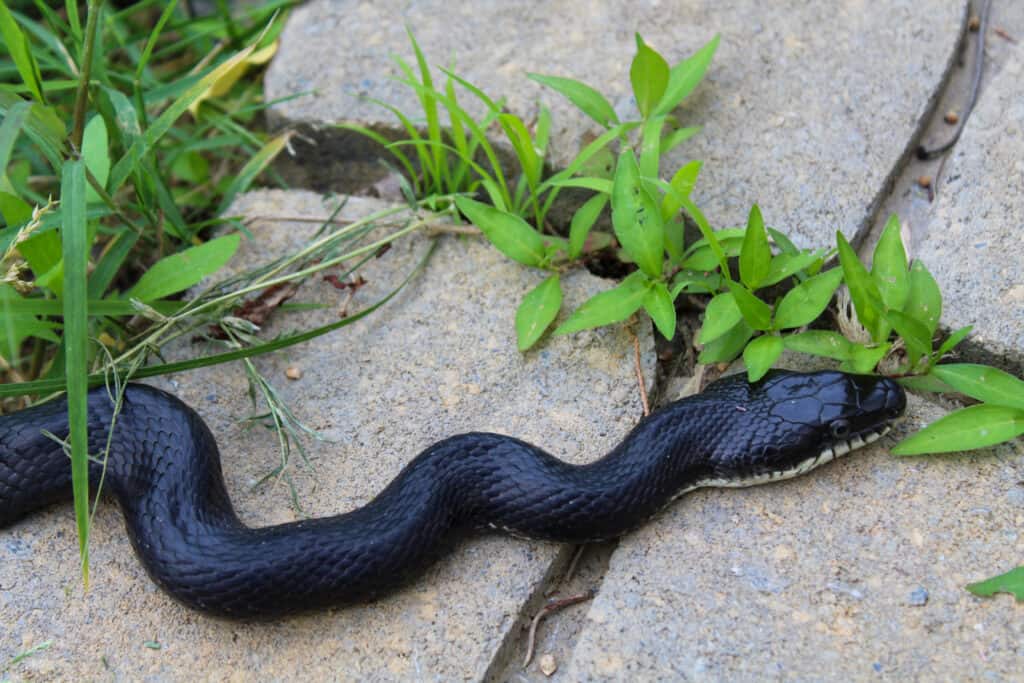
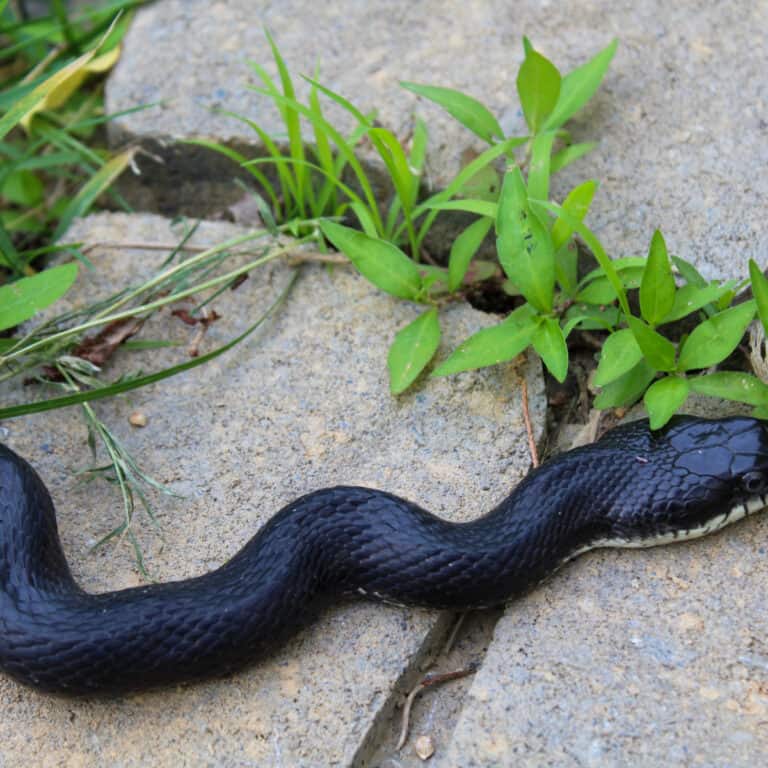
A black snake (Pantherophis obsoletus) crawling over stepping stones in a garden

Black racers are often mistaken for black rat snakes.

If you saw a black racer and a black rat snake in a forest or grassland, you may think they are one and the same. After all, these two black snakes are long and look incredibly similar even at close range. For instance, both the black racer and the black rat snake eat rodents, birds’ eggs, and amphibians.

Both species have round pupils. Plus, they’re both climbing snakes though the black rat snake climbs trees and the black racer climbs shrubs and bushes. So, with all of those similarities, what are the differences?

One of the most remarkable differences between these snakes relates to their body size. The body of a black racer is more like a narrow whip whereas the body of a black rat snake is thick. In terms of length, the black racer can grow as long as six feet while the black rat snake can measure up to eight feet.

The scales on these snakes are another feature to take into account. The scales of a black racer have a flat tone while the scales of a black rat snake are shiny.

Their behavior is another thing to observe when trying to differentiate these two snakes. Black racers are aggressive and nervous. Alternatively, black rat snakes are docile with a mild temperament.

Black racers bite their prey and swallow it whole. Alternatively, black rat snakes are constrictors squeezing their prey until the animal is dead. Then, the snake starts the process of swallowing it. If you’ll notice, a black racer’s body is not thick or strong enough to constrict its prey.

How Dangerous Are They?

The black rat snake is not poisonous. It kills its prey by constricting its body like a boa constrictor or a python.

Of course, it can still bite a human if it feels cornered. The first thing to do if you get a bite from a black rat snake is to clean the wound with soap and warm water.

Next, put first-aid cream or ointment on it. After that, put a clean bandage over the wound and watch for redness or a rash that can signal infection. If these symptoms appear, it’s best to see a medical professional to treat the infection.

Behavior and Humans

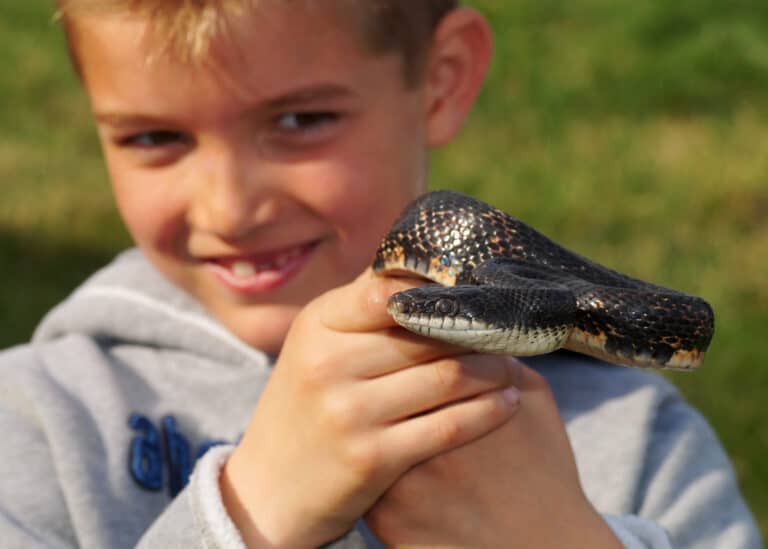
Sometimes these snakes take refuge from the heat in barns or stables on farms. But keep in mind these are shy, non-aggressive snakes and would much rather avoid people.

Interestingly, black rat snakes have a few defenses if they feel threatened by a human, a dog, or another predator. For example, this snake can freeze. This means it crinkles or kinks its body to make itself look like a crooked stick on the ground. Clever snake!

This snake may also release an odor to discourage a threat from approaching it. In addition, these snakes are known to shake their tails as a way to warn any threatening predator to move away.

View all 453 animals that start with B

Sources

  1. Seaworld / Accessed April 20, 2022
  2. IUCN Red List / Accessed April 20, 2022
  3. Maryland Zoo / Accessed April 20, 2022
  4. Chatt Nature Center / Accessed April 20, 2022
  5. Ohio History Center / Accessed April 20, 2022
  6. South Carolina Department of Natural Resources / Accessed April 20, 2022
  7. University of Kentucky College of Agriculture, Food and Environment / Accessed April 20, 2022
Rebecca Bales

About the Author

Rebecca Bales

Rebecca is an experienced Professional Freelancer with nearly a decade of expertise in writing SEO Content, Digital Illustrations, and Graphic Design. When not engrossed in her creative endeavors, Rebecca dedicates her time to cycling and filming her nature adventures. When not focused on her passion for creating and crafting optimized materials, she harbors a deep fascination and love for cats, jumping spiders, and pet rats.
Connect:

Thank you for reading! Have some feedback for us?


Black Rat Snake FAQs (Frequently Asked Questions)

No, these snakes are not poisonous.