
Quick Take
- One of these species holds a world record, and it was set right here in Tennessee in a pond most anglers have never heard of. See the world record →
- One popular bass species is virtually missing from an entire region of Tennessee, and most anglers targeting it are already fishing in the wrong spot. Check the regional gaps →
- One fish on this list has a biological feature found in almost no other freshwater species, which makes them elite predators at exactly the hours most anglers quit for the day. Explore their night vision →
- The biggest fish on this list can top 100 pounds and is legally catchable statewide, though the rules for keeping one are trickier than they first appear. Review harvest regulations →
Summertime fishing in Tennessee changes significantly from west to east because the state’s geography, water temperatures, and aquatic habitats shift dramatically, even though some core species are found statewide. While general summer habits, such as fish seeking deeper, cooler water during the hottest part of the day, apply statewide, the actual techniques, target species, and water types differ by region. West Tennessee is dominated by lowland river systems and swampy bottomlands, while Middle Tennessee is known for its reservoirs and meandering rivers. East Tennessee is defined by high-elevation coldwater streams and reservoirs. Continue reading to discover the best fish to catch in Tennessee this summer.
Blue Catfish
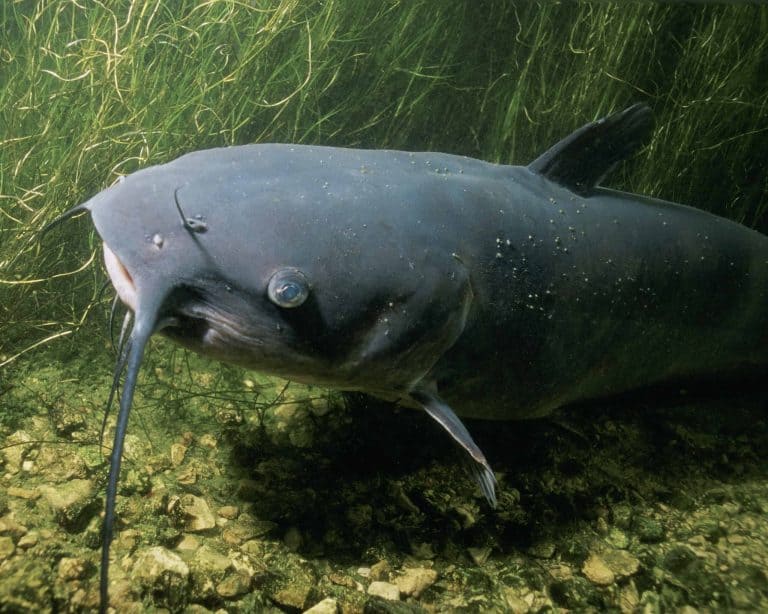
Blue catfish (Ictalurus furcatus) are a highly popular target for summer anglers across Tennessee. Warmer temperatures stabilize river conditions, causing these massive sport fish to feed heavily along deep river bends, ledges, and tailwaters below dams.
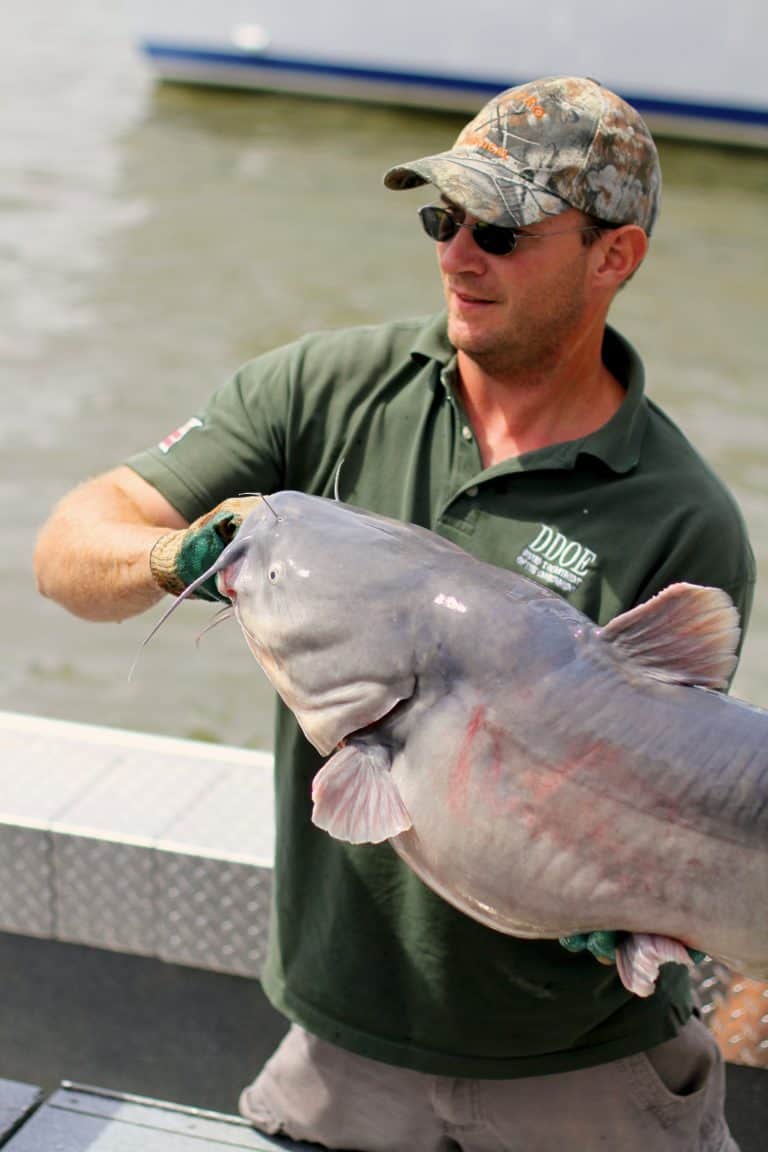
The largest catfish species in North America, blue catfish are heavy-set with pale blue-gray to silvery bodies, prominent dorsal humps, white bellies, and deeply forked tails. While trophy-sized specimens can exceed 5 feet in length and weigh over 100 pounds in major river systems, the average blue catfish measures 24 to 46 inches in length and weighs 25 to 40 pounds.
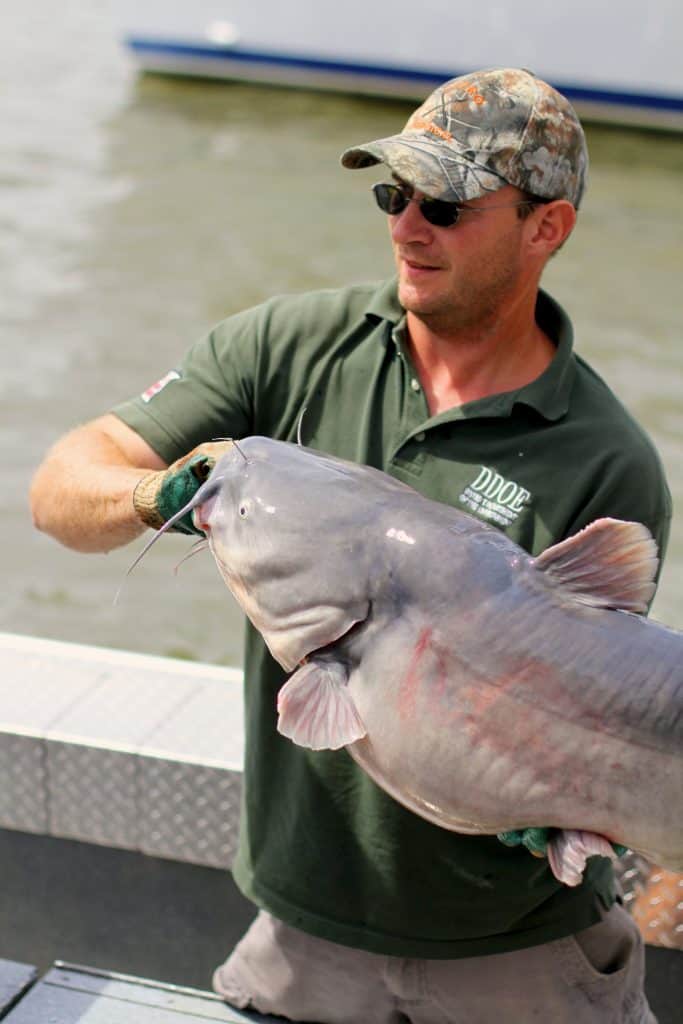
The blue catfish is the largest catfish native to North America.
©U.S. Fish and Wildlife Service / Public Domain – Original / License
They are widely distributed throughout the state’s primary river drainages, meaning fishermen can target them in West Tennessee (along the Mississippi River), Middle Tennessee (within the Cumberland and lower Tennessee River systems), and East Tennessee (in deep impoundments and upper reservoirs like Watts Bar and Fort Loudoun), making them accessible summer game fish.
ennessee has a statewide limit of one trophy-sized (over 34 inches) catfish allowed to be harvested per licensed fisherman per day. However, there is no statewide limit for catfish 34 inches and under. Specific local water bodies, state park lakes, or community ponds may have bag limits (such as a standard 5-fish daily limit for combined blue and channel catfish), so it is always advisable to verify the rules for your exact location.
Smallmouth Bass
Smallmouth bass (Micropterus dolomieu) have brownish-green bodies with dark vertical bars and, unlike largemouth bass, do not have jaws that extend past their eyes. An average smallmouth bass measures 12 to 18 inches long and weighs between one and three pounds.
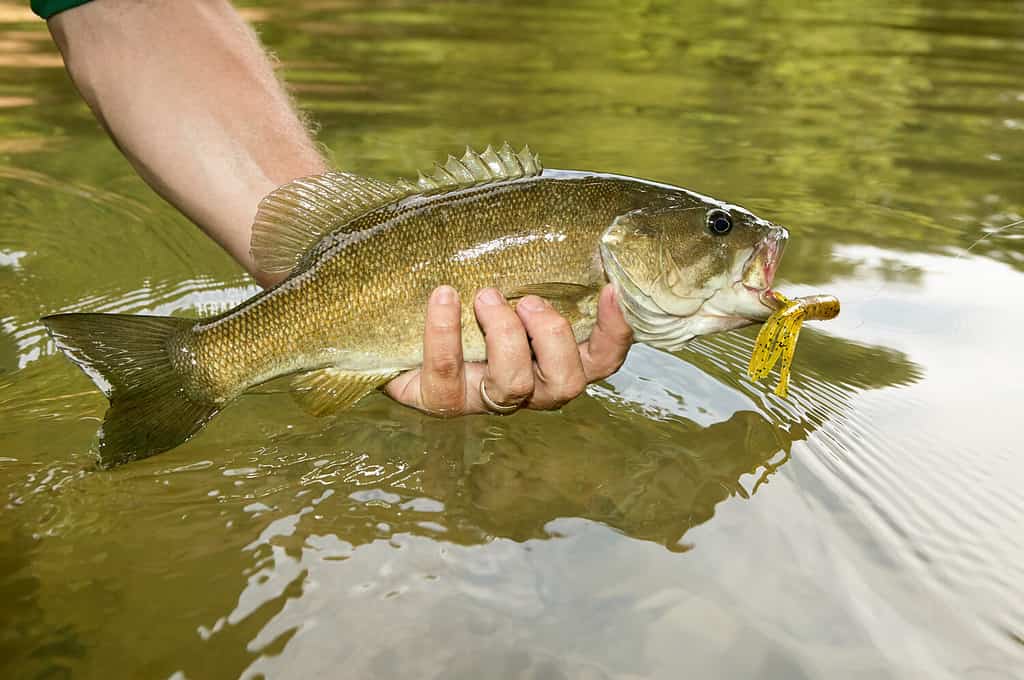
Native to Canada, smallmouth bass thrive in the cool, clear waters of Middle and East Tennessee.
©CLP Media/Shutterstock.com
Smallmouth bass thrive in Middle and East Tennessee’s cool, rocky rivers and deep reservoirs during summer. Smallmouth bass are not established in West Tennessee, as the region’s slow, muddy, and sandy-bottomed waterways do not suit this species, which prefers clear, cool, and rocky habitats.
The statewide daily bag limit for black bass (including largemouth, smallmouth, and spotted bass combined) is 5 fish per day, though specific length and creel restrictions vary widely by individual rivers, reservoirs, and regional management areas.
Rainbow Trout
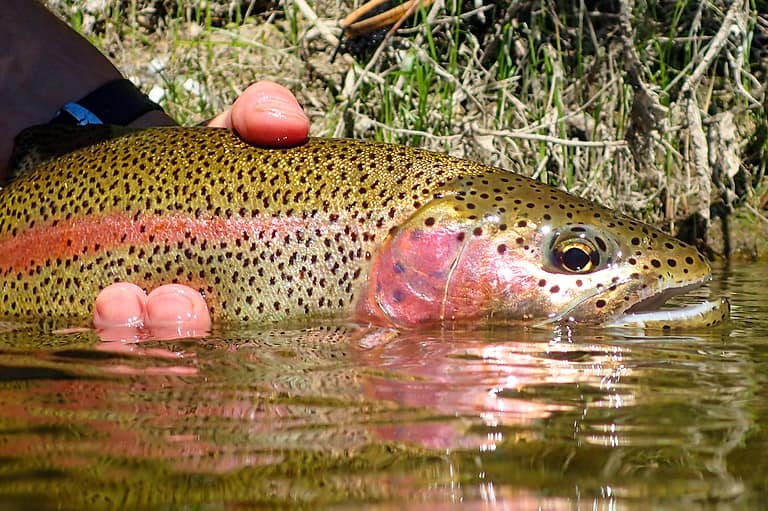
Fishing for rainbow trout (Oncorhynchus mykiss) in the summertime in Tennessee centers on cold tailwaters and mountain streams. Rainbow trout have an olive-to-silver body with a prominent pink-red lateral stripe and black spots.
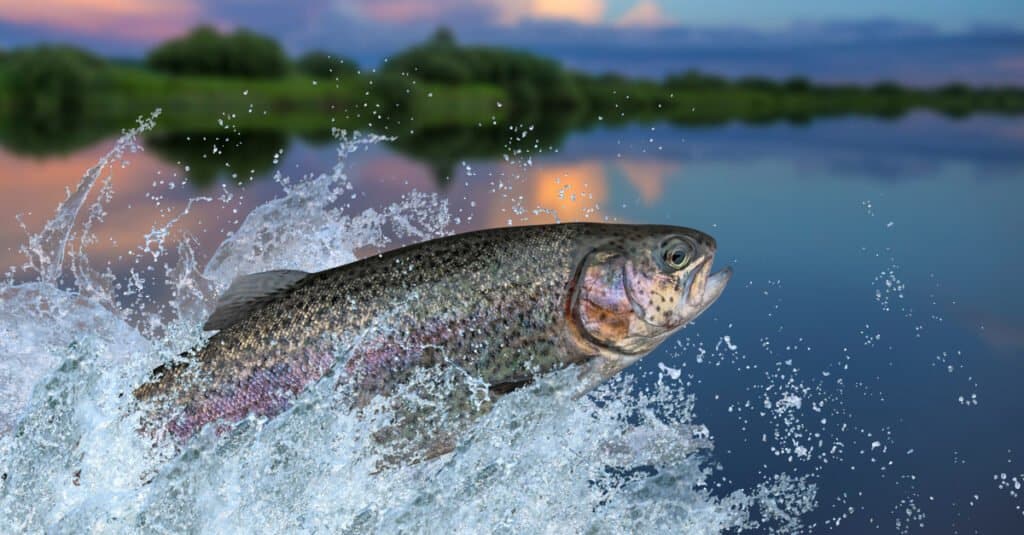
Rainbow trout can sport green, silver, yellow, and blue colors.
©FedBul/Shutterstock.com
An average stream specimen is 7 to 15 inches long and weighs 0.5 to 2 pounds, while reservoir rainbow trout often weigh five pounds or more. Rainbow trout are primarily found in East and Middle Tennessee, with virtually no established populations in West Tennessee.
Tennessee has a statewide daily bag limit of five trout (all species combined) with no standard minimum length, although specific tailwaters, rivers, and managed areas may enforce unique slot limits, gear restrictions, or reduced bag limits.
Black Crappie
During hot summer days in Tennessee, black crappie (Pomoxis nigromaculatus) move to deeper, cooler water near submerged brush, timber, and dock pilings. Black crappie have flat, silvery-green bodies with dark spots. An average black crappie is 10 inches long and weighs about one pound.
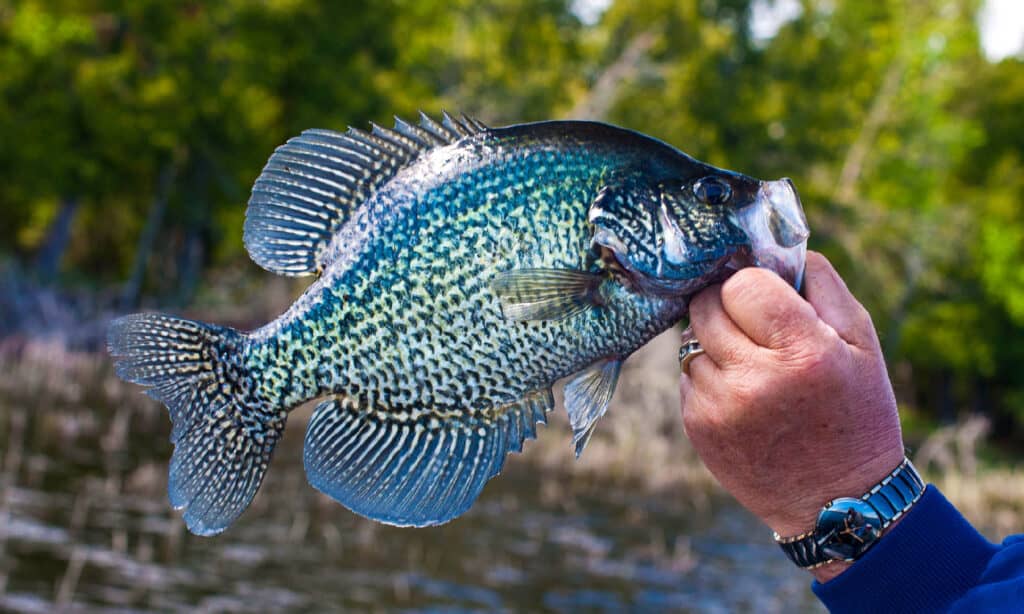
Black crappie can be found in all three regions (West, Middle, East) of Tennessee.
©iStock.com/SteveOehlenschlager
Black crappie are found across the state. The statewide regulations for crappie set a general daily bag limit of 30 crappie (combined species) with a 10-inch minimum length limit, though specific regional exceptions and water bodies vary significantly.
The official International Game Fish Association (IGFA) All-Tackle World Record for the heaviest recorded black crappie ever caught was caught by angler Lionel “Jam” Ferguson on May 15, 2018, from Richeison Pond in Loudon County, Tennessee. The trophy-sized fish tipped the scales at an astonishing 5 pounds, 7 ounces, breaking a 12-year-old international record out of Missouri.
Walleye
In the summertime, walleye (Sander vitreus) are found in deep, cool reservoirs. Walleye are gold-and-olive fish with oversized eyes. An average walleye measures 15 to 28 inches in length and weighs from 2 to 10 pounds.
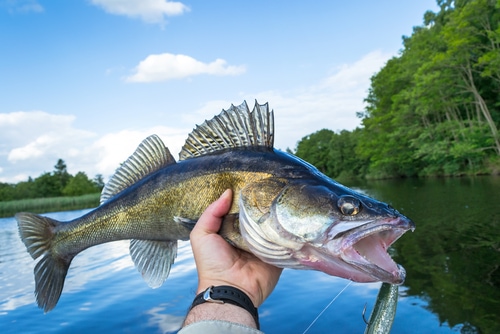
Walleye are one of the very few freshwater fish to have a special reflective eye layer called a tapetum lucidum that gives them a glassy look, lets them see exceptionally well in the dark, and makes them master hunters at dawn and dusk.
©Piotr Wawrzyniuk/Shutterstock.com
While walleye are rare in West Tennessee, they thrive in Middle Tennessee (Dale Hollow Lake and Center Hill Lake) and East Tennessee (Norris Lake and Watauga Lake) thanks to annual stocking. The statewide daily creel limit for walleye in Tennessee is 5 fish per day with a 16-inch minimum length limit.