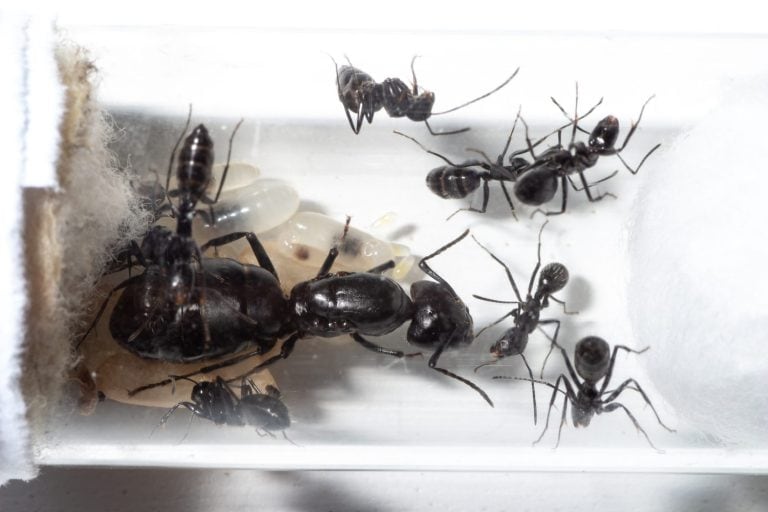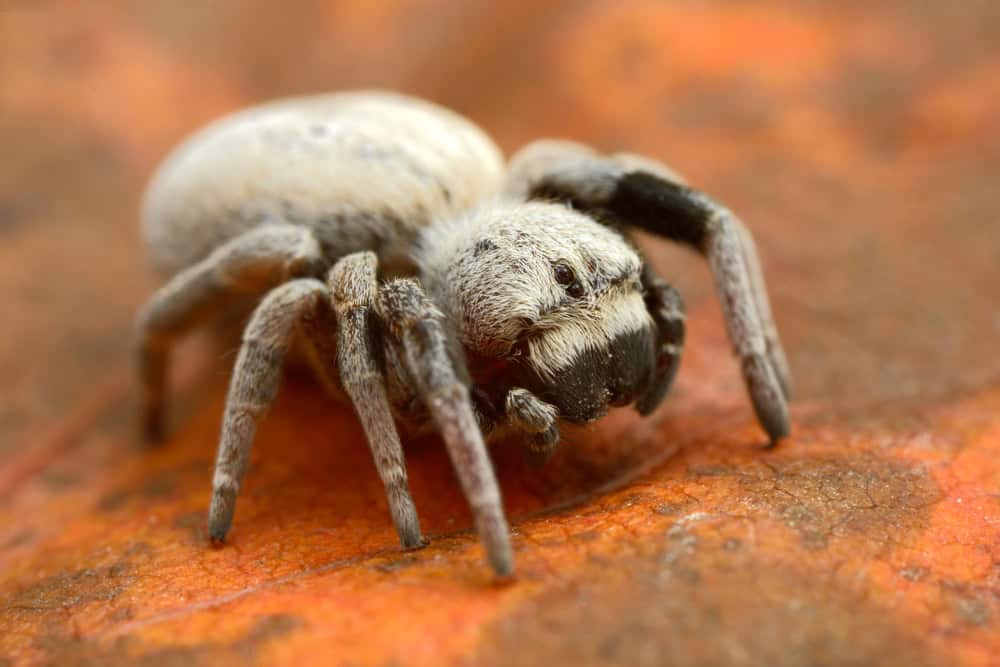

As far as nature is concerned, once you have raised your kids to be independent adults, there is little point in your staying alive. Setting aside the benefits of grandparental support, from a genetic point of view, you have fulfilled your main role. You may even end up competing for resources with your offspring. Some species, therefore, have evolved to eliminate the maternal figure once the offspring are grown—by eating her! It is the ultimate maternal sacrifice, and the African social spider (Stegodyphus dumicola) is one of the animals that does it.
African Social Spiders’ Lifestyle
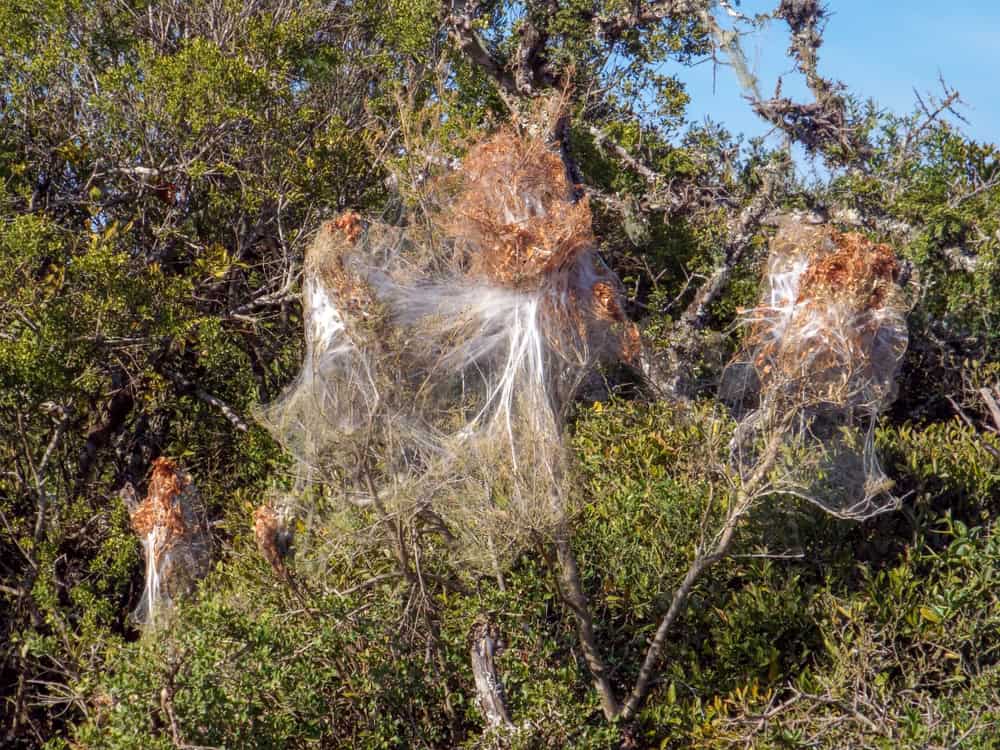
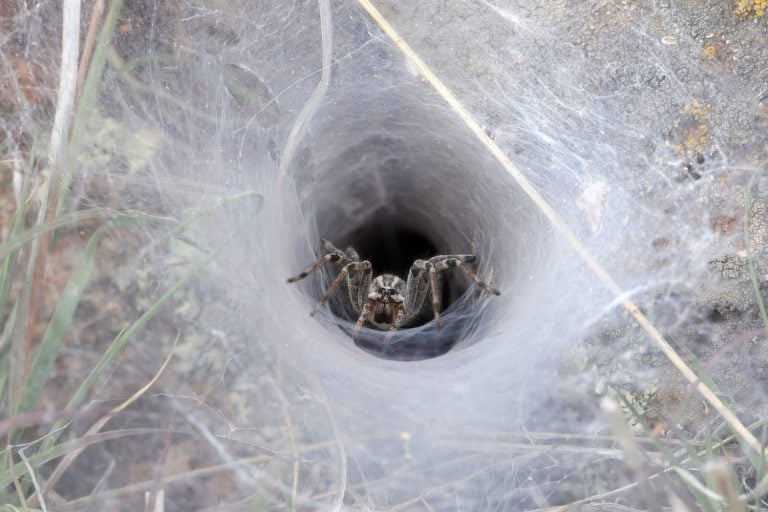
African social spiders have large, messy webs.
©jason johnstone/Shutterstock.com
As their name suggests, African social spiders are social! They are a native species of central and southern Africa, where they live in large natal colonies. These spiders are often found in semi-arid woodlands in hot and dry thornbush areas. Hundreds of related spiders can be found living together in large, silken, unkempt webs. Most of the spiders in the colony are female, but only around 40 percent of them actually produce offspring. The rest help care for the young spiderlings.
These spiders capture prey in specific areas of their webs. The larger spiders cooperate in capturing the prey. You may see many females dealing with captured prey at the same time. They inject their digestive juices into the prey and then suck out the nutrients. However, the spiderlings have a very different approach to nutrition.
Spiderling Cannibalism
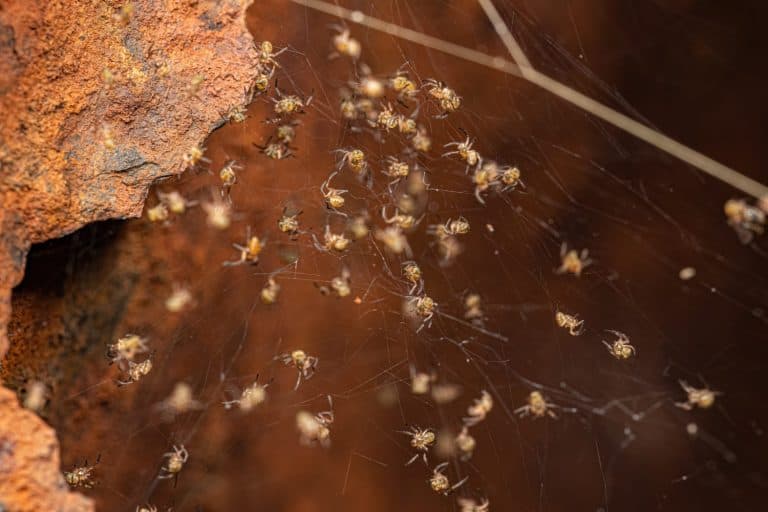
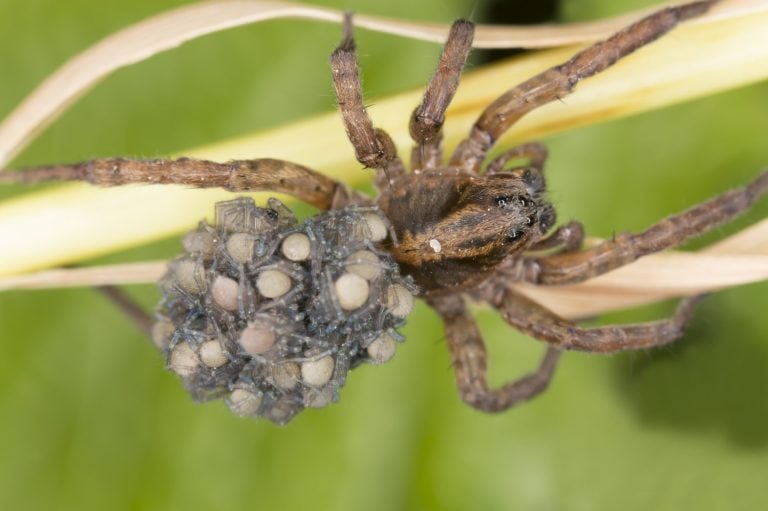
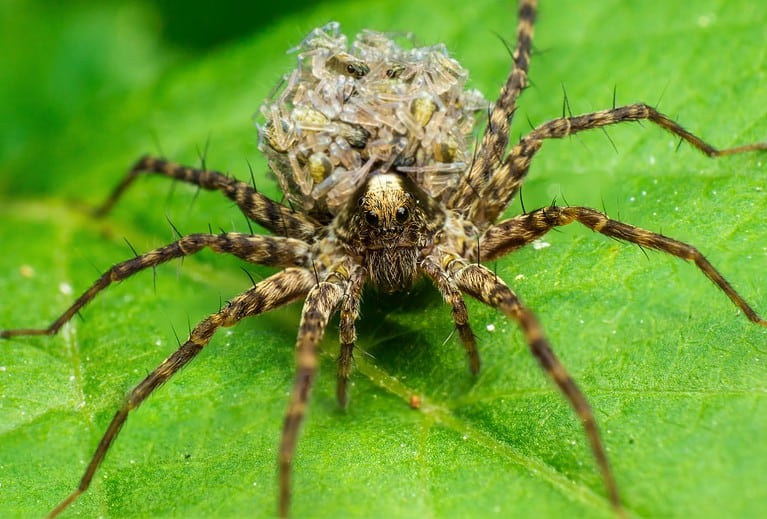
African social spiderlings have a brutal approach when it comes to finding a meal. When the spiderlings reach a developmental stage called the second instar, their mother feeds them by regurgitating her own meals. However, when the spiders reach their final instar, they eat their mother. This behavior is called matriphagy and is also seen in some other animals, such as certain earwig and worm species.
They begin by climbing onto their mother’s back and feeding on her body fluids until she dies. However, it doesn’t end there. The spiderlings will also sometimes feed on other elderly females in the colony, such as helpers or ‘aunties,’ who have cared for them when they were young.